India Industrial Exports: Next High-Value Growth Wave
India’s Industrial Exports Transformation: Where the Next High-Value Export Wave Will Be Won
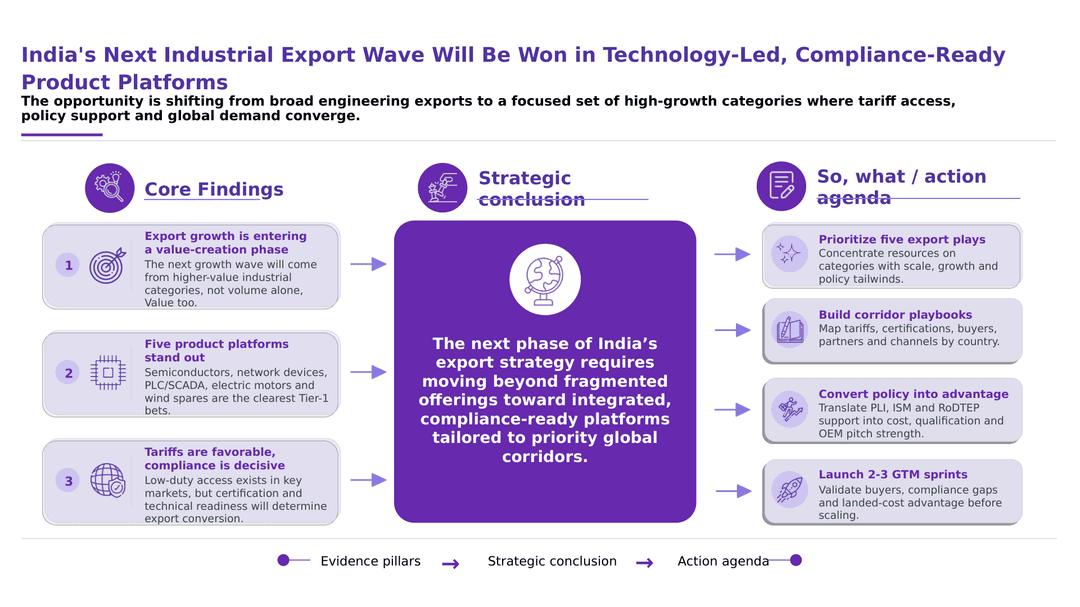
India’s export story is entering a more selective phase. The next wave will not be driven by scale alone, but by product-level choices, tariff access, compliance readiness and the ability to serve high-demand global industrial corridors.
As India moves from broad engineering exports to future-ready product platforms, the strategic question is becoming sharper:
India’s export story is entering a more selective phase. The next wave will not be driven by scale alone, but by product-level choices, tariff access, compliance readiness and the ability to serve high-demand global industrial corridors.
As India moves from broad engineering exports to future-ready product platforms, the strategic question is becoming sharper:which industrial categories can convert global demand, domestic policy support and market access into sustained export advantage?
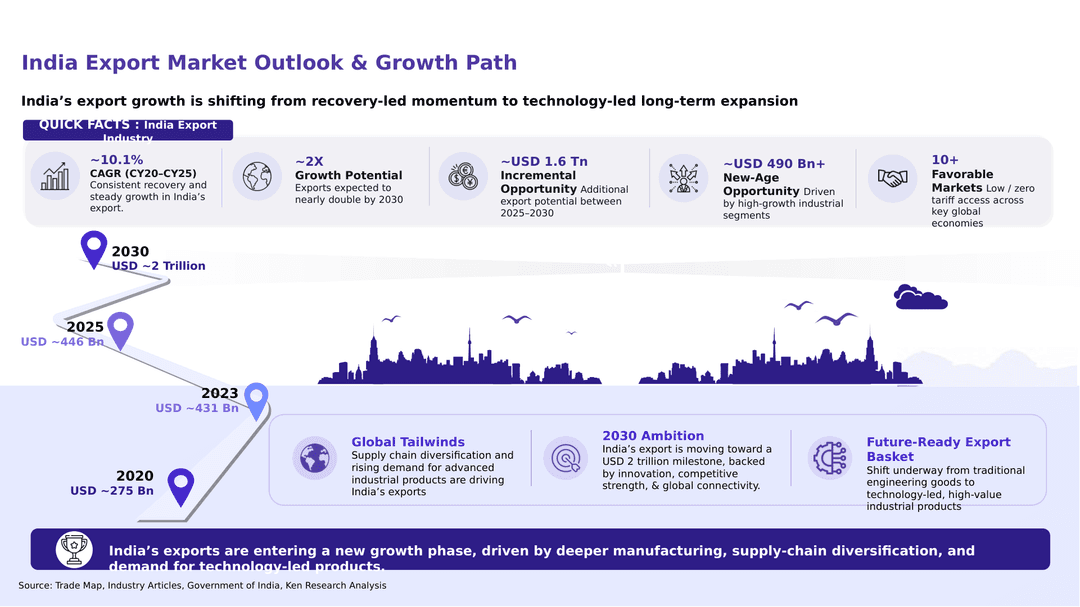
India’s export base has moved from recovery-led momentum to a more strategic growth phase. Exports increased from approximatelyUSD 275 billion in 2020to aroundUSD 446 billion in 2025, with the 2030 ambition pointing toward a much larger export base.
But the real opportunity is not in treating exports as one broad number.
The next phase will depend on identifying product categories where global demand, favourable tariff access, lower exporter intensity and domestic manufacturing support converge. The categories that win this phase will not necessarily be the largest today; they will be the ones best positioned for future-ready industrial demand.
India’s Export Growth Is Becoming More Product-Selective
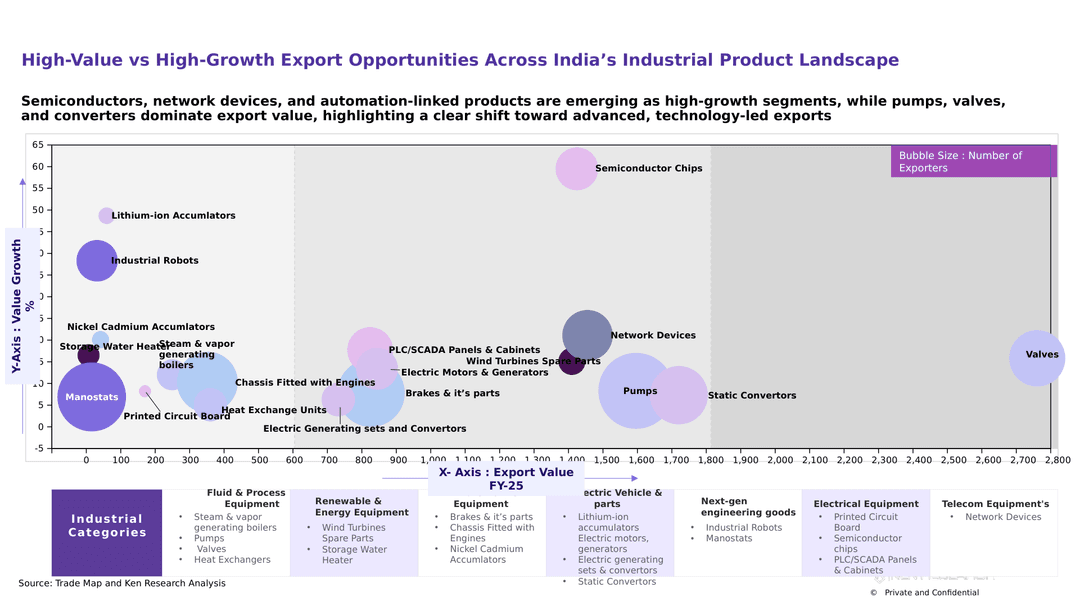
India’s export growth path is expanding, but future value will not be distributed evenly across all industrial categories. Product families linked to global capex cycles, industrial automation, renewable deployment, electronics manufacturing and supply-chain diversification are beginning to show stronger strategic relevance.
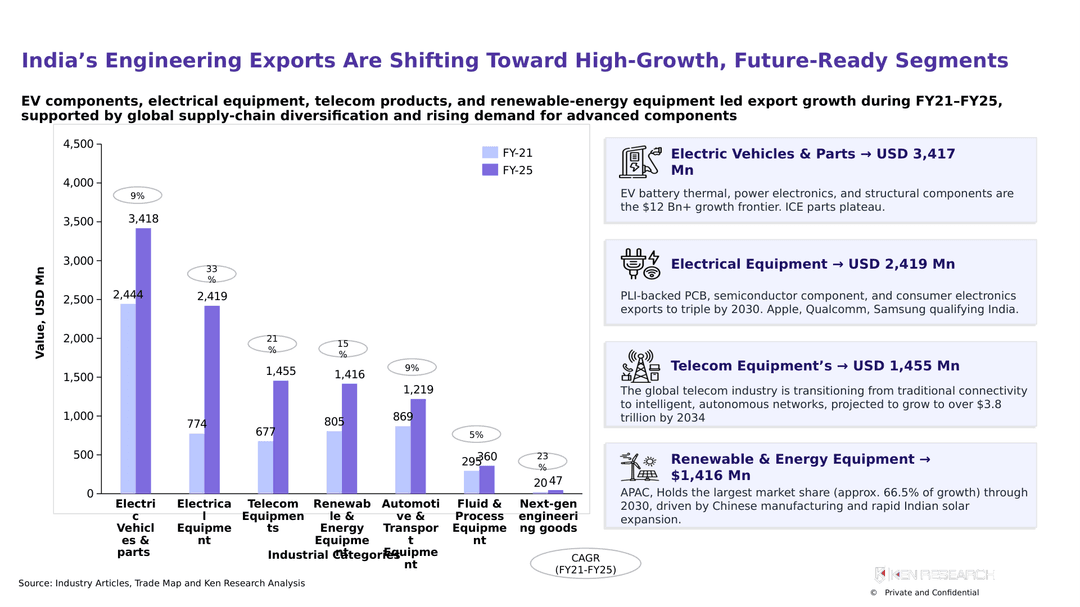
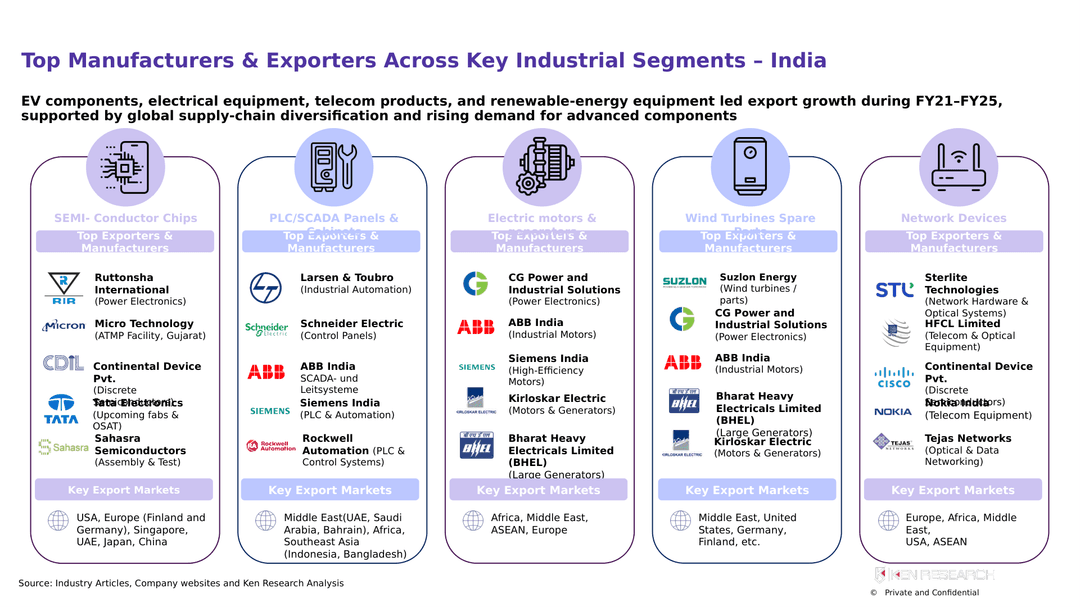
This shift is already visible. EV components and parts, electrical equipment, telecom equipment and renewable-energy equipment have outpaced several traditional industrial categories. The implication is clear: India’s next export advantage will be built less through broad manufacturing participation and more through sharper product-platform prioritisation.
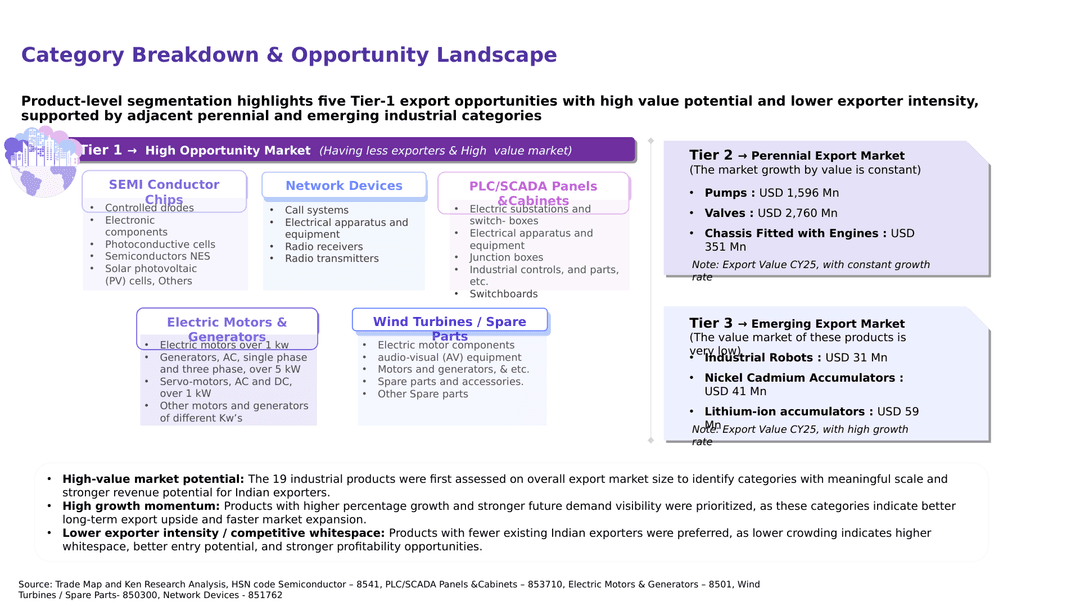
Five Product Platforms Are Emerging as Priority Export Plays
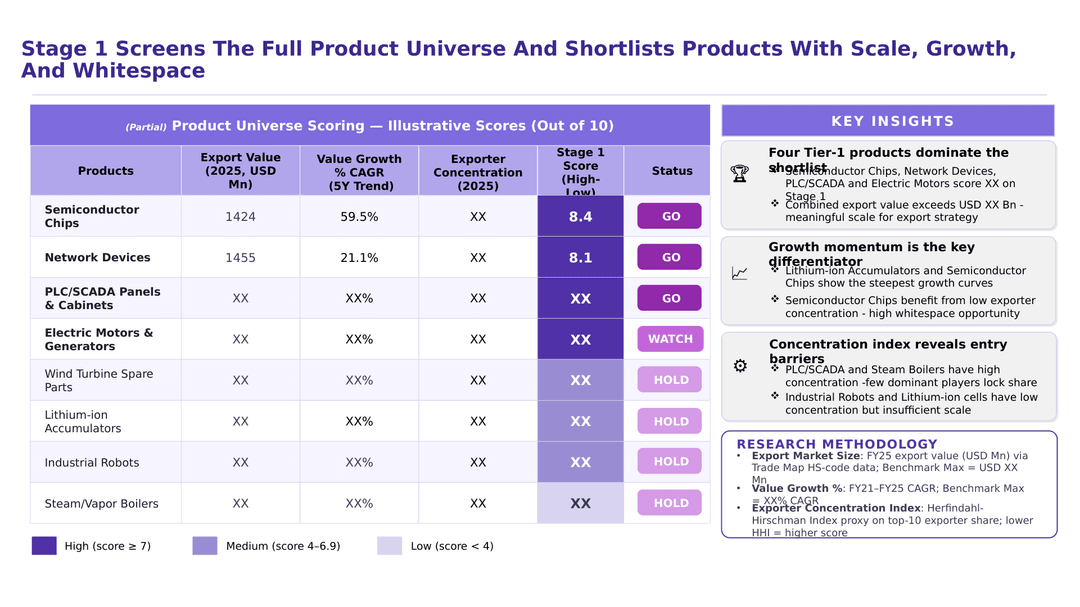
The opportunity is becoming more concentrated around industrial product platforms that offer stronger value potential, improving domestic capability and export whitespace.
The priority areas highlighted in the POV include:
These categories matter because they sit close to global demand themes such as industrial digitisation, energy transition, automation and advanced electronics. The full POV goes deeper into how these product platforms compare against adjacent categories and why some segments may offer stronger export potential than conventional industrial baskets.
Tariff Access Creates an Opening, but Readiness Will Decide Conversion
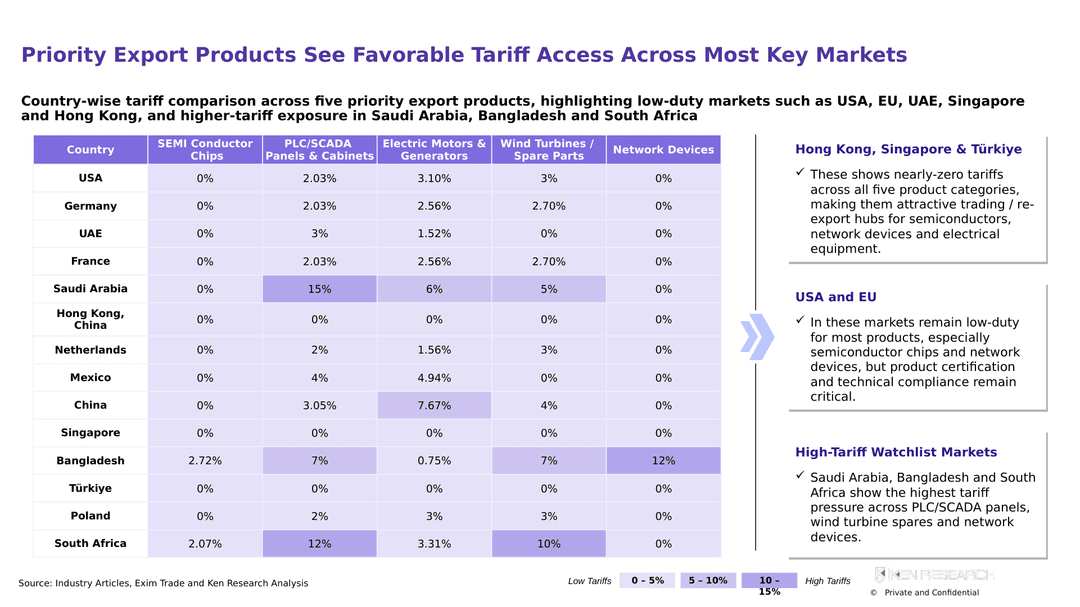
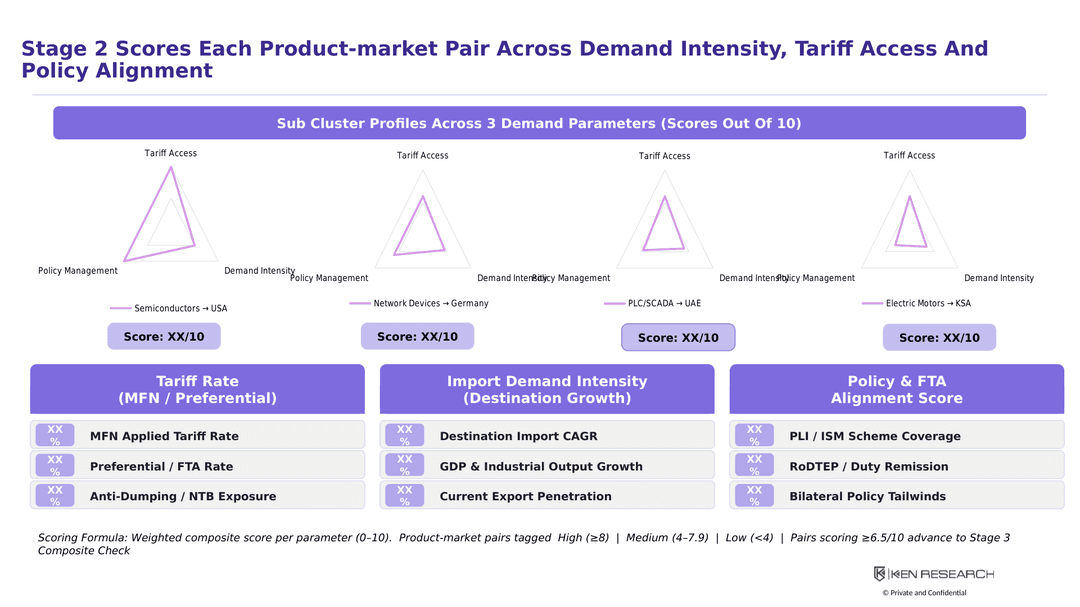
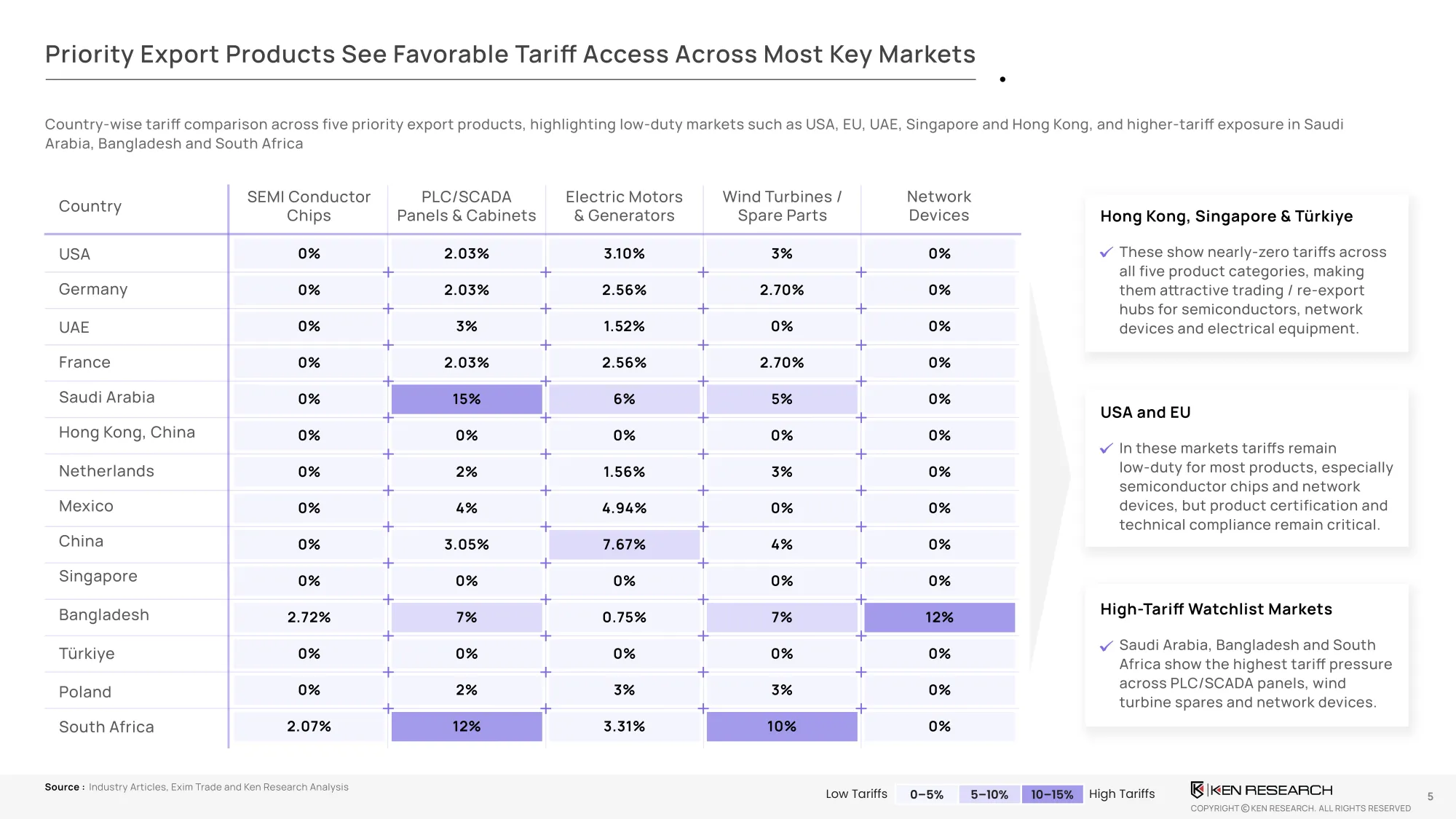
Several global markets offer favourable tariff conditions across India’s priority export products. Markets such as Hong Kong, Singapore and Türkiye show strong access potential across multiple categories, while USA and key European markets remain attractive for selected electronics, electrical and network equipment segments.
However, tariff access is only the entry point.
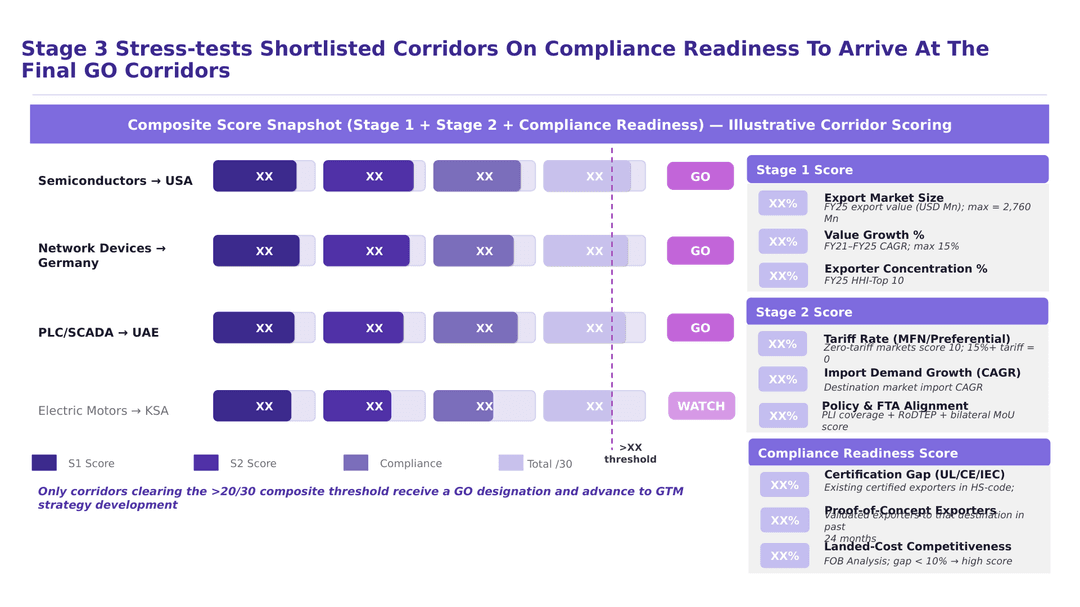
The harder test will be conversion. Product certification, buyer qualification, technical compliance, documentation discipline and market-specific go-to-market readiness will decide whether Indian exporters can turn favourable access into repeatable business.
Priority export products benefit from low or near-zero tariffs across major markets such as the USA, EU, UAE, Hong Kong, Singapore and Turkey.
Export Winners Will Build Corridors, Not Just Catalogues
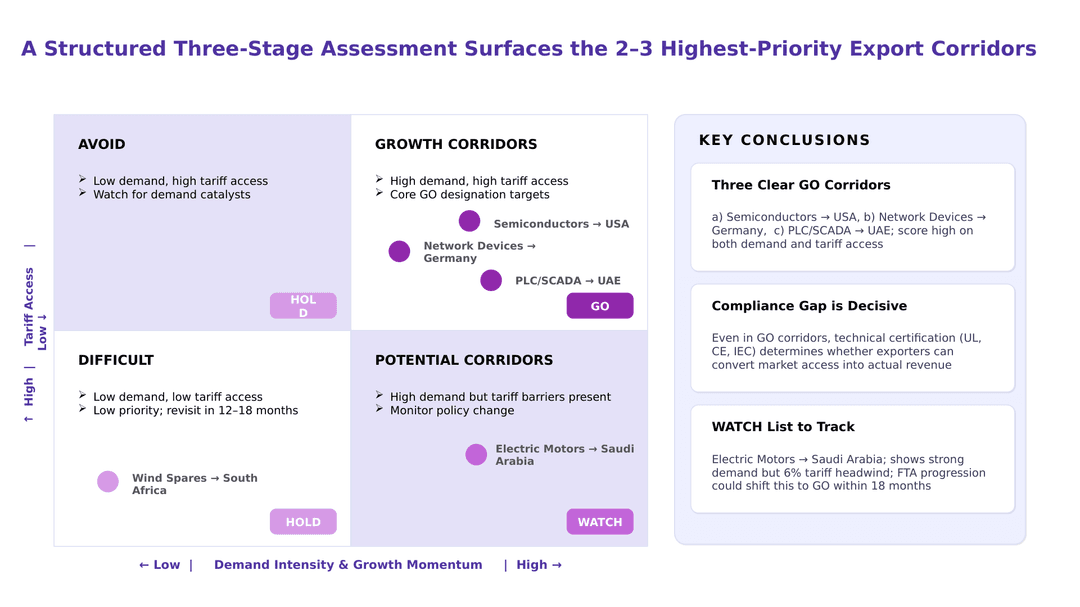
The next industrial export winners will not be the companies with the widest product catalogues. They will be the companies that build sharper product-market corridors.
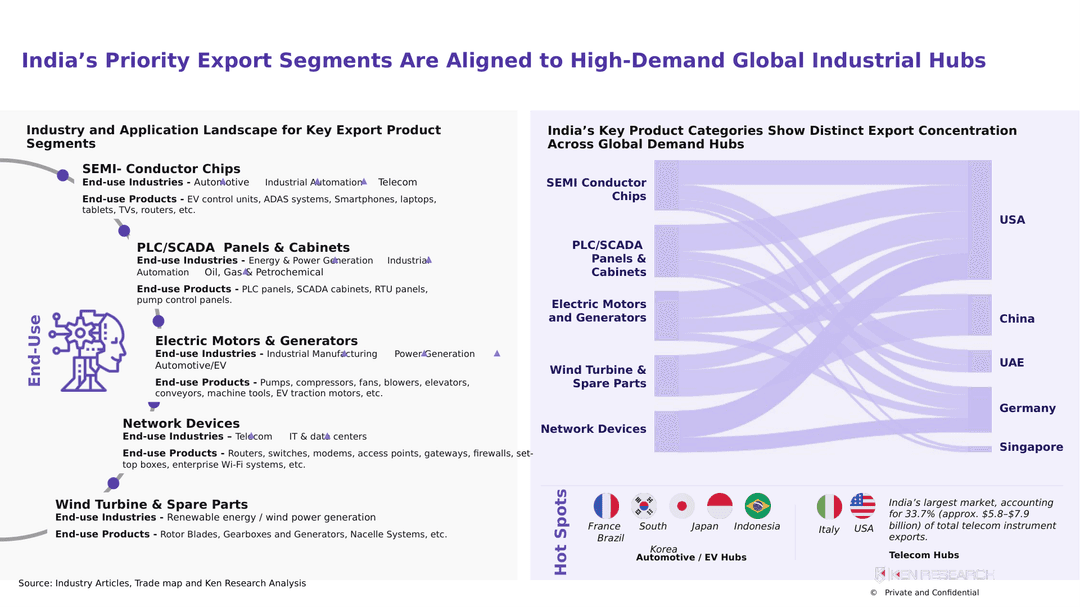
A semiconductor component exporter, a network device manufacturer and a wind turbine spare parts supplier will not scale through the same export model. Each category requires a different combination of buyer access, certification, channel partnerships, landed-cost positioning and after-sales support.
This makes corridor discipline central to export strategy. The full POV examines how priority products align with demand hubs such as USA, China, UAE, Germany and Singapore, and where Indian exporters may need differentiated entry playbooks.
Policy Support Is Strengthening Export Readiness
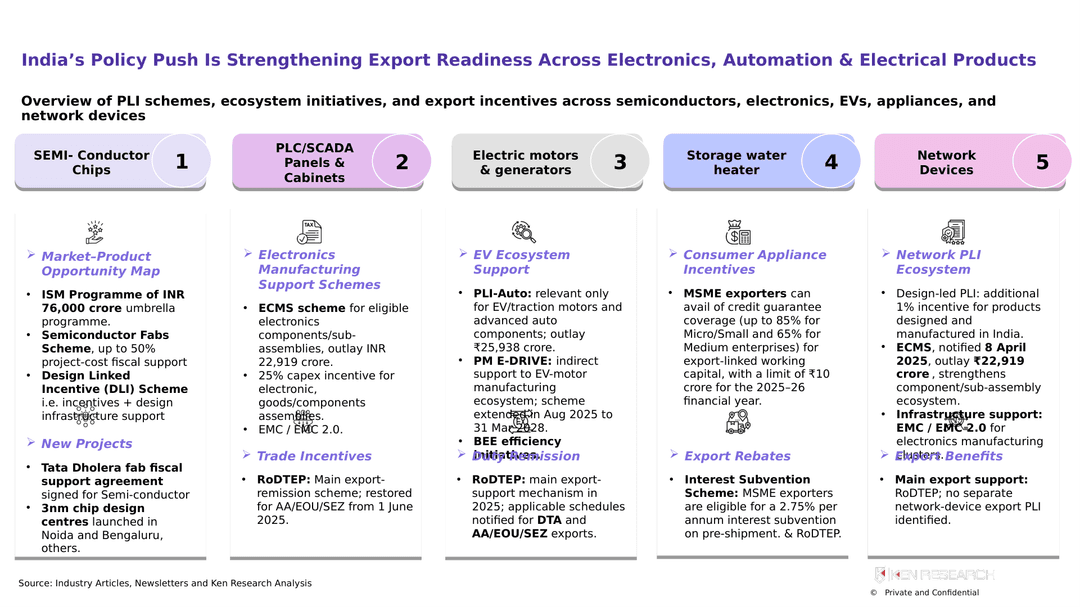
India’s policy environment is increasingly aligned with technology-led industrial exports. Incentives across semiconductors, electronics manufacturing, EV components, MSME export support and network equipment are strengthening the domestic base for export-ready manufacturing.
The advantage, however, will not come from policy support alone.
Companies that translate incentives into cost competitiveness, certification readiness, capacity planning and buyer qualification will be better positioned to scale. The full POV connects policy support with priority product categories to show where incentives can become a practical export advantage.
Strategic Takeaway
India’s next industrial export wave will not be won through generic expansion. It will be won through sharper product selection, stronger corridor discipline and faster conversion of policy support into export-ready capability.
The opportunity is widening, but not uniformly. Some product categories are moving into higher-value global demand pools, while others remain exposed to crowded competition, limited differentiation or weaker growth visibility.
For Indian exporters, the strategic question is no longer simply:“Where should we export?”
The sharper question is:Which product platform should we prioritise, for which global corridor, with what compliance and cost advantage?