A Ken Research POV on why Mexico is becoming the region’s export-manufacturing engine while Brazil remains its scale-led domestic logistics anchor
Nearshoring is reshaping Latin America’s logistics market, but the opportunity is not developing uniformly across countries, sectors or service lines.
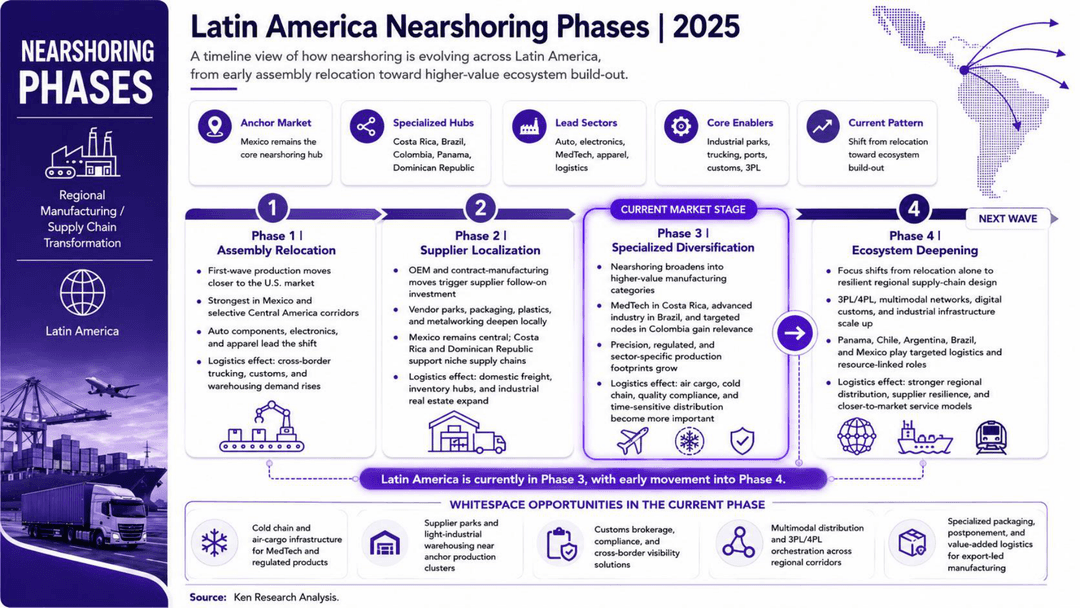
Mexico is attracting manufacturing relocation, supplier investment and U.S.-bound cross-border freight because of its geographic proximity, industrial base and USMCA-linked trade ecosystem. Brazil, by contrast, continues to derive its logistics strength from the scale of its domestic production, consumption and nationwide distribution requirements.
Other markets are developing more specialized roles. Costa Rica is strengthening its position in regulated, high-value manufacturing; Panama and Colombia are emerging as distribution and regional-connectivity platforms; Chile and Argentina remain closely linked to mining and energy-transition supply chains; and Central America is becoming increasingly relevant for apparel and time-sensitive manufacturing.
The central question is therefore no longer whether nearshoring will create additional logistics demand.
It is:
Which countries, sectors and logistics capabilities are best positioned to convert manufacturing relocation into sustainable value creation?
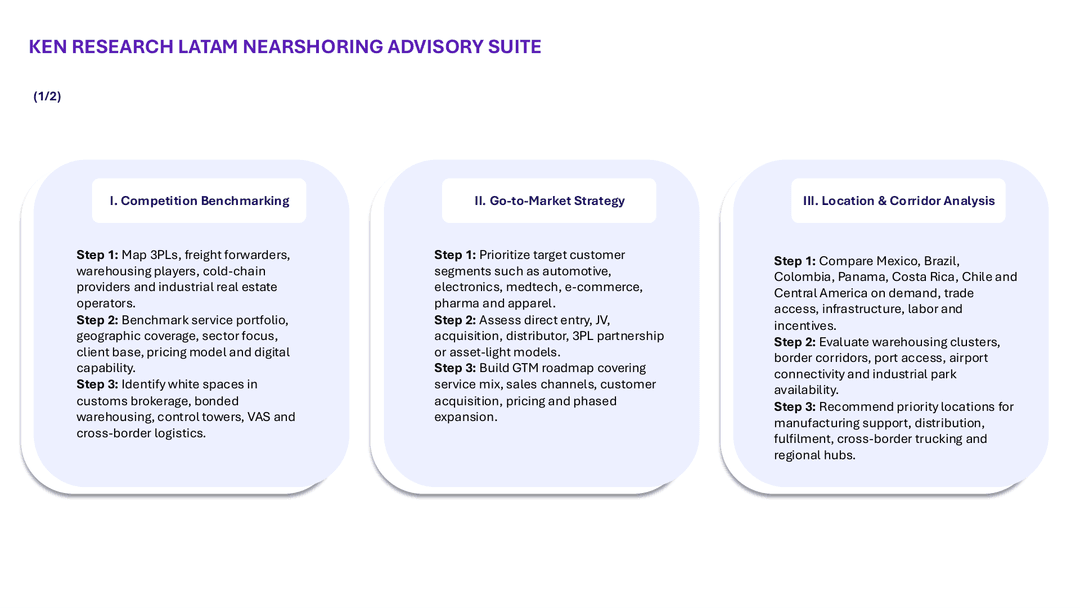
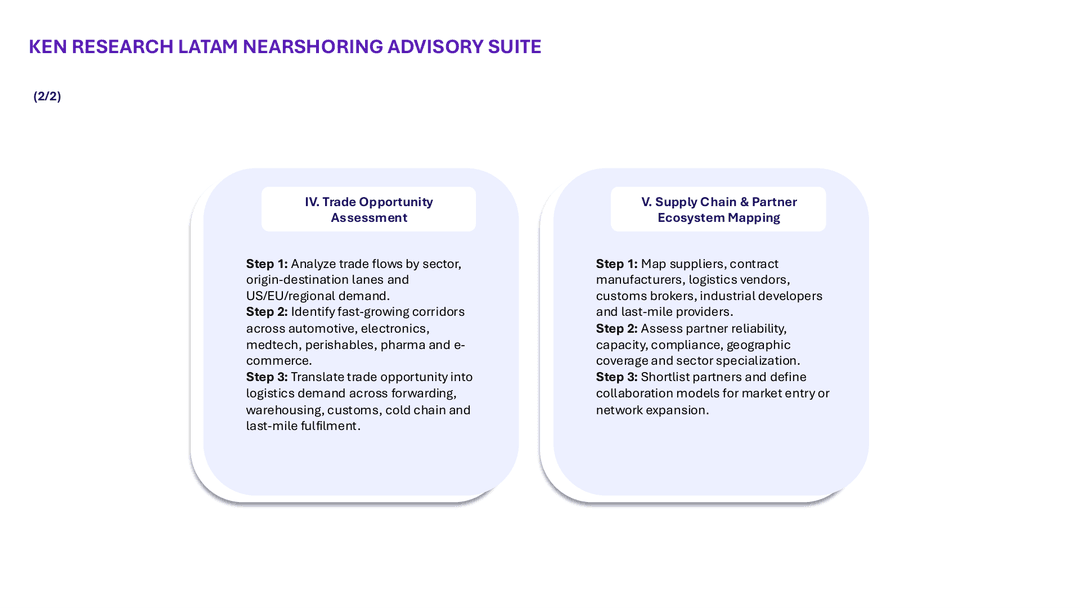
Ken Research’s POV examines where nearshoring-led demand is emerging, which sectors are creating the strongest logistics pull and how logistics providers, manufacturers and investors should prioritize regional entry and network expansion.
Is Latin America becoming one integrated nearshoring platform, or a portfolio of distinct logistics models?
Nearshoring is frequently discussed as a single regional growth theme. In practice, it is producing different economic models across Latin America.
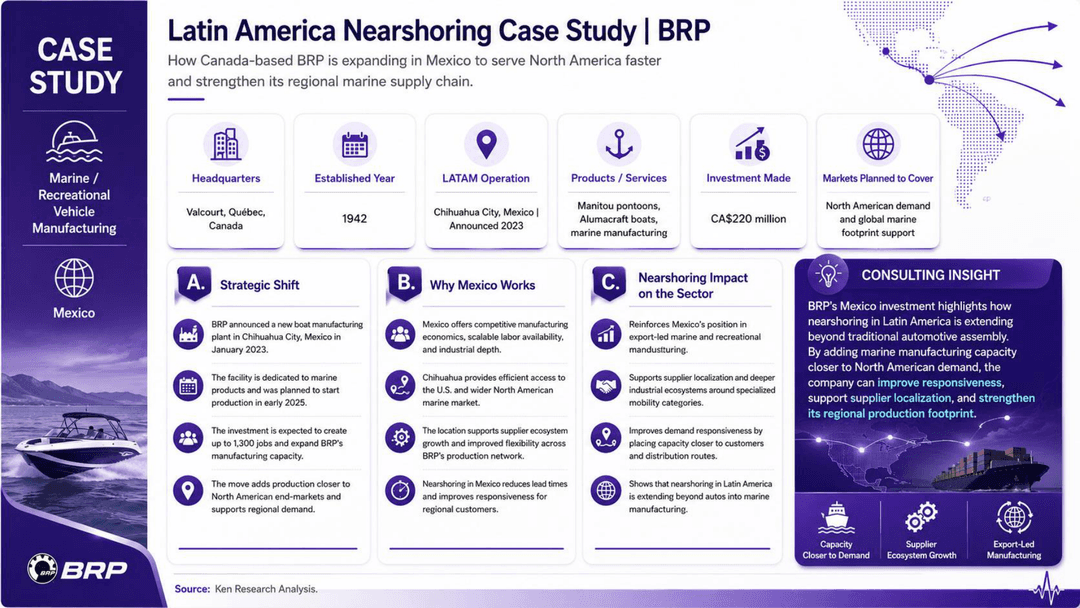
Mexico is developing an export-oriented logistics ecosystem connected directly to U.S. manufacturing and consumption. Demand is rising across cross-border trucking, customs brokerage, industrial parks, supplier warehousing and multimodal freight.
Brazil’s logistics opportunity follows a different logic. Its scale is rooted in domestic manufacturing, agriculture, consumer markets, e-commerce and long-distance distribution rather than primarily in U.S.-oriented production relocation.
Elsewhere, market roles are more targeted:
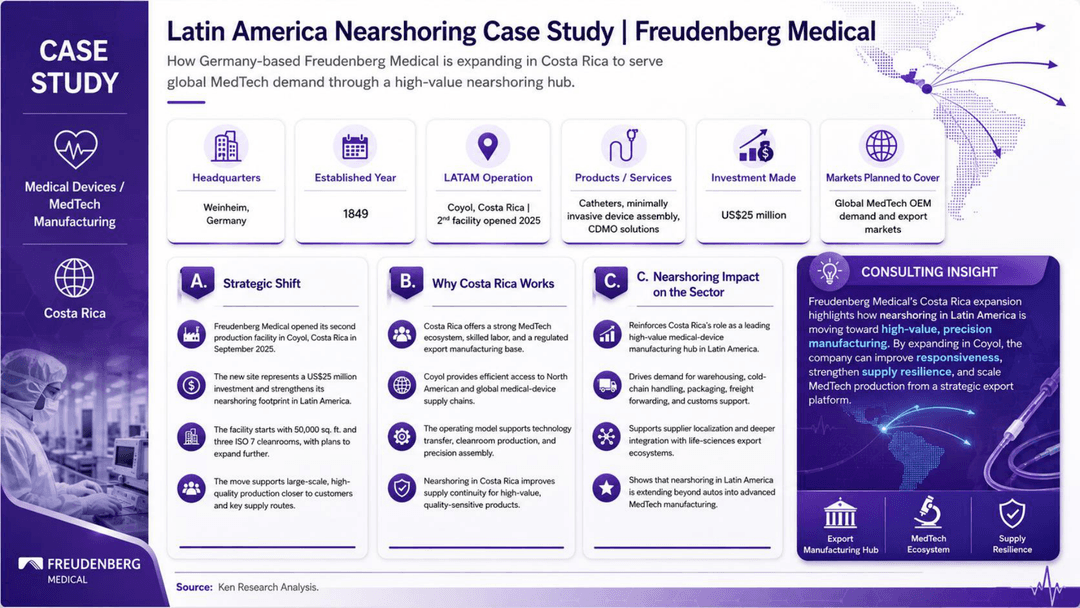
Costa Rica is building on medical-device and advanced-manufacturing capabilities.
Panama is positioned around ports, transshipment and regional distribution.
Colombia combines domestic consumption with emerging fulfilment and distribution opportunities.
Chile and Argentina remain important for mining, critical minerals and energy-transition logistics.
Central American markets are benefiting from shorter replenishment cycles in textiles and apparel.
This creates a portfolio of opportunities rather than one uniform regional thesis.
The strategic challenge is to determine which operating model fits each market:
Cross-border manufacturing logistics
Domestic distribution
Port-led regional fulfilment
Sector-specific cold chain
Industrial real estate
Resource-export logistics
E-commerce and last-mile infrastructure
Mexico and Brazil Represent Two Different Logistics Value Pools
Mexico is the nearshoring engine; Brazil is the scale-market anchor
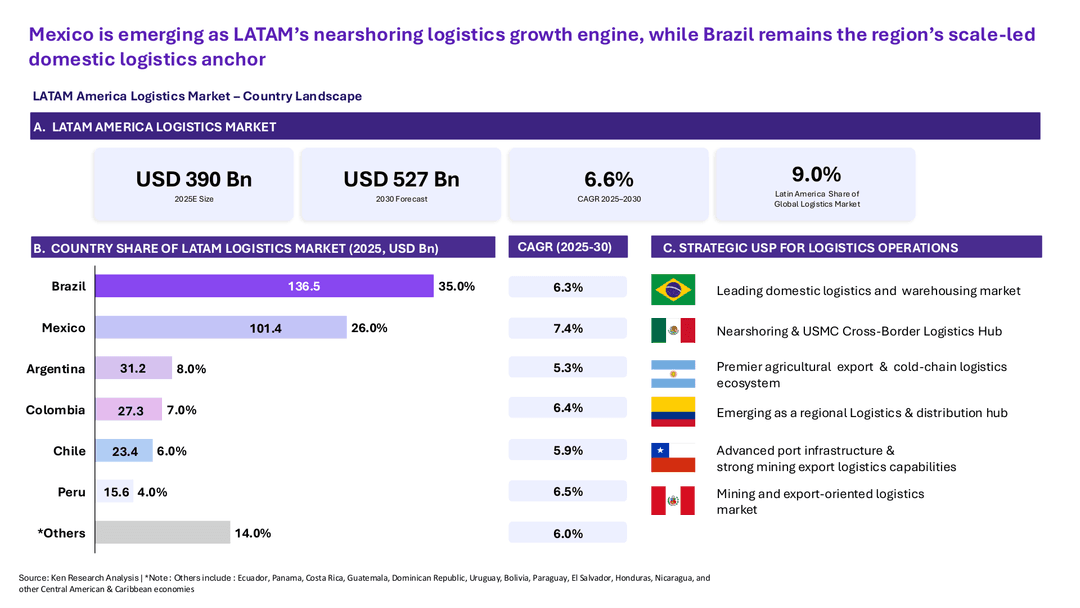
Mexico and Brazil together account for the majority of Latin America’s logistics activity, but the drivers behind their markets are structurally different.
Mexico: Cross-Border Manufacturing and Trade
Mexico’s advantage is built around:
Proximity to the United States
USMCA market access
Established automotive and electronics clusters
Industrial-park infrastructure
Cross-border supplier ecosystems
Shorter lead times than Asian sourcing locations
As suppliers move closer to North American customers, logistics demand extends beyond transportation. Manufacturers require bonded and supplier warehouses, customs support, inventory visibility, cross-docking, industrial facilities and dependable border execution.
Mexico is therefore not only gaining freight volume. It is generating a broader ecosystem of manufacturing-support services.
Brazil’s opportunity is less dependent on becoming a U.S.-facing factory platform. It rests on helping companies localize production, position inventory and serve a large but operationally complex internal market.
The distinction matters:
Mexico creates value through cross-border velocity. Brazil creates value through domestic reach and network density.
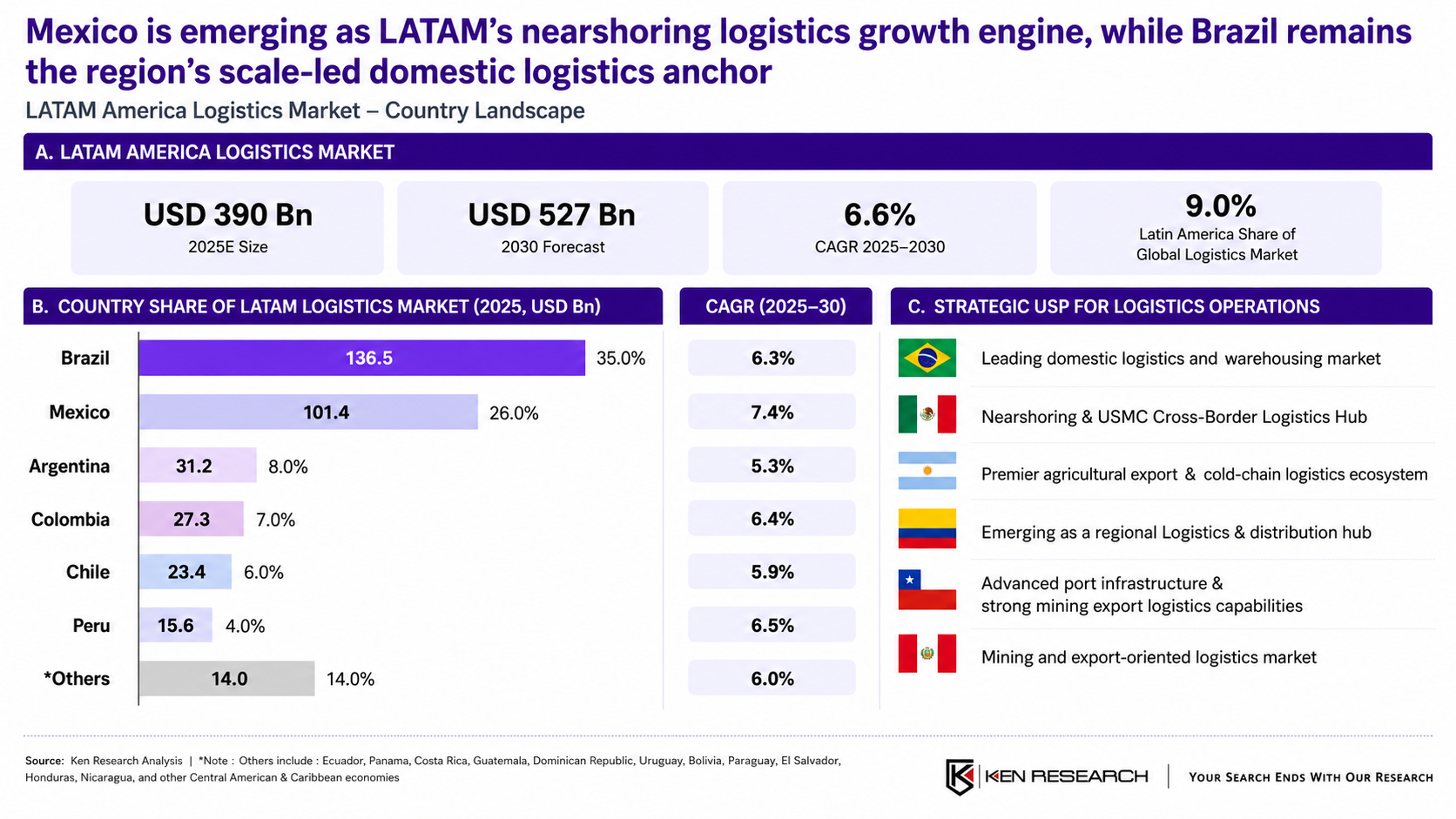
The deck identifies Mexico as Latin America’s nearshoring-led logistics growth engine and Brazil as the region’s scale-led domestic logistics anchor.
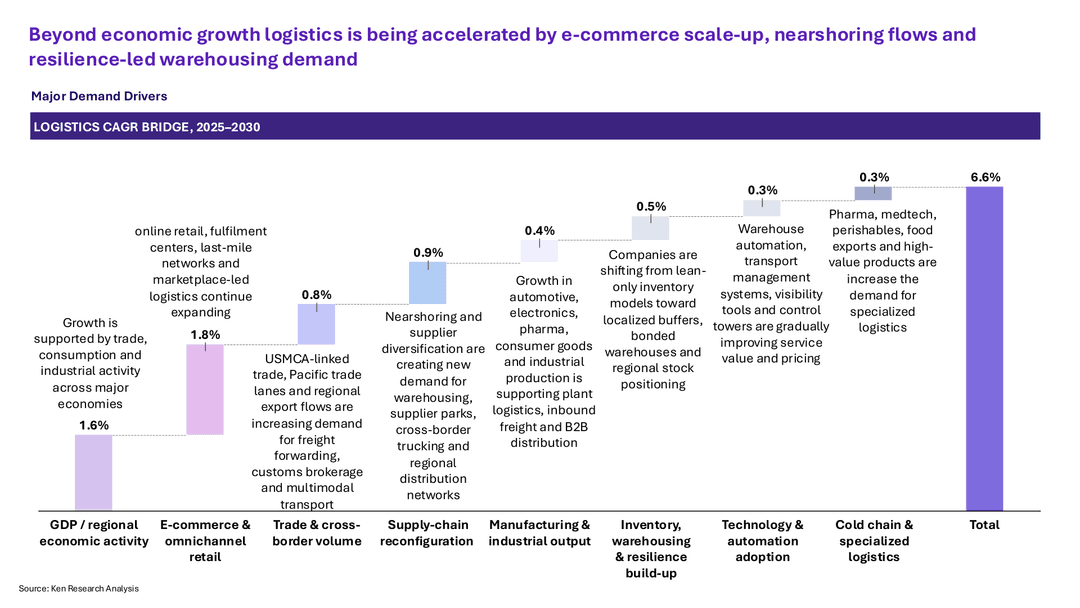
Latin America’s logistics market is projected to grow from USD 390 billion in 2025 to USD 527 billion by 2030, led by Brazil’s domestic scale and Mexico’s nearshoring growth.
Nearshoring Is Changing What Logistics Customers Buy
Value is moving beyond freight movement toward inventory, visibility and integrated solutions
Nearshoring increases transport volumes, but its larger effect may be the expansion of higher-value logistics requirements around relocated manufacturing.
Companies establishing regional production need more than a carrier.
They require:
Supplier and inbound logistics
Industrial and bonded warehousing
Customs brokerage
Inventory buffers
Regional fulfilment
Value-added packaging and assembly
Transport visibility
Multicountry coordination
Supply-chain design and control towers
This is shifting logistics demand away from isolated movement services toward more integrated service portfolios.
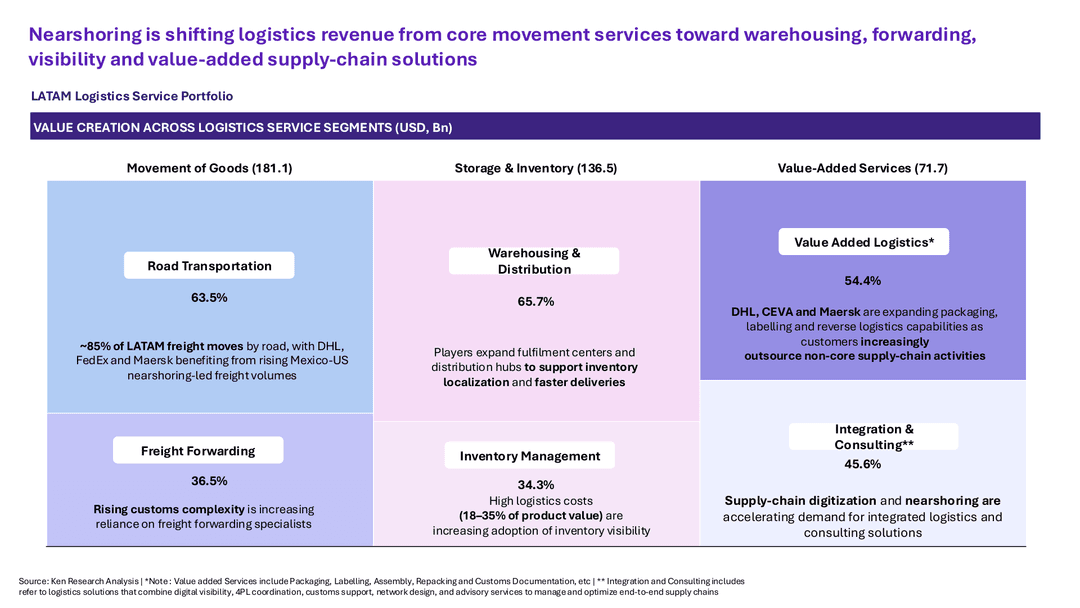
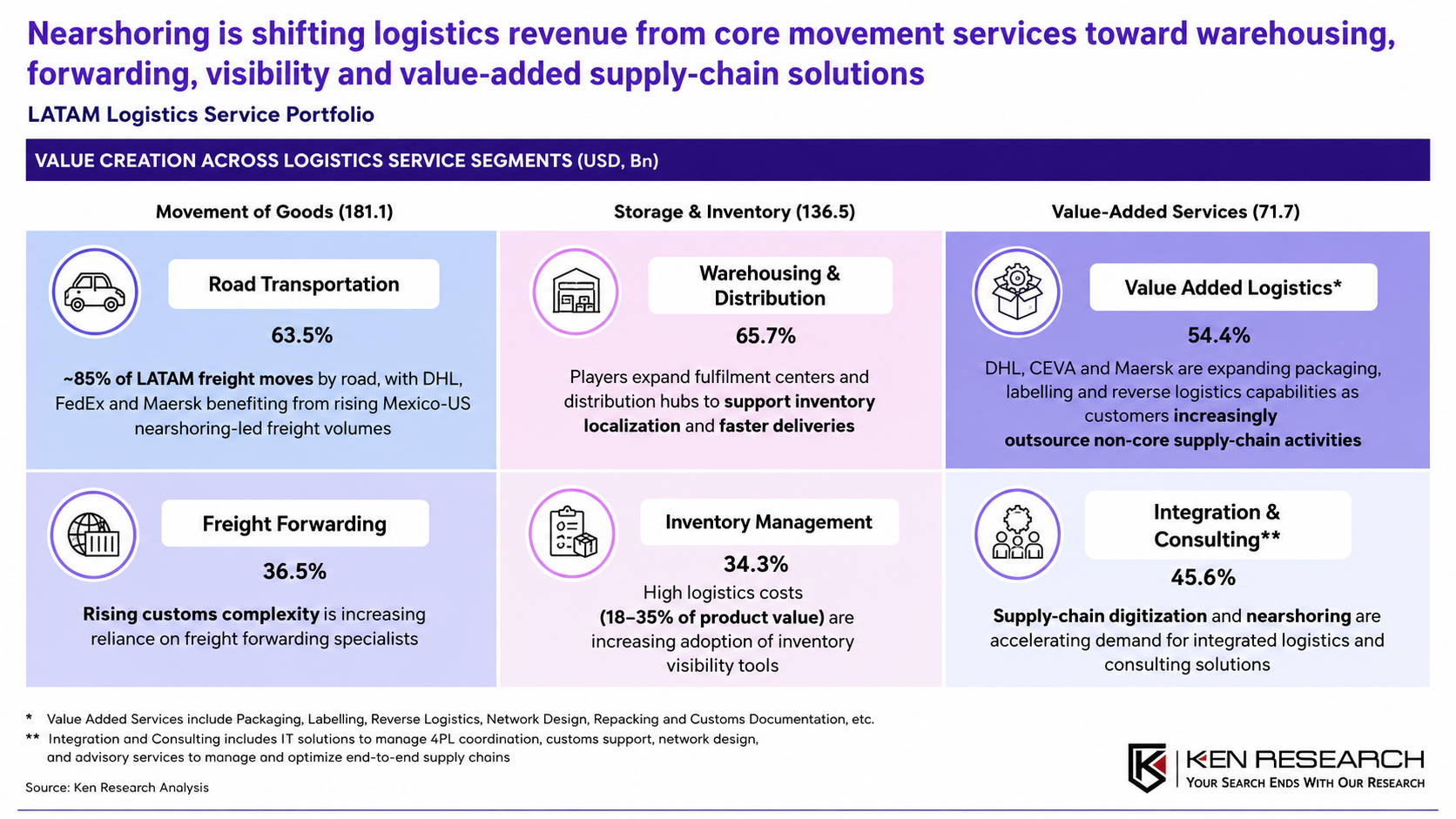
Freight transportation remains the market’s largest component, but warehousing, inventory management, forwarding, value-added logistics and consulting are becoming strategically more important as supply chains become more regionalized and operationally complex.
Nearshoring also changes inventory logic.
Companies that previously relied heavily on long-distance, lean supply chains are placing more stock closer to manufacturing sites and end markets. This supports demand for regional distribution centres, bonded facilities, supplier parks and localized inventory-management capabilities.
The providers best positioned to capture the opportunity will not necessarily be those moving the most freight.
They will be those capable of managing the interfaces between transport, inventory, customs, data and production.
The deck highlights a migration in logistics value from core movement services toward warehousing, forwarding, visibility, value-added activities and integrated supply-chain solutions.
Nearshoring is expanding demand for warehousing, inventory management and value-added logistics across Latin America.
The Nearshoring Opportunity Is Sector-Led
Manufacturing relocation will create different logistics requirements by industry
Nearshoring will not affect every sector in the same way.
The strongest opportunities are emerging where production relocation, supply-chain resilience and regional market access intersect.
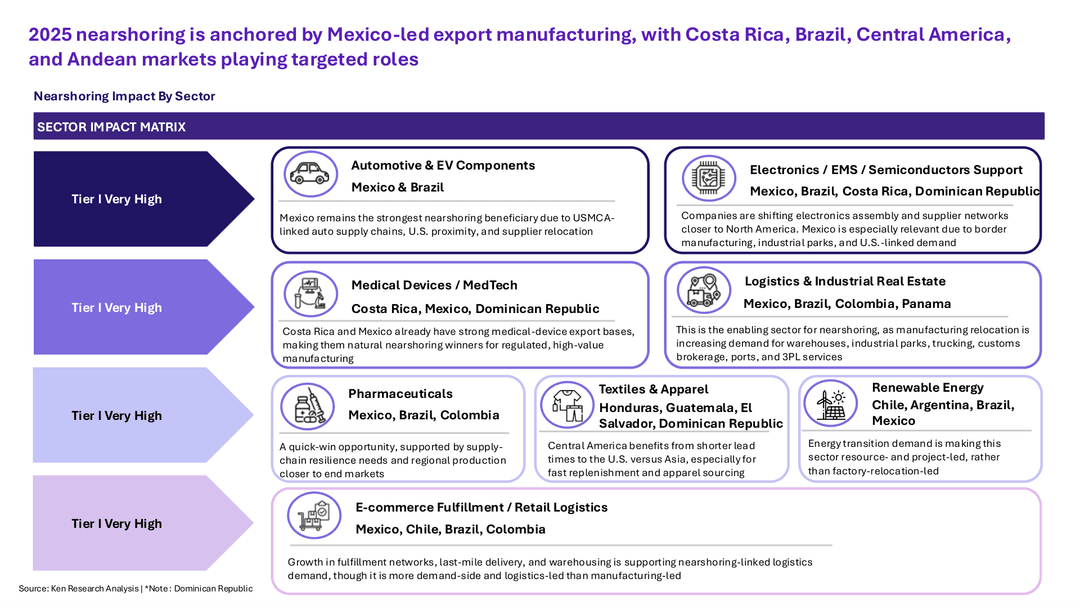
Automotive and EV Components
Mexico remains the most established beneficiary because of its integrated North American automotive supply chain.
The logistics opportunity includes:
Inbound component flows
Sequenced and just-in-time delivery
Supplier parks
Cross-border trucking
Specialized warehousing
Reverse logistics
Battery and hazardous-goods handling
Brazil also remains relevant because of its large domestic automotive and industrial market.
Electronics and EMS
Electronics manufacturers are diversifying assembly and supplier networks closer to North American customers.
Mexico offers the clearest cross-border platform, while Costa Rica, Brazil and selected Caribbean markets can support specialized production and assembly roles.
These operations require secure, time-sensitive and high-visibility logistics.
Medical Devices
Costa Rica and Mexico have developed strong medical-device export positions.
Medtech logistics requires:
Regulatory compliance
Validated storage
High inventory accuracy
Air-freight connectivity
Traceability
Secure customs execution
This creates a smaller but higher-value logistics opportunity.
Pharmaceuticals
Mexico, Brazil and Colombia offer opportunities in pharmaceutical production, regional distribution and resilience-led inventory positioning.
Temperature control, compliance and traceability make this an attractive specialized-logistics segment.
Textiles and Apparel
Central America can benefit from shorter replenishment times to the United States compared with Asian sourcing.
The logistics model depends on fast production cycles, consolidation, customs execution and frequent regional shipments.
E-Commerce Fulfilment
E-commerce is not a classic manufacturing-relocation story, but it reinforces the broader nearshoring ecosystem.
Inventory localization, fulfilment centres and last-mile networks are creating significant warehousing and technology demand in Mexico, Brazil, Chile and Colombia.
Critical Minerals and Renewable Energy
Chile, Argentina and Brazil play strategic roles in copper, lithium and renewable-energy supply chains.
This opportunity is more project- and resource-led than factory-relocation-led, requiring port, bulk, project-cargo and specialized transport capabilities.
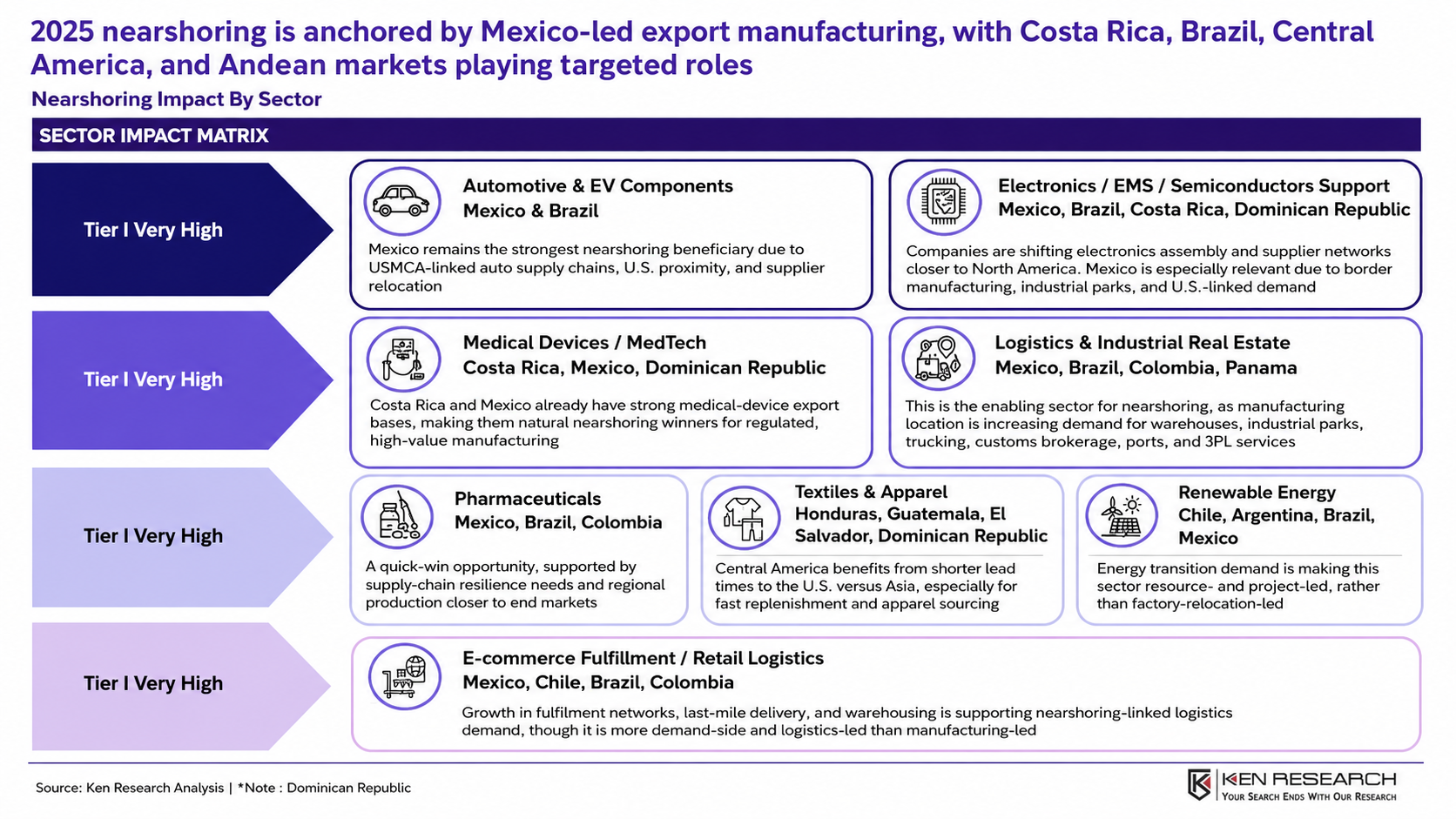
The deck identifies automotive, electronics, medical devices, logistics real estate, e-commerce, pharmaceuticals, textiles and renewable energy as the principal sector-specific opportunity pools.
Mexico leads Latin America’s nearshoring growth, while other markets capture specialized opportunities across manufacturing, logistics and energy.
Latin America Is Becoming a Two-Speed Investment Story
Capital is concentrating around export manufacturing and domestic-market localization
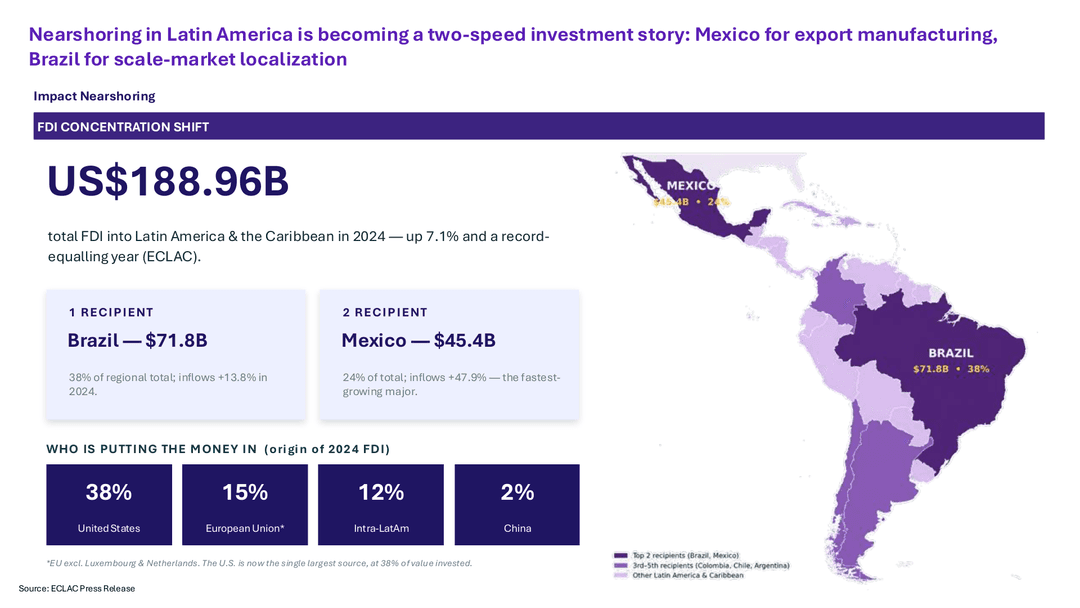
Investment flows reinforce the structural divide between Mexico and Brazil.
Mexico is attracting capital linked to manufacturing relocation, supplier expansion and access to the U.S. market. This supports industrial real estate, cross-border corridors and manufacturing-oriented logistics services.
Brazil remains the largest recipient of regional investment because of its domestic scale and diversified economy. Capital entering Brazil is more likely to support local manufacturing, distribution, infrastructure, consumer markets and resource-linked industries.
This produces a two-speed model:
Export-Manufacturing Nearshoring
Led primarily by Mexico and selected smaller specialist markets.
The winning logistics capabilities include:
Cross-border trucking
Customs brokerage
Supplier warehousing
Industrial parks
Air and ocean forwarding
Production logistics
Scale-Market Localization
Led primarily by Brazil, with opportunities in Colombia and other larger domestic markets.
The winning capabilities include:
Regional distribution
Inventory localization
E-commerce fulfilment
Long-haul domestic transport
Multiclient warehousing
Network optimization
For logistics companies, the operating model should therefore follow the underlying source of demand.
A Mexico strategy cannot simply be replicated in Brazil, and a Brazil-led domestic network model may not provide the speed and customs capability required for Mexico–U.S. trade.
The deck frames nearshoring as a two-speed investment story, with Mexico oriented toward export manufacturing and Brazil toward scale-market localization.
Infrastructure Is Redrawing the Region’s Trade Corridors
Ports, border capacity and industrial nodes will determine where logistics value concentrates
Nearshoring does not operate independently of physical infrastructure.
Its growth depends on:
Border-crossing capacity
Industrial-park availability
Port connectivity
Road reliability
Airport cargo links
Customs efficiency
Energy and utility access
Warehouse and labour availability
Mexico’s northern border corridors remain central to U.S.-bound production flows.
Panama retains a strategic role in transshipment and regional distribution.
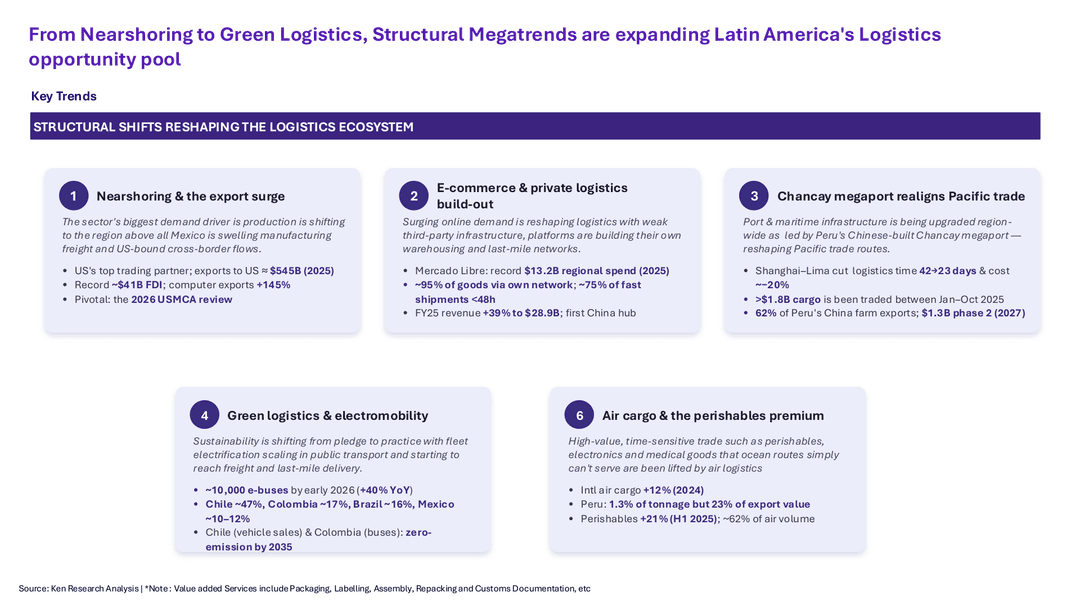
Peru’s Chancay port could strengthen direct Pacific trade connectivity with Asia and alter how cargo moves between South America and global markets.
Costa Rica’s air-freight connectivity supports high-value medical-device exports.
Chile’s port and infrastructure network enables mining and resource-linked trade.
The result is a more complex logistics map in which different corridors serve different commercial models.
This also creates location risk.
Industrial and warehouse investment that is not aligned with reliable trade lanes, customer clusters or labour access may fail to capture the expected nearshoring demand.
The winning proposition will combine location, sector specialization and service depth
Nearshoring creates opportunities for both asset-heavy and asset-light logistics models.
However, providers need to make deliberate choices about where they compete.
Build cross-border execution capabilities
Relevant for Mexico and U.S.-linked supply chains.
Critical capabilities include:
Customs brokerage
Border drayage
Cross-docking
Bonded warehousing
Multimodal coordination
Trade compliance
Develop sector-specialized platforms
Relevant for MedTech, pharmaceuticals, automotive, perishables and high-value electronics.
The competitive advantage comes from compliance, infrastructure, expertise and operational reliability rather than basic transport capacity.
Expand warehousing and industrial real estate
Nearshoring creates demand for supplier parks, manufacturing-support warehouses, regional inventory hubs and fulfilment centres.
The opportunity is strongest where manufacturing clusters, ports, borders and consumer markets intersect.
Integrate technology and visibility
Regional supply chains require real-time information across carriers, customs, warehouses and production sites.
Control towers, transport-management systems and inventory platforms can improve reliability and support higher-value service contracts.
Build regional partner ecosystems
Few logistics providers can own every asset across Latin America.
Local partnerships, acquisitions and joint ventures can provide faster access to:
Customs expertise
Last-mile networks
Warehousing
Sector capabilities
Country-level operating knowledge
The Central Takeaway
Nearshoring is expanding Latin America’s logistics opportunity, but it is not creating one regional winner or one standard operating model.
Mexico will remain the clearest beneficiary of U.S.-linked manufacturing relocation.
Brazil will continue to anchor the region through domestic scale and network complexity.
Costa Rica, Panama, Colombia, Chile, Argentina and Central America will capture more focused value pools based on sector specialization, connectivity and trade position.
The winners will be companies that move beyond a generic Latin America strategy and identify the intersection of:
The right country
The right corridor
The right sector
The right service portfolio
The right market-entry model
Nearshoring will create logistics growth across Latin America, but value will concentrate among players that can translate manufacturing relocation into warehousing, cross-border execution, visibility and integrated supply-chain solutions.