About the Report
Base Year 2024Listen to the audio summary
Qatar White Tea Market Overview
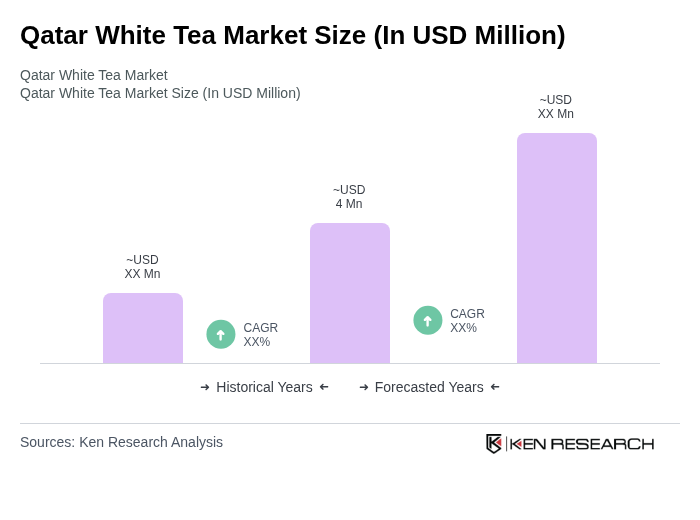
- The Qatar White Tea Market is valued at USD 4 million, based on a five-year historical analysis and by referencing the overall Qatar tea market size and the typical share contributed by premium and specialty tea categories within total tea sales. This growth is primarily driven by increasing consumer awareness of health benefits associated with white tea, such as its antioxidant properties and relatively low caffeine content, aligned with broader health-and-wellness trends in the Qatari tea market. Additionally, the rising trend of premiumization in the beverage sector, with consumers trading up to specialty and luxury teas, has led to a surge in demand for high-quality white tea products across retail and HoReCa channels in Qatar.
- Key demand hubs in this market include Doha, Al Rayyan, and Al Wakrah, which act as primary consumption centers due to their high population density, concentration of high-income households, and a growing café and specialty tea shop culture that promotes the consumption of premium and specialty teas. The presence in these cities of major supermarkets, hypermarkets, gourmet retailers, hotel chains, and well-developed online grocery and e-commerce platforms further enhances accessibility to white tea products and supports the expansion of both international and private-label brands.
- In 2023, the Qatari government continued implementing policies to promote organic and safe food products, including premium teas, under frameworks such as the Qatar National Health Strategy and the Food Safety Law (Law No. 8 of 1990) and its implementing regulations, overseen by the Ministry of Public Health and the Ministry of Municipality. These instruments strengthen controls on residues, labeling, and certification for imported and domestically marketed organic products, encouraging suppliers to adopt sustainable and quality-focused sourcing practices and ensuring that consumers have access to high-quality tea and other organic options as part of broader efforts to support food safety and health-conscious consumption.
Qatar White Tea Market Segmentation
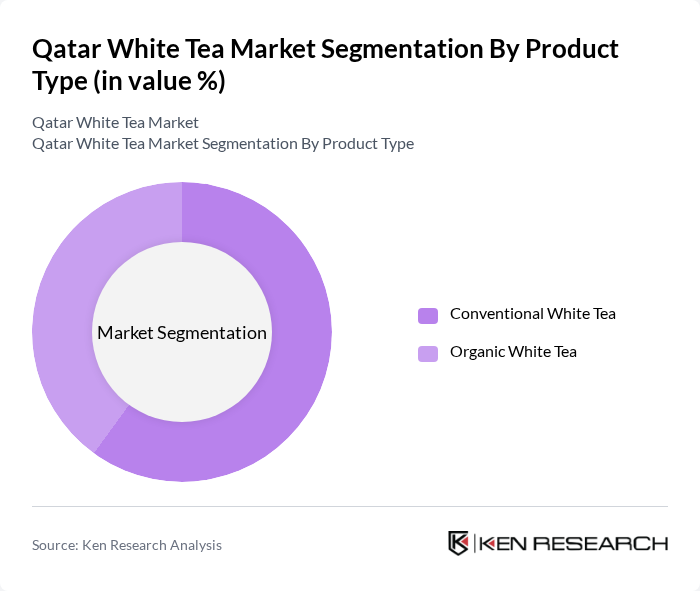
By Product Type:The market is segmented into two main product types: Conventional White Tea and Organic White Tea, in line with the way white tea is categorized in specialized reports by type and application. Conventional White Tea remains popular due to its affordability, wider availability through mainstream retail channels, and the strong presence of established international brands in Qatar’s tea market. Organic White Tea is gaining traction among health-conscious consumers who prefer products perceived to be free from synthetic pesticides and agrochemicals and who actively seek organic or clean-label hot beverages, a trend also observed in the global white tea segment. The demand for organic options is further supported by rising disposable incomes, expanding modern retail formats, and increasing awareness of wellness-oriented and premium tea offerings in Qatar.
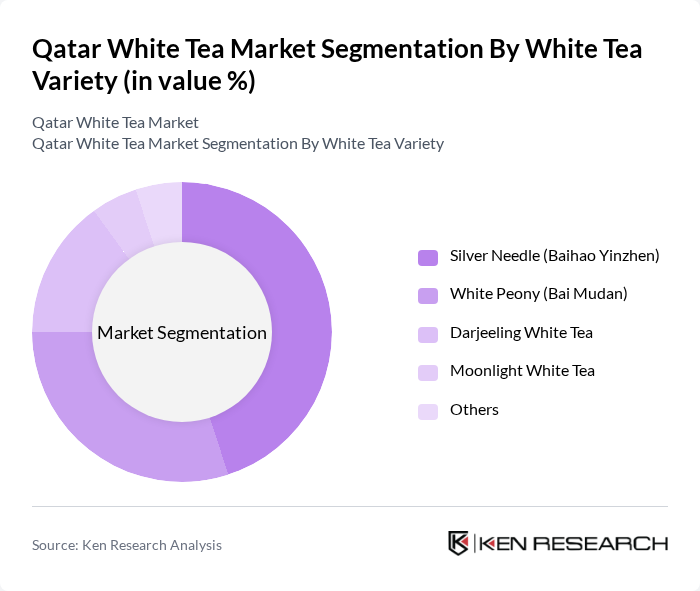
By White Tea Variety:The market is further categorized into various white tea varieties, including Silver Needle (Baihao Yinzhen), White Peony (Bai Mudan), Darjeeling White Tea, Moonlight White Tea, and Others, which aligns with the main global white tea types covered in specialized industry analyses. Silver Needle is the most sought-after variety in the premium end of the segment due to its delicate, nuanced flavor profile and high antioxidant content, making it attractive to connoisseurs and luxury tea consumers in Qatar’s hospitality and specialty retail channels. White Peony follows closely, favored for its balanced taste, floral aroma, and relatively more accessible price point compared with Silver Needle, which broadens its appeal among consumers trading up from conventional black and green teas.
Qatar White Tea Market Competitive Landscape
The Qatar White Tea Market is characterized by a dynamic mix of regional and international players. Leading participants such as Ahmad Tea, Twinings, Lipton (Unilever), Dilmah, Almunayes Tea, Betjeman & Barton Qatar, Harrods Tea (via premium retailers), Mariage Frères (via specialty stores), TWG Tea (hotel & boutique channels), Carrefour Private Label White Tea, Lulu Hypermarket Private Label White Tea, Monoprix Qatar Private Label White Tea, Organic & Specialty Tea Importers (aggregated), HoReCa-Focused Tea Distributors (aggregated), Online-First Specialty Tea Retailers (aggregated) contribute to innovation, geographic expansion, and service delivery in this space, leveraging Qatar’s growing demand for premium tea, modern retail penetration, and an expanding tourism and hospitality sector.
Qatar White Tea Market Industry Analysis
Growth Drivers
- Increasing Health Consciousness:The health benefits associated with white tea, such as high antioxidant content and potential weight management properties, are driving consumer interest. In Qatar, the health and wellness market is projected to reach $1.8 billion in future, reflecting a 12% annual growth rate. This trend is supported by a growing population of health-conscious consumers, with 65% of Qatari adults actively seeking healthier beverage options, thus boosting white tea demand significantly.
- Rising Demand for Premium Beverages:The premium beverage segment in Qatar is expanding, with a market value of approximately $1 billion in future. Consumers are increasingly willing to pay more for high-quality products, including specialty teas. This trend is evident as 50% of consumers express a preference for premium brands, which enhances the market potential for white tea, particularly among affluent demographics seeking unique and luxurious beverage experiences.
- Expansion of Retail Outlets:The number of retail outlets in Qatar has increased by 20% over the past two years, with over 1,500 new stores opening in future. This expansion includes specialty tea shops and health food stores, providing greater accessibility to white tea products. Enhanced distribution channels are crucial, as 75% of consumers prefer purchasing tea from physical stores, thus facilitating increased sales and brand visibility in the market.
Market Challenges
- High Competition from Other Tea Varieties:The Qatari tea market is highly competitive, with black and green teas dominating sales, accounting for 70% of total tea consumption. This intense competition poses a challenge for white tea, which currently holds only a 12% market share. As consumers remain loyal to established tea varieties, white tea must differentiate itself through marketing and education to capture a larger audience.
- Limited Consumer Awareness:Despite its health benefits, consumer awareness of white tea remains low, with only 35% of the population familiar with its advantages. This lack of knowledge hinders market growth, as many consumers are unaware of the unique qualities that set white tea apart from other varieties. Educational campaigns and tastings are essential to increase awareness and drive demand in the Qatari market.
Qatar White Tea Market Future Outlook
The future of the Qatar white tea market appears promising, driven by increasing health consciousness and a shift towards premium beverage consumption. As consumers become more aware of the health benefits associated with white tea, demand is expected to rise. Additionally, the expansion of retail outlets and online sales channels will enhance accessibility. Collaborations with health and wellness brands will further promote white tea, positioning it as a desirable choice among health-focused consumers in Qatar.
Market Opportunities
- Product Innovation and Flavor Variants:Introducing innovative flavors and blends can attract new consumers. The market for flavored teas is growing, with a projected increase of 25% in sales in future. Unique offerings, such as jasmine or citrus-infused white tea, can cater to diverse palates and enhance market penetration.
- Eco-friendly Packaging Solutions:With sustainability becoming a priority, eco-friendly packaging can significantly enhance brand appeal. Approximately 60% of consumers in Qatar prefer products with sustainable packaging. By adopting biodegradable or recyclable materials, white tea brands can attract environmentally conscious consumers and differentiate themselves in a competitive market.
Scope of the Report
| Segment | Sub-Segments |
|---|---|
| By Product Type | Conventional White Tea Organic White Tea |
| By White Tea Variety | Silver Needle (Baihao Yinzhen) White Peony (Bai Mudan) Darjeeling White Tea Moonlight White Tea Others |
| By Application | Beverages Cosmetics & Toiletries Pharmaceuticals & Nutraceuticals Others |
| By Packaging Type | Loose Leaf Tea Bags Ready-to-Drink (RTD) / Bottled Sachets & Pouches Tin / Premium Gifting Packs Others |
| By Distribution Channel | Supermarkets/Hypermarkets Convenience Stores Specialty Stores HoReCa (Hotels, Restaurants & Cafés) Online Retail & Marketplaces Others |
| By End-User | Residential / Household Commercial (HoReCa, Offices, Airlines, etc.) Institutional (Healthcare, Education, Government) Others |
| By Region | Doha Al Rayyan Al Wakrah Al Khor & Others |
Key Target Audience
Investors and Venture Capitalist Firms
Government and Regulatory Bodies (e.g., Ministry of Commerce and Industry, Qatar Food Safety Department)
Manufacturers and Producers
Distributors and Retailers
Importers and Exporters
Health and Wellness Organizations
Hospitality and Food Service Providers
Market Analysts and Industry Experts
Players Mentioned in the Report:
Ahmad Tea
Twinings
Lipton (Unilever)
Dilmah
Almunayes Tea
Betjeman & Barton Qatar
Harrods Tea (via premium retailers)
Mariage Freres (via specialty stores)
TWG Tea (hotel & boutique channels)
Carrefour Private Label White Tea
Lulu Hypermarket Private Label White Tea
Monoprix Qatar Private Label White Tea
Organic & Specialty Tea Importers (aggregated)
HoReCa-Focused Tea Distributors (aggregated)
Online-First Specialty Tea Retailers (aggregated)
Table of Contents
Market Assessment Phase
1. Executive Summary and Approach
2. Qatar White Tea Market Overview
2.1 Key Insights and Strategic Recommendations
2.2 Qatar White Tea Market Overview
2.3 Definition and Scope
2.4 Evolution of Market Ecosystem
2.5 Timeline of Key Regulatory Milestones
2.6 Value Chain & Stakeholder Mapping
2.7 Business Cycle Analysis
2.8 Policy & Incentive Landscape
3. Qatar White Tea Market Analysis
3.1 Growth Drivers
3.1.1 Increasing Health Consciousness
3.1.2 Rising Demand for Premium Beverages
3.1.3 Expansion of Retail Outlets
3.1.4 Growing Online Sales Channels
3.2 Market Challenges
3.2.1 High Competition from Other Tea Varieties
3.2.2 Limited Consumer Awareness
3.2.3 Fluctuating Raw Material Prices
3.2.4 Regulatory Compliance Issues
3.3 Market Opportunities
3.3.1 Product Innovation and Flavor Variants
3.3.2 Export Potential to Neighboring Markets
3.3.3 Collaborations with Health and Wellness Brands
3.3.4 Eco-friendly Packaging Solutions
3.4 Market Trends
3.4.1 Shift Towards Organic and Natural Products
3.4.2 Increasing Popularity of Ready-to-Drink Options
3.4.3 Growth of Subscription Services for Tea
3.4.4 Social Media Influence on Consumer Choices
3.5 Government Regulation
3.5.1 Food Safety Standards Compliance
3.5.2 Import Tariffs on Tea Products
3.5.3 Labeling and Packaging Regulations
3.5.4 Health Claims Regulations
4. SWOT Analysis
5. Stakeholder Analysis
6. Porter's Five Forces Analysis
7. Qatar White Tea Market Market Size, 2019-2024
7.1 By Value
7.2 By Volume
7.3 By Average Selling Price
8. Qatar White Tea Market Segmentation
8.1 By Product Type
8.1.1 Conventional White Tea
8.1.2 Organic White Tea
8.2 By White Tea Variety
8.2.1 Silver Needle (Baihao Yinzhen)
8.2.2 White Peony (Bai Mudan)
8.2.3 Darjeeling White Tea
8.2.4 Moonlight White Tea
8.2.5 Others
8.3 By Application
8.3.1 Beverages
8.3.2 Cosmetics & Toiletries
8.3.3 Pharmaceuticals & Nutraceuticals
8.3.4 Others
8.4 By Packaging Type
8.4.1 Loose Leaf
8.4.2 Tea Bags
8.4.3 Ready-to-Drink (RTD) / Bottled
8.4.4 Sachets & Pouches
8.4.5 Tin / Premium Gifting Packs
8.4.6 Others
8.5 By Distribution Channel
8.5.1 Supermarkets/Hypermarkets
8.5.2 Convenience Stores
8.5.3 Specialty Stores
8.5.4 HoReCa (Hotels, Restaurants & Cafés)
8.5.5 Online Retail & Marketplaces
8.5.6 Others
8.6 By End-User
8.6.1 Residential / Household
8.6.2 Commercial (HoReCa, Offices, Airlines, etc.)
8.6.3 Institutional (Healthcare, Education, Government)
8.6.4 Others
8.7 By Region
8.7.1 Doha
8.7.2 Al Rayyan
8.7.3 Al Wakrah
8.7.4 Al Khor & Others
9. Qatar White Tea Market Competitive Analysis
9.1 Market Share of Key Players
9.2 Cross Comparison of Key Players
9.2.1 Company Name
9.2.2 Group Size (Large, Medium, or Small as per industry convention)
9.2.3 Qatar White Tea Revenue (Latest Year, QAR Million)
9.2.4 3-Year Qatar White Tea Revenue CAGR (%)
9.2.5 Qatar White Tea Volume Sold (Tonnes, Latest Year)
9.2.6 Market Share by Value (%)
9.2.7 Market Share by Volume (%)
9.2.8 EBITDA Margin from White Tea Portfolio (%)
9.2.9 Average Realized Price per Kg (QAR/Kg)
9.2.10 Distribution Network Reach (Number of Outlets/Points of Sale)
9.2.11 Share of Online Sales in Total White Tea Revenue (%)
9.2.12 SKU Count in White Tea Portfolio
9.2.13 New Product Launches in Last 3 Years (Number)
9.2.14 Marketing & Promotion Spend on White Tea (% of Revenue)
9.2.15 Customer Satisfaction / NPS Score
9.3 SWOT Analysis of Top Players
9.4 Pricing Analysis
9.5 Detailed Profile of Major Companies
9.5.1 Ahmad Tea
9.5.2 Twinings
9.5.3 Lipton (Unilever)
9.5.4 Dilmah
9.5.5 Almunayes Tea
9.5.6 Betjeman & Barton Qatar
9.5.7 Harrods Tea (via premium retailers)
9.5.8 Mariage Frères (via specialty stores)
9.5.9 TWG Tea (hotel & boutique channels)
9.5.10 Carrefour Private Label White Tea
9.5.11 Lulu Hypermarket Private Label White Tea
9.5.12 Monoprix Qatar Private Label White Tea
9.5.13 Organic & Specialty Tea Importers (aggregated)
9.5.14 HoReCa-Focused Tea Distributors (aggregated)
9.5.15 Online-First Specialty Tea Retailers (aggregated)
10. Qatar White Tea Market End-User Analysis
10.1 Procurement Behavior of Key Ministries
10.1.1 Ministry of Health
10.1.2 Ministry of Education
10.1.3 Ministry of Commerce
10.1.4 Others
10.2 Corporate Spend on Infrastructure & Energy
10.2.1 Corporate Wellness Programs
10.2.2 Office Refreshments
10.2.3 Event Sponsorships
10.2.4 Others
10.3 Pain Point Analysis by End-User Category
10.3.1 Quality Assurance
10.3.2 Supply Chain Reliability
10.3.3 Pricing Concerns
10.3.4 Others
10.4 User Readiness for Adoption
10.4.1 Awareness Levels
10.4.2 Trial and Feedback
10.4.3 Brand Loyalty
10.4.4 Others
10.5 Post-Deployment ROI and Use Case Expansion
10.5.1 Customer Feedback Mechanisms
10.5.2 Repeat Purchase Rates
10.5.3 Expansion into New Segments
10.5.4 Others
11. Qatar White Tea Market Future Size, 2025-2030
11.1 By Value
11.2 By Volume
11.3 By Average Selling Price
Go-To-Market Strategy Phase
1. Whitespace Analysis + Business Model Canvas
1.1 Market Gaps Identification
1.2 Value Proposition Development
1.3 Revenue Streams
1.4 Cost Structure Analysis
1.5 Key Partnerships
1.6 Customer Segments
1.7 Channels
2. Marketing and Positioning Recommendations
2.1 Branding Strategies
2.2 Product USPs
3. Distribution Plan
3.1 Urban Retail vs Rural NGO Tie-ups
4. Channel & Pricing Gaps
4.1 Underserved Routes
4.2 Pricing Bands
5. Unmet Demand & Latent Needs
5.1 Category Gaps
5.2 Consumer Segments
6. Customer Relationship
6.1 Loyalty Programs
6.2 After-sales Service
7. Value Proposition
7.1 Sustainability
7.2 Integrated Supply Chains
8. Key Activities
8.1 Regulatory Compliance
8.2 Branding
8.3 Distribution Setup
9. Entry Strategy Evaluation
9.1 Domestic Market Entry Strategy
9.1.1 Product Mix
9.1.2 Pricing Band
9.1.3 Packaging
9.2 Export Entry Strategy
9.2.1 Target Countries
9.2.2 Compliance Roadmap
10. Entry Mode Assessment
10.1 JV
10.2 Greenfield
10.3 M&A
10.4 Distributor Model
11. Capital and Timeline Estimation
11.1 Capital Requirements
11.2 Timelines
12. Control vs Risk Trade-Off
12.1 Ownership vs Partnerships
13. Profitability Outlook
13.1 Breakeven Analysis
13.2 Long-term Sustainability
14. Potential Partner List
14.1 Distributors
14.2 JVs
14.3 Acquisition Targets
15. Execution Roadmap
15.1 Phased Plan for Market Entry
15.1.1 Market Setup
15.1.2 Market Entry
15.1.3 Growth Acceleration
15.1.4 Scale & Stabilize
15.2 Key Activities and Milestones
15.2.1 Milestone Planning
15.2.2 Activity Tracking
Research Methodology
Phase 1: Approach1
Desk Research
- Analysis of market reports from local trade associations and government publications
- Review of academic journals and articles focusing on consumer behavior towards white tea
- Examination of import/export data and trends from Qatar's customs authorities
Primary Research
- Interviews with key stakeholders in the white tea supply chain, including importers and distributors
- Surveys targeting consumers to understand preferences and purchasing habits related to white tea
- Focus group discussions with health and wellness experts to gauge perceptions of white tea benefits
Validation & Triangulation
- Cross-validation of findings through multiple data sources, including sales data and consumer feedback
- Triangulation of insights from industry experts and market analysts to ensure accuracy
- Sanity checks through expert panel reviews to validate assumptions and projections
Phase 2: Market Size Estimation1
Top-down Assessment
- Estimation of total beverage market size in Qatar and identification of white tea's market share
- Analysis of demographic trends and their impact on white tea consumption
- Incorporation of health trends and consumer preferences towards natural beverages
Bottom-up Modeling
- Collection of sales data from major retailers and specialty tea shops in Qatar
- Estimation of average price points for various white tea products
- Volume estimates based on consumer purchasing patterns and frequency of purchase
Forecasting & Scenario Analysis
- Multi-factor regression analysis incorporating economic indicators and health trends
- Scenario modeling based on potential changes in consumer preferences and market dynamics
- Development of baseline, optimistic, and pessimistic forecasts through 2030
Phase 3: CATI Sample Composition1
| Scope Item/Segment | Sample Size | Target Respondent Profiles |
|---|---|---|
| Retail Consumer Insights | 120 | Regular White Tea Consumers, Health-Conscious Shoppers |
| Wholesale Distributor Feedback | 80 | Tea Importers, Distribution Managers |
| Health and Wellness Expert Opinions | 40 | Nutritionists, Herbalists, Wellness Coaches |
| Market Trend Analysis | 60 | Market Analysts, Industry Experts |
| Retailer Sales Data | 50 | Store Managers, Category Buyers |
Frequently Asked Questions
What is the current value of the Qatar White Tea Market?
The Qatar White Tea Market is valued at approximately USD 4 million, reflecting a growing interest in premium and specialty teas among consumers, driven by health benefits and a trend towards premiumization in the beverage sector.
What factors are driving the growth of white tea consumption in Qatar?
Which cities in Qatar are the main consumption hubs for white tea?
What are the main types of white tea available in Qatar?
Other Regional/Country Reports
Indonesia White Tea Market
Malaysia White Tea Market
KSA White Tea Market
APAC White Tea Market
SEA White Tea Market
Vietnam White Tea Market
Other Adjacent Reports
Malaysia Green Tea Market
Mexico Black Tea Market
Malaysia Herbal Tea Market
Egypt Oolong Tea Market
Middle East Specialty Coffee Market Report Size Share Growth Drivers Trends Opportunities & Forecast 2025–2030UAE Functional Beverage MarketMalaysia Organic Beverage Market
Vietnam Health Supplement Market Outlook to 2030Brazil Premium Beverage Market
KSA sustainable packaging market report Size, Share, Growth Drivers, Trends, Opportunities & Forecast 2025–2030Why Buy From Us?

What makes us stand out is that our consultants follow Robust, Refine and Result (RRR) methodology. Robust for clear definitions, approaches and sanity checking, Refine for differentiating respondents' facts and opinions, and Result for presenting data with story.

We have set a benchmark in the industry by offering our clients with syndicated and customized market research reports featuring coverage of entire market as well as meticulous research and analyst insights.

While we don't replace traditional research, we flip the method upside down. Our dual approach of Top Bottom & Bottom Top ensures quality deliverable by not just verifying company fundamentals but also looking at the sector and macroeconomic factors.

With one step in the future, our research team constantly tries to show you the bigger picture. We help with some of the tough questions you may encounter along the way: How is the industry positioned? Best marketing channel? KPI's of competitors? By aligning every element, we help maximize success.

Our report gives you instant access to the answers and sources that other companies might choose to hide. We elaborate each steps of research methodology we have used and showcase you the sample size to earn your trust.

If you need any support, we are here! We pride ourselves on universe strength, data quality, and quick, friendly, and professional service.