About the Report
Base Year 2024Thailand Hospitality and Tourism Platforms Market Overview
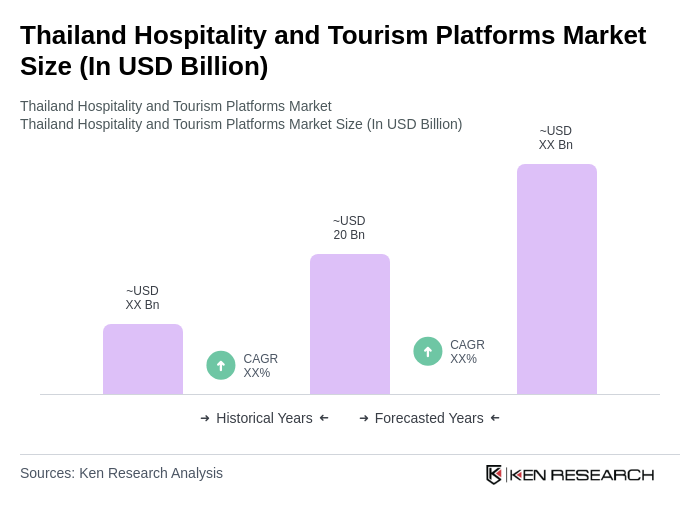
- The Thailand Hospitality and Tourism Platforms Market is valued at USD 20 billion, based on a five-year historical analysis. This growth is primarily driven by the increasing influx of international tourists, a growing middle class, and the rise of digital platforms that facilitate travel planning and booking. The market has seen a significant shift towards online platforms, enhancing accessibility and convenience for travelers.
- Key cities such as Bangkok, Phuket, and Chiang Mai dominate the market due to their rich cultural heritage, vibrant nightlife, and extensive hospitality offerings. Bangkok, as the capital, serves as a major hub for international flights and tourism activities, while Phuket is renowned for its beaches and resorts, attracting millions of visitors annually. Chiang Mai's unique cultural experiences further enhance its appeal, making these cities pivotal in the hospitality and tourism landscape.
- In 2023, the Thai government implemented a new regulation aimed at enhancing the quality of tourism services. This regulation mandates that all hospitality establishments must obtain a "Clean and Safe" certification, ensuring compliance with health and safety standards. This initiative is part of a broader strategy to boost tourism confidence and attract more international visitors, particularly in the post-pandemic recovery phase.
Thailand Hospitality and Tourism Platforms Market Segmentation
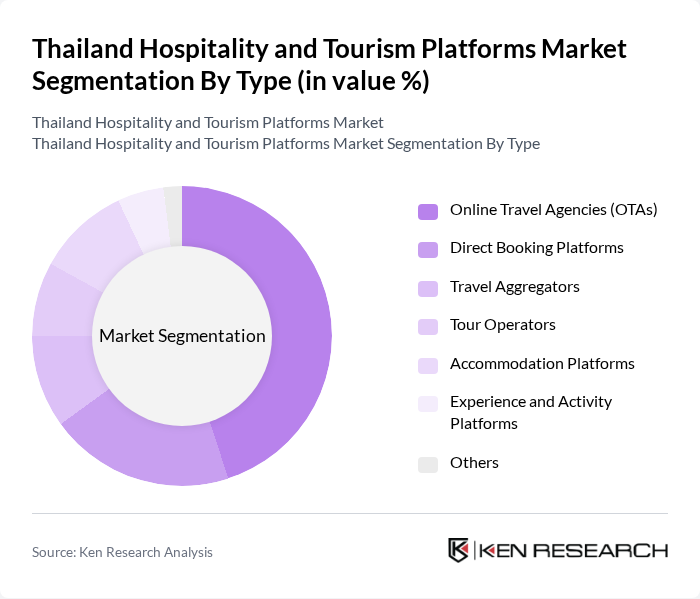
By Type:The market is segmented into various types, including Online Travel Agencies (OTAs), Direct Booking Platforms, Travel Aggregators, Tour Operators, Accommodation Platforms, Experience and Activity Platforms, and Others. Among these, Online Travel Agencies (OTAs) are the most dominant due to their extensive reach and user-friendly interfaces, allowing travelers to compare prices and book services conveniently. The rise of mobile applications has further solidified their position, catering to the growing demand for on-the-go travel solutions.
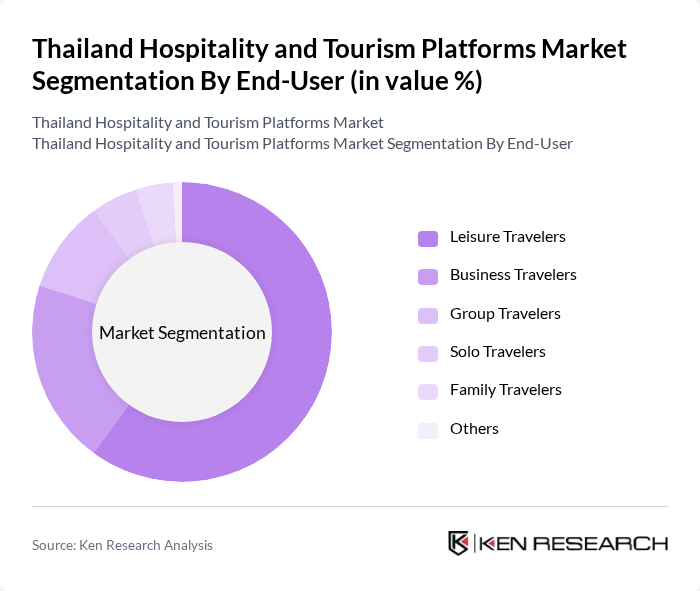
By End-User:The end-user segmentation includes Leisure Travelers, Business Travelers, Group Travelers, Solo Travelers, Family Travelers, and Others. Leisure Travelers dominate the market, driven by the increasing trend of experiential travel and the desire for unique cultural experiences. The rise of social media has also influenced this segment, as travelers seek to share their experiences online, further boosting demand for diverse travel options.
Thailand Hospitality and Tourism Platforms Market Competitive Landscape
The Thailand Hospitality and Tourism Platforms Market is characterized by a dynamic mix of regional and international players. Leading participants such as Agoda, Booking.com, Expedia Group, TripAdvisor, Traveloka, Airbnb, Thai Airways, TAT (Tourism Authority of Thailand), Klook, GetYourGuide, Skyscanner, Lastminute.com, Ctrip, Hostelworld, Viator contribute to innovation, geographic expansion, and service delivery in this space.
Thailand Hospitality and Tourism Platforms Market Industry Analysis
Growth Drivers
- Increasing Domestic Tourism:In future, Thailand's domestic tourism is projected to reach 160 million trips, driven by a growing middle class and increased disposable income. The Tourism Authority of Thailand reported that domestic travelers contributed approximately 1.2 trillion THB to the economy in future. This trend is expected to continue, as local attractions and cultural experiences gain popularity, further stimulating the hospitality sector and encouraging investment in tourism platforms.
- Growth in International Arrivals:Thailand anticipates welcoming over 30 million international tourists in future, a significant rebound from the pandemic lows. The Ministry of Tourism and Sports noted that international arrivals generated around 2.5 trillion THB in revenue in future. This influx is supported by improved air connectivity and marketing campaigns targeting key markets, enhancing the demand for hospitality and tourism platforms that cater to diverse traveler needs.
- Digital Transformation in Booking Platforms:The digital landscape in Thailand is evolving rapidly, with over 70% of travelers using online platforms for bookings in future. The e-commerce sector is projected to grow to 4.5 trillion THB, with travel services comprising a significant portion. This shift towards digital solutions is driven by increased smartphone penetration and internet access, prompting hospitality platforms to innovate and enhance user experiences through technology.
Market Challenges
- Intense Competition Among Platforms:The Thailand hospitality market is characterized by fierce competition, with over 1,000 online travel agencies and booking platforms vying for market share in future. This saturation leads to price wars and reduced profit margins, making it challenging for new entrants to establish themselves. Established players are investing heavily in marketing and technology to maintain their competitive edge, further complicating the landscape for smaller platforms.
- Regulatory Compliance Issues:The hospitality sector in Thailand faces stringent regulatory requirements, including licensing and health regulations. In future, compliance costs are expected to rise by 15% due to new data protection laws and safety standards post-COVID-19. These regulations can create barriers for smaller platforms, limiting their ability to compete effectively and increasing operational complexities for all players in the market.
Thailand Hospitality and Tourism Platforms Market Future Outlook
The Thailand hospitality and tourism platforms market is poised for significant growth, driven by increasing domestic and international travel. As digital transformation continues, platforms that leverage advanced technologies like AI and machine learning will enhance customer experiences. Additionally, the focus on sustainable tourism will shape offerings, attracting eco-conscious travelers. Collaborations with local businesses will further enrich the travel experience, creating a more integrated and diverse tourism ecosystem in Thailand.
Market Opportunities
- Expansion of Eco-Tourism:The eco-tourism sector in Thailand is projected to grow significantly, with an estimated 20% increase in eco-friendly travel options by future. This trend is driven by rising consumer awareness of environmental issues, presenting opportunities for platforms to offer sustainable travel packages that appeal to environmentally conscious travelers.
- Development of Niche Travel Experiences:There is a growing demand for niche travel experiences, such as culinary tours and wellness retreats, expected to increase by 25% in future. Platforms that curate unique travel experiences can tap into this trend, catering to specific interests and enhancing customer engagement, thereby driving revenue growth.
Scope of the Report
| Segment | Sub-Segments |
|---|---|
| By Type | Online Travel Agencies (OTAs) Direct Booking Platforms Travel Aggregators Tour Operators Accommodation Platforms Experience and Activity Platforms Others |
| By End-User | Leisure Travelers Business Travelers Group Travelers Solo Travelers Family Travelers Others |
| By Service Type | Accommodation Services Transportation Services Food and Beverage Services Tour and Activity Services Others |
| By Booking Channel | Mobile Applications Websites Travel Agents Social Media Platforms Others |
| By Customer Segment | Corporate Clients Individual Consumers Travel Groups Educational Institutions Others |
| By Geographic Focus | Urban Areas Rural Areas Tourist Hotspots Emerging Destinations Others |
| By Price Range | Budget Mid-Range Luxury Others |
Key Target Audience
Investors and Venture Capitalist Firms
Government and Regulatory Bodies (e.g., Tourism Authority of Thailand, Ministry of Tourism and Sports)
Hospitality Management Companies
Travel Agencies and Tour Operators
Online Travel Platforms
Local and International Hotel Chains
Destination Marketing Organizations
Event and Conference Organizers
Players Mentioned in the Report:
Agoda
Booking.com
Expedia Group
TripAdvisor
Traveloka
Airbnb
Thai Airways
TAT (Tourism Authority of Thailand)
Klook
GetYourGuide
Skyscanner
Lastminute.com
Ctrip
Hostelworld
Viator
Table of Contents
Market Assessment Phase
1. Executive Summary and Approach
2. Thailand Hospitality and Tourism Platforms Market Overview
2.1 Key Insights and Strategic Recommendations
2.2 Thailand Hospitality and Tourism Platforms Market Overview
2.3 Definition and Scope
2.4 Evolution of Market Ecosystem
2.5 Timeline of Key Regulatory Milestones
2.6 Value Chain & Stakeholder Mapping
2.7 Business Cycle Analysis
2.8 Policy & Incentive Landscape
3. Thailand Hospitality and Tourism Platforms Market Analysis
3.1 Growth Drivers
3.1.1 Increasing Domestic Tourism
3.1.2 Growth in International Arrivals
3.1.3 Digital Transformation in Booking Platforms
3.1.4 Government Initiatives to Promote Tourism
3.2 Market Challenges
3.2.1 Intense Competition Among Platforms
3.2.2 Regulatory Compliance Issues
3.2.3 Economic Fluctuations Affecting Travel
3.2.4 Infrastructure Limitations in Remote Areas
3.3 Market Opportunities
3.3.1 Expansion of Eco-Tourism
3.3.2 Development of Niche Travel Experiences
3.3.3 Integration of AI and Machine Learning
3.3.4 Partnerships with Local Businesses
3.4 Market Trends
3.4.1 Rise of Mobile Booking Applications
3.4.2 Increased Focus on Sustainable Tourism
3.4.3 Personalization in Travel Services
3.4.4 Growth of Influencer Marketing in Travel
3.5 Government Regulation
3.5.1 Tourism Authority of Thailand Guidelines
3.5.2 Health and Safety Regulations Post-COVID-19
3.5.3 Licensing Requirements for Online Platforms
3.5.4 Data Protection Laws Affecting Customer Information
4. SWOT Analysis
5. Stakeholder Analysis
6. Porter's Five Forces Analysis
7. Thailand Hospitality and Tourism Platforms Market Market Size, 2019-2024
7.1 By Value
7.2 By Volume
7.3 By Average Selling Price
8. Thailand Hospitality and Tourism Platforms Market Segmentation
8.1 By Type
8.1.1 Online Travel Agencies (OTAs)
8.1.2 Direct Booking Platforms
8.1.3 Travel Aggregators
8.1.4 Tour Operators
8.1.5 Accommodation Platforms
8.1.6 Experience and Activity Platforms
8.1.7 Others
8.2 By End-User
8.2.1 Leisure Travelers
8.2.2 Business Travelers
8.2.3 Group Travelers
8.2.4 Solo Travelers
8.2.5 Family Travelers
8.2.6 Others
8.3 By Service Type
8.3.1 Accommodation Services
8.3.2 Transportation Services
8.3.3 Food and Beverage Services
8.3.4 Tour and Activity Services
8.3.5 Others
8.4 By Booking Channel
8.4.1 Mobile Applications
8.4.2 Websites
8.4.3 Travel Agents
8.4.4 Social Media Platforms
8.4.5 Others
8.5 By Customer Segment
8.5.1 Corporate Clients
8.5.2 Individual Consumers
8.5.3 Travel Groups
8.5.4 Educational Institutions
8.5.5 Others
8.6 By Geographic Focus
8.6.1 Urban Areas
8.6.2 Rural Areas
8.6.3 Tourist Hotspots
8.6.4 Emerging Destinations
8.6.5 Others
8.7 By Price Range
8.7.1 Budget
8.7.2 Mid-Range
8.7.3 Luxury
8.7.4 Others
9. Thailand Hospitality and Tourism Platforms Market Competitive Analysis
9.1 Market Share of Key Players
9.2 Cross Comparison of Key Players
9.2.1 Company Name
9.2.2 Group Size (Large, Medium, or Small as per industry convention)
9.2.3 Revenue Growth Rate
9.2.4 Customer Acquisition Cost
9.2.5 Customer Retention Rate
9.2.6 Average Order Value
9.2.7 Market Penetration Rate
9.2.8 Pricing Strategy
9.2.9 User Engagement Metrics
9.2.10 Brand Recognition Score
9.3 SWOT Analysis of Top Players
9.4 Pricing Analysis
9.5 Detailed Profile of Major Companies
9.5.1 Agoda
9.5.2 Booking.com
9.5.3 Expedia Group
9.5.4 TripAdvisor
9.5.5 Traveloka
9.5.6 Airbnb
9.5.7 Thai Airways
9.5.8 TAT (Tourism Authority of Thailand)
9.5.9 Klook
9.5.10 GetYourGuide
9.5.11 Skyscanner
9.5.12 Lastminute.com
9.5.13 Ctrip
9.5.14 Hostelworld
9.5.15 Viator
10. Thailand Hospitality and Tourism Platforms Market End-User Analysis
10.1 Procurement Behavior of Key Ministries
10.1.1 Budget Allocation for Tourism
10.1.2 Decision-Making Processes
10.1.3 Preferred Service Providers
10.1.4 Evaluation Criteria for Platforms
10.2 Corporate Spend on Infrastructure & Energy
10.2.1 Investment in Digital Infrastructure
10.2.2 Spending on Marketing and Promotions
10.2.3 Budget for Partnerships and Collaborations
10.3 Pain Point Analysis by End-User Category
10.3.1 Issues with Booking Processes
10.3.2 Customer Service Challenges
10.3.3 Payment Processing Difficulties
10.4 User Readiness for Adoption
10.4.1 Familiarity with Digital Platforms
10.4.2 Willingness to Use New Technologies
10.4.3 Training and Support Needs
10.5 Post-Deployment ROI and Use Case Expansion
10.5.1 Measurement of Success Metrics
10.5.2 Opportunities for Upselling
10.5.3 Feedback Mechanisms for Improvement
11. Thailand Hospitality and Tourism Platforms Market Future Size, 2025-2030
11.1 By Value
11.2 By Volume
11.3 By Average Selling Price
Go-To-Market Strategy Phase
1. Whitespace Analysis + Business Model Canvas
1.1 Market Gaps Identification
1.2 Value Proposition Development
1.3 Revenue Streams Analysis
1.4 Key Partnerships Exploration
1.5 Customer Segmentation Insights
1.6 Cost Structure Evaluation
1.7 Competitive Advantage Assessment
2. Marketing and Positioning Recommendations
2.1 Branding Strategies
2.2 Product USPs
2.3 Target Audience Identification
2.4 Communication Channels Selection
2.5 Promotional Tactics
2.6 Market Positioning Framework
3. Distribution Plan
3.1 Urban Retail Strategies
3.2 Rural NGO Tie-Ups
3.3 Online vs Offline Distribution
3.4 Partnership Opportunities
3.5 Logistics and Supply Chain Considerations
4. Channel & Pricing Gaps
4.1 Underserved Routes
4.2 Pricing Bands Analysis
4.3 Competitor Pricing Strategies
4.4 Customer Willingness to Pay
4.5 Value-Based Pricing Models
5. Unmet Demand & Latent Needs
5.1 Category Gaps Identification
5.2 Consumer Segments Analysis
5.3 Emerging Trends Exploration
5.4 Feedback from Current Users
5.5 Future Needs Forecasting
6. Customer Relationship
6.1 Loyalty Programs Development
6.2 After-Sales Service Strategies
6.3 Customer Engagement Initiatives
6.4 Feedback and Improvement Mechanisms
6.5 Community Building Efforts
7. Value Proposition
7.1 Sustainability Initiatives
7.2 Integrated Supply Chains
7.3 Unique Selling Points
7.4 Customer-Centric Innovations
7.5 Competitive Differentiation
8. Key Activities
8.1 Regulatory Compliance
8.2 Branding Efforts
8.3 Distribution Setup
8.4 Training and Development
8.5 Performance Monitoring
9. Entry Strategy Evaluation
9.1 Domestic Market Entry Strategy
9.1.1 Product Mix Considerations
9.1.2 Pricing Band Analysis
9.1.3 Packaging Strategies
9.2 Export Entry Strategy
9.2.1 Target Countries Identification
9.2.2 Compliance Roadmap Development
10. Entry Mode Assessment
10.1 Joint Ventures
10.2 Greenfield Investments
10.3 Mergers & Acquisitions
10.4 Distributor Model Evaluation
11. Capital and Timeline Estimation
11.1 Capital Requirements Analysis
11.2 Timelines for Implementation
12. Control vs Risk Trade-Off
12.1 Ownership vs Partnerships
12.2 Risk Management Strategies
13. Profitability Outlook
13.1 Breakeven Analysis
13.2 Long-Term Sustainability Strategies
14. Potential Partner List
14.1 Distributors Identification
14.2 Joint Ventures Opportunities
14.3 Acquisition Targets
15. Execution Roadmap
15.1 Phased Plan for Market Entry
15.1.1 Market Setup
15.1.2 Market Entry
15.1.3 Growth Acceleration
15.1.4 Scale & Stabilize
15.2 Key Activities and Milestones
15.2.1 Milestone Planning
15.2.2 Activity Tracking
Research Methodology
Phase 1: Approach1
Desk Research
- Analysis of tourism statistics from the Tourism Authority of Thailand (TAT)
- Review of industry reports from government agencies and tourism boards
- Examination of academic journals and publications on hospitality trends in Thailand
Primary Research
- Interviews with hotel managers and owners across various regions in Thailand
- Surveys with travel agencies and tour operators to gauge market sentiment
- Focus groups with tourists to understand preferences and experiences
Validation & Triangulation
- Cross-validation of findings with data from industry associations and local chambers of commerce
- Triangulation of qualitative insights from interviews with quantitative data from surveys
- Sanity checks through expert panel reviews comprising industry veterans
Phase 2: Market Size Estimation1
Top-down Assessment
- Estimation of total tourism revenue based on historical growth rates and current trends
- Segmentation of the market by types of accommodation and services offered
- Incorporation of government tourism initiatives and promotional campaigns
Bottom-up Modeling
- Collection of occupancy rates and average daily rates from a sample of hotels
- Estimation of revenue from ancillary services such as dining and excursions
- Volume x pricing model for various hospitality services to derive total market size
Forecasting & Scenario Analysis
- Multi-factor regression analysis incorporating economic indicators and travel trends
- Scenario planning based on potential impacts of global events on tourism
- Baseline, optimistic, and pessimistic forecasts through 2030
Phase 3: CATI Sample Composition1
| Scope Item/Segment | Sample Size | Target Respondent Profiles |
|---|---|---|
| Hotel Management Insights | 100 | General Managers, Operations Directors |
| Travel Agency Perspectives | 80 | Agency Owners, Travel Consultants |
| Tourist Experience Feedback | 150 | International Tourists, Domestic Travelers |
| Restaurant and Dining Trends | 70 | Restaurant Managers, Culinary Directors |
| Event and Conference Planning | 60 | Event Coordinators, Venue Managers |
Frequently Asked Questions
What is the current value of the Thailand Hospitality and Tourism Platforms Market?
The Thailand Hospitality and Tourism Platforms Market is valued at approximately USD 20 billion, reflecting a significant growth driven by increased international tourism, a rising middle class, and the expansion of digital platforms for travel planning and booking.
Which cities are the main hubs for tourism in Thailand?
What recent regulations has the Thai government implemented for the hospitality sector?
What types of platforms are included in the Thailand Hospitality and Tourism market?
Other Regional/Country Reports
Indonesia Hospitality and Tourism Platforms Market
Malaysia Hospitality and Tourism Platforms Market
KSA Hospitality and Tourism Platforms Market
APAC Hospitality and Tourism Platforms Market
SEA Hospitality and Tourism Platforms Market
Vietnam Hospitality and Tourism Platforms Market
Other Adjacent Reports
Philippines Accommodation Booking Platforms Market
Japan Tour Operator Software Market
Germany Travel Insurance Platforms Market
Vietnam Airline Reservation Systems Market
UAE Event Management Platforms Market
Malaysia Sustainable Tourism Market
Philippines Travel Technology Market
Qatar Hospitality Management Software Market
Thailand Destination Marketing Market
Why Buy From Us?

What makes us stand out is that our consultants follow Robust, Refine and Result (RRR) methodology. Robust for clear definitions, approaches and sanity checking, Refine for differentiating respondents' facts and opinions, and Result for presenting data with story.

We have set a benchmark in the industry by offering our clients with syndicated and customized market research reports featuring coverage of entire market as well as meticulous research and analyst insights.

While we don't replace traditional research, we flip the method upside down. Our dual approach of Top Bottom & Bottom Top ensures quality deliverable by not just verifying company fundamentals but also looking at the sector and macroeconomic factors.

With one step in the future, our research team constantly tries to show you the bigger picture. We help with some of the tough questions you may encounter along the way: How is the industry positioned? Best marketing channel? KPI's of competitors? By aligning every element, we help maximize success.

Our report gives you instant access to the answers and sources that other companies might choose to hide. We elaborate each steps of research methodology we have used and showcase you the sample size to earn your trust.

If you need any support, we are here! We pride ourselves on universe strength, data quality, and quick, friendly, and professional service.