About the Report
Base Year 2024USA Alpaca Apparel Accessories Market Overview
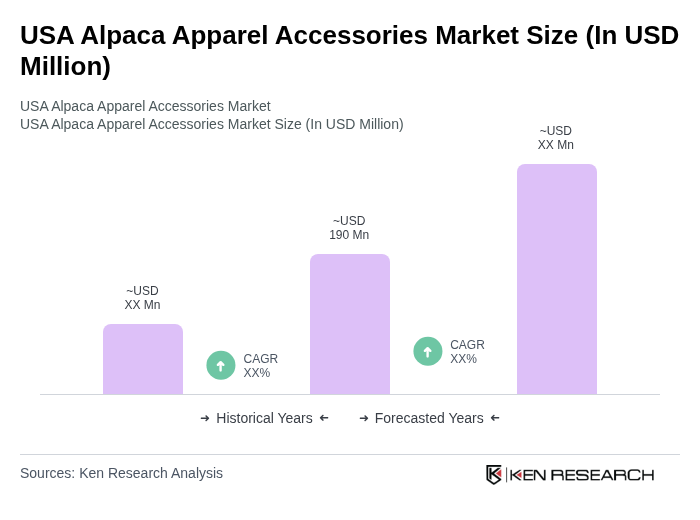
- The USA Alpaca Apparel Accessories Market is valued at USD 190 million, based on recent analysis. Growth is being propelled by rising consumer demand for eco-friendly and performance-oriented natural fibers that offer breathability, thermal regulation, and hypoallergenic qualities, aligning with the surge in sustainable and ethical fashion preferences and expanding direct-to-consumer and online retail models that broaden market access through artisanal and premium product offerings.
- Key players in this market include brands such as Purely Alpaca, Bee & Alpaca, Alpaca Collections, Spirit of the Andes, and Eileen Fisher, which drive market dynamics through innovation, craftsmanship, and premium positioning. North America, especially the United States, dominates the market owing to consumers’ high purchasing power, strong sustainability awareness, and well-developed retail infrastructure, while luxury and outdoor fashion sectors actively incorporate alpaca fiber into collections.
- A pertinent industry development involves efforts by the South American Alpaca Association to enforce ethical sourcing and improved animal welfare standards, aiming to bolster global supply chain transparency and strengthen consumer trust in alpaca products. These initiatives reinforce the market’s alignment with sustainable and ethical fashion norms.
USA Alpaca Apparel Accessories Market Segmentation
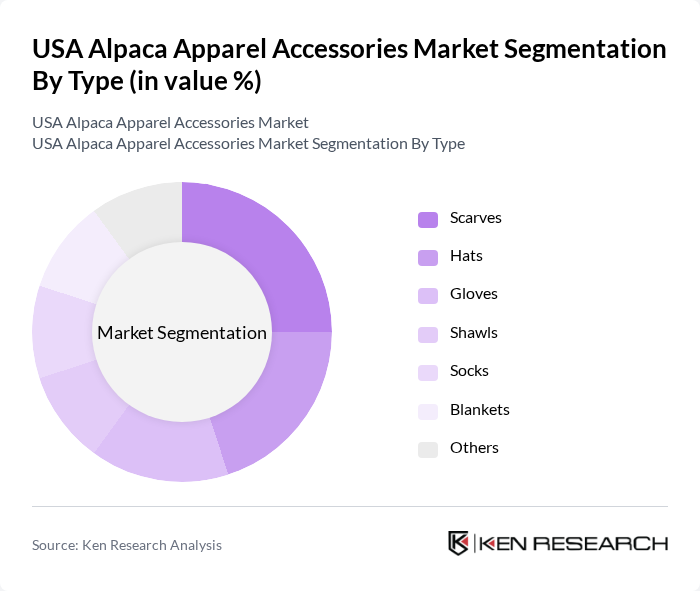
By Type:The market for alpaca apparel accessories is diverse, featuring various types such as scarves, hats, gloves, shawls, socks, blankets, and others. Scarves are particularly popular due to their versatility and style, appealing to a wide range of consumers. Hats and gloves also see significant demand, especially in colder climates where alpaca's thermal properties are highly valued. The growing trend towards sustainable fashion has further boosted the popularity of these products, as consumers increasingly seek eco-friendly options.
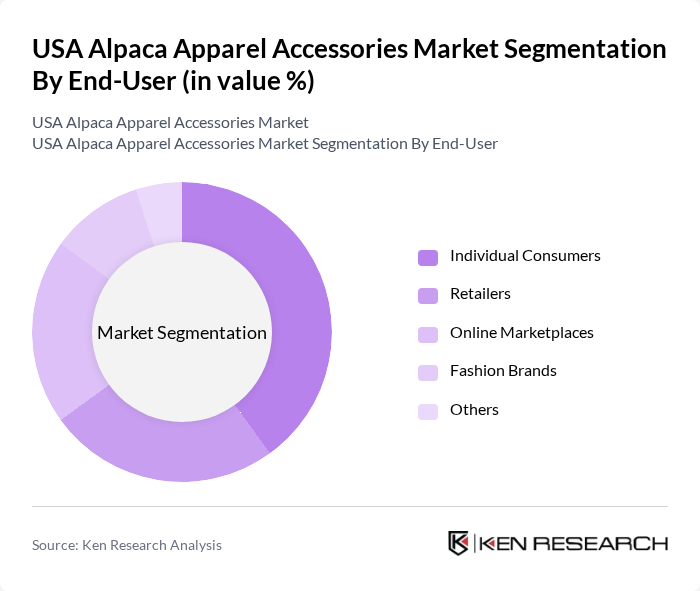
By End-User:The end-user segmentation of the alpaca apparel accessories market includes individual consumers, retailers, online marketplaces, boutiques, and others. Individual consumers represent the largest segment, driven by the growing trend of personal fashion and the desire for unique, high-quality products. Retailers and online marketplaces are also significant, as they provide consumers with easy access to a variety of alpaca products, enhancing market reach and visibility.
USA Alpaca Apparel Accessories Market Competitive Landscape
The USA Alpaca Apparel Accessories Market is characterized by a dynamic mix of regional and international players. Leading participants such as Alpaca Collections, The Alpaca Shop, Peruvian Connection, Alpaca Warehouse, Andes Gifts, Alpaca Direct, The Alpaca Company, Aymara Alpaca, Alpaca Llama Company, Cuzco Alpaca, Alpaca Fiber Co., Alpaca Boutique, Alpaca Fashion, The Alpaca Farm, Alpaca Creations contribute to innovation, geographic expansion, and service delivery in this space.
USA Alpaca Apparel Accessories Market Industry Analysis
Growth Drivers
- High U.S. Market Revenue:The U.S. alpaca apparel and accessories market is projected to generate approximately USD 216.5 million. This substantial revenue indicates a robust consumer interest in alpaca products, driven by the increasing demand for sustainable and luxury fashion. The market's growth is further supported by rising disposable incomes and a shift towards eco-friendly materials, positioning alpaca apparel as a desirable choice among environmentally conscious consumers.
- North America Dominance in Global Market:In future, North America is expected to account for USD 553 million of the global alpaca apparel and accessories market. This dominance highlights the region's significant role in driving revenue and consumer trends in the alpaca sector. The U.S. market's leadership is attributed to its established retail infrastructure and a growing base of consumers who prioritize sustainable fashion, thereby enhancing the overall market landscape.
- U.S. Alpaca Fiber Market Size:The U.S. alpaca fiber market is valued at approximately USD 180 million. This substantial market size indicates a strong domestic supply chain for alpaca fibers, which is crucial for the apparel sector. The availability of high-quality alpaca fibers supports the production of premium apparel, catering to the increasing consumer demand for luxury and sustainable clothing options, thus fostering market growth.
Market Challenges
- Limited Consumer Awareness of Alpaca Fiber:In future, only 18 percent of U.S. consumers are familiar with alpaca fiber, compared to 65 percent for organic cotton. This lack of awareness poses a significant challenge for the alpaca apparel market, as it limits consumer adoption and brand recognition. Increased educational efforts and marketing strategies are essential to enhance consumer knowledge and drive demand for alpaca products.
- Competition from Larger Sustainable Fiber Markets:The organic cotton apparel market in the U.S. is valued at USD 2.1 billion, presenting a formidable challenge for alpaca products. The established presence of alternative sustainable fibers creates intense competition, making it difficult for alpaca apparel to capture market share. Brands must differentiate their offerings and emphasize unique selling points to compete effectively in this crowded marketplace.
USA Alpaca Apparel Accessories Market Future Outlook
The future of the U.S. alpaca apparel accessories market appears promising, driven by trends in customization and online retail expansion. With an anticipated 20 million units of alpaca-based activewear expected, brands are likely to innovate and personalize their offerings to meet consumer preferences. Additionally, the growth of e-commerce, which accounted for 42 percent of total sales in the global alpaca apparel market, will enhance accessibility and convenience for consumers, further propelling market growth.
Market Opportunities
- Home Furnishings Expansion in U.S.:The U.S. alpaca fiber market shows that home furnishings account for 25 percent of market share, indicating significant growth potential beyond apparel. This segment allows brands to diversify their product offerings and tap into the lucrative home décor market, appealing to consumers seeking sustainable and luxurious home textiles.
- Artisanal & Handcrafted Product Demand:The growing consumer preference for handmade and unique products presents a niche opportunity for alpaca brands. As global production trends indicate artisan market growth, U.S. small-scale farms can leverage this demand by offering distinctive, hand-processed alpaca fibers, enhancing their market appeal and profitability.
Scope of the Report
| Segment | Sub-Segments |
|---|---|
| By Type | Scarves Hats Gloves Shawls Socks Blankets Others |
| By End-User | Individual Consumers Retailers Online Marketplaces Boutiques Others |
| By Distribution Channel | Online Retail Brick-and-Mortar Stores Wholesale Distributors Direct Sales Others |
| By Price Range | Premium Mid-Range Budget Others |
| By Material Blend | 100% Alpaca Alpaca-Wool Blends Alpaca-Cotton Blends Others |
| By Gender | Men Women Unisex Others |
| By Age Group | Children Adults Seniors Others |
Key Target Audience
Investors and Venture Capitalist Firms
Government and Regulatory Bodies (e.g., U.S. Department of Agriculture, U.S. Fish and Wildlife Service)
Manufacturers and Producers
Distributors and Retailers
Fashion and Apparel Brands
Textile and Fiber Associations
Importers and Exporters
Financial Institutions
Players Mentioned in the Report:
Alpaca Collections
The Alpaca Shop
Peruvian Connection
Alpaca Warehouse
Andes Gifts
Alpaca Direct
The Alpaca Company
Aymara Alpaca
Alpaca Llama Company
Cuzco Alpaca
Alpaca Fiber Co.
Alpaca Boutique
Alpaca Fashion
The Alpaca Farm
Alpaca Creations
Table of Contents
Market Assessment Phase
1. Executive Summary and Approach
2. USA Alpaca Apparel Accessories Market Overview
2.1 Key Insights and Strategic Recommendations
2.2 USA Alpaca Apparel Accessories Market Overview
2.3 Definition and Scope
2.4 Evolution of Market Ecosystem
2.5 Timeline of Key Regulatory Milestones
2.6 Value Chain & Stakeholder Mapping
2.7 Business Cycle Analysis
2.8 Policy & Incentive Landscape
3. USA Alpaca Apparel Accessories Market Analysis
3.1 Growth Drivers
3.1.1 Increasing consumer awareness of sustainable fashion
3.1.2 Rising demand for luxury and premium apparel
3.1.3 Growth in e-commerce and online retail channels
3.1.4 Expansion of alpaca farming and production capabilities
3.2 Market Challenges
3.2.1 High production costs associated with alpaca fibers
3.2.2 Competition from synthetic and alternative fibers
3.2.3 Limited consumer knowledge about alpaca products
3.2.4 Supply chain disruptions affecting availability
3.3 Market Opportunities
3.3.1 Growing trend of personalized and custom apparel
3.3.2 Expansion into international markets
3.3.3 Collaborations with fashion designers and brands
3.3.4 Development of innovative alpaca blends and products
3.4 Market Trends
3.4.1 Increasing focus on ethical sourcing and production
3.4.2 Rise of athleisure and casual wear incorporating alpaca
3.4.3 Popularity of eco-friendly and biodegradable materials
3.4.4 Growth of social media marketing for alpaca brands
3.5 Government Regulation
3.5.1 Regulations on animal welfare in alpaca farming
3.5.2 Import/export regulations for alpaca fibers
3.5.3 Labeling requirements for sustainable products
3.5.4 Tax incentives for sustainable fashion initiatives
4. SWOT Analysis
5. Stakeholder Analysis
6. Porter's Five Forces Analysis
7. USA Alpaca Apparel Accessories Market Market Size, 2019-2024
7.1 By Value
7.2 By Volume
7.3 By Average Selling Price
8. USA Alpaca Apparel Accessories Market Segmentation
8.1 By Type
8.1.1 Scarves
8.1.2 Hats
8.1.3 Gloves
8.1.4 Shawls
8.1.5 Socks
8.1.6 Blankets
8.1.7 Others
8.2 By End-User
8.2.1 Individual Consumers
8.2.2 Retailers
8.2.3 Online Marketplaces
8.2.4 Boutiques
8.2.5 Others
8.3 By Distribution Channel
8.3.1 Online Retail
8.3.2 Brick-and-Mortar Stores
8.3.3 Wholesale Distributors
8.3.4 Direct Sales
8.3.5 Others
8.4 By Price Range
8.4.1 Premium
8.4.2 Mid-Range
8.4.3 Budget
8.4.4 Others
8.5 By Material Blend
8.5.1 100% Alpaca
8.5.2 Alpaca-Wool Blends
8.5.3 Alpaca-Cotton Blends
8.5.4 Others
8.6 By Gender
8.6.1 Men
8.6.2 Women
8.6.3 Unisex
8.6.4 Others
8.7 By Age Group
8.7.1 Children
8.7.2 Adults
8.7.3 Seniors
8.7.4 Others
9. USA Alpaca Apparel Accessories Market Competitive Analysis
9.1 Market Share of Key Players
9.2 Cross Comparison of Key Players
9.2.1 Company Name
9.2.2 Group Size (Large, Medium, or Small as per industry convention)
9.2.3 Revenue Growth Rate
9.2.4 Market Penetration Rate
9.2.5 Customer Retention Rate
9.2.6 Average Order Value
9.2.7 Pricing Strategy
9.2.8 Brand Recognition Score
9.2.9 Product Return Rate
9.2.10 Customer Satisfaction Index
9.3 SWOT Analysis of Top Players
9.4 Pricing Analysis
9.5 Detailed Profile of Major Companies
9.5.1 Alpaca Collections
9.5.2 The Alpaca Shop
9.5.3 Peruvian Connection
9.5.4 Alpaca Warehouse
9.5.5 Andes Gifts
9.5.6 Alpaca Direct
9.5.7 The Alpaca Company
9.5.8 Aymara Alpaca
9.5.9 Alpaca Llama Company
9.5.10 Cuzco Alpaca
9.5.11 Alpaca Fiber Co.
9.5.12 Alpaca Boutique
9.5.13 Alpaca Fashion
9.5.14 The Alpaca Farm
9.5.15 Alpaca Creations
10. USA Alpaca Apparel Accessories Market End-User Analysis
10.1 Procurement Behavior of Key Ministries
10.1.1 Government procurement policies
10.1.2 Budget allocation for sustainable products
10.1.3 Preference for local sourcing
10.1.4 Evaluation criteria for suppliers
10.2 Corporate Spend on Infrastructure & Energy
10.2.1 Investment in sustainable apparel
10.2.2 Budget for employee uniforms
10.2.3 Spending on promotional merchandise
10.2.4 Others
10.3 Pain Point Analysis by End-User Category
10.3.1 Quality concerns
10.3.2 Availability of products
10.3.3 Pricing issues
10.3.4 Customer service challenges
10.4 User Readiness for Adoption
10.4.1 Awareness of alpaca benefits
10.4.2 Willingness to pay premium prices
10.4.3 Interest in sustainable fashion
10.4.4 Others
10.5 Post-Deployment ROI and Use Case Expansion
10.5.1 Measurement of customer satisfaction
10.5.2 Analysis of repeat purchases
10.5.3 Evaluation of brand loyalty
10.5.4 Others
11. USA Alpaca Apparel Accessories Market Future Size, 2025-2030
11.1 By Value
11.2 By Volume
11.3 By Average Selling Price
Go-To-Market Strategy Phase
1. Whitespace Analysis + Business Model Canvas
1.1 Market gaps and opportunities
2. Marketing and Positioning Recommendations
2.1 Branding strategies
2.2 Product USPs
3. Distribution Plan
3.1 Urban retail vs rural NGO tie-ups
4. Channel & Pricing Gaps
4.1 Underserved routes
4.2 Pricing bands
5. Unmet Demand & Latent Needs
5.1 Category gaps
5.2 Consumer segments
6. Customer Relationship
6.1 Loyalty programs
6.2 After-sales service
7. Value Proposition
7.1 Sustainability
7.2 Integrated supply chains
8. Key Activities
8.1 Regulatory compliance
8.2 Branding
8.3 Distribution setup
9. Entry Strategy Evaluation
9.1 Domestic Market Entry Strategy
9.1.1 Product mix
9.1.2 Pricing band
9.1.3 Packaging
9.2 Export Entry Strategy
9.2.1 Target countries
9.2.2 Compliance roadmap
10. Entry Mode Assessment
10.1 JV
10.2 Greenfield
10.3 M&A
10.4 Distributor Model
11. Capital and Timeline Estimation
11.1 Capital requirements
11.2 Timelines
12. Control vs Risk Trade-Off
12.1 Ownership vs Partnerships
13. Profitability Outlook
13.1 Breakeven analysis
13.2 Long-term sustainability
14. Potential Partner List
14.1 Distributors
14.2 JVs
14.3 Acquisition targets
15. Execution Roadmap
15.1 Phased Plan for Market Entry
15.1.1 Market Setup
15.1.2 Market Entry
15.1.3 Growth Acceleration
15.1.4 Scale & Stabilize
15.2 Key Activities and Milestones
15.2.1 Milestone tracking
15.2.2 Activity scheduling
Research Methodology
Phase 1: Approach1
Desk Research
- Industry reports from the American Alpaca Association and textile trade organizations
- Market analysis from government publications on fiber and textile production
- Consumer trend reports focusing on sustainable fashion and alpaca fiber usage
Primary Research
- Interviews with alpaca farmers and breeders to understand supply dynamics
- Surveys with retailers specializing in alpaca apparel and accessories
- Focus groups with consumers to gauge preferences and buying behavior
Validation & Triangulation
- Cross-validation of findings through multiple industry expert interviews
- Triangulation of data from sales reports, consumer surveys, and trade statistics
- Sanity checks through feedback from a panel of alpaca industry experts
Phase 2: Market Size Estimation1
Top-down Assessment
- Estimation of total market size based on national apparel spending trends
- Segmentation by product categories such as scarves, hats, and sweaters
- Incorporation of growth rates from sustainable fashion initiatives
Bottom-up Modeling
- Volume estimates based on production data from alpaca farms across the USA
- Retail price analysis of alpaca apparel and accessories
- Calculation of market size using sales volume multiplied by average retail prices
Forecasting & Scenario Analysis
- Multi-variable forecasting using trends in eco-conscious consumer behavior
- Scenario analysis based on potential changes in alpaca fiber supply and demand
- Baseline, optimistic, and pessimistic projections through 2030
Phase 3: CATI Sample Composition1
| Scope Item/Segment | Sample Size | Target Respondent Profiles |
|---|---|---|
| Retail Sales of Alpaca Accessories | 100 | Store Managers, Retail Buyers |
| Consumer Preferences for Alpaca Products | 150 | Fashion Enthusiasts, Eco-conscious Shoppers |
| Alpaca Fiber Production Insights | 80 | Farm Owners, Fiber Processors |
| Market Trends in Sustainable Fashion | 120 | Fashion Designers, Sustainability Consultants |
| Distribution Channels for Alpaca Apparel | 90 | Wholesale Distributors, E-commerce Managers |
Frequently Asked Questions
What is the current value of the USA Alpaca Apparel Accessories Market?
The USA Alpaca Apparel Accessories Market is valued at approximately USD 190 million, driven by increasing consumer demand for eco-friendly and performance-oriented natural fibers, as well as the growth of sustainable and ethical fashion preferences.
Who are the key players in the USA Alpaca Apparel Accessories Market?
What types of products are included in the alpaca apparel accessories market?
What are the main growth drivers for the USA Alpaca Apparel Accessories Market?
Other Regional/Country Reports
Indonesia Alpaca Apparel Accessories Market
Malaysia Alpaca Apparel Accessories Market
KSA Alpaca Apparel Accessories Market
APAC Alpaca Apparel Accessories Market
SEA Alpaca Apparel Accessories Market
Vietnam Alpaca Apparel Accessories Market
Other Adjacent Reports
Japan Sustainable Fashion Market
Japan Natural Fiber Apparel Market
Malaysia Luxury Accessories Market
Kuwait Outdoor Clothing Market
Indonesia Eco-Friendly Textiles Market
Brazil Wool Apparel Market
Qatar Cashmere Products Market
Kuwait Home Furnishings Market
Germany Artisanal Crafts Market
Global activewear market report Size, Share, Growth Drivers, Trends, Opportunities & Forecast 2025–2030Why Buy From Us?

What makes us stand out is that our consultants follow Robust, Refine and Result (RRR) methodology. Robust for clear definitions, approaches and sanity checking, Refine for differentiating respondents' facts and opinions, and Result for presenting data with story.

We have set a benchmark in the industry by offering our clients with syndicated and customized market research reports featuring coverage of entire market as well as meticulous research and analyst insights.

While we don't replace traditional research, we flip the method upside down. Our dual approach of Top Bottom & Bottom Top ensures quality deliverable by not just verifying company fundamentals but also looking at the sector and macroeconomic factors.

With one step in the future, our research team constantly tries to show you the bigger picture. We help with some of the tough questions you may encounter along the way: How is the industry positioned? Best marketing channel? KPI's of competitors? By aligning every element, we help maximize success.

Our report gives you instant access to the answers and sources that other companies might choose to hide. We elaborate each steps of research methodology we have used and showcase you the sample size to earn your trust.

If you need any support, we are here! We pride ourselves on universe strength, data quality, and quick, friendly, and professional service.