















APAC Automotive Test Equipment Market Outlook to 2030
Region:Asia
Author(s):Mukul
Product Code:KROD3725
October 2024
88
About the Report
APAC Automotive Test Equipment
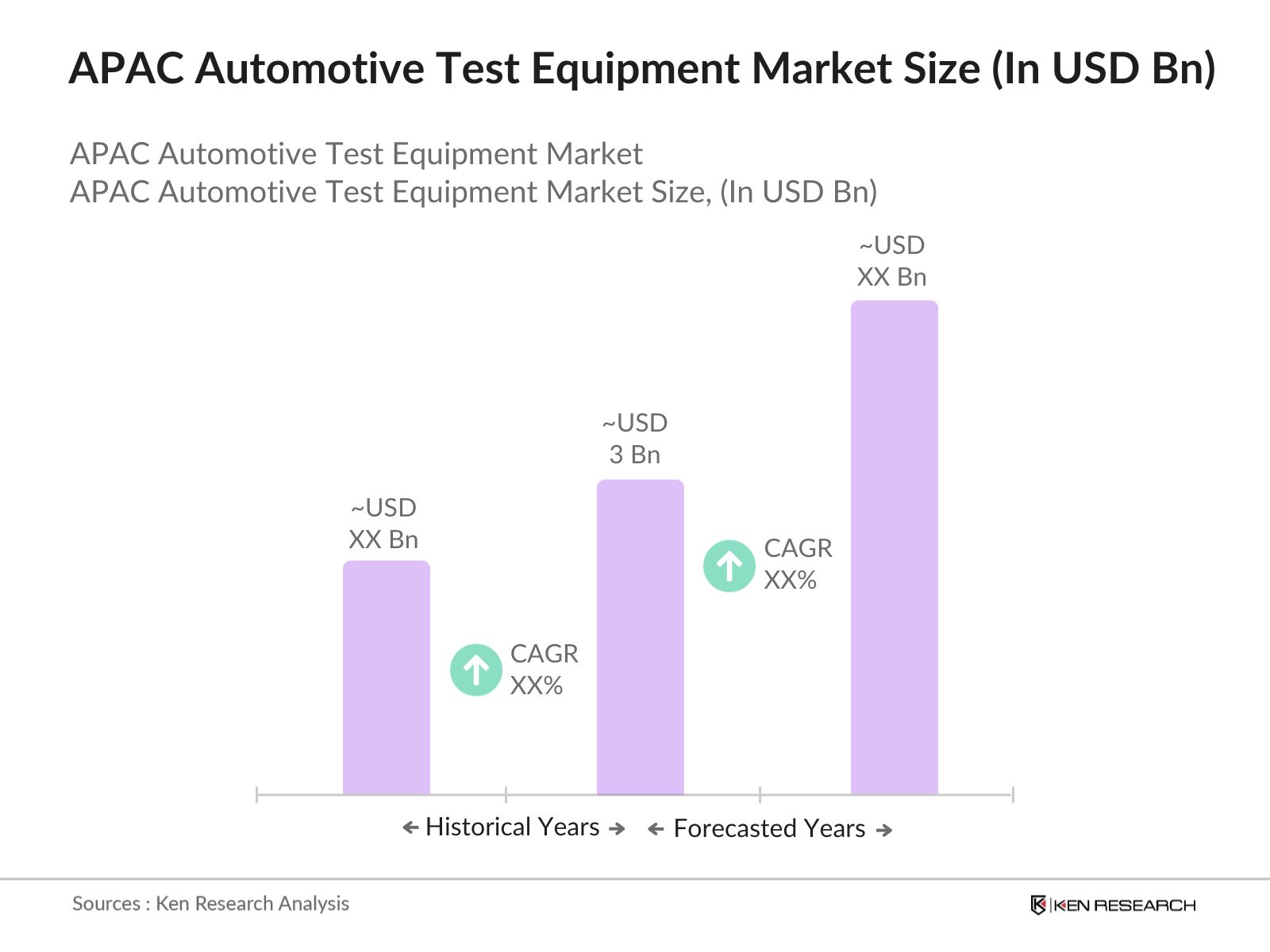
- The APAC automotive test equipment market is valued at USD 3 billion. This robust valuation stems from the increasing demand for stringent emission regulations, rising electric vehicle (EV) sales, and the region's growing automotive production capacities. Nations like China and India have been ramping up their automotive production significantly, driving the need for advanced testing solutions. Factors such as rising vehicle ownership and the shift towards cleaner mobility have been essential in boosting the demand for automotive testing equipment in this region, especially for emissions and safety testing.
- China, India, and Japan dominate the APAC automotive test equipment market due to their well-established automotive manufacturing industries. China, in particular, remains at the forefront owing to its rapid industrialization, increasing electric vehicle penetration, and large-scale vehicle production. Meanwhile, Japan continues to lead in automotive innovation, with substantial investments in autonomous vehicle testing and smart mobility. These countries possess the largest automotive industries, supported by high production volumes, infrastructure investments, and strong government policies geared towards vehicle testing regulations.
- Different countries in the APAC region have implemented their own regulatory policies for automotive testing. For example, India’s Ministry of Road Transport and Highways introduced mandatory crash testing for all vehicles sold in the country, starting in 2020. In contrast, Japan follows stringent vehicle inspection protocols that include emissions, safety, and vehicle performance tests. These regional regulatory policies play a critical role in shaping the demand for testing equipment, as manufacturers must adhere to diverse testing standards across APAC.
APAC Automotive Test Equipment Market Segmentation
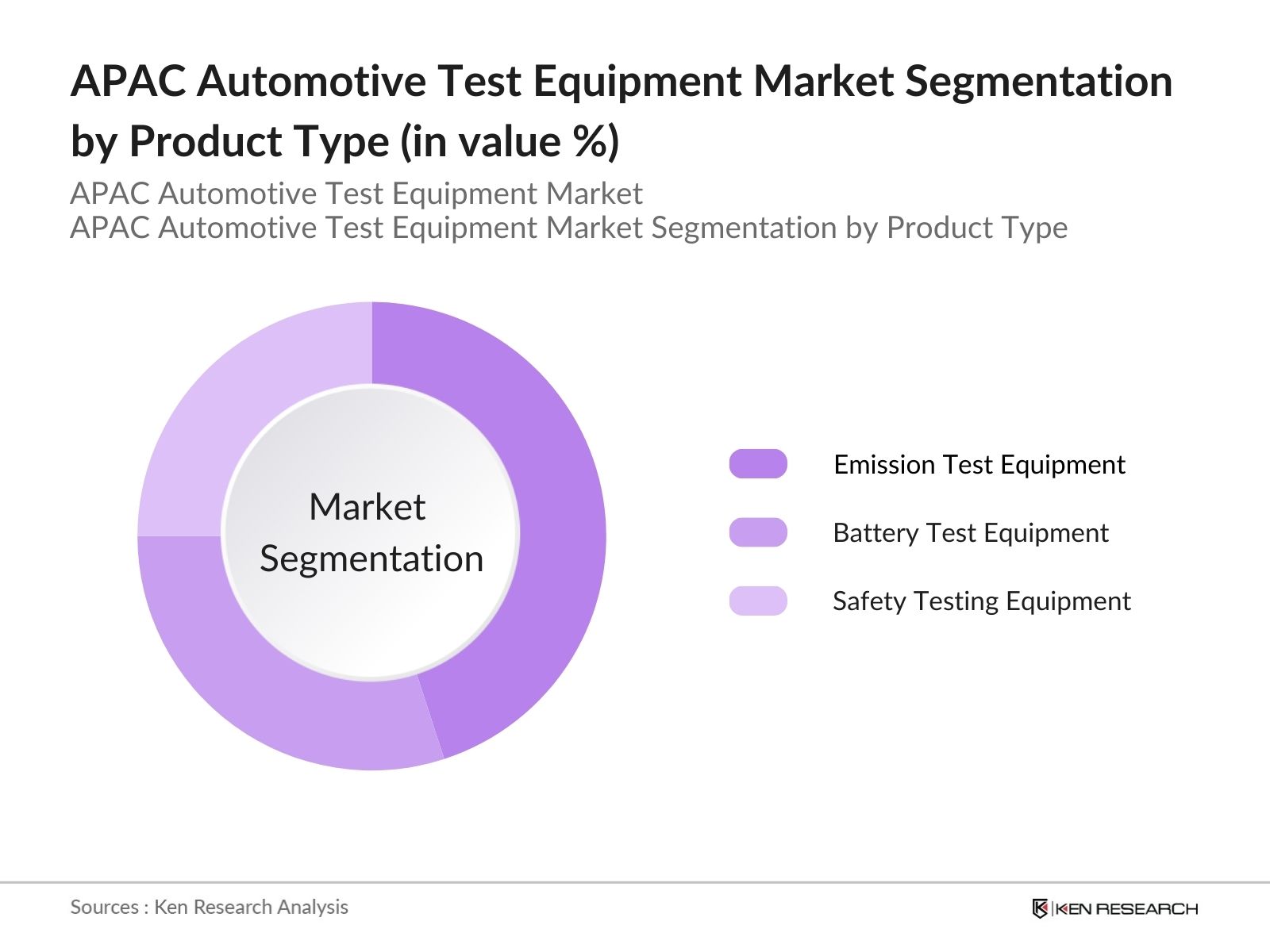
- By Product Type: The APAC automotive test equipment market is segmented by product type into emission test equipment, battery test equipment, and safety testing equipment. Among these, emission test equipment holds a dominant market share. The growing enforcement of stricter emission norms across countries like China and India has driven the demand for comprehensive emission testing solutions. Additionally, with the rise of electric and hybrid vehicles, emission standards remain a priority for regulatory bodies, making this segment critical for compliance and sustainability initiatives.
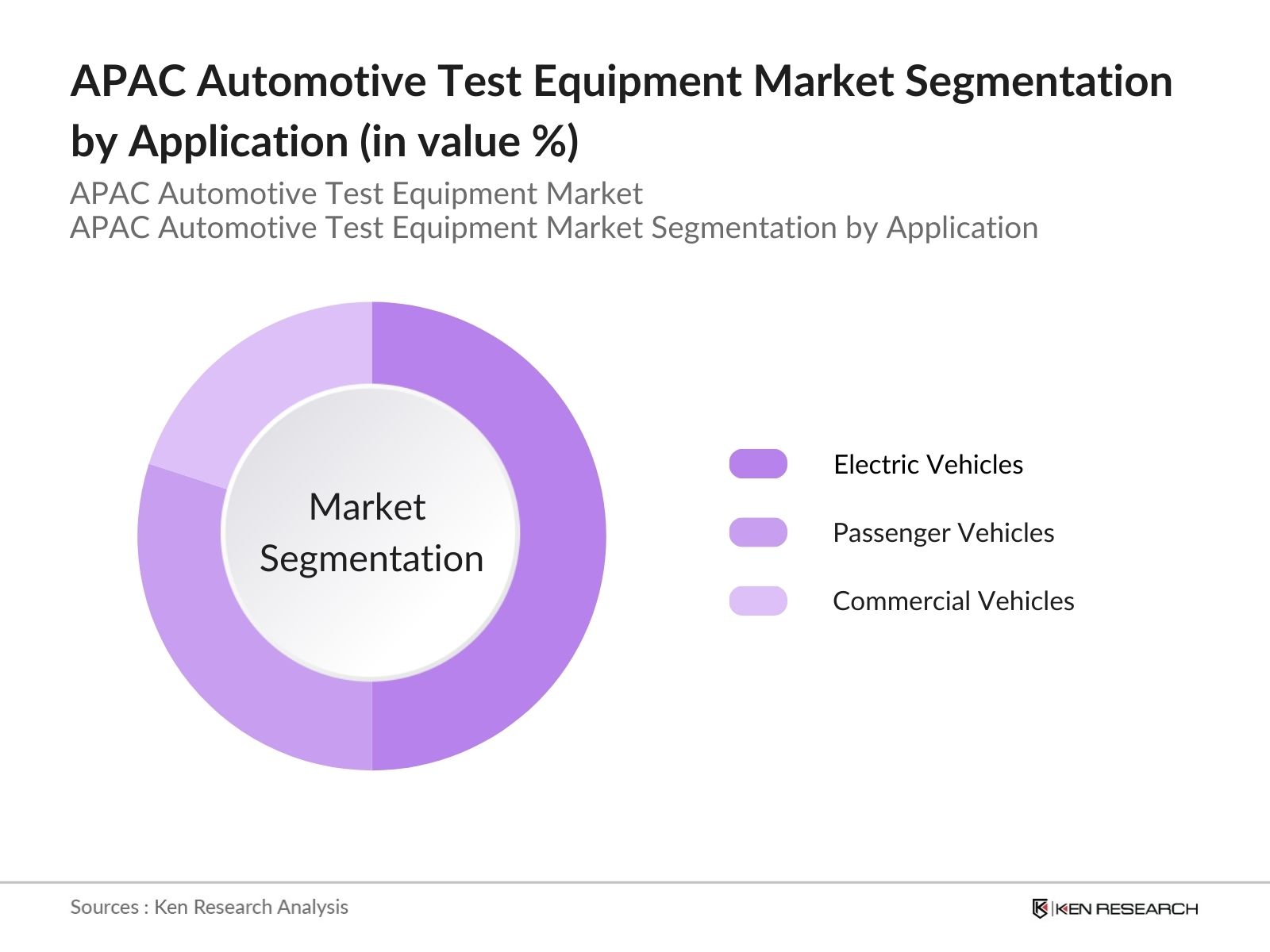
- By Application: The APAC automotive test equipment market is also segmented by application into passenger vehicles, commercial vehicles, and electric vehicles. Electric vehicles lead the market share within this segmentation due to increasing governmental support, rising consumer awareness regarding sustainable mobility, and the significant expansion of EV charging infrastructure. Countries like China, which is home to the world's largest EV market, have propelled the growth of this sub-segment through aggressive investments and subsidies to accelerate EV adoption.
APAC Automotive Test Equipment Market Competitive Landscape
The APAC automotive test equipment market is characterized by the presence of both global and regional players. Major companies focus on offering diversified test equipment solutions ranging from emission testing to autonomous vehicle testing. Industry consolidation is apparent, with a few dominant players driving innovation and technological advancements through collaborations, product launches, and acquisitions.
|
Company Name |
Establishment Year |
Headquarters |
R&D Investments |
Revenue |
No. of Employees |
Major Clients |
Product Range |
Technological Innovation |
|
AVL List GmbH |
1948 |
Austria |
|
|
|
|
|
|
|
Horiba Ltd. |
1945 |
Japan |
|
|
|
|
|
|
|
Bosch Automotive Solutions |
1886 |
Germany |
|
|
|
|
|
|
|
Siemens AG |
1847 |
Germany |
|
|
|
|
|
|
|
Denso Corporation |
1949 |
Japan |
|
|
|
|
|
|
APAC Automotive Test Equipment Industry Analysis
APAC Automotive Test Equipment Market Growth Drivers
- Expansion of Automotive Manufacturing: The expansion of automotive manufacturing in APAC is bolstered by countries like China, Japan, and South Korea, which collectively account for nearly 60% of global vehicle production. In 2023, China alone produced over 27 million vehicles, making it the largest automotive producer worldwide. India, with its goal of producing 9 million vehicles by 2025, is also seeing significant growth in its automotive sector, driven by rising demand and government incentives. This expansion is leading to a growing demand for automotive test equipment, as manufacturers seek to ensure safety and compliance with international standards.
- Rise in EV and Hybrid Vehicle Testing: The APAC region is witnessing an accelerated rise in electric vehicle (EV) and hybrid vehicle testing. China had registered over 5.7 million EVs by 2023, positioning itself as the global leader in EV sales and production. Japan and South Korea are also ramping up their EV manufacturing capacities, with projected production of 1.4 million EVs in Japan by 2025. Testing equipment for EV batteries, electric drivetrains, and hybrid systems is in high demand, as countries push for cleaner transportation solutions and stricter environmental compliance.
- Stricter Emission and Safety Regulations: Governments across APAC are enforcing stricter emission and safety regulations, driving demand for advanced automotive test equipment. For instance, India implemented BS-VI emission norms in 2020, aligning with Euro 6 standards, which require testing for particulate matter and nitrogen oxides. Additionally, ASEAN countries, like Indonesia, are setting targets to reduce carbon emissions by 29% by 2030. Compliance with these standards mandates rigorous vehicle testing to ensure both environmental and safety benchmarks are met.
APAC Automotive Test Equipment Market Restraints
- Lack of Skilled Workforce for Handling Complex Systems: The lack of a skilled workforce capable of operating and maintaining complex automotive test systems is a pressing issue in the APAC region. While countries like China and Japan have robust training programs, other nations, such as Indonesia and the Philippines, face a shortage of qualified personnel. According to a 2022 report, 35% of automotive testing facilities in Southeast Asia reported difficulties in finding trained technicians to operate advanced equipment, leading to increased operational costs and longer lead times for vehicle testing.
- Regulatory Compliance Across Different Countries: Compliance with automotive regulations varies significantly across APAC, creating challenges for manufacturers and testing facilities operating in multiple countries. For example, emission standards differ between India’s BS-VI and China’s CN-6 emission standards, necessitating different testing protocols. Additionally, vehicle safety regulations in countries like Japan and South Korea are more stringent than in other APAC nations, leading to increased complexity in ensuring compliance across borders. This fragmented regulatory landscape complicates the testing process and increases the demand for adaptable test equipment.
APAC Automotive Test Equipment Market Future Outlook
The APAC automotive test equipment market is expected to experience significant growth over the next five years. This growth will be driven by the increasing adoption of electric vehicles, stringent regulatory standards for emissions and safety, and advancements in autonomous vehicle technology. The market's future will also see a strong influence from the integration of artificial intelligence in testing processes, enabling manufacturers to increase efficiency and reduce costs associated with vehicle testing. Additionally, countries like China, India, and Japan will continue to play pivotal roles in this growth due to their ongoing investments in the automotive sector.
Market Opportunities
- Growth in Autonomous Vehicle Testing: The APAC region is emerging as a key player in the development and testing of autonomous vehicles. By 2025, China is expected to have over 10,000 autonomous vehicles on its roads, with Japan and South Korea following closely behind. This rise in autonomous driving technologies necessitates the development of specialized testing equipment for radar, LIDAR, and AI-driven decision-making systems. The opportunity for growth in this segment is immense, as governments invest in smart infrastructure to support autonomous vehicles.
Source: IMF - Increasing Focus on Safety and Emission Testing: With growing concerns about road safety and environmental sustainability, there is a heightened focus on stringent safety and emission testing across APAC. India, which sees over 150,000 road deaths annually, is implementing stricter safety protocols, including crash testing for all vehicles. Similarly, South Korea and Japan are ramping up emission testing to meet international climate targets. This trend is creating opportunities for companies to supply the necessary testing equipment to ensure vehicles meet the evolving safety and emission standards.
Scope of the Report
|
By Product Type |
Emission Test Equipment Wheel Alignment Test Equipment Dynamometers Vehicle Safety Testing Equipment Battery Testing Equipment |
|
By Application |
Passenger Vehicles Commercial Vehicles Electric Vehicles Heavy-Duty Vehicles |
|
By Technology |
Hardware-Based Testing Software-Based Testing Integrated Test Systems AI and Machine Learning in Testing |
|
By End-Use |
OEMs Independent Testing Service Providers Automotive Repair & Maintenance Service Centers |
|
By Region |
China India Japan South Korea ASEAN |
Products
Key Target Audience
Automotive OEMs
Independent Testing Service Providers
EV Manufacturers
Government and Regulatory Bodies (e.g., Ministry of Industry and Information Technology (MIIT) in China)
Aftermarket Service Providers
R&D Institutes and Innovation Centers
Investments and Venture Capital Firms
Autonomous Vehicle Testing Centers
Time Period Captured in the Report:
- Historical Period: 2018-2023
- Base Year: 2023
- Forecast Period: 2023-2028
Companies
AVL List GmbH
Horiba Ltd.
Bosch Automotive Service Solutions Inc.
Siemens AG
Denso Corporation
MAHLE GmbH
Continental AG
MTS Systems Corporation
Vector Informatik GmbH
Intertek Group Plc
Actia Group
ABB Ltd.
Softing AG
Ricardo Plc
Sierra Instruments Inc.
Table of Contents
1. APAC Automotive Test Equipment Market Overview
1.1. Definition and Scope
1.2. Market Taxonomy
1.3. Market Growth Rate (APAC-Specific Demand and Adoption Rate)
1.4. Market Segmentation Overview
2. APAC Automotive Test Equipment Market Size (In USD Bn)
2.1. Historical Market Size
2.2. Year-On-Year Growth Analysis
2.3. Key Market Developments and Milestones
3. APAC Automotive Test Equipment Market Analysis
3.1. Growth Drivers (Increasing Vehicle Production, Technological Advancements, Electric Vehicle Adoption)
3.1.1. Expansion of Automotive Manufacturing
3.1.2. Rise in EV and Hybrid Vehicle Testing
3.1.3. Stricter Emission and Safety Regulations
3.2. Market Challenges (Regulation Complexity, High Initial Investments, Technological Shifts)
3.2.1. High Cost of Advanced Test Equipment
3.2.2. Lack of Skilled Workforce for Handling Complex Systems
3.2.3. Regulatory Compliance Across Different Countries
3.3. Opportunities (Emerging Markets, New Technology Integration, Automation in Testing)
3.3.1. Growth in Autonomous Vehicle Testing
3.3.2. Increasing Focus on Safety and Emission Testing
3.3.3. Expanding Scope for Aftermarket Testing Equipment
3.4. Trends (Connectivity, AI in Testing, Increased Use of Software-Based Solutions)
3.4.1. Integration of AI and Machine Learning in Testing Procedures
3.4.2. Shift Toward Digital Testing Platforms
3.4.3. Remote Monitoring and Testing Solutions Adoption
3.5. Government Regulations (Emission Standards, Safety Norms, Industry Certifications)
3.5.1. Regional Regulatory Policies for Automotive Testing
3.5.2. Stringent Emission Norms (Euro 6, BS-VI)
3.5.3. Mandatory Vehicle Safety Testing Protocols
3.6. SWOT Analysis (Strengths, Weaknesses, Opportunities, Threats)
3.7. Stakeholder Ecosystem (Automobile OEMs, Test Equipment Manufacturers, Regulatory Bodies)
3.8. Porter’s Five Forces Analysis (Supplier Power, Buyer Power, Competitive Rivalry, Threat of New Entrants, Threat of Substitutes)
3.9. Competition Ecosystem (Key Players, Competitive Landscape)
4. APAC Automotive Test Equipment Market Segmentation
4.1. By Product Type (In Value %)
4.1.1. Emission Test Equipment
4.1.2. Wheel Alignment Test Equipment
4.1.3. Dynamometers
4.1.4. Vehicle Safety Testing Equipment
4.1.5. Battery Testing Equipment
4.2. By Application (In Value %)
4.2.1. Passenger Vehicles
4.2.2. Commercial Vehicles
4.2.3. Electric Vehicles
4.2.4. Heavy-Duty Vehicles
4.3. By Technology (In Value %)
4.3.1. Hardware-Based Testing
4.3.2. Software-Based Testing
4.3.3. Integrated Test Systems
4.3.4. AI and Machine Learning in Testing
4.4. By End-Use (In Value %)
4.4.1. OEMs
4.4.2. Independent Testing Service Providers
4.4.3. Automotive Repair & Maintenance Service Centers
4.5. By Region (In Value %)
4.5.1. China
4.5.2. India
4.5.3. Japan
4.5.4. South Korea
4.5.5. ASEAN
5. APAC Automotive Test Equipment Market Competitive Analysis
5.1. Detailed Profiles of Major Competitors
5.1.1. AVL List GmbH
5.1.2. Horiba Ltd.
5.1.3. Bosch Automotive Service Solutions Inc.
5.1.4. Siemens AG
5.1.5. ABB Ltd.
5.1.6. Softing AG
5.1.7. Denso Corporation
5.1.8. MAHLE GmbH
5.1.9. Actia Group
5.1.10. Continental AG
5.1.11. Vector Informatik GmbH
5.1.12. Ricardo Plc
5.1.13. Sierra Instruments Inc.
5.1.14. Intertek Group Plc
5.1.15. MTS Systems Corporation
5.2. Cross Comparison Parameters (Product Portfolio, Service Offerings, Market Reach, Regional Penetration, Technological Innovations, R&D Investments, Customer Base, Revenue)
5.3. Market Share Analysis
5.4. Strategic Initiatives (New Product Launches, Partnerships, Acquisitions)
5.5. Mergers and Acquisitions Analysis
5.6. Investment Analysis (Venture Capital and Private Equity)
5.7. Venture Capital Funding Overview
5.8. Government Grants and Funding Programs for Testing Infrastructure
6. APAC Automotive Test Equipment Market Regulatory Framework
6.1. Emission and Safety Testing Regulations
6.2. Compliance with Industry Standards (ISO, IEC)
6.3. Certification Procedures for Testing Equipment
6.4. Testing Guidelines and Mandatory Protocols
7. APAC Automotive Test Equipment Future Market Size (In USD Bn)
7.1. Future Market Size Projections
7.2. Key Factors Driving Future Market Growth (EV Testing, Autonomous Vehicles, Stricter Emission Norms)
8. APAC Automotive Test Equipment Future Market Segmentation
8.1. By Product Type (In Value %)
8.2. By Application (In Value %)
8.3. By Technology (In Value %)
8.4. By End-Use (In Value %)
8.5. By Region (In Value %)
9. APAC Automotive Test Equipment Market Analysts’ Recommendations
9.1. TAM/SAM/SOM Analysis (Total Addressable Market, Serviceable Available Market, Serviceable Obtainable Market)
9.2. Customer Cohort Analysis (Automotive OEMs, Independent Testing Service Providers)
9.3. Marketing Initiatives and Campaigns
9.4. White Space Opportunity Analysis (Growth Areas and Untapped Markets)
Disclaimer
Contact Us
Research Methodology
Step 1: Identification of Key Variables
The first step involved mapping the entire APAC automotive test equipment market ecosystem, identifying key stakeholders including OEMs, government bodies, and testing service providers. This phase focused on gathering comprehensive data from proprietary databases, secondary research, and government reports to establish key market variables.
Step 2: Market Analysis and Construction
Historical data pertaining to the APAC automotive test equipment market was compiled and analyzed, focusing on penetration rates, the competitive landscape, and revenue streams from various testing equipment segments. Analysis included both qualitative and quantitative factors to ensure the accuracy of revenue estimates.
Step 3: Hypothesis Validation and Expert Consultation
Hypotheses were validated through interviews with industry experts, including automotive engineers and testing service providers. These interviews provided insights into operational challenges, regulatory dynamics, and future market trends, helping refine the overall market data.
Step 4: Research Synthesis and Final Output
This final step involved direct engagement with key automotive testing companies to validate product-specific trends and sales performance. The research synthesis ensured a comprehensive, reliable market analysis based on a bottom-up approach, tailored to industry needs.
Frequently Asked Questions
01. How big is the APAC Automotive Test Equipment Market?
The APAC automotive test equipment market was valued at USD 3 billion, driven by the need for advanced testing systems in response to growing vehicle production and the rise in electric vehicle adoption.
02. What are the key challenges in the APAC Automotive Test Equipment Market?
Challenges in the APAC automotive test equipment market include high costs of advanced test equipment, regulatory complexities across various countries, and the need for skilled labor to operate sophisticated testing systems.
03. Who are the major players in the APAC Automotive Test Equipment Market?
Major players in the APAC automotive test equipment market include AVL List GmbH, Horiba Ltd., Bosch Automotive Service Solutions Inc., Siemens AG, and Denso Corporation. These companies dominate the market due to their extensive product portfolios and strong R&D capabilities.
04. What are the growth drivers of the APAC Automotive Test Equipment Market?
Growth is driven by increasing demand for electric vehicles, rising vehicle safety concerns, and the implementation of stringent emission regulations, prompting automotive manufacturers to adopt advanced testing solutions.
|
Product Type |
Market Share (%) |
|
Emission Test Equipment |
45% |
|
Battery Test Equipment |
30% |
|
Safety Testing Equipment |
25% |
|
Application |
Market Share (%) |
|
Electric Vehicles |
50% |
|
Passenger Vehicles |
30% |
|
Commercial Vehicles |
20% |
Why Buy From Us?

What makes us stand out is that our consultants follows Robust, Refine and Result (RRR) methodology. i.e. Robust for clear definitions, approaches and sanity checking, Refine for differentiating respondents facts and opinions and Result for presenting data with story

We have set a benchmark in the industry by offering our clients with syndicated and customized market research reports featuring coverage of entire market as well as meticulous research and analyst insights.

While we don't replace traditional research, we flip the method upside down. Our dual approach of Top Bottom & Bottom Top ensures quality deliverable by not just verifying company fundamentals but also looking at the sector and macroeconomic factors.

With one step in the future, our research team constantly tries to show you the bigger picture. We help with some of the tough questions you may encounter along the way: How is the industry positioned? Best marketing channel? KPI's of competitors? By aligning every element, we help maximize success.

Our report gives you instant access to the answers and sources that other companies might choose to hide. We elaborate each steps of research methodology we have used and showcase you the sample size to earn your trust.

If you need any support, we are here! We pride ourselves on universe strength, data quality, and quick, friendly, and professional service.