
APAC Cleaning Robot Market Outlook to 2030
Region:Afganistan
Author(s):Shubham Kashyap
Product Code:KROD6091
Region:Afganistan
Author(s):Shubham Kashyap
Product Code:KROD6091
November 2024
82
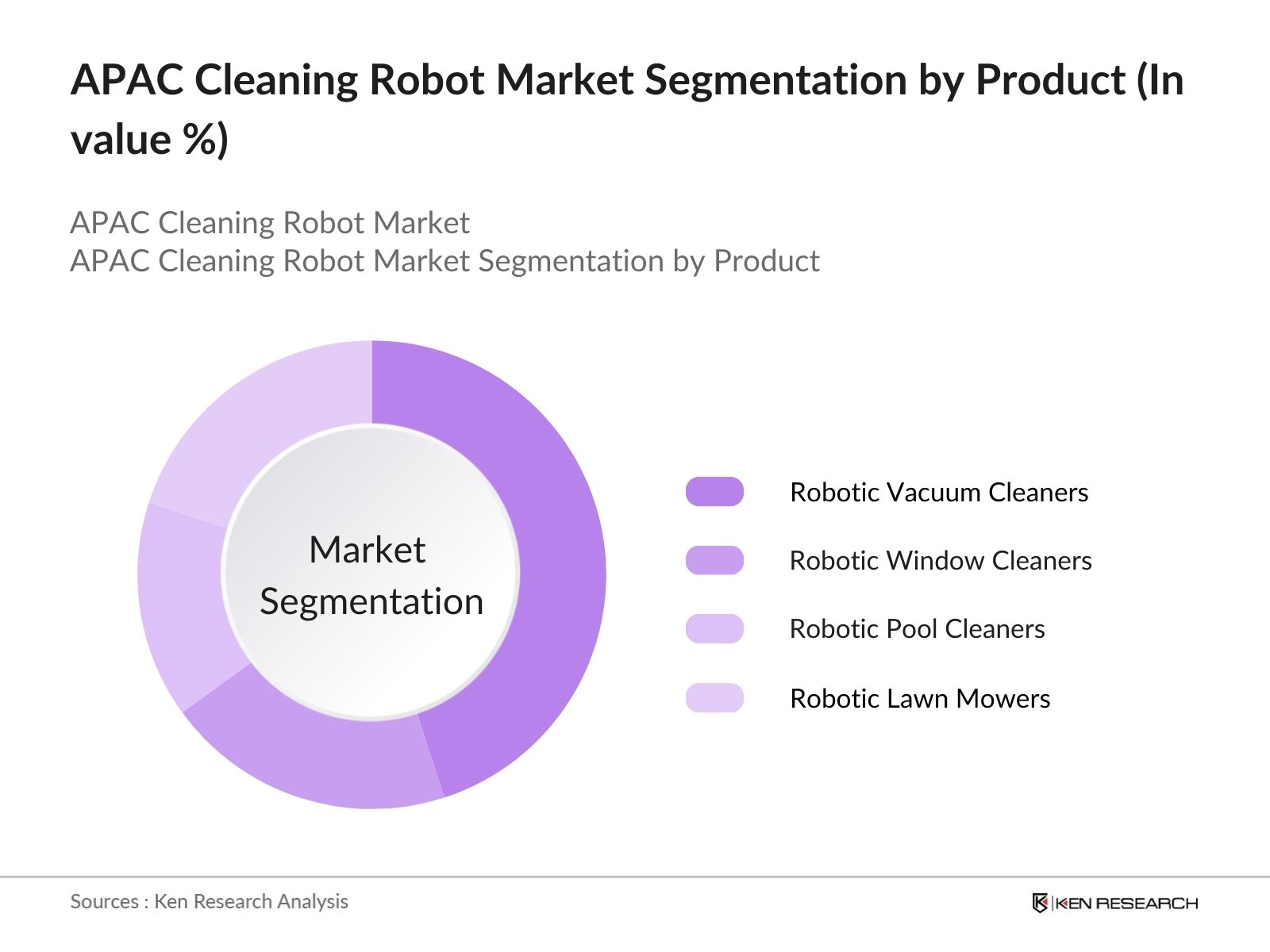
The APAC Cleaning Robot market is led by established players, both global and regional, who invest significantly in R&D to advance autonomous and energy-efficient technologies. Prominent companies such as iRobot and Xiaomi have maintained their market dominance by offering diverse and innovative cleaning solutions, which cater to the specific needs of residential and commercial sectors. Local players in China and Japan are also enhancing their product offerings to capture market share through government collaborations and affordable pricing strategies.
Growth Drivers
Market Challenges
The APAC Cleaning Robot market is projected to experience steady growth over the coming years as advancements in AI and robotics continue to enhance product functionality. With increased government support for smart home initiatives and the integration of IoT technology, the market is poised for widespread adoption across residential, commercial, and industrial sectors. Countries with large urban populations and progressive technological policies, such as China, Japan, and South Korea, are expected to lead this growth. The introduction of cost-effective models and longer-lasting batteries will likely contribute to higher adoption rates in developing markets within the APAC region.
Future Market Opportunities
Scope of the Table
|
Product Type |
Robotic Vacuum Cleaners Robotic Pool Cleaners Robotic Lawn Mowers Robotic Window Cleaners |
|
Application |
Residential Commercial Industrial |
|
Technology |
Autonomous Remote-Controlled |
|
Distribution Channel |
Online Retail Offline Retail |
|
Region |
China Japan South Korea India Rest of the APAC |
1.1. Definition and Scope
1.2. Market Taxonomy
1.3. Market Growth Rate
1.4. Market Segmentation Overview
2.1. Historical Market Size
2.2. Year-On-Year Growth Analysis
2.3. Key Market Developments and Milestones
3.1. Growth Drivers
3.1.1. Increasing Urban Population
3.1.2. Rising Disposable Income
3.1.3. Technological Advancements in AI and Robotics
3.1.4. Demand for Smart Home Solutions
3.2. Market Challenges
3.2.1. High Initial Investment Cost
3.2.2. Maintenance and Operational Complexity
3.2.3. Limited Market Penetration in Emerging Regions
3.3. Opportunities
3.3.1. Expansion of E-commerce Channels
3.3.2. Increasing Adoption of IoT in Home Appliances
3.3.3. Untapped Potential in APACs Rural Markets
3.4. Trends
3.4.1. Adoption of AI-Powered Robots
3.4.2. Integration with Home Automation Systems
3.4.3. Energy Efficiency and Sustainability Focus
3.5. Government Regulations
3.5.1. Import and Export Policies
3.5.2. Product Safety Standards
3.5.3. Regulatory Support for Smart Technology
3.6. SWOT Analysis
3.7. Stakeholder Ecosystem
3.8. Porters Five Forces
3.9. Competition Ecosystem
4.1. By Product Type (In Value %)
4.1.1. Robotic Vacuum Cleaners
4.1.2. Robotic Pool Cleaners
4.1.3. Robotic Lawn Mowers
4.1.4. Robotic Window Cleaners
4.2. By Application (In Value %)
4.2.1. Residential
4.2.2. Commercial
4.2.3. Industrial
4.3. By Technology (In Value %)
4.3.1. Autonomous
4.3.2. Remote-Controlled
4.4. By Distribution Channel (In Value %)
4.4.1. Online Retail
4.4.2. Offline Retail
4.5. By Region (In Value %)
4.5.1. China
4.5.2. Japan
4.5.3. South Korea
4.5.4. Southeast Asia
4.5.5. India
5.1. Detailed Profiles of Major Companies
5.1.1. iRobot Corporation
5.1.2. LG Electronics Inc.
5.1.3. Samsung Electronics Co., Ltd.
5.1.4. Dyson Ltd.
5.1.5. Ecovacs Robotics
5.1.6. Xiaomi Corporation
5.1.7. SharkNinja Operating LLC
5.1.8. Panasonic Corporation
5.1.9. Bosch Group
5.1.10. Neato Robotics, Inc.
5.1.11. ILIFE Robotics Technology
5.1.12. Roborock
5.1.13. Alfred Krcher SE & Co. KG
5.1.14. Hitachi, Ltd.
5.1.15. Philips N.V.
5.2. Cross Comparison Parameters (Number of Employees, Headquarters, Inception Year, Revenue, Market Share, Innovation Score, Brand Recognition, Regional Market Penetration)
5.3. Market Share Analysis
5.4. Strategic Initiatives
5.5. Mergers and Acquisitions
5.6. Investment Analysis
5.7. Venture Capital Funding
5.8. Government Grants
5.9. Private Equity Investments
6.1. Environmental Standards
6.2. Compliance Requirements
6.3. Certification Processes
7.1. Future Market Size Projections
7.2. Key Factors Driving Future Market Growth
8.1. By Product Type (In Value %)
8.2. By Application (In Value %)
8.3. By Technology (In Value %)
8.4. By Distribution Channel (In Value %)
8.5. By Region (In Value %)
9.1. TAM/SAM/SOM Analysis
9.2. Customer Cohort Analysis
9.3. Marketing Initiatives
9.4. White Space Opportunity Analysis
Disclaimer Contact Us
The initial phase involves identifying key market variables that influence the APAC Cleaning Robot Market. A detailed ecosystem map is created, covering all major stakeholders in the industry. This involves gathering data through secondary research and proprietary databases to define market dynamics accurately.
This phase entails compiling and analyzing historical market data for the APAC Cleaning Robot Market. The analysis focuses on penetration rates, usage in different applications, and resulting revenue generation across market segments, ensuring reliable data quality.
Hypotheses and market insights are validated through consultations with industry experts. These discussions involve telephonic and virtual interviews, providing direct insights from practitioners to corroborate the data collected and refine the report.
The final phase integrates insights gathered from leading manufacturers and service providers in the APAC region. This step ensures a comprehensive, validated analysis of the market dynamics, with a focus on emerging trends, consumer preferences, and growth opportunities within the APAC Cleaning Robot Market.
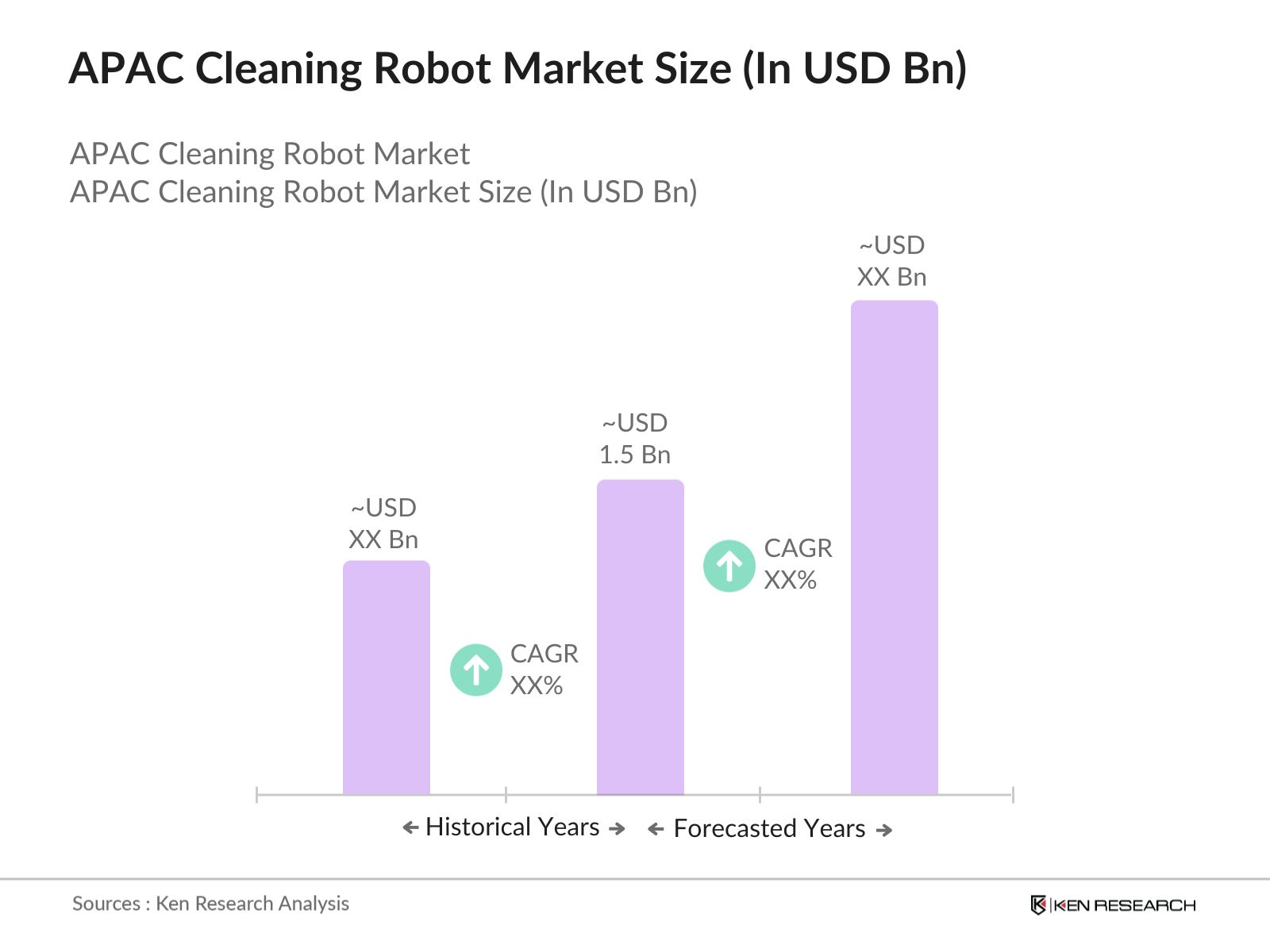
The APAC Cleaning Robot Market is valued at USD 1.5 billion, driven by demand for automated cleaning solutions in both residential and commercial sectors, as well as advancements in AI and smart home technology.
High initial costs and durability constraints are primary challenges in the APAC Cleaning Robot Market, with premium cleaning robots often priced beyond the reach of some consumers. Maintenance requirements further impact their longevity in intensive applications.
Key players in the APAC Cleaning Robot Market include iRobot, Xiaomi, LG Electronics, Ecovacs Robotics, and Dyson, who lead due to strong product offerings and brand presence across multiple APAC regions.
The APAC Cleaning Robot Market is driven by rising disposable incomes, urbanization, and the increasing adoption of smart home devices. Technological advancements in AI-powered navigation and automation further support growth.

What makes us stand out is that our consultants follows Robust, Refine and Result (RRR) methodology. i.e. Robust for clear definitions, approaches and sanity checking, Refine for differentiating respondents facts and opinions and Result for presenting data with story

We have set a benchmark in the industry by offering our clients with syndicated and customized market research reports featuring coverage of entire market as well as meticulous research and analyst insights.

While we don't replace traditional research, we flip the method upside down. Our dual approach of Top Bottom & Bottom Top ensures quality deliverable by not just verifying company fundamentals but also looking at the sector and macroeconomic factors.

With one step in the future, our research team constantly tries to show you the bigger picture. We help with some of the tough questions you may encounter along the way: How is the industry positioned? Best marketing channel? KPI's of competitors? By aligning every element, we help maximize success.

Our report gives you instant access to the answers and sources that other companies might choose to hide. We elaborate each steps of research methodology we have used and showcase you the sample size to earn your trust.

If you need any support, we are here! We pride ourselves on universe strength, data quality, and quick, friendly, and professional service.