About the Report
Base Year 2024Listen to the audio summary
APAC Diving Tourism Market Overview
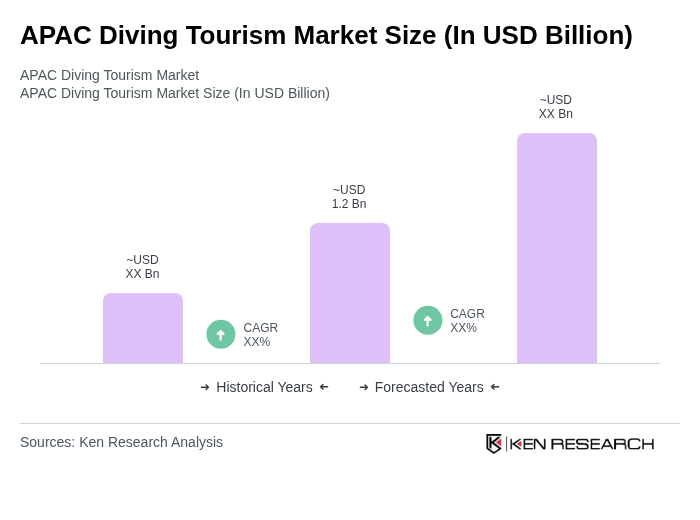
- The APAC Diving Tourism Market is valued at USD 1.2 billion, based on a five-year historical analysis. This growth is primarily driven by the increasing popularity of adventure tourism, rising disposable incomes, and a growing awareness of marine conservation. The market has seen a surge in interest from both domestic and international tourists seeking unique underwater experiences, contributing to its robust expansion.
- Countries such as Thailand, Indonesia, and the Philippines dominate the APAC Diving Tourism Market due to their rich marine biodiversity, stunning coral reefs, and well-established diving infrastructure. These nations offer a variety of diving experiences, from beginner-friendly sites to challenging dives, attracting a diverse range of tourists. Their strategic marketing and investment in tourism infrastructure further enhance their appeal.
- In 2023, the government of Thailand implemented new regulations aimed at promoting sustainable diving practices. Under the "Ministerial Regulation on the Control of Diving Tourism Businesses, B.E. 2566 (2023)" issued by the Ministry of Tourism and Sports, dive operators are required to undergo mandatory training on environmental conservation, and marine protected areas have been formally designated to safeguard underwater ecosystems. The regulation mandates compliance with environmental standards and periodic certification for operators, ensuring that diving tourism contributes positively to local communities and the environment.
APAC Diving Tourism Market Segmentation
By Type:The diving tourism market can be segmented into various types, including Scuba Diving, Free Diving, Technical Diving, Wreck Diving, Drift Diving, and Others. Each type caters to different preferences and skill levels among divers, influencing market dynamics and consumer choices.
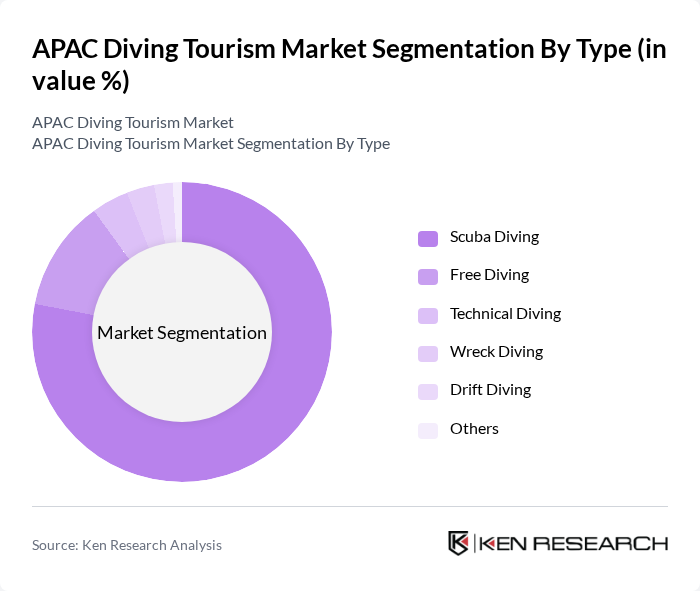
Among these types,Scuba Divingis the leading segment, accounting for a significant portion of the market. This dominance can be attributed to its accessibility for beginners and the wide range of locations available for scuba diving experiences. The popularity of scuba diving courses and certifications has also contributed to its growth, as more individuals seek to explore underwater environments safely. Additionally, the social aspect of scuba diving, often done in groups, enhances its appeal.
By Tourist Type:The market can be further segmented into Domestic Tourists and International Tourists. Each group has distinct preferences and behaviors that influence their diving tourism choices.
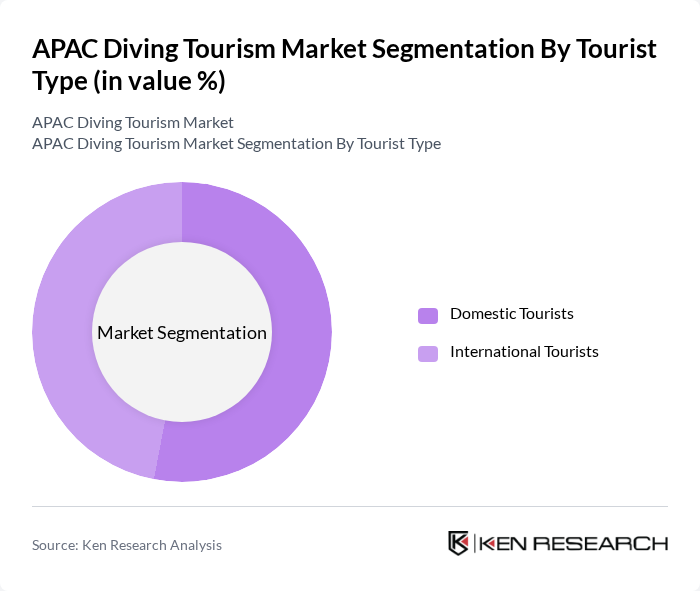
Domestic Touristsrepresent the largest segment in the diving tourism market, driven by the increasing interest in local travel and adventure activities. Many countries in the APAC region have seen a rise in domestic tourism, particularly during the pandemic, as people sought safe and accessible vacation options. This trend has led to a greater emphasis on local dive sites, with many divers exploring their own country's underwater attractions.
APAC Diving Tourism Market Competitive Landscape
The APAC Diving Tourism Market is characterized by a dynamic mix of regional and international players. Leading participants such as PADI (Professional Association of Diving Instructors), SSI (Scuba Schools International), Dive Adventures Asia, Bluewater Travel, ZuBlu, Divers Den, Scuba Travel, LiveAboard.com, Dive The World, The Natural Travel Collection, Aquatic Adventure, Scuba.com, Oceanic Worldwide, TUSA (Tabata USA), Divebooker contribute to innovation, geographic expansion, and service delivery in this space.
APAC Diving Tourism Market Industry Analysis
Growth Drivers
- Increasing Popularity of Adventure Tourism:The APAC region has seen a surge in adventure tourism, with the market valued at approximately $1.2 trillion in future. This growth is driven by a 15% increase in travelers seeking unique experiences, particularly in countries like Thailand and Indonesia, where diving is a major attraction. The rise in adventure tourism is expected to continue, with an estimated 30 million divers participating annually, further boosting the diving tourism sector.
- Growth in Disposable Income Among Consumers:The World Bank projects that the average disposable income in APAC countries will rise by approximately 5% in future, leading to increased spending on leisure activities, including diving tourism. Countries like China and India are experiencing rapid economic growth, with GDP per capita expected to reach approximately $12,000 and $2,500 respectively. This increase in disposable income allows more consumers to invest in travel and adventure experiences, including diving trips.
- Expansion of Diving Infrastructure and Facilities:Investment in diving infrastructure across the APAC region is projected to exceed $500 million in future. This includes the development of new dive shops, training centers, and improved access to dive sites. Countries like the Philippines and Malaysia are enhancing their facilities to accommodate the growing number of divers, which is expected to increase by 20% in future, making diving more accessible and appealing to tourists.
Market Challenges
- Environmental Concerns and Regulations:The diving tourism industry faces significant challenges due to environmental regulations aimed at protecting marine ecosystems. In future, stricter regulations are expected to be enforced, particularly in marine protected areas, which could limit access to popular dive sites. The International Marine Conservation Society reports that approximately 40% of coral reefs in the region are under threat, necessitating a balance between tourism and conservation efforts.
- Safety and Health Risks Associated with Diving:Safety remains a critical concern in the diving tourism sector, with an estimated 1,000 diving-related accidents reported annually in the APAC region. The World Health Organization highlights that inadequate training and equipment contribute to these incidents. As safety regulations tighten, diving operators may face increased operational costs, which could deter potential tourists and impact overall market growth.
APAC Diving Tourism Market Future Outlook
The APAC diving tourism market is poised for significant evolution, driven by emerging trends such as the rise of eco-conscious travelers and technological advancements in diving gear. As more consumers prioritize sustainable travel, operators will need to adapt by offering eco-friendly tours and experiences. Additionally, the integration of virtual reality in pre-dive training and marketing will enhance engagement, attracting a broader audience. These trends indicate a dynamic future for the diving tourism sector in the region.
Market Opportunities
- Development of Eco-Friendly Diving Tours:There is a growing demand for eco-friendly diving experiences, with an estimated 25% of divers expressing interest in sustainable tourism options. Operators can capitalize on this trend by offering tours that emphasize marine conservation and responsible diving practices, potentially increasing customer loyalty and attracting environmentally conscious travelers.
- Collaboration with Local Communities for Sustainable Tourism:Engaging local communities in diving tourism can enhance cultural experiences and promote sustainability. Reports indicate that community-based tourism can increase local income by up to 30%. By partnering with local stakeholders, diving operators can create authentic experiences that benefit both tourists and residents, fostering a more sustainable tourism model.
Scope of the Report
| Segment | Sub-Segments |
|---|---|
| By Type | Scuba Diving Free Diving Technical Diving Wreck Diving Drift Diving Others |
| By Tourist Type | Domestic Tourists International Tourists |
| By Age Group | –20 Years –30 Years –40 Years and Above |
| By Diver Experience Level | New Diver Recreational Diver Active Diver Professional Diver |
| By End-User | Individual/Solo Travelers Friends/Groups Couples Families |
| By Region | Southeast Asia (Indonesia, Thailand, Malaysia, Philippines, etc.) East Asia (China, Japan, South Korea, etc.) South Asia (India, Sri Lanka, Maldives, etc.) Oceania (Australia, New Zealand, Fiji, etc.) |
| By Booking Channel | Online Travel Agencies Direct Bookings (Operator Websites) Offline Travel Agents Others |
Key Target Audience
Investors and Venture Capitalist Firms
Government and Regulatory Bodies (e.g., Ministry of Tourism, National Parks Authority)
Tourism Boards and Destination Marketing Organizations
Diving Equipment Manufacturers and Suppliers
Travel Agencies and Tour Operators
Marine Conservation Organizations
Hospitality Industry Stakeholders (e.g., Hotels and Resorts)
Insurance Companies Specializing in Adventure Tourism
Players Mentioned in the Report:
PADI (Professional Association of Diving Instructors)
SSI (Scuba Schools International)
Dive Adventures Asia
Bluewater Travel
ZuBlu
Divers Den
Scuba Travel
LiveAboard.com
Dive The World
The Natural Travel Collection
Aquatic Adventure
Scuba.com
Oceanic Worldwide
TUSA (Tabata USA)
Divebooker
Table of Contents
Market Assessment Phase
1. Executive Summary and Approach
2. APAC Diving Tourism Market Overview
2.1 Key Insights and Strategic Recommendations
2.2 APAC Diving Tourism Market Overview
2.3 Definition and Scope
2.4 Evolution of Market Ecosystem
2.5 Timeline of Key Regulatory Milestones
2.6 Value Chain & Stakeholder Mapping
2.7 Business Cycle Analysis
2.8 Policy & Incentive Landscape
3. APAC Diving Tourism Market Analysis
3.1 Growth Drivers
3.1.1 Increasing popularity of adventure tourism
3.1.2 Growth in disposable income among consumers
3.1.3 Expansion of diving infrastructure and facilities
3.1.4 Rising awareness of marine conservation
3.2 Market Challenges
3.2.1 Environmental concerns and regulations
3.2.2 Safety and health risks associated with diving
3.2.3 Competition from alternative tourist activities
3.2.4 Seasonal fluctuations in tourist arrivals
3.3 Market Opportunities
3.3.1 Development of eco-friendly diving tours
3.3.2 Collaboration with local communities for sustainable tourism
3.3.3 Technological advancements in diving equipment
3.3.4 Growth of social media marketing for tourism
3.4 Market Trends
3.4.1 Rise in solo and female diving travelers
3.4.2 Increased focus on wellness and holistic experiences
3.4.3 Integration of virtual reality in diving experiences
3.4.4 Popularity of liveaboard diving trips
3.5 Government Regulation
3.5.1 Marine protected areas and conservation laws
3.5.2 Licensing requirements for diving operators
3.5.3 Safety regulations for diving activities
3.5.4 Environmental impact assessments for new developments
4. SWOT Analysis
5. Stakeholder Analysis
6. Porter's Five Forces Analysis
7. APAC Diving Tourism Market Market Size, 2019-2024
7.1 By Value
7.2 By Volume
7.3 By Average Selling Price
8. APAC Diving Tourism Market Segmentation
8.1 By Type
8.1.1 Scuba Diving
8.1.2 Free Diving
8.1.3 Technical Diving
8.1.4 Wreck Diving
8.1.5 Drift Diving
8.1.6 Others
8.2 By Tourist Type
8.2.1 Domestic Tourists
8.2.2 International Tourists
8.3 By Age Group
8.3.1 10–20 Years
8.3.2 21–30 Years
8.3.3 31–40 Years
8.3.4 41 and Above
8.4 By Diver Experience Level
8.4.1 New Diver
8.4.2 Recreational Diver
8.4.3 Active Diver
8.4.4 Professional Diver
8.5 By End-User
8.5.1 Individual/Solo Travelers
8.5.2 Friends/Groups
8.5.3 Couples
8.5.4 Families
8.6 By Region
8.6.1 Southeast Asia (Indonesia, Thailand, Malaysia, Philippines, etc.)
8.6.2 East Asia (China, Japan, South Korea, etc.)
8.6.3 South Asia (India, Sri Lanka, Maldives, etc.)
8.6.4 Oceania (Australia, New Zealand, Fiji, etc.)
8.7 By Booking Channel
8.7.1 Online Travel Agencies
8.7.2 Direct Bookings (Operator Websites)
8.7.3 Offline Travel Agents
8.7.4 Others
9. APAC Diving Tourism Market Competitive Analysis
9.1 Market Share of Key Players
9.2 Cross Comparison of Key Players
9.2.1 Company Name
9.2.2 Number of Dive Centers/Locations
9.2.3 Annual Certified Divers (Volume)
9.2.4 Revenue (USD Million)
9.2.5 Market Penetration (APAC Countries Served)
9.2.6 Average Booking Value (USD)
9.2.7 Customer Satisfaction/Net Promoter Score (NPS)
9.2.8 Repeat Booking Rate (%)
9.2.9 Digital Engagement (Website/App Traffic, Social Media Followers)
9.2.10 Sustainability/Eco-Certification Status
9.3 SWOT Analysis of Top Players
9.4 Pricing Analysis
9.5 Detailed Profile of Major Companies
9.5.1 PADI (Professional Association of Diving Instructors)
9.5.2 SSI (Scuba Schools International)
9.5.3 Dive Adventures Asia
9.5.4 Bluewater Travel
9.5.5 ZuBlu
9.5.6 Divers Den
9.5.7 Scuba Travel
9.5.8 LiveAboard.com
9.5.9 Dive The World
9.5.10 The Natural Travel Collection
9.5.11 Aquatic Adventure
9.5.12 Scuba.com
9.5.13 Oceanic Worldwide
9.5.14 TUSA (Tabata USA)
9.5.15 Divebooker
10. APAC Diving Tourism Market End-User Analysis
10.1 Procurement Behavior of Key Ministries
10.1.1 Budget Allocation for Tourism
10.1.2 Collaboration with Private Sector
10.1.3 Focus on Sustainable Practices
10.1.4 Regulatory Compliance Requirements
10.2 Corporate Spend on Infrastructure & Energy
10.2.1 Investment in Diving Facilities
10.2.2 Funding for Marine Conservation
10.2.3 Partnerships with Local Businesses
10.2.4 Technology Upgrades for Safety
10.3 Pain Point Analysis by End-User Category
10.3.1 Safety Concerns
10.3.2 Accessibility Issues
10.3.3 Environmental Impact Awareness
10.3.4 Cost of Diving Activities
10.4 User Readiness for Adoption
10.4.1 Awareness of Diving Opportunities
10.4.2 Training and Certification Availability
10.4.3 Marketing Effectiveness
10.4.4 Community Engagement
10.5 Post-Deployment ROI and Use Case Expansion
10.5.1 Customer Feedback Mechanisms
10.5.2 Performance Metrics Tracking
10.5.3 Expansion into New Markets
10.5.4 Long-term Partnerships Development
11. APAC Diving Tourism Market Future Size, 2025-2030
11.1 By Value
11.2 By Volume
11.3 By Average Selling Price
Go-To-Market Strategy Phase
1. Whitespace Analysis + Business Model Canvas
1.1 Market Gaps Identification
1.2 Value Proposition Development
1.3 Revenue Streams Analysis
1.4 Cost Structure Evaluation
1.5 Key Partnerships Exploration
1.6 Customer Segmentation
1.7 Competitive Advantage Assessment
2. Marketing and Positioning Recommendations
2.1 Branding Strategies
2.2 Product USPs
2.3 Target Audience Identification
2.4 Communication Channels
2.5 Promotional Activities
3. Distribution Plan
3.1 Urban Retail Strategies
3.2 Rural NGO Tie-ups
3.3 Online vs Offline Distribution
3.4 Partnership Opportunities
3.5 Logistics and Supply Chain Management
4. Channel & Pricing Gaps
4.1 Underserved Routes
4.2 Pricing Bands Analysis
4.3 Competitor Pricing Strategies
4.4 Customer Willingness to Pay
4.5 Value Perception
5. Unmet Demand & Latent Needs
5.1 Category Gaps
5.2 Consumer Segments Analysis
5.3 Emerging Trends Identification
5.4 Customer Feedback Integration
5.5 Market Entry Opportunities
6. Customer Relationship
6.1 Loyalty Programs
6.2 After-sales Service
6.3 Customer Engagement Strategies
6.4 Feedback Mechanisms
6.5 Community Building Initiatives
7. Value Proposition
7.1 Sustainability Initiatives
7.2 Integrated Supply Chains
7.3 Unique Selling Points
7.4 Customer-Centric Approach
7.5 Competitive Differentiation
8. Key Activities
8.1 Regulatory Compliance
8.2 Branding Efforts
8.3 Distribution Setup
8.4 Training and Development
8.5 Marketing Campaigns
9. Entry Strategy Evaluation
9.1 Domestic Market Entry Strategy
9.1.1 Product Mix
9.1.2 Pricing Band
9.1.3 Packaging Options
9.2 Export Entry Strategy
9.2.1 Target Countries
9.2.2 Compliance Roadmap
10. Entry Mode Assessment
10.1 Joint Ventures
10.2 Greenfield Investments
10.3 Mergers & Acquisitions
10.4 Distributor Model
10.5 Risk Assessment
11. Capital and Timeline Estimation
11.1 Capital Requirements
11.2 Timelines for Implementation
11.3 Funding Sources
11.4 Financial Projections
11.5 Milestone Tracking
12. Control vs Risk Trade-Off
12.1 Ownership vs Partnerships
12.2 Risk Mitigation Strategies
12.3 Control Mechanisms
12.4 Partnership Evaluation
12.5 Long-term Strategy Alignment
13. Profitability Outlook
13.1 Breakeven Analysis
13.2 Long-term Sustainability
13.3 Profit Margin Projections
13.4 Revenue Growth Forecast
13.5 Cost Management Strategies
14. Potential Partner List
14.1 Distributors
14.2 Joint Ventures
14.3 Acquisition Targets
14.4 Strategic Alliances
14.5 Industry Collaborations
15. Execution Roadmap
15.1 Phased Plan for Market Entry
15.1.1 Market Setup
15.1.2 Market Entry
15.1.3 Growth Acceleration
15.1.4 Scale & Stabilize
15.2 Key Activities and Milestones
15.2.1 Activity Planning
15.2.2 Milestone Tracking
15.2.3 Performance Evaluation
15.2.4 Adjustment Strategies
Research Methodology
Phase 1: Approach1
Desk Research
- Analysis of tourism statistics from the Asia-Pacific Tourism Organization
- Review of industry reports from diving associations and tourism boards
- Examination of market trends through academic journals and publications on marine tourism
Primary Research
- Interviews with dive shop owners and operators across key APAC markets
- Surveys with tourists who have participated in diving activities in the region
- Focus groups with diving instructors and tour guides to gather insights on customer preferences
Validation & Triangulation
- Cross-validation of findings through multiple data sources, including government tourism data
- Triangulation of insights from primary interviews with secondary research findings
- Sanity checks conducted through expert panel reviews comprising industry veterans
Phase 2: Market Size Estimation1
Top-down Assessment
- Estimation of total tourism revenue in APAC, focusing on diving-related expenditures
- Segmentation of the market by country and type of diving experience (e.g., recreational, professional)
- Incorporation of growth rates from historical data and tourism forecasts
Bottom-up Modeling
- Collection of data on the number of dive shops and their average revenue per shop
- Estimation of average spending per tourist on diving activities and related services
- Calculation of total market size based on the number of divers and average spend
Forecasting & Scenario Analysis
- Multi-factor regression analysis considering factors like environmental sustainability and travel trends
- Scenario modeling based on potential impacts of climate change on diving locations
- Development of baseline, optimistic, and pessimistic market growth projections through 2030
Phase 3: CATI Sample Composition1
| Scope Item/Segment | Sample Size | Target Respondent Profiles |
|---|---|---|
| Recreational Diving Tourists | 100 | Leisure Divers, Travel Enthusiasts |
| Professional Diving Instructors | 60 | Certified Instructors, Dive Masters |
| Diving Equipment Retailers | 50 | Store Owners, Sales Managers |
| Marine Conservation Organizations | 40 | Conservation Officers, Environmental Scientists |
| Tourism Boards and Agencies | 40 | Tourism Directors, Marketing Managers |
Frequently Asked Questions
What is the current value of the APAC Diving Tourism Market?
The APAC Diving Tourism Market is valued at approximately USD 1.2 billion, reflecting a robust growth driven by increasing adventure tourism, rising disposable incomes, and heightened awareness of marine conservation among tourists.
Which countries are leading in the APAC Diving Tourism Market?
What types of diving experiences are available in the APAC region?
How has the APAC Diving Tourism Market been affected by environmental regulations?
Other Regional/Country Reports
Indonesia Diving Tourism Market
Malaysia Diving Tourism Market
KSA Diving Tourism Market
SEA Diving Tourism Market
Vietnam Diving Tourism Market
Other Adjacent Reports
Germany Marine Conservation Market
Malaysia Scuba Equipment Market
Japan Underwater Photography Market
Kuwait Water Sports Market
Saudi Arabia Travel Insurance Market Outlook to 2030: Size, Share, Growth and TrendsKuwait Sustainable Tourism Market
Indonesia Dive Resort Market
Malaysia Adventure Travel Agency Market
Why Buy From Us?

What makes us stand out is that our consultants follow Robust, Refine and Result (RRR) methodology. Robust for clear definitions, approaches and sanity checking, Refine for differentiating respondents' facts and opinions, and Result for presenting data with story.

We have set a benchmark in the industry by offering our clients with syndicated and customized market research reports featuring coverage of entire market as well as meticulous research and analyst insights.

While we don't replace traditional research, we flip the method upside down. Our dual approach of Top Bottom & Bottom Top ensures quality deliverable by not just verifying company fundamentals but also looking at the sector and macroeconomic factors.

With one step in the future, our research team constantly tries to show you the bigger picture. We help with some of the tough questions you may encounter along the way: How is the industry positioned? Best marketing channel? KPI's of competitors? By aligning every element, we help maximize success.

Our report gives you instant access to the answers and sources that other companies might choose to hide. We elaborate each steps of research methodology we have used and showcase you the sample size to earn your trust.

If you need any support, we are here! We pride ourselves on universe strength, data quality, and quick, friendly, and professional service.