Ken Research Logo

APAC Natural Fiber Composites Market Outlook to 2030

Region:Asia

Author(s):Shubham Kashyap

Product Code:KROD8218

Published On

December 2024

Total pages

86

About the Report

APAC Natural Fiber Composites Market Overview

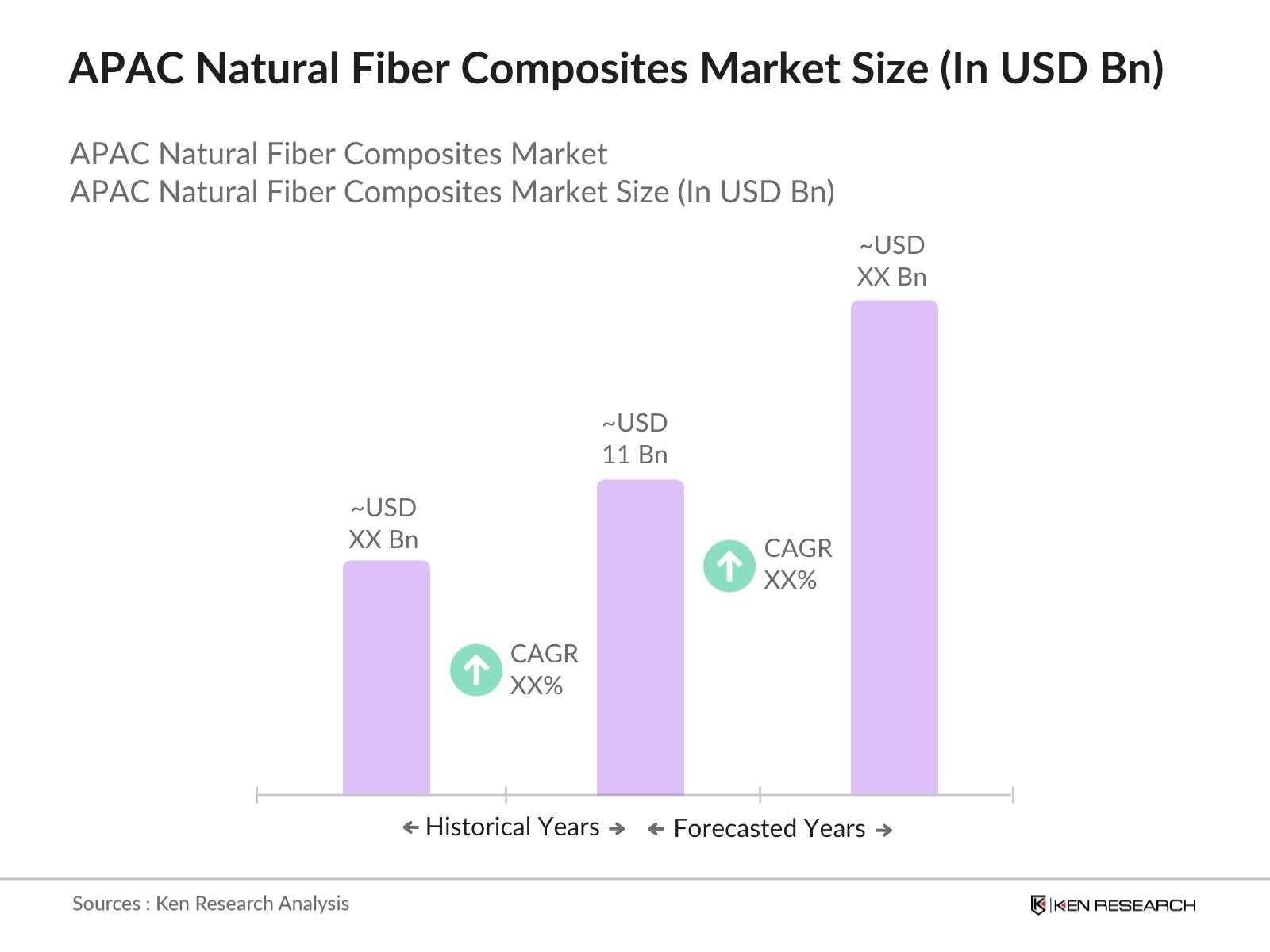
  • The APAC Natural Fiber Composites Market is valued at USD 11 billion, primarily driven by increasing demand for sustainable materials across industries such as automotive, construction, and consumer goods. This growth is further supported by government initiatives promoting eco-friendly manufacturing practices and the cost-effectiveness of natural fibers compared to synthetic alternatives. The shift towards green materials in manufacturing aligns with the broader APAC commitment to sustainability, creating robust demand for natural fiber composites in key industrial applications. APAC Natural Fiber Composites Market
  • China, Japan, and India lead the APAC Natural Fiber Composites Market due to strong government support, well-established manufacturing infrastructure, and large automotive sectors prioritizing sustainable materials. Chinas emphasis on environmental protection and Japans advanced R&D capabilities in sustainable materials reinforce their dominance. Indias growing construction industry, coupled with government policies supporting green building materials, further boosts its position in this market.
  • Governments across APAC are strengthening environmental compliance standards, pushing industries toward sustainable materials. For example, Indias Ministry of Environment, Forest and Climate Change implemented stricter controls in 2024 on non-biodegradable materials, effectively promoting natural fiber composites for applications in packaging and construction. Similarly, in 2023, China implemented stringent emissions reduction targets for manufacturing plants, directly impacting material selection for industries reliant on traditional composites. This regulatory shift supports natural fibers, given their low carbon footprint and biodegradability.

APAC Natural Fiber Composites Market Segmentation

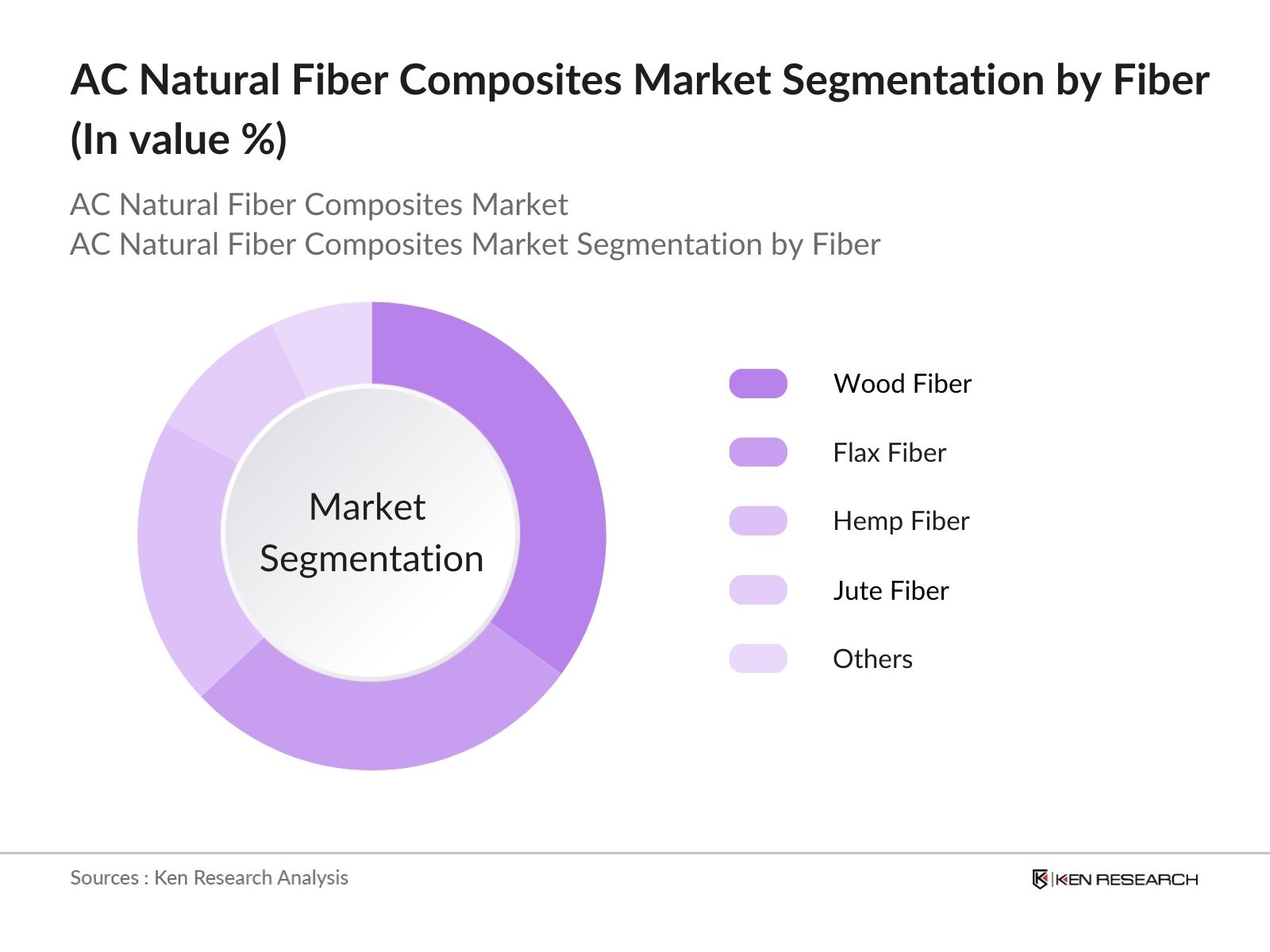
  • By Fiber Type: The Market is segmented by fiber type into wood fiber, flax fiber, hemp fiber, jute fiber, and others. Wood fiber composites hold a dominant share due to their widespread application in construction and furniture manufacturing, where strength and versatility are essential. The natural properties of wood fibers align with environmental regulations, and their availability makes them a practical choice for composite material productionAPAC Natural Fiber Composites Market Segmentation
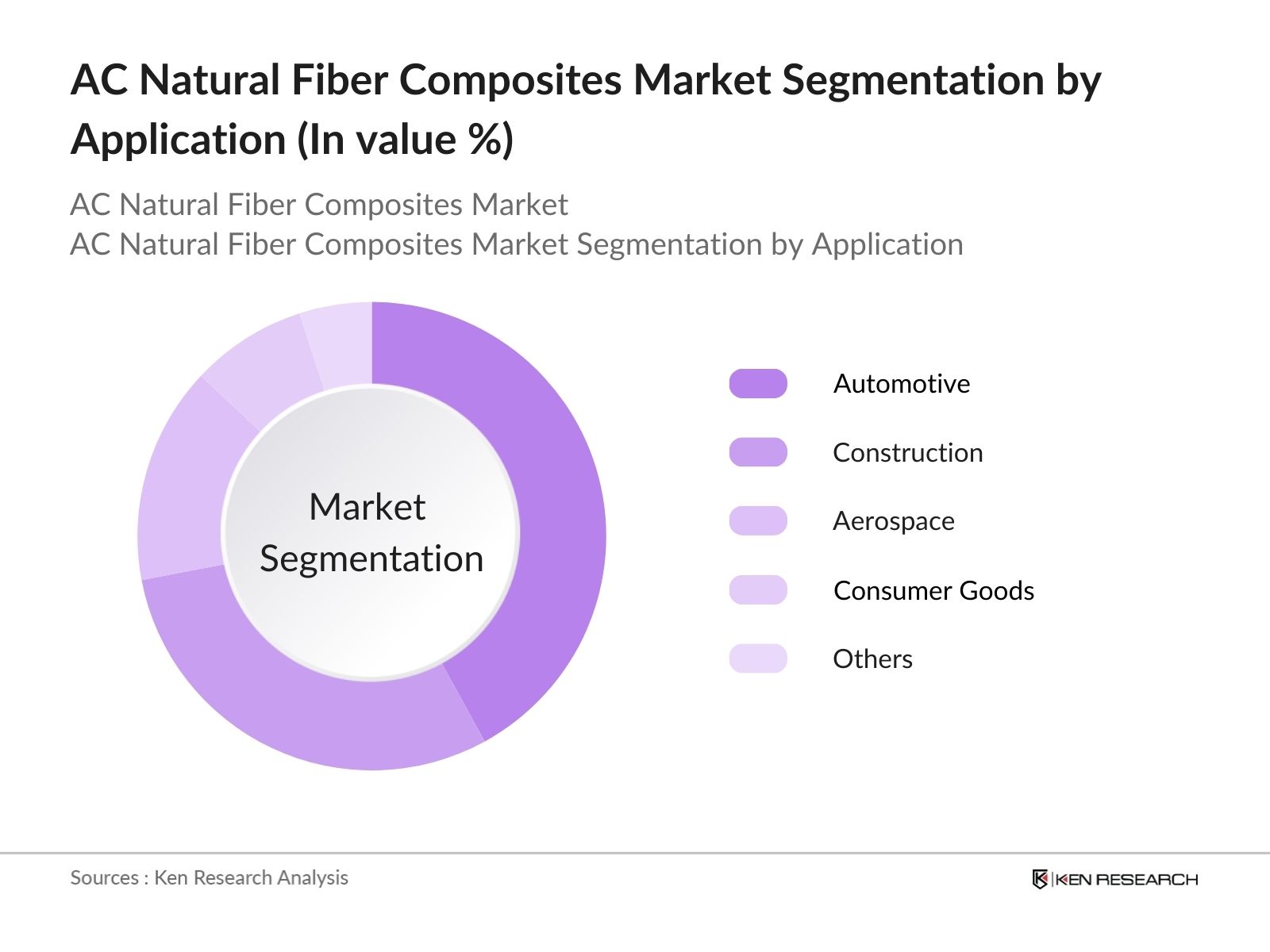
  • By Application: The Market is further segmented by application into automotive, construction, aerospace, consumer goods, and others. The automotive sector holds the largest share in this segment, driven by a shift toward lightweight, eco-friendly materials that enhance fuel efficiency and reduce emissions. Automotive manufacturers are increasingly adopting natural fiber composites for interior components, a trend reinforced by strict emission regulations and the push towards sustainability. APAC Natural Fiber Composites Market Segmentation

APAC Natural Fiber Composites Market Competitive Landscape

The APAC Natural Fiber Composites Market is characterized by a mix of global leaders and regional players, with companies investing heavily in sustainable product innovation and production capacity expansion to meet rising demand.

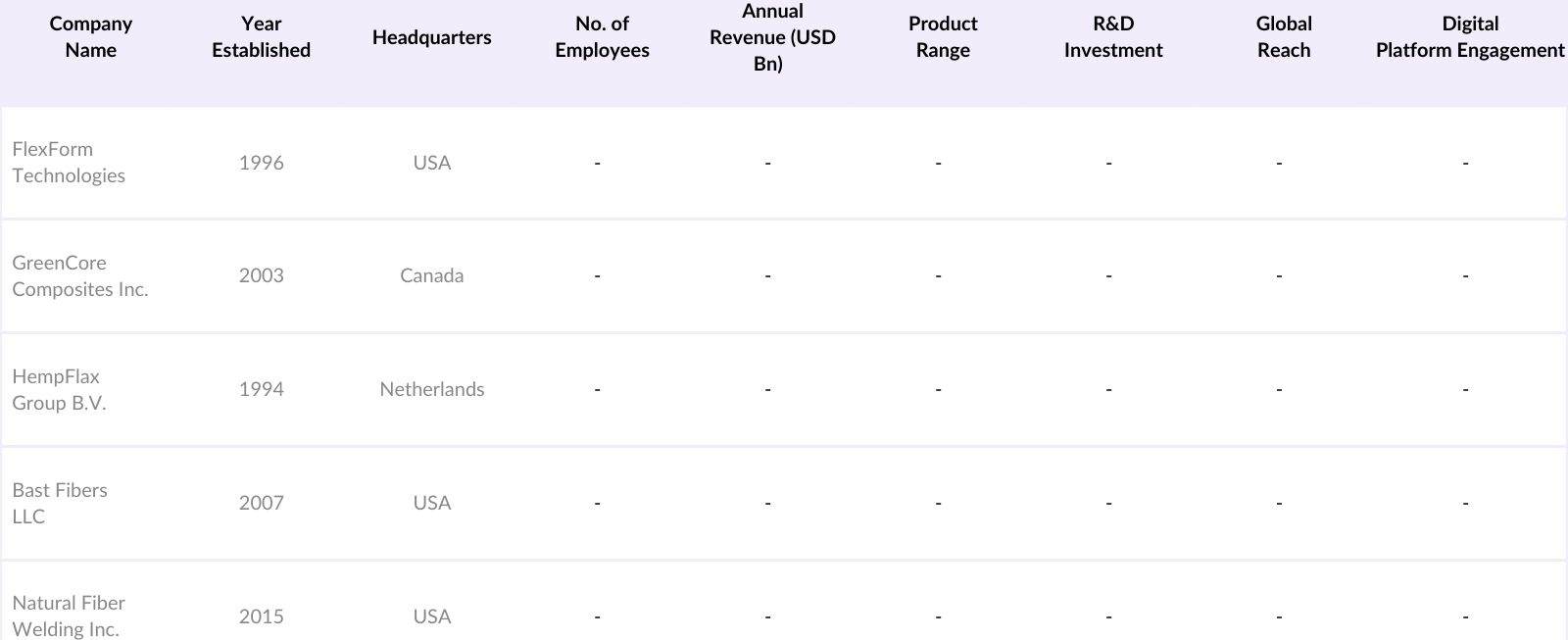
The APAC Natural Fiber Composites Market is led by companies prioritizing sustainable practices across multiple sectors. Major players like FlexForm Technologies and HempFlax Group B.V. dominate through strong production capacities and ongoing investment in green technologies and processes. APAC Natural Fiber Composites Market Competitive Landscape
APAC Natural Fiber Composites Market Analysis

Growth Drivers

  • Sustainable Manufacturing Demand: With sustainability goals intensifying across the APAC region, governments have enforced stricter policies aimed at lowering carbon emissions. China has enacted a series of emissions reduction targets, with an aim to reach peak emissions before 2030, sparking demand for sustainable materials such as natural fiber composites. Additionally, Japan and South Korea are advancing toward net-zero emissions by 2050, encouraging industries to explore eco-friendly alternatives to traditional plastics and metals. This shift promotes the use of renewable composites, particularly in transportation and consumer goods manufacturing.
  • Renewable Resource Emphasis: The APAC regions commitment to renewable resources has grown substantially, driven by government mandates to reduce fossil fuel reliance. In 2024, Asia-Pacific countries collectively invested over 100 billion in green initiatives, including renewable resources, with Japan being the largest contributor in the renewable energy development. This commitment has led to increased adoption of natural fiber composites, particularly in industrial applications. These materials reduce dependency on synthetic fibers and align with the Renewable Energy Directive across the region. This emphasis supports the use of composites derived from bamboo, jute, and kenaf, commonly used in the automotive and construction sectors.
  • Technological Advancements in Fiber Processing: The APAC region has seen significant advancements in fiber processing technologies, which improve the efficiency and quality of natural fiber composites. Japan invested nearly USD 120 million combined in 2023 to develop advanced processing technologies that reduce fiber degradation and enhance bonding with polymers. These improvements lower production costs and expand the potential applications of natural fiber composites in high-performance sectors like automotive and aerospace. Enhanced fiber processing methods are also expected to reduce reliance on imported synthetic fibers, supporting local economies in countries such as India and Indonesia.

Market Challenges

  • Supply Chain Issues: Supply chain instability for natural fibers remains a challenge, especially with fluctuating crop yields impacted by climate change. In 2024, severe monsoons in India disrupted major portion of jute production, leading to raw material shortages and delayed shipments. Furthermore, regional logistical issues have affected timely transportation, as noted in Thailands 2022 report on agricultural exports. Such disruptions increase production costs for composite manufacturers, impacting their ability to maintain consistent output and meet high demand.
  • Processing Complexity: Natural fiber composites in the APAC region face processing challenges due to fiber variability, requiring specialized treatments that add to manufacturing costs. Countries like India and Vietnam, key producers of jute and kenaf, report that maintaining consistent fiber quality demands investment in advanced technology, which can be a barrier for smaller manufacturers. The high costs associated with processing technology upgrades significantly impact small to medium enterprises across the region. This complexity underscores the need for enhanced standardization in composite production, which could help streamline processes and improve quality consistency.

APAC Natural Fiber Composites Market Future Outlook

The APAC Natural Fiber Composites Market is expected to experience substantial growth through 2028, fueled by increasing government support, a rising focus on sustainable materials, and strong demand across automotive and construction sectors. As companies prioritize environmentally friendly materials, the adoption of natural fiber composites is projected to expand, particularly in automotive applications where lightweight and sustainable materials are essential.

Future Market Opportunities

  • Lightweight Material Demand: The APAC region has seen increased adoption of lightweight materials, particularly in automotive and aerospace applications, where weight reduction is critical for fuel efficiency. As of 2023, Japans automotive industry alone invested billions in lightweight materials, with natural fiber composites being a primary focus. Countries like China are also exploring natural fibers as a substitute for conventional materials in their vehicle manufacturing processes. This growing demand provides ample opportunity for APAC-based manufacturers to innovate and expand their offerings in the composites market.
  • Eco-Friendly Standards: Growing demand for eco-friendly materials has led to an emphasis on biodegradable composites. By 2024, Chinas Ministry of Ecology and Environment is mandating eco-friendly standards for materials used in construction and consumer products, which boosts the attractiveness of natural fiber composites. Australia is also progressing with policies promoting sustainable manufacturing, allocating billions to green materials research in 2023. These regulations open new avenues for natural fiber composites in packaging, electronics, and furniture manufacturing, aligning with the regions environmental compliance standards.

Scope of the Report

By Fiber Type

Wood Fiber Composites

Flax Fiber Composites

Hemp Fiber Composites

Jute Fiber Composites

Others

By Application

Automotive

Building & Construction

Aerospace

Consumer Goods

Others

By Process Type

Compression Molding

Injection Molding

Pultrusion

Others

By Resin Type

Thermoset Resins

Thermoplastic Resins

By Region

East Asia

South Asia

Oceania

Others


Products


Key Target Audience

  • Automotive Manufacturers

  • Construction Companies

  • Consumer Goods Manufacturers

  • Aerospace Industry Players

  • Investors and Venture Capitalist Firms

  • Banks and Financial Institutions

  • Government and Regulatory Bodies (e.g., Ministry of Environment, Sustainability Standards Organizations)

  • Research & Development Organizations

Companies

Players Mentioned in the Report

  • FlexForm Technologies

  • GreenCore Composites Inc.

  • Greencastle Corp.

  • Tecnaro GmbH

  • Bast Fibers LLC

  • Natural Fiber Welding Inc.

  • HempFlax Group B.V.

  • Trex Company, Inc.

  • Procotex Corporation S.A.

  • Fiberon LLC

  • Lanxess AG

  • Asahi Kasei Corp.

  • Lingrove

  • EcoTechnilin Ltd.

  • Advanced Composites Engineering

Table of Contents

1. APAC Natural Fiber Composites Market Overview

1.1 Definition and Scope

1.2 Market Taxonomy

1.3 Market Dynamics Overview

1.4 Key Growth Indicators

2. APAC Natural Fiber Composites Market Size (in USD Billion)

2.1 Historical Market Size Analysis

2.2 Year-On-Year Growth Analysis

2.3 Key Developments and Technological Milestones

3. APAC Natural Fiber Composites Market Analysis

3.1 Growth Drivers (e.g., Renewable Resource Emphasis, Sustainability Goals)

3.2 Market Challenges (e.g., Processing Complexity, Supply Chain Stability)

3.3 Opportunities (e.g., Lightweight Material Demand, Eco-Friendly Standards)

3.4 Trends (e.g., Automotive Lightweighting, Bio-based Innovation)

3.5 Government Regulations (e.g., Environmental Compliance Standards, Emission Reduction Targets)

3.6 SWOT Analysis

3.7 Value Chain Analysis

3.8 Porters Five Forces

3.9 Competitive Ecosystem

4. APAC Natural Fiber Composites Market Segmentation

4.1 By Fiber Type (in Value %)

4.1.1 Wood Fiber Composites

4.1.2 Flax Fiber Composites

4.1.3 Hemp Fiber Composites

4.1.4 Jute Fiber Composites

4.1.5 Others

4.2 By Application (in Value %)

4.2.1 Automotive

4.2.2 Building & Construction

4.2.3 Aerospace

4.2.4 Consumer Goods

4.2.5 Others

4.3 By Process Type (in Value %)

4.3.1 Compression Molding

4.3.2 Injection Molding

4.3.3 Pultrusion

4.3.4 Others

4.4 By Resin Type (in Value %)

4.4.1 Thermoset Resins

4.4.2 Thermoplastic Resins

4.5 By Region (in Value %)

4.5.1 East Asia

4.5.2 South Asia

4.5.3 Oceania

4.5.4 Others

5. APAC Natural Fiber Composites Market Competitive Analysis

5.1 Profiles of Major Companies

5.1.1 FlexForm Technologies

5.1.2 GreenCore Composites Inc.

5.1.3 Greencastle Corp.

5.1.4 Tecnaro GmbH

5.1.5 Bast Fibers LLC

5.1.6 Natural Fiber Welding Inc.

5.1.7 HempFlax Group B.V.

5.1.8 Trex Company, Inc.

5.1.9 Procotex Corporation S.A.

5.1.10 Fiberon LLC

5.1.11 Lanxess AG

5.1.12 Asahi Kasei Corp.

5.1.13 Lingrove

5.1.14 EcoTechnilin Ltd.

5.1.15 Advanced Composites Engineering

5.2 Cross Comparison Parameters (Manufacturing Capacity, Technological Integration, Sustainability Focus, Production Location, Employee Count, Established Markets, R&D Spend, Strategic Partnerships)

5.3 Market Share Analysis

5.4 Strategic Initiatives and Partnerships

5.5 Mergers and Acquisitions

5.6 Investment and Funding Landscape

5.7 Government Grants and Subsidies

5.8 Private Equity and Venture Capital Involvement

6. APAC Natural Fiber Composites Market Regulatory Framework

6.1 Environmental Compliance Standards

6.2 Certification and Labeling Requirements

6.3 Import/Export Policies and Duties

7. APAC Natural Fiber Composites Future Market Size (in USD Billion)

7.1 Future Growth Projections

7.2 Key Growth Drivers and Inhibitors

8. APAC Natural Fiber Composites Future Market Segmentation

8.1 By Fiber Type (in Value %)

8.2 By Application (in Value %)

8.3 By Process Type (in Value %)

8.4 By Resin Type (in Value %)

8.5 By Region (in Value %)

9. APAC Natural Fiber Composites Market Analysts Recommendations

9.1 Total Addressable Market Analysis

9.2 Emerging Market Opportunities

9.3 Strategic Marketing Insights

9.4 White Space Analysis for Product Innovation

Disclaimer Contact Us

Research Methodology


Step 1: Identification of Key Variables

This step involves identifying major stakeholders in the APAC Natural Fiber Composites Market, with extensive desk research from secondary and proprietary databases, focusing on defining variables that influence the market dynamics.

Step 2: Market Analysis and Construction

Historical data on market growth and penetration is analyzed, covering metrics like regional production capabilities, supply-demand trends, and revenue generation across sectors.

Step 3: Hypothesis Validation and Expert Consultation

Industry hypotheses are validated through expert interviews to gather insights on production practices, market challenges, and emerging trends, ensuring accuracy in data interpretation.

Step 4: Research Synthesis and Final Output

The final analysis includes direct consultations with manufacturers, assessing market segmentation, production capacities, and consumer demand trends to provide an in-depth outlook of the APAC Natural Fiber Composites Market.


Frequently Asked Questions


01. How big is the APAC Natural Fiber Composites Market?

The APAC Natural Fiber Composites Market is valued at USD 11 billion, driven by demand from automotive and construction sectors seeking sustainable materials.

02. What are the challenges in the APAC Natural Fiber Composites Market?

Challenges in the APAC Natural Fiber Composites Market include supply chain variability due to agricultural yield fluctuations and regulatory inconsistencies across regions, which affect production consistency.

03. Who are the major players in the APAC Natural Fiber Composites Market?

Key players in the APAC Natural Fiber Composites Market include FlexForm Technologies, HempFlax Group B.V., GreenCore Composites Inc., and Natural Fiber Welding Inc., leading due to their focus on sustainable practices and innovation.

04. What are the growth drivers of the APAC Natural Fiber Composites Market?

The APAC Natural Fiber Composites Market growth is driven by demand for eco-friendly materials and the automotive sectors shift towards lightweight composites, aligning with APACs sustainability goals.


Why Buy From Us?

RRR
Refine Robust Result (RRR) Framework

What makes us stand out is that our consultants follows Robust, Refine and Result (RRR) methodology. i.e. Robust for clear definitions, approaches and sanity checking, Refine for differentiating respondents facts and opinions and Result for presenting data with story

Our Reach Is Unmatched

We have set a benchmark in the industry by offering our clients with syndicated and customized market research reports featuring coverage of entire market as well as meticulous research and analyst insights.

Research
Shifting the Research Paradigm

While we don't replace traditional research, we flip the method upside down. Our dual approach of Top Bottom & Bottom Top ensures quality deliverable by not just verifying company fundamentals but also looking at the sector and macroeconomic factors.

Insite
More Insights-Better Decisions

With one step in the future, our research team constantly tries to show you the bigger picture. We help with some of the tough questions you may encounter along the way: How is the industry positioned? Best marketing channel? KPI's of competitors? By aligning every element, we help maximize success.

Trust
Transparency and Trust

Our report gives you instant access to the answers and sources that other companies might choose to hide. We elaborate each steps of research methodology we have used and showcase you the sample size to earn your trust.

support
Round the Clock Support

If you need any support, we are here! We pride ourselves on universe strength, data quality, and quick, friendly, and professional service.

Why Client Choose Us?

400000+ Reports in repository
150+ Consulting project a year
100+ Analysts
8000+ Client Queries in 2022