APAC Self-Tanning Products Market Outlook to 2030

Region:Asia

Author(s):Shubham Kashyap

Product Code:KROD4187

Published On

December 2024

Total pages

81

About the Report

APAC Self-Tanning Products Market Overview

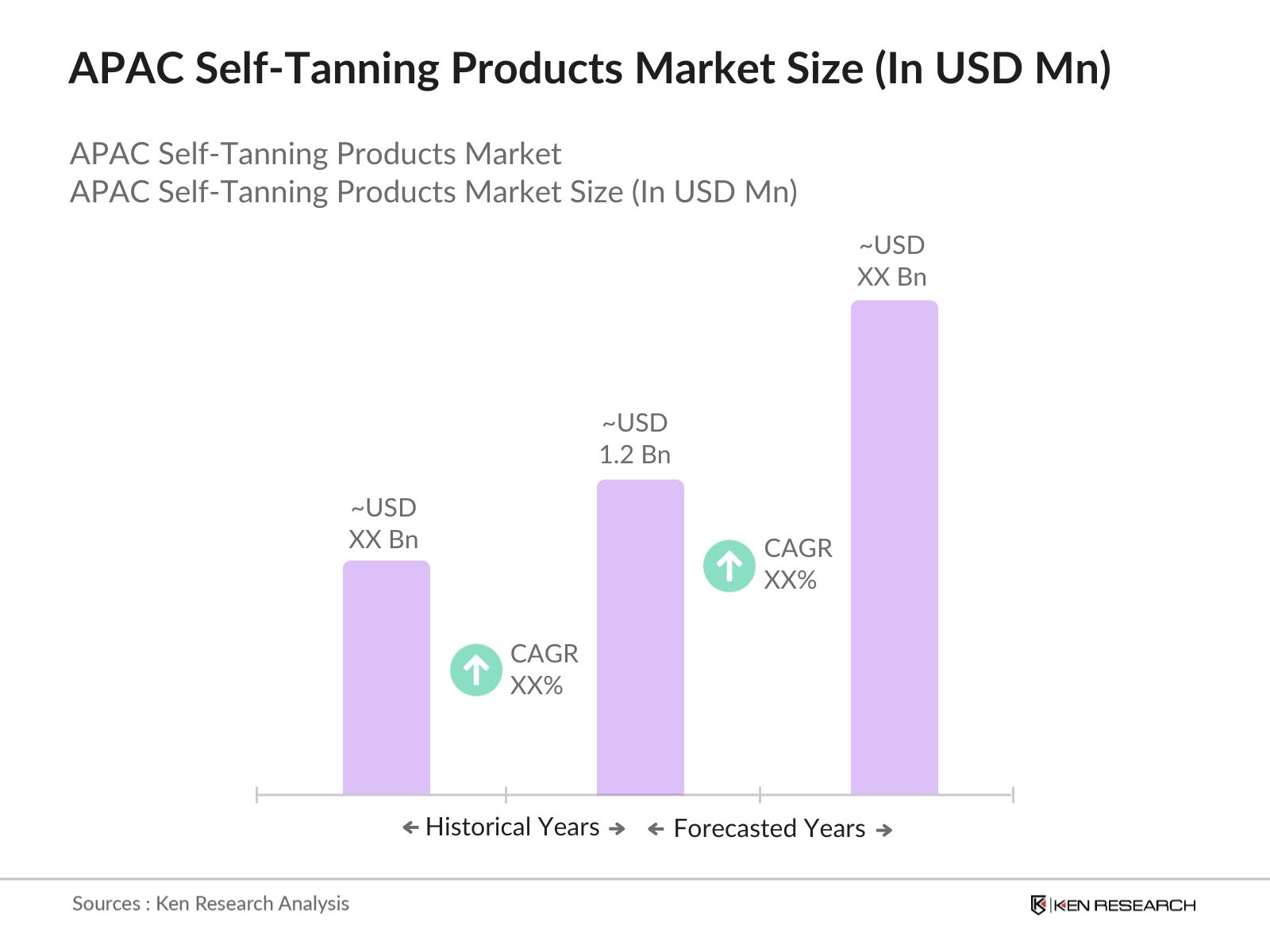
  • The APAC self-tanning products market is currently valued at USD 1.2 billion, reflecting a five-year period of steady growth. The market is witnessing a rapid rise, driven by increasing consumer awareness regarding the harmful effects of UV exposure and the rising trend of achieving a sun-kissed glow without sunbathing. Consumers are increasingly shifting towards self-tanning products as a safer and convenient alternative to traditional tanning methods.

APAC Self-Tanning Products Market Size

  • Market growth is particularly strong in countries like Australia, South Korea, and Japan, where awareness about skin cancer and the harmful effects of UV rays is more widespread. These markets are seeing increased demand for self-tanning lotions, creams, and sprays. In contrast, emerging economies like India, Thailand, and Vietnam are catching up as the trend of skin tanning, once considered a Western practice, becomes more popular among urban populations in these countries.
  • APAC countries enforce stringent safety standards for cosmetic products, including self-tanners. In Japan, the Pharmaceutical and Medical Devices Agency (PMDA) has implemented strict guidelines for the approval of beauty products, requiring comprehensive testing for allergens and skin irritants. Similar regulations exist in South Korea and Australia, where products must comply with national health standards.

APAC Self-Tanning Products Market Segmentation

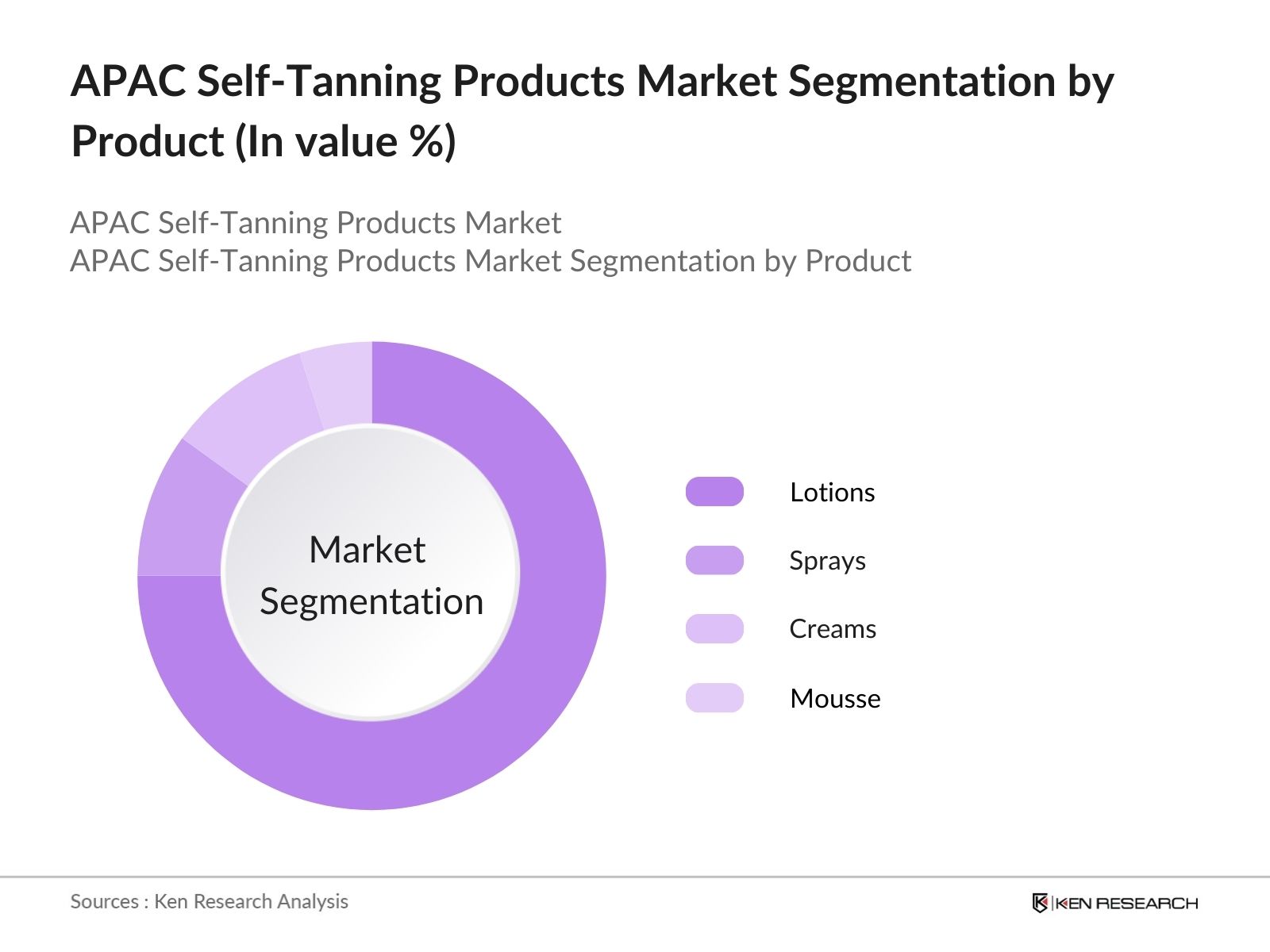
  • By Product: The market is segmented by product type into lotions, sprays, creams, and mousse. Lotions and sprays dominate the market, driven by ease of application and high consumer preference. Spray tanning products are gaining traction in countries like Australia and South Korea, where consumers prefer a quick and even application. Creams, on the other hand, are popular in Japan and Southeast Asia, where moisturizing properties are highly valued alongside tanning benefits.

APAC Self-Tanning Products Market Segmentation by Product

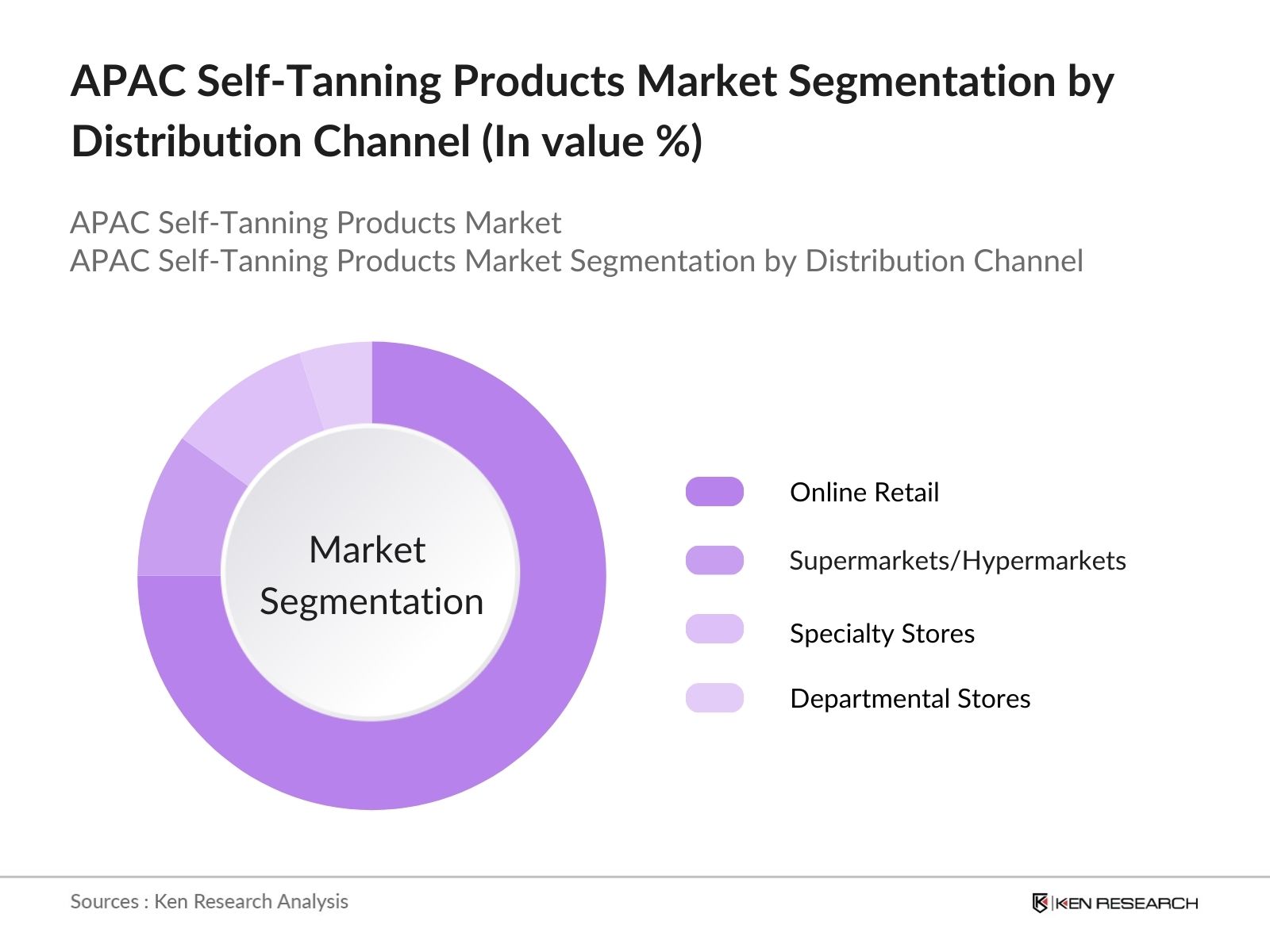
  • By Distribution Channel: The market is further segmented by distribution channels into online retail, supermarkets/hypermarkets, specialty stores, and department stores. The online retail segment is witnessing the fastest growth, particularly in Southeast Asia, where e-commerce platforms such as Shopee and Lazada offer a wide range of self-tanning products. Supermarkets and hypermarkets remain strong in established markets like Australia and Japan, offering consumers the convenience of purchasing beauty products alongside their groceries.

APAC Self-Tanning Products Market Segmentation by Distribution Channel

APAC Self-Tanning Products Market Competitive Landscape

The APAC self-tanning products market is highly competitive, with global and regional players competing to capture market share through product innovation, strategic partnerships, and an expanding distribution network. Leading brands such as St. Tropez, Bondi Sands, and LOral dominate the market with their premium self-tanning products, while local players are focusing on organic and eco-friendly formulations.

Company Name

Establishment Year

Headquarters

Key Products

Revenue (2023)

Distribution Network

Brand Endorsements

Sustainability Initiatives

Market Presence

R&D Investment

St. Tropez

1996

London, UK


Bondi Sands

2012

Melbourne, Australia


L'Oral Paris

1909

Paris, France


Jergens

1882

Cincinnati, USA


Loving Tan

2014

Sydney, Australia


APAC Self-Tanning Products Industry Analysis

Growth Drivers

  • Rising Awareness of UV Damage: The APAC region has seen a rise in awareness about the harmful effects of prolonged UV exposure, which can lead to skin cancer and other health issues. According to the World Health Organization (WHO), nearly 1.5 million cases of skin cancer are diagnosed annually, a significant proportion of which are linked to UV exposure. In response, consumers are seeking alternatives to sunbathing, such as self-tanning products. This heightened awareness is driving the demand for safer, non-UV tanning solutions across the region, particularly in countries with high UV exposure like Australia and New Zealand.
  • Growing Popularity of Clean and Organic Self-Tanning Products: With a global push towards clean beauty, APAC consumers are increasingly opting for organic and non-toxic self-tanning products. Government-backed campaigns, such as Japan's "Organic Certification" program, have amplified the demand for products without harmful chemicals. The region's clean beauty market has shown strong growth, particularly in Australia and South Korea, where strict regulations ensure product safety. South Korea's Ministry of Food and Drug Safety reported that organic cosmetic sales, including self-tanners, have grown significantly, reaching $250 million by 2023.
  • Influence of social media and Celebrity Endorsements: Social media platforms like Instagram, TikTok, and Weibo have amplified the visibility of self-tanning products through influencers and celebrities. In 2023, the average social media user in APAC spent around 3.5 hours per day on platforms that often feature beauty trends. Celebrity endorsements by figures like Kim Kardashian in Australia and top beauty influencers in countries like Japan have propelled self-tanning products into mainstream beauty conversations. This digital influence has significantly driven sales, especially among younger consumers.

Market Challenges

  • Cultural Preferences and Perceptions: In many APAC countries, including China, India, and Japan, traditional beauty standards still prioritize fair skin, posing a challenge for self-tanning products. Despite growing interest in Western beauty trends, the cultural preference for lighter skin persists, influencing product choices. In India, the market for fairness creams remains dominant, with over majority of skincare products aimed at skin lightening, as per India's Ministry of Health and Family Welfare. This preference slows the adoption of self-tanning products in these markets.
  • High Competition with Traditional Sun Care Products: Traditional sun care products, including sunscreens and skin lightening treatments, remain strong competitors to self-tanning products. APAC markets, especially in Southeast Asia, have deeply ingrained habits of using SPF-based products rather than self-tanners. The Asia Pacific Sun Care Association reports that sunblock sales in countries like Thailand and Vietnam increased substantially in 2023, while self-tanning products are still emerging in these regions.

APAC Self-Tanning Products Market Future Outlook

The APAC self-tanning products market is expected to continue its growth over the next five years, driven by increasing consumer awareness of UV damage, the influence of social media, and rising disposable income. As more consumers across the region embrace self-tanning products, particularly in urban centers, the market is set to expand further.

Future Market Opportunities

  • Expansion of Distribution Networks into Rural Areas: Rural regions in countries like India and Indonesia present untapped opportunities for self-tanning product manufacturers. With over 66% of Indias population residing in rural areas and increasing internet penetration of 55% as of 2023 (India Telecom Regulatory Authority), expanding distribution networks into these areas could significantly boost sales. E-commerce giants, such as Flipkart and Amazon, are already focusing on rural expansion, creating new pathways for beauty products like self-tanners.
  • Innovation in Eco-Friendly, Organic Products: Consumers are showing a rising preference for eco-friendly and organic products. APAC countries like Australia and Japan have seen significant demand for sustainable beauty solutions. In 2023, Australias Department of Agriculture, Fisheries, and Forestry reported substantial increase in the demand for eco-labeled cosmetic products. This growing demand for environmentally conscious products provides an opportunity for brands to introduce innovative self-tanning formulations that align with consumer preferences for green certifications and minimal environmental impact.

Scope of the Report

By Product Type

Lotions

Sprays

Creams

Mousse

By Distribution Channel

Online Retail

Supermarkets/Hypermarkets

Specialty Stores

Departmental Stores

By Ingredients

Synthetic Ingredients

Organic and Natural Ingredients

By Consumer Group

Women

Men

Teenagers

By Country

China

Australia

Japan

South Korea

India

Rest of APAC

Products

Key Target Audience

  • Self-Tanning Product Manufacturers

  • Beauty Retail Chains

  • E-commerce Platforms

  • Investors and Venture Capitalist Firms

  • Government and Regulatory Bodies (APAC Cosmetic Regulatory Authorities)

  • Exporters and Importers of Self-Tanning Products

  • Skincare Product Wholesalers

  • Organic and Clean Beauty Advocacy Groups

  • Banks and Financial Institutions

Companies

Major Players Mentioned in the Report

  • St. Tropez

  • Bondi Sands

  • L'Oral Paris

  • Jergens

  • Loving Tan

  • Vita Liberata

  • Tan-Luxe

  • Bali Body

  • Eco Tan

  • Fake Bake

  • Neutrogena

  • Clarins

  • Isle of Paradise

  • Sienna X

  • MineTan

Table of Contents

1. APAC Self-Tanning Products Market Overview

1.1. Definition and Scope
1.2. Market Taxonomy
1.3. Market Growth Rate (Consumer Preferences for Tanning Alternatives, Demand in Key APAC Countries)
1.4. Market Segmentation Overview

2. APAC Self-Tanning Products Market Size (In USD Mn)

2.1. Historical Market Size
2.2. Year-On-Year Growth Analysis (Growth in Premium and Eco-Friendly Products)
2.3. Key Market Developments and Milestones (Launch of New Products, Brand Collaborations)

3. APAC Self-Tanning Products Market Analysis

3.1. Growth Drivers
3.1.1. Increasing Awareness of UV Risks
3.1.2. Growing Popularity of Clean and Organic Self-Tanning Products
3.1.3. Influence of Social Media and Celebrity Endorsements
3.1.4. E-Commerce Penetration and Online Sales Growth
3.2. Market Challenges
3.2.1. Cultural Preferences for Fair Skin in Certain APAC Markets
3.2.2. High Competition with Traditional Sun Care Products
3.2.3. Lack of Product Awareness in Emerging Markets
3.3. Opportunities
3.3.1. Expansion of Distribution Networks into Rural Areas
3.3.2. Innovation in Eco-Friendly, Organic Products
3.3.3. Collaboration with Beauty Influencers and Bloggers
3.4. Trends
3.4.1. Increasing Demand for Vegan and Cruelty-Free Self-Tanning Products
3.4.2. Rise of Home-Based Self-Tanning Kits
3.4.3. Growth in Spray and Foam-Based Tanning Solutions
3.5. Government Regulation
3.5.1. Product Safety Standards (APAC Regulatory Framework)
3.5.2. Import and Export Regulations for Cosmetic Products
3.5.3. Green Certifications and Eco-Labeling Requirements
3.6. SWOT Analysis
3.7. Stake Ecosystem (Retailers, Online Marketplaces, Beauty Salons)
3.8. Porters Five Forces (Power of Buyers, Suppliers, and Threat of New Entrants)
3.9. Competition Ecosystem

4. APAC Self-Tanning Products Market Segmentation

4.1. By Product Type (In Value %)
4.1.1. Lotions
4.1.2. Sprays
4.1.3. Creams
4.1.4. Mousse
4.2. By Distribution Channel (In Value %)
4.2.1. Online Retail
4.2.2. Supermarkets/Hypermarkets
4.2.3. Specialty Stores
4.2.4. Departmental Stores
4.3. By Ingredients (In Value %)
4.3.1. Synthetic Ingredients
4.3.2. Organic and Natural Ingredients
4.4. By Consumer Group (In Value %)
4.4.1. Women
4.4.2. Men
4.4.3. Teenagers
4.5. By Country (In Value %)
4.5.1. China
4.5.2. Australia
4.5.3. Japan
4.5.4. South Korea
4.5.5. India

5. APAC Self-Tanning Products Market Competitive Analysis

5.1. Detailed Profiles of Major Companies
5.1.1. St. Tropez
5.1.2. Bondi Sands
5.1.3. LOral Paris
5.1.4. Jergens
5.1.5. Loving Tan
5.1.6. Vita Liberata
5.1.7. Tan-Luxe
5.1.8. Bali Body
5.1.9. Eco Tan
5.1.10. Fake Bake
5.1.11. Neutrogena
5.1.12. Clarins
5.1.13. Isle of Paradise
5.1.14. Sienna X
5.1.15. MineTan
5.2. Cross Comparison Parameters (Revenue, Key Markets, Product Range, Distribution Network, Market Share, Brand Endorsements, Sustainability Initiatives, Marketing Strategies)
5.3. Market Share Analysis
5.4. Strategic Initiatives
5.5. Mergers and Acquisitions
5.6. Investment Analysis
5.7. R&D Investment
5.8. Partnerships and Collaborations

6. APAC Self-Tanning Products Market Regulatory Framework

6.1. Product Safety Regulations
6.2. Environmental Impact and Sustainable Manufacturing Standards
6.3. Certifications and Compliance Requirements

7. APAC Self-Tanning Products Future Market Size (In USD Mn)

7.1. Future Market Size Projections
7.2. Key Factors Driving Future Market Growth

8. APAC Self-Tanning Products Future Market Segmentation

8.1. By Product Type (In Value %)
8.2. By Distribution Channel (In Value %)
8.3. By Ingredients (In Value %)
8.4. By Consumer Group (In Value %)
8.5. By Country (In Value %)

9. APAC Self-Tanning Products Market Analysts Recommendations

9.1. TAM/SAM/SOM Analysis
9.2. Customer Cohort Analysis
9.3. Strategic Marketing Initiatives
9.4. White Space Opportunity Analysis

Disclaimer Contact Us

Research Methodology

Step 1: Identification of Key Variables


This phase involves identifying key market dynamics in the APAC self-tanning products market. We conduct extensive desk research using secondary sources, including proprietary databases, industry reports, and government publications. The aim is to map the key variables that drive market growth, such as consumer preferences, product formulations, and distribution networks.

Step 2: Market Analysis and Construction


We analyze historical data for the APAC self-tanning products market to understand market penetration and revenue generation. This includes an in-depth examination of the leading product categories and regional market dynamics. Revenue projections are validated by tracking market shifts in product formulations and regional consumer trends.

Step 3: Hypothesis Validation and Expert Consultation


Market hypotheses are developed and validated through consultations with industry experts. These consultations are conducted via structured interviews, providing insights into product development trends, consumer behavior, and competitive strategies. Insights from market players are critical for refining and validating the market estimates.

Step 4: Research Synthesis and Final Output


In the final phase, the research findings are compiled and cross-referenced with industry inputs to produce a comprehensive market report. Data is validated using a bottom-up approach, ensuring accurate and reliable market insights for the APAC self-tanning products market.

Frequently Asked Questions

01. How big is the APAC Self-Tanning Products Market?

The APAC self-tanning products market is valued at USD 160 million, driven by rising awareness about UV damage and growing demand for safer tanning alternatives.

02. What are the challenges in the APAC Self-Tanning Products Market?

Key challengesAPAC self-tanning products market the vinclude cultural preferences for fair skin in certain markets, high competition from traditional sun care products, and limited awareness of self-tanning products in rural areas.

03. Who are the major players in the APAC Self-Tanning Products Market?

Major players in the APAC self-tanning products market include St. Tropez, Bondi Sands, L'Oral Paris, Jergens, and Loving Tan. These companies dominate due to their product innovation, strong brand presence, and effective marketing strategies.

04. What are the growth drivers of the APAC Self-Tanning Products Market?

Growth drivers in the APAC self-tanning products market include increasing awareness of the risks of UV exposure, rising demand for organic and cruelty-free self-tanning products, and expanding e-commerce platforms in the region.

Why Buy From Us?

RRR
Refine Robust Result (RRR) Framework

What makes us stand out is that our consultants follows Robust, Refine and Result (RRR) methodology. i.e. Robust for clear definitions, approaches and sanity checking, Refine for differentiating respondents facts and opinions and Result for presenting data with story

Our Reach Is Unmatched

We have set a benchmark in the industry by offering our clients with syndicated and customized market research reports featuring coverage of entire market as well as meticulous research and analyst insights.

Research
Shifting the Research Paradigm

While we don't replace traditional research, we flip the method upside down. Our dual approach of Top Bottom & Bottom Top ensures quality deliverable by not just verifying company fundamentals but also looking at the sector and macroeconomic factors.

Insite
More Insights-Better Decisions

With one step in the future, our research team constantly tries to show you the bigger picture. We help with some of the tough questions you may encounter along the way: How is the industry positioned? Best marketing channel? KPI's of competitors? By aligning every element, we help maximize success.

Trust
Transparency and Trust

Our report gives you instant access to the answers and sources that other companies might choose to hide. We elaborate each steps of research methodology we have used and showcase you the sample size to earn your trust.

support
Round the Clock Support

If you need any support, we are here! We pride ourselves on universe strength, data quality, and quick, friendly, and professional service.

Why Client Choose Us?

400000+ Reports in repository
150+ Consulting project a year
100+ Analysts
8000+ Client Queries in 2022