Region:Asia
Author(s):Geetanshi
Product Code:KRAC3862
Pages:94
Published On:October 2025
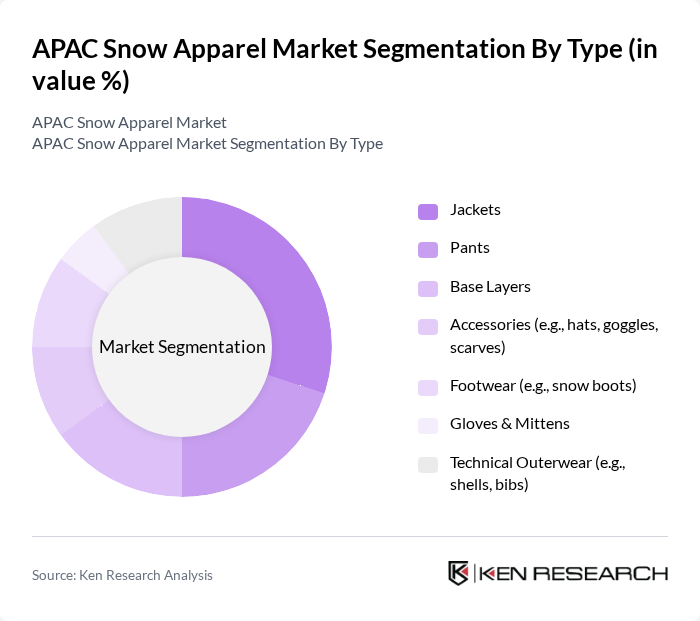
By Type:The snow apparel market is segmented into various types, including jackets, pants, base layers, accessories, footwear, gloves & mittens, and technical outerwear. Among these, jackets and technical outerwear are particularly popular due to their essential role in providing warmth and protection against harsh weather conditions. The increasing focus on performance and functionality in snow apparel has led to a rise in demand for technical outerwear, which incorporates advanced materials and technologies such as waterproof membranes, thermal insulation, and ergonomic designs. Accessories, including hats, goggles, and scarves, are also gaining traction as consumers seek comprehensive protection and style for winter sports activities .
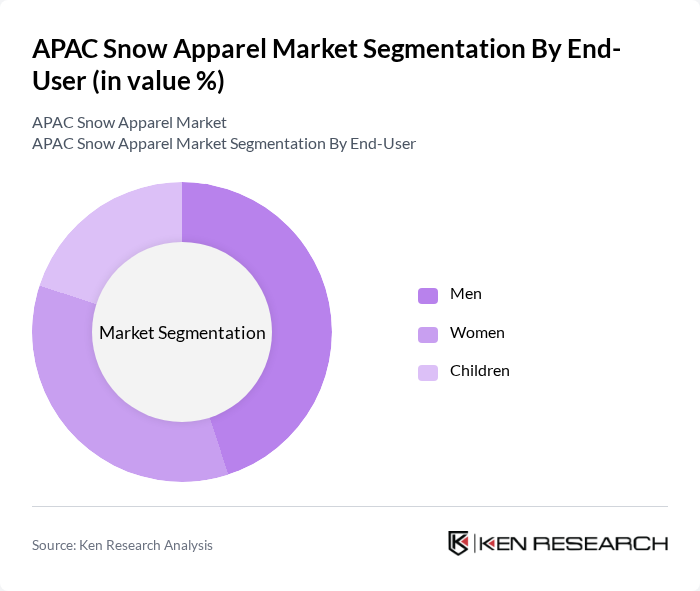
By End-User:The market is segmented by end-user into men, women, and children. The men's segment holds a significant share due to higher participation rates in winter sports among men. However, the women's segment is rapidly growing as brands increasingly focus on designing stylish and functional apparel tailored for female consumers. The children's segment is also gaining traction as families engage in winter sports activities together, driving demand for durable and comfortable snow apparel for kids. The rise of family-oriented winter tourism and the expansion of junior ski programs in APAC countries further support this trend .
The APAC Snow Apparel Market is characterized by a dynamic mix of regional and international players. Leading participants such as The North Face, Columbia Sportswear, Patagonia, Arc'teryx, Salomon, Burton Snowboards, Mammut, Spyder, Helly Hansen, Mountain Hardwear, Black Diamond Equipment, Outdoor Research, Goldwin Inc., Descente Ltd., and Phenix contribute to innovation, geographic expansion, and service delivery in this space.
The APAC snow apparel market is poised for significant transformation, driven by evolving consumer preferences and technological advancements. As sustainability becomes a priority, brands are increasingly adopting eco-friendly practices, which will likely reshape product offerings. Additionally, the integration of smart technology into apparel is expected to enhance user experience, attracting tech-savvy consumers. The combination of these trends will create a dynamic market environment, fostering innovation and potentially expanding the consumer base in the coming years.
| Segment | Sub-Segments |
|---|---|
| By Type | Jackets Pants Base Layers Accessories (e.g., hats, goggles, scarves) Footwear (e.g., snow boots) Gloves & Mittens Technical Outerwear (e.g., shells, bibs) |
| By End-User | Men Women Children |
| By Region | China Japan South Korea India Australia Southeast Asia (e.g., Singapore, Malaysia, Indonesia, Vietnam, Thailand) Taiwan Rest of APAC |
| By Sales Channel | Online Retail Offline Retail (Specialty Stores, Department Stores) Direct Sales (Brand Stores, Pop-ups) |
| By Price Range | Premium Mid-range Budget |
| By Material | Synthetic Fabrics (e.g., polyester, nylon) Natural Fabrics (e.g., wool, cotton blends) Blended Fabrics |
| By Usage | Recreational Professional/Competitive Casual/Urban |
| Scope Item/Segment | Sample Size | Target Respondent Profiles |
|---|---|---|
| Retail Sales of Snow Apparel | 100 | Store Managers, Sales Representatives |
| Consumer Preferences in Snow Gear | 120 | Winter Sports Enthusiasts, Casual Buyers |
| Market Trends in Ski Equipment | 80 | Product Managers, Brand Strategists |
| Distribution Channels for Snow Apparel | 60 | Logistics Coordinators, Supply Chain Analysts |
| Impact of Climate on Apparel Sales | 40 | Environmental Analysts, Market Researchers |
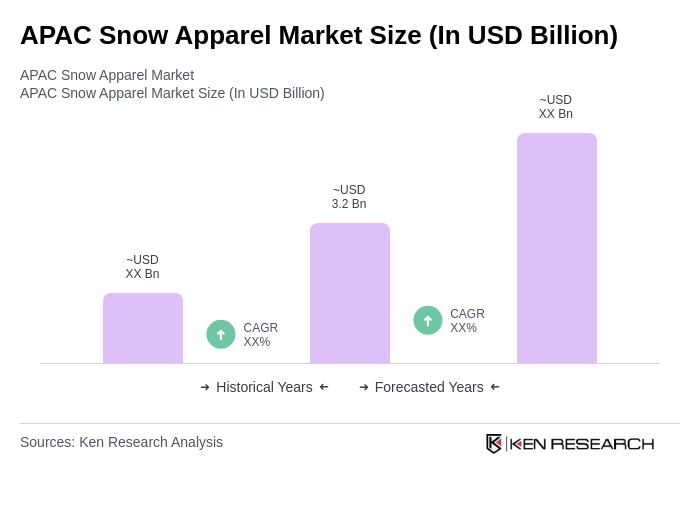
The APAC Snow Apparel Market is valued at approximately USD 3.2 billion, reflecting a significant growth driven by increased participation in winter sports, rising disposable incomes, and a growing trend towards outdoor recreational activities.

What makes us stand out is that our consultants follow Robust, Refine and Result (RRR) methodology. Robust for clear definitions, approaches and sanity checking, Refine for differentiating respondents' facts and opinions, and Result for presenting data with story.

We have set a benchmark in the industry by offering our clients with syndicated and customized market research reports featuring coverage of entire market as well as meticulous research and analyst insights.

While we don't replace traditional research, we flip the method upside down. Our dual approach of Top Bottom & Bottom Top ensures quality deliverable by not just verifying company fundamentals but also looking at the sector and macroeconomic factors.

With one step in the future, our research team constantly tries to show you the bigger picture. We help with some of the tough questions you may encounter along the way: How is the industry positioned? Best marketing channel? KPI's of competitors? By aligning every element, we help maximize success.

Our report gives you instant access to the answers and sources that other companies might choose to hide. We elaborate each steps of research methodology we have used and showcase you the sample size to earn your trust.

If you need any support, we are here! We pride ourselves on universe strength, data quality, and quick, friendly, and professional service.













