From Chaos to Clicks: How Digital is Driving Iraq’s Auto Boom
Ken Research
September 4, 2025 - 7 min read
September 4, 2025
by Manan GoenkaIraq’s automotive market is no longer defined by patchy imports and informal dealer networks - it is fast becoming one of the Middle East’s most dynamic transformation stories. As global OEMs, digital platforms, and regional distributors converge, the market is shifting from a fragmented past to a connected future where data, transparency, and consumer choice drive the agenda.
What once meant navigating opaque supply chains and relying on word-of-mouth trust is now evolving into an experience shaped by online marketplaces, certified dealerships, and tech-enabled services. This isn’t just about buying cars - it’s about the rise of a digitally integrated ecosystem that is reshaping how vehicles are discovered, financed, and serviced across Iraq’s regions.
So why does this shift matter? Because behind Iraq’s automotive transformation are deeper questions - what forces are driving this momentum, how is technology reshaping the car-buying journey, and where will the biggest opportunities and risks emerge as the market accelerates? The answers will shape not just the future of Iraq’s auto industry, but also the experience of every buyer, seller, and brand navigating it.
Traditional Landscape of Iraq’s Auto Market
For decades, Iraq’s automotive sector was shaped by fragmented imports and informal trade. Multi-brand dealerships in Baghdad, Erbil, and Basra anchored the market, but the ecosystem was highly inconsistent. In Baghdad, Al-Sayer Group represented Toyota and Kia, while in Erbil, Sardar Group managed luxury brands such as BMW, Land Rover, and Jaguar. Basra’s market leaned heavily on independent dealers importing used cars from the UAE and Jordan, serving both mass-market and premium demand.
Behind the scenes, the supply chain relied on a patchwork of OEM distributors, independent traders, and unregulated used-vehicle channels. Import licensing and customs complexities slowed turnover, reduced transparency, and eroded consumer confidence. Buyers often depended more on personal referrals than on structured after-sales support - limiting trust and constraining market scale.
This fragmented past created a market where consumer choice was wide, but reliability and consistency were scarce. The lack of formalization also left room for aggressive new entrants to quickly gain share by offering structured, tech-enabled alternatives.
Shift Towards Structured and Connected Ecosystem
In recent years, Iraq’s automotive landscape has begun consolidating around formal networks and digital channels. Global and regional brands such as Toyota, Kia, Hyundai, and Ford now operate through exclusive dealerships with standardized showrooms and service centers. For example, Toyota, through Sardar Group, has rolled out certified outlets in Baghdad and Erbil that ensure consistent aftersales care and stronger brand assurance.
Parallel to this, digital marketplaces like OpenSooq and CarsDir are changing how buyers discover and transact—especially younger, urban consumers seeking trust and convenience. Though online transactions remain a minority share, volumes have more than doubled since 2019, supported by Iraq’s rising smartphone penetration and improving tech literacy.
The shift signals that consumer trust is moving from individuals to institutions. Dealers with integrated CRM, certified pre-owned programs, and digital touchpoints are no longer “nice to have”, they are fast becoming the baseline for relevance. For OEMs and distributors, this is the moment to scale structured networks and invest in digital-first strategies before the market’s transition locks in new leader
Growth in Vehicle Access and Consumer Preferences
With over 500 private dealerships nationwide, buyers enjoy enhanced access and choice. Leading distributor Sardar Group, for instance, leverages online organizing software to centralize operations across Baghdad and Erbil by integrating sales, inventory, and service data onto a single platform. This not only improves real-time stock visibility for dealers but also enables faster customer response, streamlined service bookings, and more personalized engagement. Government partnerships with foreign automakers have also encouraged local assembly plants, supported by inventory management and logistics systems that modernize the supply chain. Consumer preferences are shifting toward hybrid and electric vehicles, influenced by rising fuel costs, subsidies, and growing environmental awareness. SUVs, hybrids, and EVs are gaining traction, especially as Iraq continues to record one of the lowest vehicle ownership densities in the region.
Integration in New and Used Vehicle Markets
Improved inspection standards, streamlined customs are helping formalize the new-vehicle segment. On the used side, platforms such as CarsDir, iQ Cars, and OpenSooq improve price transparency and expand access for tech-savvy younger buyers. Pilot certification programs built on VIN-based inspections are strengthening buyer confidence, signaling the rise of a more trustworthy pre-owned ecosystem.
Together, these shifts mark a new mobility paradigm - where reliability and accessibility span the entire ownership journey. Players who embed transparency and tech into both new and used channels will be best placed to capture long-term loyalty.
Fleet Renewal and Informed Buyers
Iraq’s vehicle fleet is undergoing a generational renewal in parallel with the country’s technology-driven transformation. New cars now account for over 27% of the total fleet, with the 0–5-year segment growing rapidly as a direct result of better consumer awareness and access to reliable information.
First-time buyers in major cities, empowered by online marketplaces such as OpenSooq, which hosts thousands of listings from verified dealerships, are prioritizing dependability, safety, and affordability. These platforms offer detailed reports, transparent comparison tools, and streamlined financing options, enabling buyers to select vehicles that align with both lifestyle and long-term value expectations, rather than settling for outdated imports.
Regional Expansion: Beyond Baghdad’s Dominance
For years, Baghdad commanded the lion’s share of Iraq’s automotive activity. But with the expansion of connected platforms and regional investment, the market is decentralizing. Cities such as Erbil, Basra, Sulaymaniyah, and Mosul have emerged as new growth hubs.
Iraq’s government has also signed agreements for assembly plants, including a Saudi-backed Mercedes-Benz and MAN facility. These initiatives, supported by advanced inventory management systems such as real-time stock tracking, demand forecasting, and automated parts distribution, are modernizing supply chains and boosting regional distribution efficiency. This regional agility, powered by expanding internet penetration and online commerce, is no longer optional, it is essential for capturing Iraq’s evolving automotive demand.
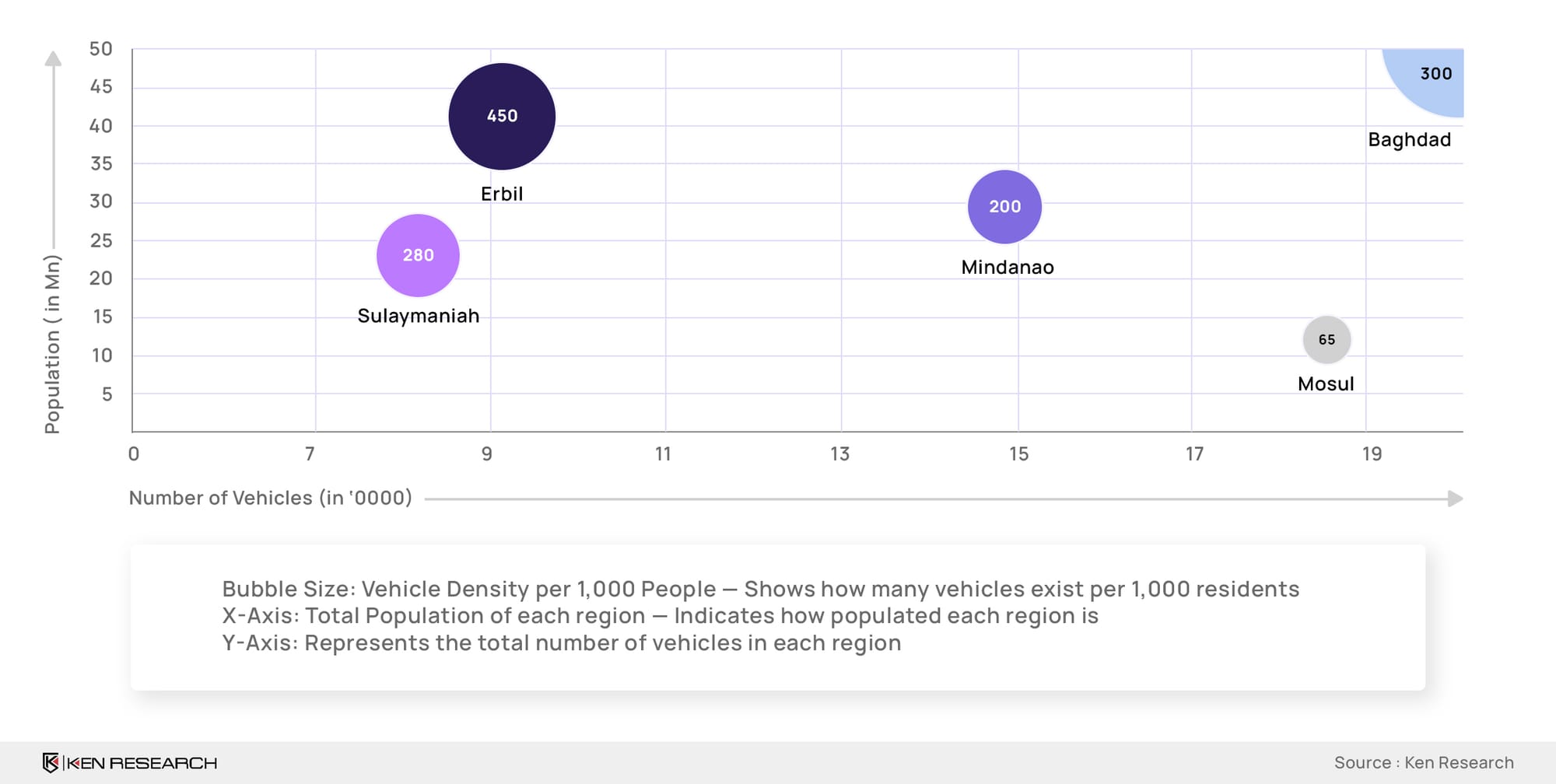
Dealership Landscape: Diversification Through Online and Local Focus
Toyota continues to anchor Iraq’s car market, particularly in Baghdad, backed by its longstanding reputation for reliability. Through its partnership with Sardar Group, Iraq’s largest automotive distributor, Toyota operates authorized dealerships and service centers across key cities. Together, they have built a connected dealership model with certified vehicle programs, customer relationship management (CRM) systems, online service booking, virtual showrooms, and targeted social media campaigns, digital engagement tools that strengthen buyer trust and sustain Toyota’s dominance even as competition intensifies.
Meanwhile, platforms such as CarsDir and OpenSooq are enabling dealerships to extend their reach through targeted advertising and real-time customer engagement. This reduces manual lead-generation efforts, increases conversion rates, and creates a more personalized buying journey which is crucial in Iraq’s tech-enabled automotive marketplace.
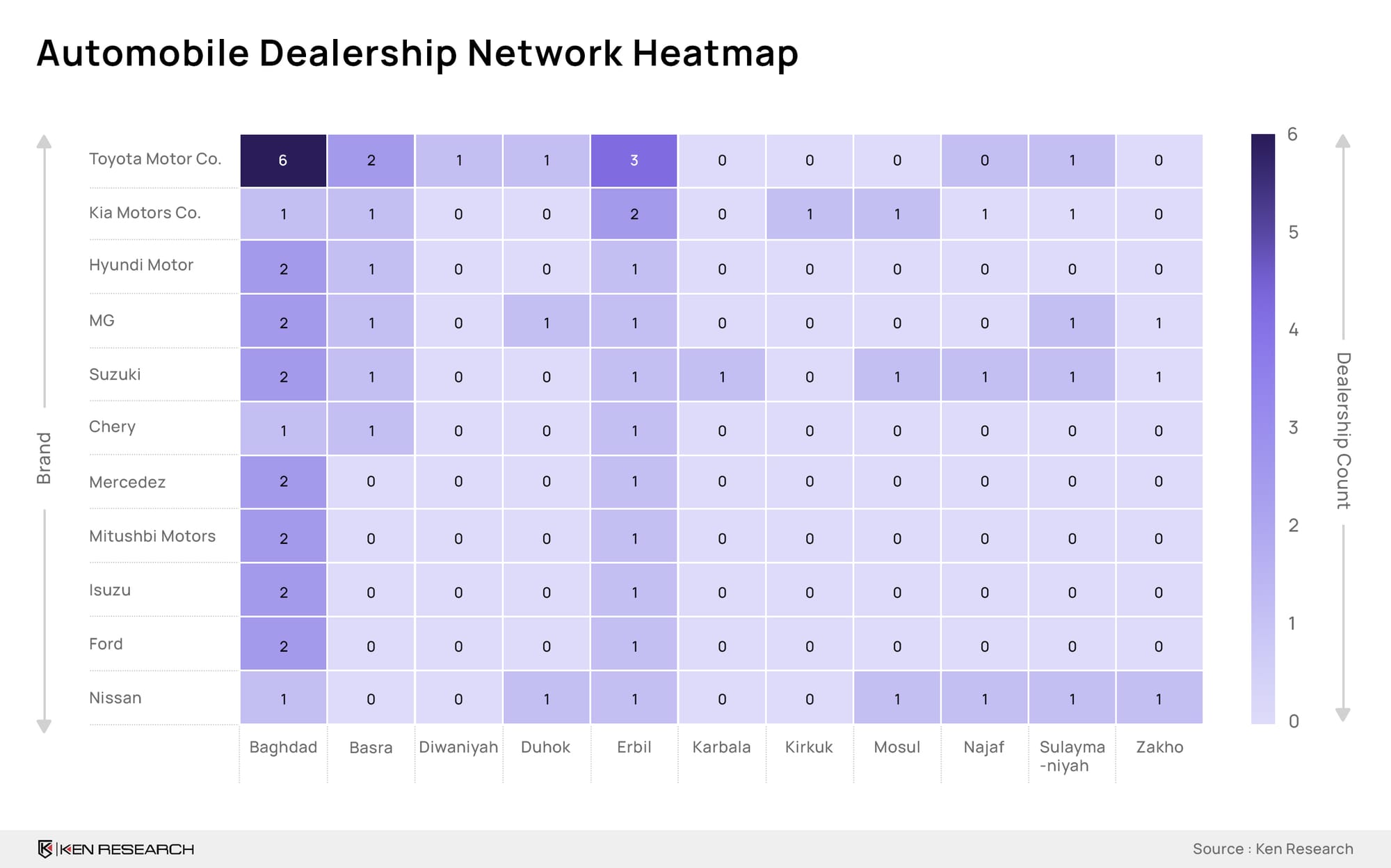
Trade Corridors: The Tech Backbone of Iraq’s Automotive Supply Chain
Iraq’s automotive supply chain begins at critical trade corridors. Umm Qasr Port in Basra serves as the main entry point for new vehicle imports from East Asia, while northern crossings like Ibrahim Khalil and Habur facilitate the flow of used cars into Kurdistan’s hubs such as Erbil and Duhok.
While regulated trade dominates, informal imports still surface in regions like Sulaymaniyah and Mosul, often entering from Iran and Syria. In such a landscape, resilience in supply chain planning has become a competitive differentiator.
Technological upgrades, including the UN-backed TIR transit system, GPS-enabled cargo tracking, and electronic customs declarations are streamlining cross-border movement. These advancements allow OEMs, dealers, and logistics providers to operate with greater visibility, transparency, and agility.
The Road Ahead: Tech Momentum, Hybrid Curiosity, and Regional Realignment
Iraq’s automotive evolution is being steered by three forces: digital adoption, hybrid curiosity, and regional realignment. Platforms like iQ Cars, now with over 34,000 listings, are reshaping the discovery and purchase journey with inspection services, detailed reports, and seamless transactions.
At the same time, hybrids such as Toyota’s Camry Hybrid and BYD’s Qin Plus are finding traction in Erbil and Sulaymaniyah, signaling early shifts in consumer preference. Meanwhile, demand growth is no longer confined to Baghdad—Erbil, Basra, and Mosul are emerging as equally strong hubs.
Takeaway: These forces are expanding both the geography of demand and the expectations of consumers. To stay relevant, market players must align product portfolios and digital channels with Iraq’s increasingly diverse and tech-aware customer base.
Conclusion: Tech Readiness and Local Adaptation Will Define Market Leaders
As Iraq enters this next phase, digital readiness and local adaptation will separate leaders from laggards. Chinese entrants have already set the pace with aggressive social media, virtual showrooms, and AI-driven lead generation, while legacy players like Toyota, Hyundai, and Kia must rethink how they deploy technology, structure networks, and engage a new generation of buyers.
As this transformation unfolds, the most pressing questions for decision-makers are clear:
- How should OEMs and distributors calibrate their digital investments to balance speed, cost, and impact in Iraq’s evolving market?
- Which regions beyond Baghdad hold the strongest potential for expansion, and how can dealer footprints be optimized accordingly?
- What strategies can ensure supply chains remain resilient and digitally responsive to fluctuating demand?
- How can used-car ecosystems, certification programs, and after-sales services be structured to build long-term customer loyalty?
- What role will hybrids, EVs, and connected-car features play in shaping Iraq’s medium-term market dynamics?
These are not abstract challenges - they are business-critical decisions. And answering them will determine who captures value in Iraq’s rapidly integrating, tech-enabled automotive ecosystem.
About the Author – Manan Goenka:
Manan Goenka is an Engagement Manager at Ken Research with 5+ years of experience advising CXOs on market assessment, product innovation, go-to-market strategy, and competitive intelligence. He has led strategic consulting mandates across global markets, particularly in the automotive, logistics and TMT sectors.
From the Author:
At Ken Research, we’ve been tracking OEM-level sales year-on-year across MENA/GCC, and the data underscores a dramatic pivot. In Iraq, the aggressive push by new entrants has compressed decades of legacy-brand dominance into just a few hyper-focused model cycles. What accelerates this momentum is not merely product placement, but a tech-enabled playbook online marketplaces, virtual showrooms, AI-driven lead generation, and digitally connected aftersales ecosystems that are cultivating consumer trust at unprecedented speed. This is no longer just a race for units sold; it’s an inflection point for market dominance and long-term relevance in one of the Middle East’s fastest-recovering automotive economies.
Related tags
Automotive, Transportation and Warehousing
Get started
We've helped companies around the world future-proof
their businesses - and we can do the same for you.