Region:Asia
Author(s):Shubham
Product Code:KRAB5051
Pages:99
Published On:October 2025
By Type:The market can be segmented into various types of authentication methods, including biometric authentication, knowledge-based authentication, multi-factor authentication, digital certificates, identity verification services, single sign-on solutions, and decentralized identity systems. Each of these sub-segments plays a crucial role in enhancing security and user experience in digital transactions.
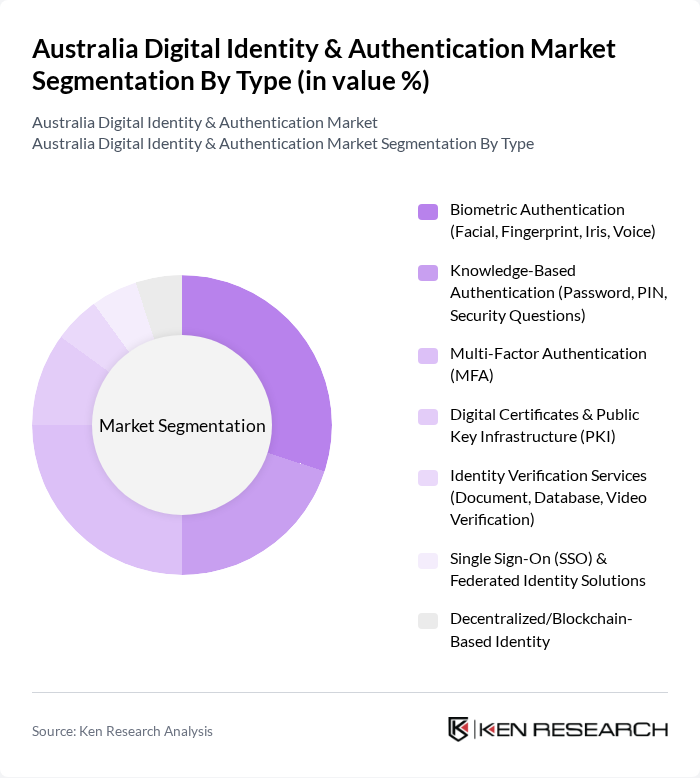
The leading sub-segment in the market is Biometric Authentication, which includes facial recognition, fingerprint scanning, iris recognition, and voice authentication. This dominance is attributed to the increasing consumer preference for secure and convenient authentication methods, particularly in sectors like banking and healthcare. The rise in mobile device usage equipped with biometric capabilities further propels this segment's growth, as users seek seamless access to services without compromising security.
By End-User:The market is segmented by end-users, including government and public sector, banking, financial services and insurance (BFSI), healthcare and life sciences, retail and e-commerce, telecommunications and IT, education, transportation and travel, and others. Each sector has unique requirements for digital identity solutions, driving the demand for tailored authentication methods.
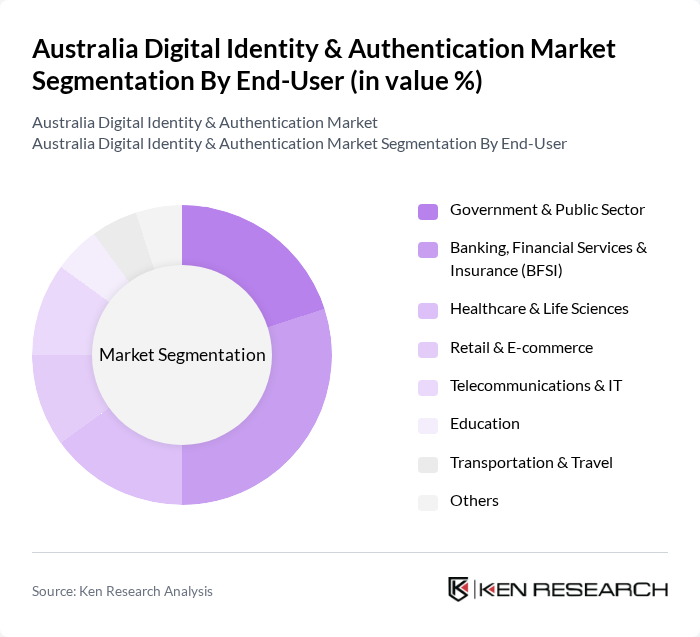
The BFSI sector is the leading end-user of digital identity solutions, driven by stringent regulatory requirements and the need for secure transactions. Financial institutions are increasingly adopting advanced authentication methods to combat fraud and enhance customer trust. The growing trend of online banking and digital payments further fuels the demand for robust identity verification solutions in this sector.
The Australia Digital Identity & Authentication Market is characterized by a dynamic mix of regional and international players. Leading participants such as Australia Post, IDSecure, Secure Logic, Vix Verify (now part of GBG Australia), GBG Australia, NEC Australia, Thales Australia, Daon, IDEMIA, Jumio, Mitek Systems, ForgeRock, Okta, Ping Identity, Auth0 (now part of Okta) contribute to innovation, geographic expansion, and service delivery in this space.
The future of the digital identity and authentication market in Australia appears promising, driven by technological advancements and increasing consumer expectations. As organizations prioritize security and user experience, the integration of AI and machine learning will enhance identity verification processes. Additionally, the shift towards decentralized identity solutions is expected to gain traction, providing users with greater control over their data. These trends will likely foster innovation and investment in the sector, positioning Australia as a leader in digital identity solutions.
| Segment | Sub-Segments |
|---|---|
| By Type | Biometric Authentication Knowledge-Based Authentication Multi-Factor Authentication Digital Certificates & Public Key Infrastructure Identity Verification Services Single Sign-On (SSO) & Federated Identity Solutions Decentralized/Blockchain-Based Identity |
| By End-User | Government & Public Sector Banking, Financial Services & Insurance (BFSI) Healthcare & Life Sciences Retail & E-commerce Telecommunications & IT Education Transportation & Travel Others |
| By Application | Online Transactions & Payments User Authentication & Access Management Physical & Logical Access Control Customer Onboarding & KYC/AML Compliance Fraud Prevention & Risk Management Remote Workforce Authentication Others |
| By Deployment Mode | Cloud-Based On-Premises Hybrid |
| By Industry Vertical | BFSI Government Healthcare Retail & E-commerce IT & Telecom Transportation Education Others |
| By Region | New South Wales Victoria Queensland Western Australia South Australia Tasmania Australian Capital Territory Northern Territory Others |
| By Pricing Model | Subscription-Based Pay-Per-Use One-Time License Fee Freemium/Trial Others |
| Scope Item/Segment | Sample Size | Target Respondent Profiles |
|---|---|---|
| Government Digital Identity Programs | 60 | Policy Makers, IT Managers |
| Banking Sector Authentication Solutions | 50 | Risk Management Officers, IT Security Analysts |
| Healthcare Digital Identity Systems | 40 | Healthcare Administrators, IT Directors |
| Consumer Digital Identity Adoption | 70 | End-users, Digital Service Consumers |
| Private Sector Identity Verification Services | 40 | Business Owners, Compliance Officers |
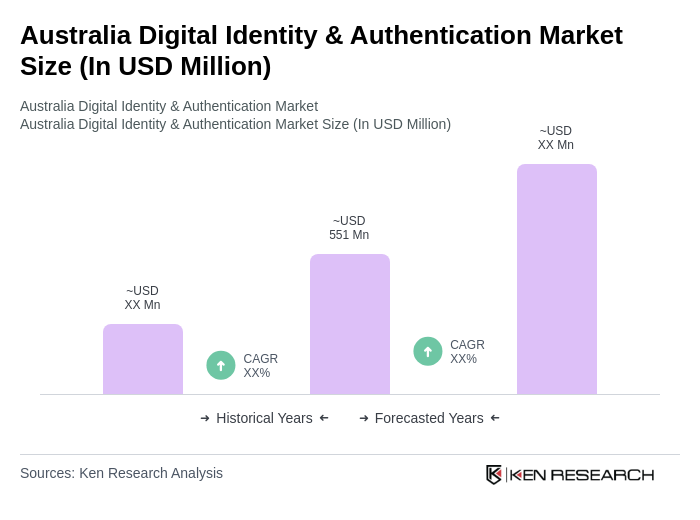
The Australia Digital Identity & Authentication Market is valued at approximately USD 551 million, reflecting a significant growth driven by the increasing need for secure online transactions and the rise in cyber threats, alongside government initiatives to enhance digital identity frameworks.

What makes us stand out is that our consultants follow Robust, Refine and Result (RRR) methodology. Robust for clear definitions, approaches and sanity checking, Refine for differentiating respondents' facts and opinions, and Result for presenting data with story.

We have set a benchmark in the industry by offering our clients with syndicated and customized market research reports featuring coverage of entire market as well as meticulous research and analyst insights.

While we don't replace traditional research, we flip the method upside down. Our dual approach of Top Bottom & Bottom Top ensures quality deliverable by not just verifying company fundamentals but also looking at the sector and macroeconomic factors.

With one step in the future, our research team constantly tries to show you the bigger picture. We help with some of the tough questions you may encounter along the way: How is the industry positioned? Best marketing channel? KPI's of competitors? By aligning every element, we help maximize success.

Our report gives you instant access to the answers and sources that other companies might choose to hide. We elaborate each steps of research methodology we have used and showcase you the sample size to earn your trust.

If you need any support, we are here! We pride ourselves on universe strength, data quality, and quick, friendly, and professional service.













