About the Report
Base Year 2024Australia Sex Reassignment Hormone Therapy Market Overview
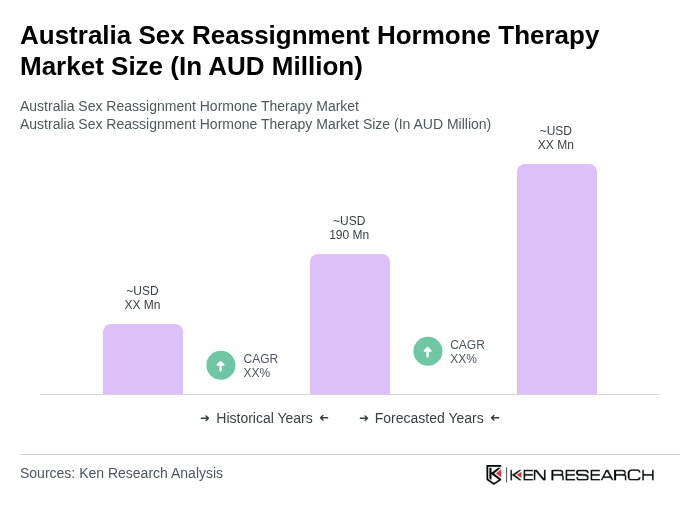
- The Australia Sex Reassignment Hormone Therapy market is valued at approximately AUD 190 million, based on a five-year historical analysis of the broader hormone replacement therapy market in Australia and the proportion attributable to gender-affirming care within specialist services. This growth is primarily driven by increasing awareness and acceptance of gender diversity, alongside advancements in medical technology such as bioidentical formulations and improved delivery systems that facilitate more effective and safer hormone therapies. The rising number of individuals seeking gender-affirming treatments, supported by greater visibility of transgender and gender-diverse people and expanded access through public hospitals and community clinics, has significantly contributed to the market's expansion.
- Key cities dominating this market include Sydney, Melbourne, and Brisbane. These urban centers are characterized by a higher concentration of healthcare facilities, specialized gender clinics, tertiary hospital-based endocrinology services, and multidisciplinary teams providing gender-affirming care, as well as strong support networks for the LGBTQ+ community. This infrastructure fosters an environment conducive to accessing gender-affirming therapies. The presence of progressive state-level health strategies, funded gender-affirming services in public systems, and community support initiatives further enhances their market dominance.
- In 2023, the Australian government implemented the National Gender-affirming Care Framework, which aims to standardize and improve access to hormone therapy for transgender individuals. This regulation mandates that all public health services provide comprehensive gender-affirming care, including hormone therapy, ensuring that patients receive timely and appropriate treatment without discrimination.
Australia Sex Reassignment Hormone Therapy Market Segmentation
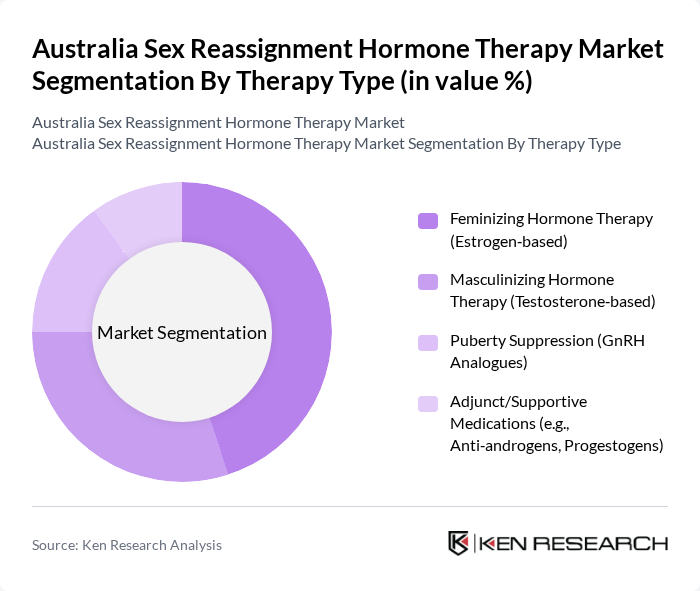
By Therapy Type:The therapy type segmentation includes various approaches to hormone therapy, each catering to different patient needs and preferences. The subsegments are Feminizing Hormone Therapy (Estrogen-based), Masculinizing Hormone Therapy (Testosterone-based), Puberty Suppression (GnRH Analogues), and Adjunct/Supportive Medications (e.g., Anti-androgens, Progestogens). This structure aligns with international clinical practice guidelines for gender-affirming hormone therapy. Among these, Feminizing Hormone Therapy is currently the leading subsegment in Australia’s gender-affirming context, supported by clinic caseloads showing a high proportion of transfeminine and non-binary patients seeking estrogen-based regimens. The increasing acceptance of transgender identities, greater public and professional education, and the availability of tailored multidisciplinary healthcare services (endocrinology, mental health, primary care) have further propelled this segment's growth.
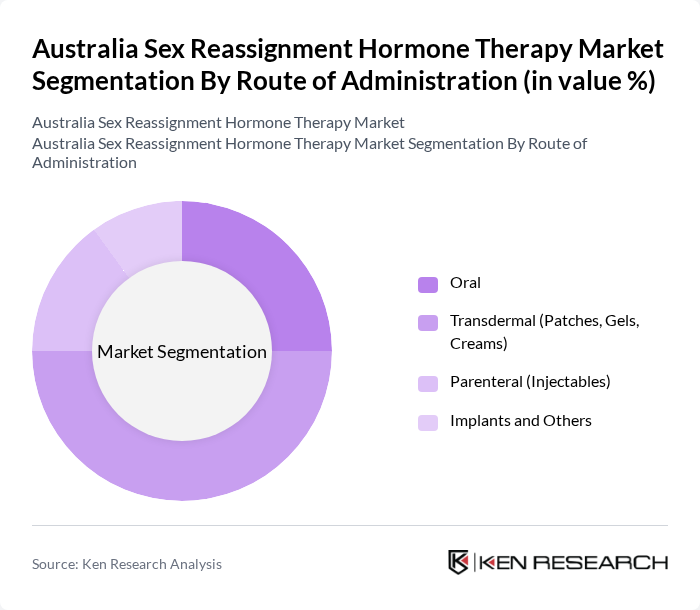
By Route of Administration:This segmentation focuses on the various methods through which hormone therapies are administered to patients. The subsegments include Oral, Transdermal (Patches, Gels, Creams), Parenteral (Injectables), and Implants and Others. In the broader Australian hormone therapy market, transdermal and parenteral routes are increasingly preferred due to convenience, more stable hormone levels, and favorable safety profiles compared with some oral formulations, a pattern mirrored in gender-affirming care. The Transdermal route is currently one of the most popular among adult patients using estrogen-based therapy due to its ease of use and reduced thromboembolic risk compared to certain oral estrogens, while injectable testosterone remains widely used for masculinizing regimens; together, these factors support strong uptake of transdermal options within the market.
Australia Sex Reassignment Hormone Therapy Market Competitive Landscape
The Australia Sex Reassignment Hormone Therapy Market is characterized by a dynamic mix of regional and international players. Leading participants such as Monash Health – Gender Clinic, The Royal Melbourne Hospital – Endocrinology & Gender Services, Sydney Local Health District – NSW Gender?Affirming Services, Queensland Health – Gender Clinics and Transgender Health Services, St Vincent's Hospital Sydney / Melbourne – Gender?Affirming Care Programs, The Gender Centre Inc. (New South Wales), Transgender Victoria (TGV), Melbourne Sexual Health Centre, Royal Perth Hospital – Sexual Health & Gender?Diverse Services, Adelaide Sexual Health Centre, The Royal Children's Hospital Melbourne – Gender Service, The Alfred Hospital – Endocrinology & Transgender Health, La Trobe University – Australian Research Centre in Sex, Health and Society, The University of Sydney – Transgender Health and Endocrinology Research Programs, Australian College of Applied Psychology – Mental Health and Counselling Support for Gender?Diverse People contribute to innovation, geographic expansion, and service delivery in this space.
Australia Sex Reassignment Hormone Therapy Market Industry Analysis
Growth Drivers
- Increasing Awareness and Acceptance of Gender Diversity:The Australian population has shown a significant increase in awareness regarding gender diversity, with 82% of Australians supporting transgender rights as of now. This cultural shift is reflected in the growing number of individuals seeking sex reassignment hormone therapy, which has increased by 32% over the past five years. The rise in educational programs and media representation has further contributed to this acceptance, fostering a more inclusive environment for transgender individuals.
- Supportive Government Policies and Healthcare Initiatives:The Australian government has implemented various policies to support transgender healthcare, including the current National Health Strategy, which allocates AUD 55 million for mental health and hormone therapy services. Additionally, Medicare now covers hormone therapy for eligible individuals, resulting in a 27% increase in access to these treatments. These initiatives are crucial in reducing barriers to care and promoting equitable healthcare access for the transgender community.
- Rising Demand for Personalized Healthcare Solutions:The trend towards personalized healthcare is evident in the sex reassignment hormone therapy market, with a reported 42% increase in demand for tailored treatment plans. This shift is driven by advancements in medical technology and a growing emphasis on individualized care. As healthcare providers adopt more patient-centered approaches, the availability of customized hormone therapies is expected to enhance treatment outcomes and patient satisfaction significantly.
Market Challenges
- High Cost of Treatment and Medications:The financial burden of sex reassignment hormone therapy remains a significant challenge, with average treatment costs reaching AUD 12,000 annually. Many patients face out-of-pocket expenses due to limited insurance coverage, which can deter individuals from seeking necessary care. This economic barrier is compounded by the fact that only 62% of private health insurance plans cover these treatments, leaving many without adequate financial support.
- Limited Access to Specialized Healthcare Providers:Access to qualified healthcare providers specializing in transgender care is limited, particularly in rural areas. Approximately 72% of transgender individuals report difficulty finding knowledgeable practitioners, which can delay treatment and negatively impact mental health. The shortage of trained professionals exacerbates existing disparities in healthcare access, making it essential to address this issue to improve patient outcomes and satisfaction.
Australia Sex Reassignment Hormone Therapy Market Future Outlook
The future of the Australia sex reassignment hormone therapy market appears promising, driven by ongoing societal acceptance and advancements in medical technology. As telehealth services expand, more individuals will gain access to hormone therapy consultations, particularly in underserved regions. Additionally, the development of innovative hormonal treatments is expected to enhance patient experiences and outcomes. These trends indicate a growing commitment to improving healthcare access and quality for transgender individuals in Australia.
Market Opportunities
- Expansion of Telehealth Services for Hormone Therapy:The rise of telehealth services presents a significant opportunity for the sex reassignment hormone therapy market. With an estimated 55% increase in telehealth consultations since the introduction of expanded telehealth arrangements, this model can improve access for individuals in remote areas, ensuring timely and effective treatment. This shift is likely to enhance patient engagement and adherence to therapy regimens.
- Growth in Mental Health Support Services for Transgender Individuals:The increasing recognition of mental health's role in overall well-being offers a vital opportunity for the market. With mental health services for transgender individuals projected to grow by 38% in future, integrating these services with hormone therapy can lead to improved health outcomes. This holistic approach can foster a supportive environment for patients navigating their transition journeys.
Scope of the Report
| Segment | Sub-Segments |
|---|---|
| By Therapy Type | Feminizing Hormone Therapy (Estrogen?based) Masculinizing Hormone Therapy (Testosterone?based) Puberty Suppression (GnRH Analogues) Adjunct/Supportive Medications (e.g., Anti?androgens, Progestogens) |
| By Route of Administration | Oral Transdermal (Patches, Gels, Creams) Parenteral (Injectables) Implants and Others |
| By Care Pathway Stage | Initiation of Gender?Affirming Hormone Therapy Maintenance and Dose Optimization Long?term Monitoring and Management of Comorbidities Transition?Related Discontinuation/Modification |
| By Care Provider Type | Public Hospitals and Specialty Gender Clinics Private Hospitals and Clinics Primary Care / GP?Led Services Community Health and NGO?Affiliated Services |
| By Patient Demographics | Adolescents and Young Adults (?25 Years) Adults (26–49 Years) Older Adults (?50 Years) Other Vulnerable and Under?served Groups |
| By Payer Type | Public Funding (Medicare, State?Funded Services) Private Health Insurance Out?of?Pocket / Self?Pay NGO, Community and Philanthropic Support |
| By Region in Australia | New South Wales & Australian Capital Territory Victoria & Tasmania Queensland Western Australia South Australia & Northern Territory |
Key Target Audience
Investors and Venture Capitalist Firms
Government and Regulatory Bodies (e.g., Therapeutic Goods Administration, Australian Health Practitioner Regulation Agency)
Pharmaceutical Manufacturers
Healthcare Providers and Clinics specializing in transgender health
Insurance Companies and Health Funds
Non-Governmental Organizations (NGOs) focused on LGBTQ+ rights
Medical Device Manufacturers related to hormone therapy
Pharmacy Chains and Specialty Pharmacies
Players Mentioned in the Report:
Monash Health Gender Clinic
The Royal Melbourne Hospital Endocrinology & Gender Services
Sydney Local Health District NSW GenderAffirming Services
Queensland Health Gender Clinics and Transgender Health Services
St Vincent's Hospital Sydney / Melbourne GenderAffirming Care Programs
The Gender Centre Inc. (New South Wales)
Transgender Victoria (TGV)
Melbourne Sexual Health Centre
Royal Perth Hospital Sexual Health & GenderDiverse Services
Adelaide Sexual Health Centre
The Royal Children's Hospital Melbourne Gender Service
The Alfred Hospital Endocrinology & Transgender Health
La Trobe University Australian Research Centre in Sex, Health and Society
The University of Sydney Transgender Health and Endocrinology Research Programs
Australian College of Applied Psychology Mental Health and Counselling Support for GenderDiverse People
Table of Contents
Market Assessment Phase
1. Executive Summary and Approach
2. Australia Sex Reassignment Hormone Therapy Market Overview
2.1 Key Insights and Strategic Recommendations
2.2 Australia Sex Reassignment Hormone Therapy Market Overview
2.3 Definition and Scope
2.4 Evolution of Market Ecosystem
2.5 Timeline of Key Regulatory Milestones
2.6 Value Chain & Stakeholder Mapping
2.7 Business Cycle Analysis
2.8 Policy & Incentive Landscape
3. Australia Sex Reassignment Hormone Therapy Market Analysis
3.1 Growth Drivers
3.1.1 Increasing Awareness and Acceptance of Gender Diversity
3.1.3 Supportive Government Policies and Healthcare Initiatives
3.1.4 Rising Demand for Personalized Healthcare Solutions
3.2 Market Challenges
3.2.1 High Cost of Treatment and Medications
3.2.2 Limited Access to Specialized Healthcare Providers
3.2.3 Stigma and Discrimination in Healthcare Settings
3.2.4 Regulatory Hurdles and Compliance Issues
3.3 Market Opportunities
3.3.1 Expansion of Telehealth Services for Hormone Therapy
3.3.2 Development of New Hormonal Treatments and Therapies
3.3.3 Collaborations with Advocacy Groups for Awareness Campaigns
3.3.4 Growth in Mental Health Support Services for Transgender Individuals
3.4 Market Trends
3.4.1 Increasing Use of Digital Platforms for Patient Education
3.4.2 Shift Towards Holistic and Integrated Care Models
3.4.3 Rising Popularity of Non-Invasive Treatment Options
3.4.4 Focus on Long-term Patient Monitoring and Support
3.5 Government Regulation
3.5.1 National Health Insurance Coverage for Hormone Therapy
3.5.2 Guidelines for Prescribing Hormones in Transgender Care
3.5.3 Regulations on the Marketing of Hormonal Products
3.5.4 Compliance Standards for Healthcare Providers
4. SWOT Analysis
5. Stakeholder Analysis
6. Porter's Five Forces Analysis
7. Australia Sex Reassignment Hormone Therapy Market Market Size, 2019-2024
7.1 By Value
7.2 By Volume
7.3 By Average Selling Price
8. Australia Sex Reassignment Hormone Therapy Market Segmentation
8.1 By Therapy Type
8.1.1 Feminizing Hormone Therapy (Estrogen?based)
8.1.2 Masculinizing Hormone Therapy (Testosterone?based)
8.1.3 Puberty Suppression (GnRH Analogues)
8.1.4 Adjunct/Supportive Medications (e.g., Anti?androgens, Progestogens)
8.2 By Route of Administration
8.2.1 Oral
8.2.2 Transdermal (Patches, Gels, Creams)
8.2.3 Parenteral (Injectables)
8.2.4 Implants and Others
8.3 By Care Pathway Stage
8.3.1 Initiation of Gender?Affirming Hormone Therapy
8.3.2 Maintenance and Dose Optimization
8.3.3 Long?term Monitoring and Management of Comorbidities
8.3.4 Transition?Related Discontinuation/Modification
8.4 By Care Provider Type
8.4.1 Public Hospitals and Specialty Gender Clinics
8.4.2 Private Hospitals and Clinics
8.4.3 Primary Care / GP?Led Services
8.4.4 Community Health and NGO?Affiliated Services
8.5 By Patient Demographics
8.5.1 Adolescents and Young Adults (?25 Years)
8.5.2 Adults (26–49 Years)
8.5.3 Older Adults (?50 Years)
8.5.4 Other Vulnerable and Under?served Groups
8.6 By Payer Type
8.6.1 Public Funding (Medicare, State?Funded Services)
8.6.2 Private Health Insurance
8.6.3 Out?of?Pocket / Self?Pay
8.6.4 NGO, Community and Philanthropic Support
8.7 By Region in Australia
8.7.1 New South Wales & Australian Capital Territory
8.7.2 Victoria & Tasmania
8.7.3 Queensland
8.7.4 Western Australia
8.7.5 South Australia & Northern Territory
9. Australia Sex Reassignment Hormone Therapy Market Competitive Analysis
9.1 Market Share of Key Players
9.2 Cross Comparison of Key Players
9.2.1 Company Name
9.2.2 Market Share (%) in Australia
9.2.3 Australia Revenue from Gender?Affirming Hormone Therapy (AUD Million)
9.2.4 3?Year Revenue CAGR (%) – Gender?Affirming Portfolio
9.2.5 EBITDA Margin (%) – Australia Operations
9.2.6 R&D Intensity (% of Revenue Allocated to GAHT?Related R&D)
9.2.7 Average Selling Price Index vs Market (Therapy Basket)
9.2.8 Patient Coverage Scale (Estimated Number of Patients Served per Year)
9.2.9 Geographic Coverage within Australia (States/Territories Served)
9.2.10 Payer Mix (Public vs Private vs Out?of?Pocket Share)
9.2.11 Time?to?Access Metrics (Average Waiting Time to Initiate Therapy)
9.2.12 Clinical Outcomes Proxy (Therapy Persistence / Adherence Rate)
9.3 SWOT Analysis of Top Players
9.4 Pricing Analysis
9.5 Detailed Profile of Major Companies
9.5.1 Monash Health – Gender Clinic
9.5.2 The Royal Melbourne Hospital – Endocrinology & Gender Services
9.5.3 Sydney Local Health District – NSW Gender?Affirming Services
9.5.4 Queensland Health – Gender Clinics and Transgender Health Services
9.5.5 St Vincent's Hospital Sydney / Melbourne – Gender?Affirming Care Programs
9.5.6 The Gender Centre Inc. (New South Wales)
9.5.7 Transgender Victoria (TGV)
9.5.8 Melbourne Sexual Health Centre
9.5.9 Royal Perth Hospital – Sexual Health & Gender?Diverse Services
9.5.10 Adelaide Sexual Health Centre
9.5.11 The Royal Children's Hospital Melbourne – Gender Service
9.5.12 The Alfred Hospital – Endocrinology & Transgender Health
9.5.13 La Trobe University – Australian Research Centre in Sex, Health and Society
9.5.14 The University of Sydney – Transgender Health and Endocrinology Research Programs
9.5.15 Australian College of Applied Psychology – Mental Health and Counselling Support for Gender?Diverse People
10. Australia Sex Reassignment Hormone Therapy Market End-User Analysis
10.1 Procurement Behavior of Key Ministries
10.1.1 Funding Allocation for Hormone Therapy
10.1.2 Approval Processes for Treatment Protocols
10.1.3 Collaboration with Healthcare Providers
10.1.4 Monitoring and Evaluation Frameworks
10.2 Corporate Spend on Infrastructure & Energy
10.2.1 Investment in Healthcare Facilities
10.2.2 Budgeting for Hormone Therapy Programs
10.2.3 Partnerships with Pharmaceutical Companies
10.2.4 Resource Allocation for Training
10.3 Pain Point Analysis by End-User Category
10.3.1 Access to Treatment
10.3.2 Affordability of Medications
10.3.3 Quality of Care
10.3.4 Support Services Availability
10.4 User Readiness for Adoption
10.4.1 Awareness of Treatment Options
10.4.2 Acceptance of Hormone Therapy
10.4.3 Availability of Support Networks
10.4.4 Training for Healthcare Providers
10.5 Post-Deployment ROI and Use Case Expansion
10.5.1 Long-term Health Outcomes
10.5.2 Cost Savings from Preventive Care
10.5.3 Expansion of Services Offered
10.5.4 Patient Satisfaction Metrics
11. Australia Sex Reassignment Hormone Therapy Market Future Size, 2025-2030
11.1 By Value
11.2 By Volume
11.3 By Average Selling Price
Go-To-Market Strategy Phase
1. Whitespace Analysis + Business Model Canvas
1.1 Market Gaps Identification
1.2 Value Proposition Development
1.3 Revenue Streams Analysis
1.4 Cost Structure Evaluation
1.5 Key Partnerships Exploration
1.6 Customer Segmentation
1.7 Channels of Distribution
2. Marketing and Positioning Recommendations
2.1 Branding Strategies
2.2 Product USPs
2.3 Target Audience Identification
2.4 Communication Strategies
2.5 Digital Marketing Approaches
2.6 Community Engagement Initiatives
2.7 Feedback Mechanisms
3. Distribution Plan
3.1 Urban Retail Strategies
3.2 Rural NGO Tie-ups
3.3 Online Distribution Channels
3.4 Partnerships with Healthcare Providers
3.5 Logistics and Supply Chain Management
3.6 Inventory Management Solutions
3.7 Customer Service Framework
4. Channel & Pricing Gaps
4.1 Underserved Routes
4.2 Pricing Bands Analysis
4.3 Competitor Pricing Strategies
4.4 Value-Based Pricing Models
4.5 Discounts and Promotions
4.6 Price Sensitivity Assessment
4.7 Customer Perception of Value
5. Unmet Demand & Latent Needs
5.1 Category Gaps Identification
5.2 Consumer Segments Analysis
5.3 Emerging Trends in Consumer Preferences
5.4 Feedback from Healthcare Providers
5.5 Innovations in Treatment Options
5.6 Future Demand Projections
5.7 Market Entry Opportunities
6. Customer Relationship
6.1 Loyalty Programs
6.2 After-sales Service
6.3 Customer Feedback Mechanisms
6.4 Community Building Initiatives
6.5 Engagement through Social Media
6.6 Educational Workshops and Seminars
6.7 Support Networks for Patients
7. Value Proposition
7.1 Sustainability Initiatives
7.2 Integrated Supply Chains
7.3 Unique Selling Points of Products
7.4 Customer-Centric Approach
7.5 Long-term Health Benefits
7.6 Cost-Effectiveness of Treatments
7.7 Accessibility of Services
8. Key Activities
8.1 Regulatory Compliance
8.2 Branding Initiatives
8.3 Distribution Setup
8.4 Training and Development
8.5 Marketing Campaigns
8.6 Partnership Development
8.7 Performance Monitoring
9. Entry Strategy Evaluation
9.1 Domestic Market Entry Strategy
9.1.1 Product Mix Considerations
9.1.2 Pricing Band Strategy
9.1.3 Packaging Innovations
9.2 Export Entry Strategy
9.2.1 Target Countries Identification
9.2.2 Compliance Roadmap Development
10. Entry Mode Assessment
10.1 Joint Ventures
10.2 Greenfield Investments
10.3 Mergers and Acquisitions
10.4 Distributor Model Evaluation
11. Capital and Timeline Estimation
11.1 Capital Requirements Analysis
11.2 Timelines for Market Entry
12. Control vs Risk Trade-Off
12.1 Ownership vs Partnerships
13. Profitability Outlook
13.1 Breakeven Analysis
13.2 Long-term Sustainability Strategies
14. Potential Partner List
14.1 Distributors
14.2 Joint Ventures
14.3 Acquisition Targets
15. Execution Roadmap
15.1 Phased Plan for Market Entry
15.1.1 Market Setup
15.1.2 Market Entry
15.1.3 Growth Acceleration
15.1.4 Scale & Stabilize
15.2 Key Activities and Milestones
15.2.1 Milestone Planning
15.2.2 Activity Tracking
Research Methodology
Phase 1: Approach1
Desk Research
- Analysis of government health statistics and reports on transgender health services in Australia
- Review of academic journals and publications focusing on hormone therapy and its effects
- Examination of market reports from healthcare organizations and NGOs involved in transgender health
Primary Research
- Interviews with endocrinologists and healthcare providers specializing in hormone therapy
- Surveys conducted with patients undergoing sex reassignment hormone therapy
- Focus groups with LGBTQ+ advocacy organizations to gather insights on patient experiences
Validation & Triangulation
- Cross-validation of findings through multiple healthcare provider interviews
- Triangulation of data from patient surveys and expert interviews
- Sanity checks through consultations with industry experts and healthcare policymakers
Phase 2: Market Size Estimation1
Top-down Assessment
- Estimation of total healthcare expenditure on transgender health services in Australia
- Analysis of demographic data to identify the transgender population and their healthcare needs
- Incorporation of trends in public and private insurance coverage for hormone therapy
Bottom-up Modeling
- Collection of data on the number of prescriptions for hormone therapy medications
- Estimation of average treatment costs based on pharmacy pricing and patient co-pays
- Volume x cost analysis to determine the overall market value for hormone therapy
Forecasting & Scenario Analysis
- Multi-factor regression analysis considering factors such as societal acceptance and healthcare policy changes
- Scenario modeling based on potential shifts in healthcare funding and insurance coverage
- Baseline, optimistic, and pessimistic projections for market growth through 2030
Phase 3: CATI Sample Composition1
| Scope Item/Segment | Sample Size | Target Respondent Profiles |
|---|---|---|
| Healthcare Providers | 80 | Endocrinologists, General Practitioners |
| Patients Undergoing Hormone Therapy | 120 | Transgender Individuals, Support Group Members |
| LGBTQ+ Advocacy Organizations | 40 | Advocacy Leaders, Health Program Coordinators |
| Pharmaceutical Representatives | 70 | Sales Managers, Product Specialists |
| Insurance Providers | 50 | Policy Analysts, Claims Managers |
Frequently Asked Questions
What is the current value of the Australia Sex Reassignment Hormone Therapy market?
The Australia Sex Reassignment Hormone Therapy market is valued at approximately AUD 190 million, reflecting a significant growth driven by increased awareness of gender diversity and advancements in medical technology.
What factors are driving the growth of the Sex Reassignment Hormone Therapy market in Australia?
Which cities in Australia are leading in Sex Reassignment Hormone Therapy services?
What is the National Gender-affirming Care Framework in Australia?
Other Regional/Country Reports
Other Adjacent Reports
Philippines Gender Reassignment Surgery Market
Germany Transgender Healthcare Market
South Africa Endocrinology Services Market
South Africa Mental Health Support Market
Ksa Telehealth Services Market Report Size, Share, Growth Drivers, Trends, Opportunities & Forecast 2025–2030Japan Bioidentical Hormone Market
Kuwait Pharmaceutical Delivery Systems Market
UAE LGBTQ+ Support Services Market
Middle East Fertility Preservation Market Size, Share, Growth Drivers, Trends, Opportunities & Forecast 2025–2030Why Buy From Us?

What makes us stand out is that our consultants follow Robust, Refine and Result (RRR) methodology. Robust for clear definitions, approaches and sanity checking, Refine for differentiating respondents' facts and opinions, and Result for presenting data with story.

We have set a benchmark in the industry by offering our clients with syndicated and customized market research reports featuring coverage of entire market as well as meticulous research and analyst insights.

While we don't replace traditional research, we flip the method upside down. Our dual approach of Top Bottom & Bottom Top ensures quality deliverable by not just verifying company fundamentals but also looking at the sector and macroeconomic factors.

With one step in the future, our research team constantly tries to show you the bigger picture. We help with some of the tough questions you may encounter along the way: How is the industry positioned? Best marketing channel? KPI's of competitors? By aligning every element, we help maximize success.

Our report gives you instant access to the answers and sources that other companies might choose to hide. We elaborate each steps of research methodology we have used and showcase you the sample size to earn your trust.

If you need any support, we are here! We pride ourselves on universe strength, data quality, and quick, friendly, and professional service.