Region:Middle East
Author(s):Geetanshi
Product Code:KRAA8983
Pages:80
Published On:November 2025
By Type:
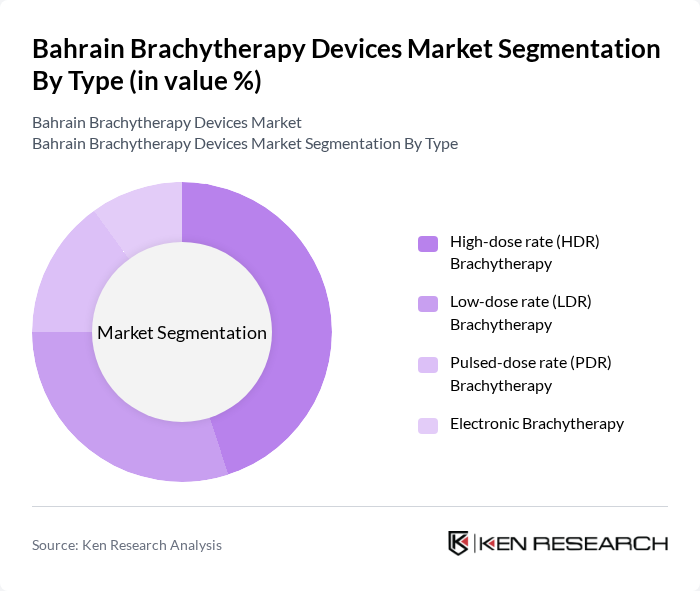
The segmentation by type includes High-dose rate (HDR) Brachytherapy, Low-dose rate (LDR) Brachytherapy, Pulsed-dose rate (PDR) Brachytherapy, and Electronic Brachytherapy. Among these, High-dose rate (HDR) Brachytherapy is the leading sub-segment due to its effectiveness in treating localized tumors with minimal damage to surrounding tissues. The increasing preference for outpatient procedures and shorter treatment times has further propelled the demand for HDR systems, making it a popular choice among healthcare providers.
By End-User:
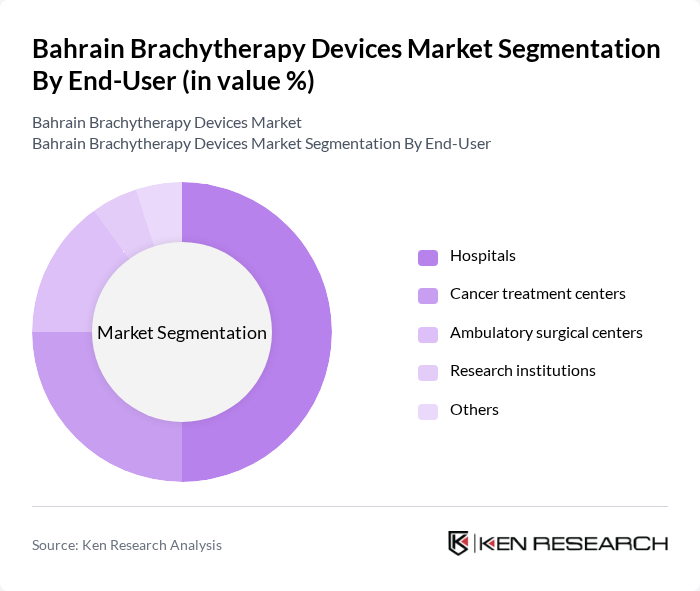
This segmentation includes Hospitals, Cancer treatment centers, Ambulatory surgical centers, Research institutions, and Others. Hospitals dominate this segment, accounting for a significant share due to their comprehensive cancer care services and advanced treatment facilities. The integration of brachytherapy into hospital oncology departments has been driven by the need for effective cancer treatment options, leading to increased investments in brachytherapy technologies.
The Bahrain Brachytherapy Devices Market is characterized by a dynamic mix of regional and international players. Leading participants such as Varian Medical Systems (a Siemens Healthineers company), Elekta AB, IsoRay, Inc., Nucletron B.V. (an Elekta company), CivaTech Oncology, Inc., Becton, Dickinson and Company (C.R. Bard, Inc.), AccuBoost (Advanced Radiation Therapy, LLC), Xoft, Inc. (a subsidiary of iCAD, Inc.), Theragenics Corporation, Boston Scientific Corporation, Eckert & Ziegler BEBIG, SenoRx, Inc. (a C.R. Bard company), C4 Imaging LLC, Medtronic plc, GT Medical Technologies, Inc. contribute to innovation, geographic expansion, and service delivery in this space.
**Sources:** - - -
The future of the Bahrain brachytherapy devices market appears promising, driven by ongoing advancements in medical technology and increasing government support for cancer treatment initiatives. As healthcare expenditure rises, investments in specialized cancer treatment facilities are expected to grow, enhancing access to brachytherapy. Additionally, the integration of artificial intelligence in treatment planning is anticipated to improve patient outcomes, making brachytherapy a more attractive option for healthcare providers and patients alike.
| Segment | Sub-Segments |
|---|---|
| By Type | High-dose rate (HDR) Brachytherapy Low-dose rate (LDR) Brachytherapy Pulsed-dose rate (PDR) Brachytherapy Electronic Brachytherapy |
| By End-User | Hospitals Cancer treatment centers Ambulatory surgical centers Research institutions Others |
| By Application | Prostate cancer Breast cancer Gynecological cancers (including cervical and endometrial) Lung cancer Head and neck cancers Others |
| By Region | Northern Governorate Southern Governorate Capital Governorate Muharraq Governorate |
| By Device Type | Brachytherapy seeds (e.g., Iodine-125, Cesium-131) Applicators (intracavitary, interstitial, surface) Afterloaders (manual and remote-controlled) Electronic brachytherapy systems Others |
| By Treatment Method | Intracavitary Brachytherapy Interstitial Brachytherapy Surface Brachytherapy Intraluminal Brachytherapy Others |
| By Patient Demographics | Adult patients Pediatric patients Geriatric patients Others |
| Scope Item/Segment | Sample Size | Target Respondent Profiles |
|---|---|---|
| Oncology Departments in Hospitals | 100 | Oncologists, Radiation Therapists |
| Medical Device Distributors | 60 | Sales Managers, Product Specialists |
| Healthcare Procurement Managers | 70 | Procurement Managers, Supply Chain Managers |
| Patient Advocacy Groups | 40 | Patient Representatives, Healthcare Advocates |
| Regulatory Bodies | 40 | Regulatory Affairs Specialists, Policy Makers |
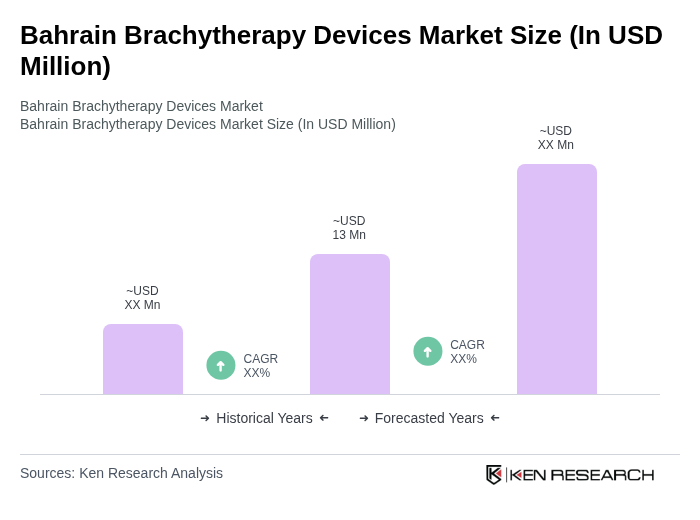
The Bahrain Brachytherapy Devices Market is valued at approximately USD 13 million, reflecting its share within the broader Middle East radiotherapy segment, which is experiencing significant growth due to rising cancer incidences and advancements in radiation therapies.

What makes us stand out is that our consultants follow Robust, Refine and Result (RRR) methodology. Robust for clear definitions, approaches and sanity checking, Refine for differentiating respondents' facts and opinions, and Result for presenting data with story.

We have set a benchmark in the industry by offering our clients with syndicated and customized market research reports featuring coverage of entire market as well as meticulous research and analyst insights.

While we don't replace traditional research, we flip the method upside down. Our dual approach of Top Bottom & Bottom Top ensures quality deliverable by not just verifying company fundamentals but also looking at the sector and macroeconomic factors.

With one step in the future, our research team constantly tries to show you the bigger picture. We help with some of the tough questions you may encounter along the way: How is the industry positioned? Best marketing channel? KPI's of competitors? By aligning every element, we help maximize success.

Our report gives you instant access to the answers and sources that other companies might choose to hide. We elaborate each steps of research methodology we have used and showcase you the sample size to earn your trust.

If you need any support, we are here! We pride ourselves on universe strength, data quality, and quick, friendly, and professional service.













