Region:Middle East
Author(s):Shubham
Product Code:KRAD6814
Pages:89
Published On:December 2025
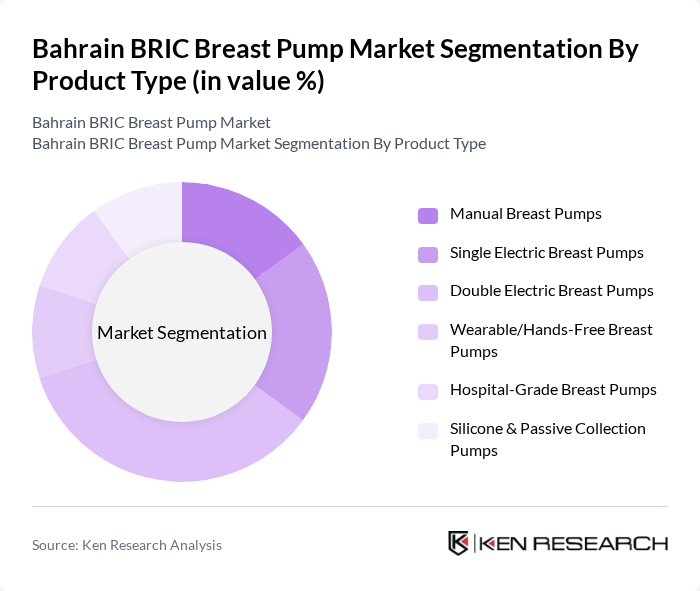
By Product Type:The product type segmentation includes various categories such as Manual Breast Pumps, Single Electric Breast Pumps, Double Electric Breast Pumps, Wearable/Hands-Free Breast Pumps, Hospital-Grade Breast Pumps, and Silicone & Passive Collection Pumps. Among these, Double Electric Breast Pumps are currently leading the market in line with global patterns where electric and wearable pumps capture the largest share, driven by higher efficiency, adjustable suction modes, and time savings that particularly appeal to working mothers who require quick and effective solutions for milk expression.
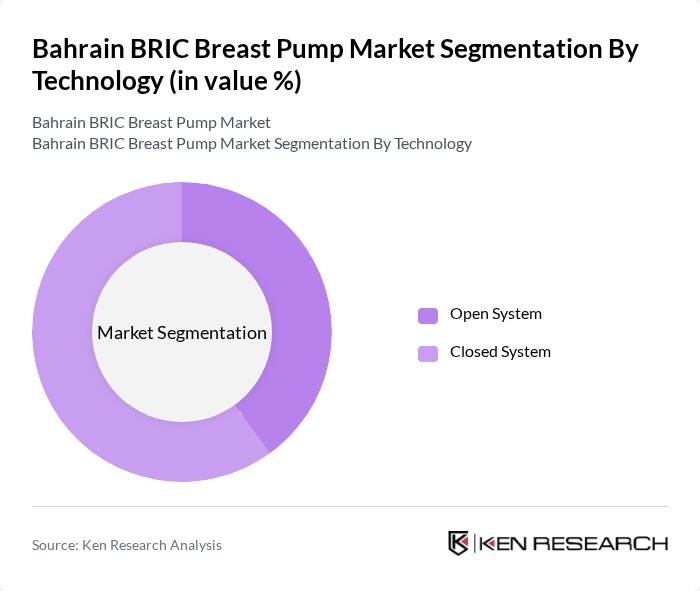
By Technology:The technology segmentation is divided into Open System and Closed System breast pumps. Closed System breast pumps are gaining traction due to their hygienic design, which prevents milk from entering the pump mechanism and reduces the risk of contamination, making them a preferred choice among health-conscious consumers and aligning with global data showing closed systems accounting for more than sixty percent of demand. This trend is particularly evident in hospital and maternity-clinic settings where infection control is paramount, and procurement policies increasingly favour closed-system and hospital-grade pumps to support safe multi-user or rental use.
The Bahrain BRIC Breast Pump Market is characterized by a dynamic mix of regional and international players. Leading participants such as Medela AG, Philips Avent (Koninklijke Philips N.V.), Pigeon Corporation, Spectra Baby (Uzinmedicare Co., Ltd.), Lansinoh Laboratories, Inc., Ameda, Inc., Ardo Medical AG, Chicco (Artsana Group), Tommee Tippee (Mayborn Group), Haakaa, Elvie (Chiaro Technology Ltd.), BabyBuddha, Nuk (MAPA GmbH), Evenflo Feeding, Inc., Local and Regional Distributors (e.g., Mumzworld, Babyshop / Centrepoint Group) contribute to innovation, geographic expansion, and service delivery in this space.
The Bahrain BRIC breast pump market is poised for significant growth, driven by evolving consumer preferences and increasing support for maternal health initiatives. As more mothers seek flexible breastfeeding solutions, the demand for innovative products will likely rise. Additionally, the government's commitment to promoting breastfeeding-friendly policies will further enhance market dynamics. The integration of technology in breast pump design will also play a crucial role in shaping future trends, ensuring that products meet the diverse needs of modern mothers.
| Segment | Sub-Segments |
|---|---|
| By Product Type | Manual Breast Pumps Single Electric Breast Pumps Double Electric Breast Pumps Wearable/Hands-Free Breast Pumps Hospital-Grade Breast Pumps Silicone & Passive Collection Pumps |
| By Technology | Open System Closed System |
| By End-User | Hospitals Maternity & Specialty Clinics Homecare Settings Lactation Consultants & Breastfeeding Support Centers |
| By Distribution Channel | Hospital & Clinic Pharmacies Retail Pharmacies & Drugstores Baby & Mother Care Specialty Stores Supermarkets & Hypermarkets E-commerce Marketplaces Brand & Distributor Websites |
| By Price Range | Economy (Entry-Level) Mid-Range Premium Hospital Procurement Price Bands |
| By Consumer Profile | First-Time Mothers Experienced Mothers with Multiple Children Working Mothers in Public Sector Working Mothers in Private Sector Expatriate Mothers |
| By Usage Pattern | Occasional / Backup Use Regular Daily Use Exclusive Pumping |
| Scope Item/Segment | Sample Size | Target Respondent Profiles |
|---|---|---|
| New Mothers | 120 | First-time mothers, mothers with infants under 12 months |
| Pediatricians | 40 | Child health specialists, family doctors |
| Lactation Consultants | 25 | Certified lactation consultants, breastfeeding support group leaders |
| Retailers of Baby Products | 35 | Store managers, product category managers |
| Healthcare Policy Makers | 15 | Public health officials, maternal health program coordinators |
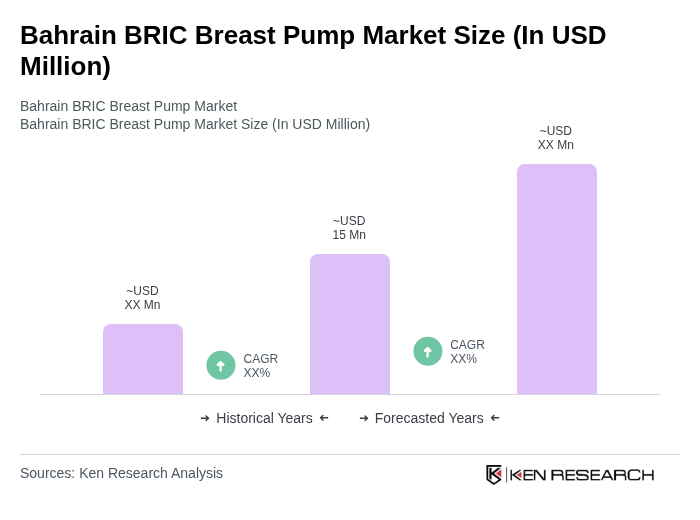
The Bahrain BRIC Breast Pump Market is valued at approximately USD 15 million, reflecting a steady growth driven by increased awareness of breastfeeding benefits and rising female labor-force participation, which boosts demand for convenient milk-expression solutions among working mothers.

What makes us stand out is that our consultants follow Robust, Refine and Result (RRR) methodology. Robust for clear definitions, approaches and sanity checking, Refine for differentiating respondents' facts and opinions, and Result for presenting data with story.

We have set a benchmark in the industry by offering our clients with syndicated and customized market research reports featuring coverage of entire market as well as meticulous research and analyst insights.

While we don't replace traditional research, we flip the method upside down. Our dual approach of Top Bottom & Bottom Top ensures quality deliverable by not just verifying company fundamentals but also looking at the sector and macroeconomic factors.

With one step in the future, our research team constantly tries to show you the bigger picture. We help with some of the tough questions you may encounter along the way: How is the industry positioned? Best marketing channel? KPI's of competitors? By aligning every element, we help maximize success.

Our report gives you instant access to the answers and sources that other companies might choose to hide. We elaborate each steps of research methodology we have used and showcase you the sample size to earn your trust.

If you need any support, we are here! We pride ourselves on universe strength, data quality, and quick, friendly, and professional service.













