Region:Middle East
Author(s):Geetanshi
Product Code:KRAD3893
Pages:83
Published On:November 2025
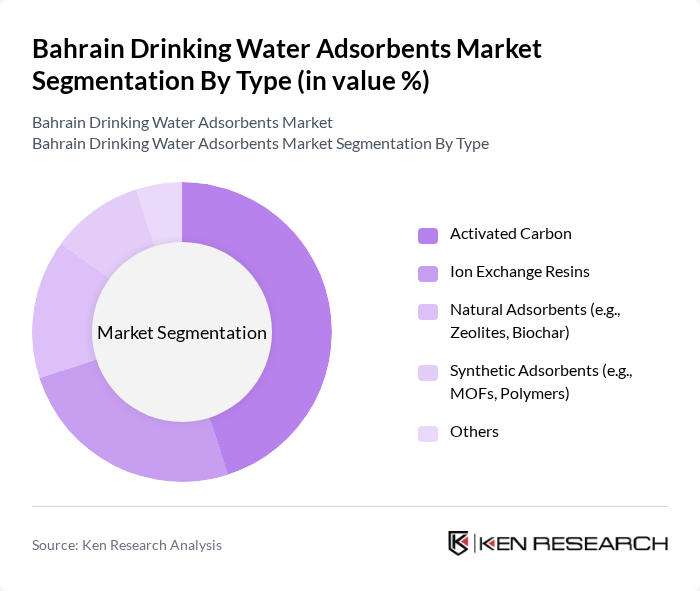
By Type:The market is segmented into various types of adsorbents, including Activated Carbon, Ion Exchange Resins, Natural Adsorbents (e.g., Zeolites, Biochar), Synthetic Adsorbents (e.g., MOFs, Polymers), and Others. Activated Carbon is the leading sub-segment due to its widespread use in both residential and industrial applications for its effectiveness in removing impurities and contaminants from water. Ion Exchange Resins are also gaining traction, particularly in industrial settings, due to their efficiency in softening water and removing specific ions. The adoption of natural and synthetic adsorbents is increasing as industries seek cost-effective and environmentally friendly alternatives .
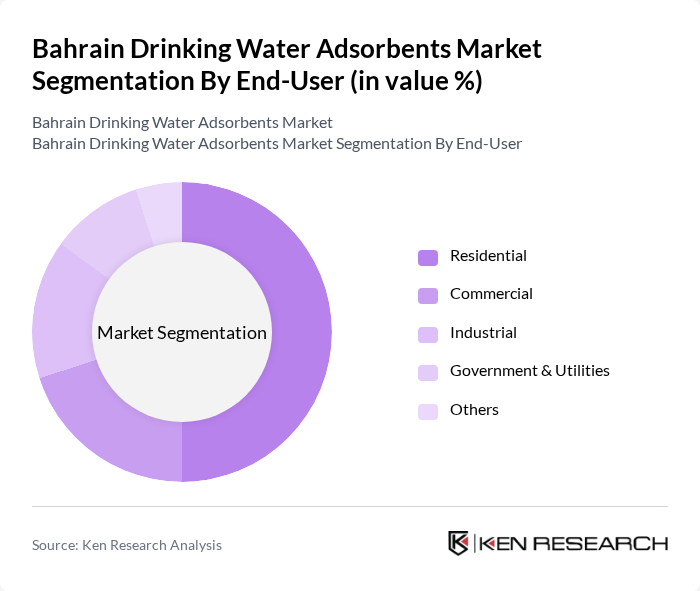
By End-User:The market is categorized into Residential, Commercial, Industrial, Government & Utilities, and Others. The Residential segment is the most significant, driven by increasing consumer awareness regarding water quality and safety. The demand for home water purification systems has surged, leading to a higher adoption of adsorbents in household applications. The Industrial segment follows closely, as industries require efficient water treatment solutions to comply with environmental regulations and ensure operational efficiency. The commercial sector is also expanding, supported by growth in hospitality, healthcare, and retail infrastructure, which require high-quality water treatment systems .
The Bahrain Drinking Water Adsorbents Market is characterized by a dynamic mix of regional and international players. Leading participants such as Gulf Water Solutions, Bahrain Water Bottling Company, Al-Ahlia Chemicals, National Water Company, Al-Moayyed International Group, Bahrain National Gas Company, Al-Hidd Water Treatment, Al-Bahrain Water Treatment, EcoWater Systems, Aqua Pure, Water Solutions Bahrain, Bahrain Environmental Services, Al-Mohsin Water Treatment, Pure Water Technologies, Bahrain Water Treatment Company contribute to innovation, geographic expansion, and service delivery in this space.
The future of the Bahrain drinking water adsorbents market appears promising, driven by increasing investments in water purification technologies and a growing emphasis on sustainability. As consumer preferences shift towards eco-friendly solutions, manufacturers are likely to innovate and develop biodegradable adsorbents. Additionally, the expansion of residential water treatment systems will create new avenues for growth, enabling companies to cater to a broader customer base while addressing environmental concerns effectively.
| Segment | Sub-Segments |
|---|---|
| By Type | Activated Carbon Ion Exchange Resins Natural Adsorbents (e.g., Zeolites, Biochar) Synthetic Adsorbents (e.g., MOFs, Polymers) Others |
| By End-User | Residential Commercial Industrial Government & Utilities Others |
| By Application | Point of Use (POU) Systems Point of Entry (POE) Systems Bottled Water Production Wastewater Treatment Others |
| By Distribution Channel | Direct Sales Retail Outlets Online Sales Distributors Others |
| By Region | Northern Governorate Southern Governorate Capital Governorate Muharraq Governorate Others |
| By Product Form | Granular Adsorbents Powdered Adsorbents Pellets Others |
| By Packaging Type | Bulk Packaging Retail Packaging Custom Packaging Others |
| Scope Item/Segment | Sample Size | Target Respondent Profiles |
|---|---|---|
| Residential Water Treatment Providers | 100 | Product Managers, Sales Directors |
| Commercial Water Purification Systems | 60 | Operations Managers, Procurement Specialists |
| Industrial Water Treatment Facilities | 50 | Facility Managers, Environmental Compliance Officers |
| Research Institutions Focused on Water Quality | 40 | Research Scientists, Academic Professors |
| Government Regulatory Bodies | 40 | Policy Makers, Environmental Analysts |
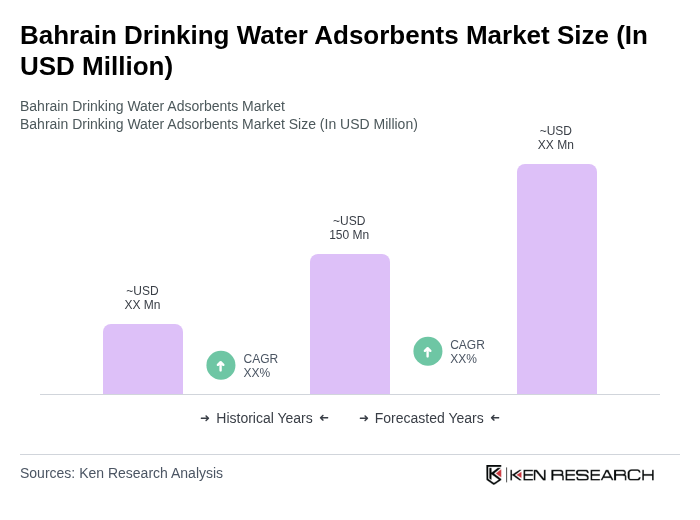
The Bahrain Drinking Water Adsorbents Market is valued at approximately USD 150 million, reflecting a five-year historical analysis. This valuation is influenced by increasing concerns over water quality, population growth, and urbanization, driving demand for effective water treatment solutions.

What makes us stand out is that our consultants follow Robust, Refine and Result (RRR) methodology. Robust for clear definitions, approaches and sanity checking, Refine for differentiating respondents' facts and opinions, and Result for presenting data with story.

We have set a benchmark in the industry by offering our clients with syndicated and customized market research reports featuring coverage of entire market as well as meticulous research and analyst insights.

While we don't replace traditional research, we flip the method upside down. Our dual approach of Top Bottom & Bottom Top ensures quality deliverable by not just verifying company fundamentals but also looking at the sector and macroeconomic factors.

With one step in the future, our research team constantly tries to show you the bigger picture. We help with some of the tough questions you may encounter along the way: How is the industry positioned? Best marketing channel? KPI's of competitors? By aligning every element, we help maximize success.

Our report gives you instant access to the answers and sources that other companies might choose to hide. We elaborate each steps of research methodology we have used and showcase you the sample size to earn your trust.

If you need any support, we are here! We pride ourselves on universe strength, data quality, and quick, friendly, and professional service.













