Region:Middle East
Author(s):Geetanshi
Product Code:KRAC4413
Pages:88
Published On:October 2025
By Type:
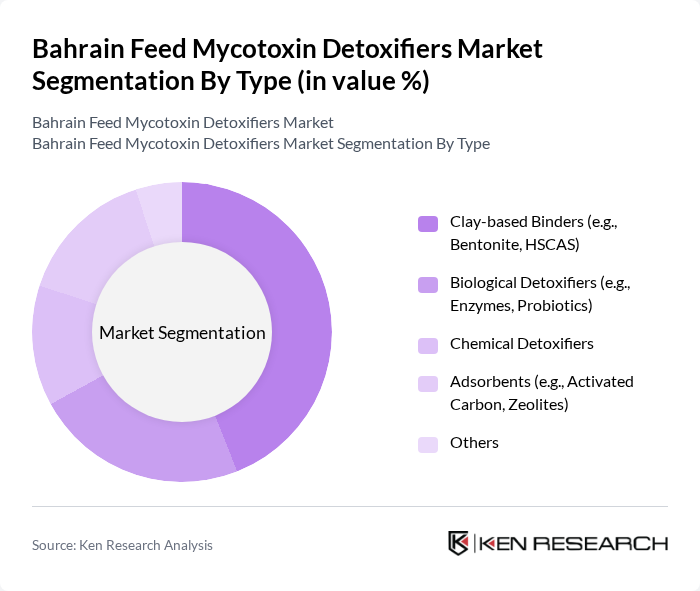
The subsegments under this category include Clay-based Binders (e.g., Bentonite, HSCAS), Biological Detoxifiers (e.g., Enzymes, Probiotics), Chemical Detoxifiers, Adsorbents (e.g., Activated Carbon, Zeolites), and Others. Among these, Clay-based Binders lead the market due to their proven effectiveness in binding a broad spectrum of mycotoxins and their widespread acceptance in the livestock industry. The growing trend towards natural and organic feed additives, as well as regulatory approvals for mineral-based solutions, has further bolstered demand for clay-based products, making them the preferred choice for many feed manufacturers .
By Application:
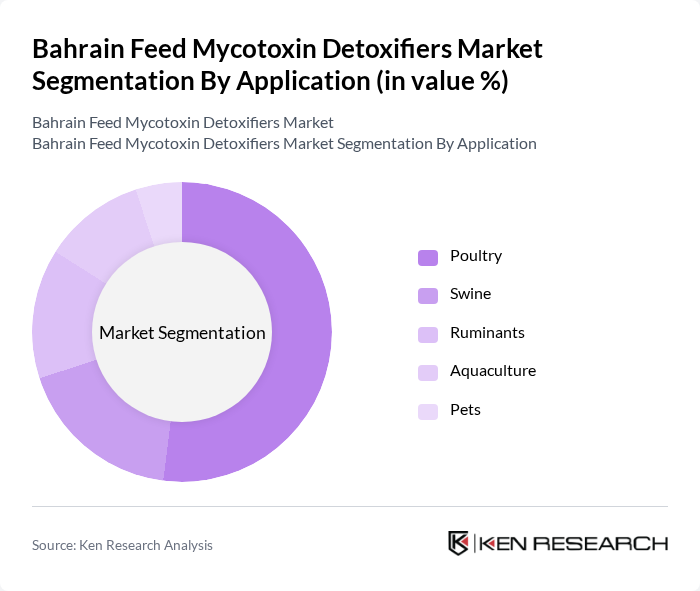
This category includes Poultry, Swine, Ruminants, Aquaculture, and Pets. The Poultry segment is the dominant application area, driven by the high demand for poultry products and the increasing focus on animal health and food safety. The prevalence of mycotoxin contamination in imported feed ingredients has led poultry producers to adopt detoxifiers to ensure flock health and maintain productivity, making this segment the primary driver of market growth .
The Bahrain Feed Mycotoxin Detoxifiers Market is characterized by a dynamic mix of regional and international players. Leading participants such as Alltech Inc., BASF SE, Cargill, Inc., Evonik Industries AG, Kemin Industries, Inc., Novus International, Inc., Adisseo France S.A.S., Impextraco NV, Biomin Holding GmbH (part of DSM-Firmenich), Perstorp Holding AB, Phibro Animal Health Corporation, Nutreco N.V., DSM-Firmenich AG, Provimi S.A. (a Cargill company), Trouw Nutrition (a Nutreco company) contribute to innovation, geographic expansion, and service delivery in this space.
The Bahrain Feed Mycotoxin Detoxifiers Market is poised for growth as awareness of animal health and feed safety continues to rise. With government regulations tightening, the demand for effective detoxification solutions will likely increase. Innovations in detoxification technologies and a shift towards organic solutions are expected to shape the market landscape. Additionally, as livestock production expands, the need for safe feed will drive further investments in mycotoxin detoxifiers, creating a robust market environment for stakeholders in the coming years.
| Segment | Sub-Segments |
|---|---|
| By Type | Clay-based Binders (e.g., Bentonite, HSCAS) Biological Detoxifiers (e.g., Enzymes, Probiotics) Chemical Detoxifiers Adsorbents (e.g., Activated Carbon, Zeolites) Others |
| By Application | Poultry Swine Ruminants Aquaculture Pets |
| By Distribution Channel | Direct Sales Distributors Online Sales Others |
| By Formulation | Dry (Powder, Granules) Liquid |
| By End-User | Commercial Farms Smallholder Farms Feed Manufacturers Integrators |
| By Packaging Type | Bulk Packaging Retail Packaging Custom Packaging |
| By Price Range | Economy Mid-Range Premium |
| Scope Item/Segment | Sample Size | Target Respondent Profiles |
|---|---|---|
| Livestock Feed Manufacturers | 50 | Production Managers, Quality Control Officers |
| Veterinary Professionals | 40 | Veterinarians, Animal Health Consultants |
| Feed Ingredient Suppliers | 40 | Procurement Managers, Sales Representatives |
| Regulatory Bodies | 40 | Policy Makers, Compliance Officers |
| Farm Operators | 50 | Farm Managers, Livestock Owners |
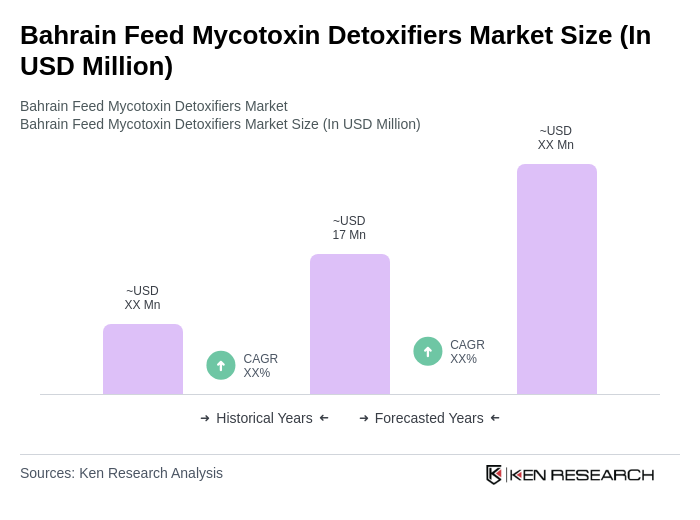
The Bahrain Feed Mycotoxin Detoxifiers Market is valued at approximately USD 17 million, reflecting a five-year historical analysis that highlights growth driven by increased awareness of animal health and the demand for safe animal feed.

What makes us stand out is that our consultants follow Robust, Refine and Result (RRR) methodology. Robust for clear definitions, approaches and sanity checking, Refine for differentiating respondents' facts and opinions, and Result for presenting data with story.

We have set a benchmark in the industry by offering our clients with syndicated and customized market research reports featuring coverage of entire market as well as meticulous research and analyst insights.

While we don't replace traditional research, we flip the method upside down. Our dual approach of Top Bottom & Bottom Top ensures quality deliverable by not just verifying company fundamentals but also looking at the sector and macroeconomic factors.

With one step in the future, our research team constantly tries to show you the bigger picture. We help with some of the tough questions you may encounter along the way: How is the industry positioned? Best marketing channel? KPI's of competitors? By aligning every element, we help maximize success.

Our report gives you instant access to the answers and sources that other companies might choose to hide. We elaborate each steps of research methodology we have used and showcase you the sample size to earn your trust.

If you need any support, we are here! We pride ourselves on universe strength, data quality, and quick, friendly, and professional service.













