Region:Middle East
Author(s):Geetanshi
Product Code:KRAC1001
Pages:89
Published On:October 2025
By Type:
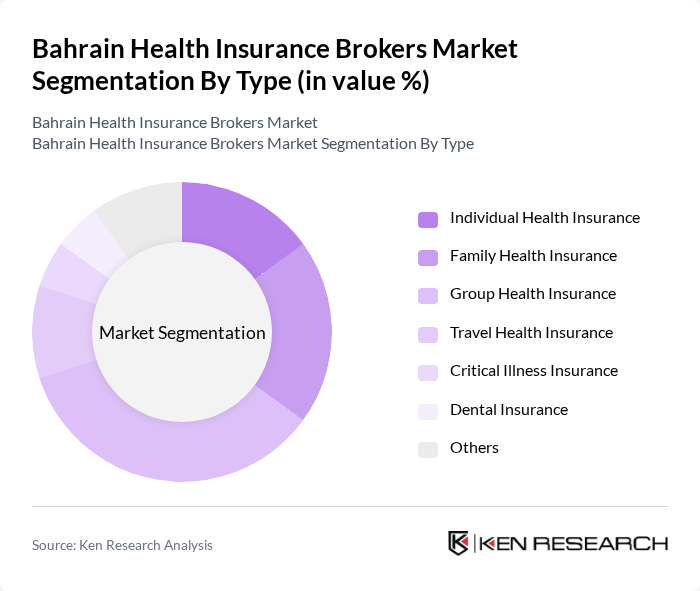
The major segments under this category include Individual Health Insurance, Family Health Insurance, Group Health Insurance, Travel Health Insurance, Critical Illness Insurance, Dental Insurance, and Others. Group Health Insurance is currently the leading segment, driven by the increasing number of companies providing health benefits to employees. This trend is supported by regulatory requirements for employer-provided coverage, as well as the need for businesses to attract and retain talent. Rising healthcare costs and greater awareness of health issues are also contributing to the popularity of group plans. Market participants are increasingly offering customized and specialized plans, including digital enrollment and wellness programs, to meet evolving consumer needs .
By End-User:
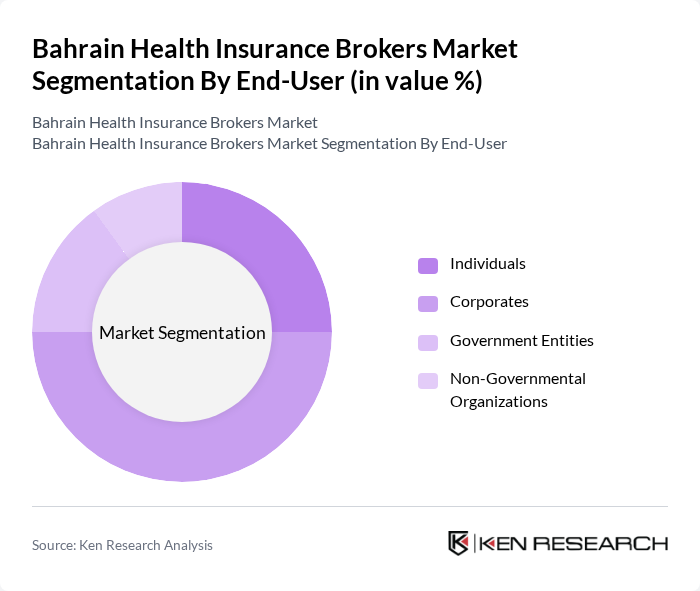
This segmentation includes Individuals, Corporates, Government Entities, and Non-Governmental Organizations. Corporates remain the leading end-users, reflecting the widespread adoption of employer-sponsored health insurance as a standard employee benefit. Regulatory requirements for corporate health coverage and increasing employee awareness of health and wellness have contributed to the expansion of corporate health insurance plans. Government entities and NGOs also participate actively, but the corporate sector accounts for the largest share due to compliance and talent retention priorities .
The Bahrain Health Insurance Brokers Market is characterized by a dynamic mix of regional and international players. Leading participants such as Bupa Arabia, Gulf Insurance Group, Bahrain National Holding Company, Takaful International Company, Al Ahlia Insurance Company, Trust International Insurance, MetLife Bahrain, AXA Gulf, Daman Bahrain, Qatar Insurance Company, Oman Insurance Company, Arab Orient Insurance Company, Al Hilal Life Insurance, National Life & General Insurance Company, Zurich Insurance Group contribute to innovation, geographic expansion, and service delivery in this space.
The future of the Bahrain health insurance brokers market appears promising, driven by technological advancements and evolving consumer preferences. The integration of digital platforms is expected to enhance customer engagement and streamline processes, making insurance more accessible. Additionally, the increasing focus on preventive healthcare will likely lead to the development of innovative insurance products tailored to individual needs, fostering a more competitive environment. As the market adapts to these trends, brokers will need to leverage technology to stay relevant and meet consumer demands effectively.
| Segment | Sub-Segments |
|---|---|
| By Type | Individual Health Insurance Family Health Insurance Group Health Insurance Travel Health Insurance Critical Illness Insurance Dental Insurance Others |
| By End-User | Individuals Corporates Government Entities Non-Governmental Organizations |
| By Distribution Channel | Direct Sales Brokers Online Platforms Agents |
| By Coverage Type | Inpatient Coverage Outpatient Coverage Maternity Coverage Emergency Coverage |
| By Premium Range | Low Premium Medium Premium High Premium |
| By Policy Duration | Short-Term Policies Long-Term Policies |
| By Policy Type | Comprehensive Plans Basic Plans Add-On Plans Others |
| By Customer Segment | Young Adults Families Seniors Expatriates |
| Scope Item/Segment | Sample Size | Target Respondent Profiles |
|---|---|---|
| Individual Health Insurance Policyholders | 100 | Policyholders, Family Heads |
| Corporate Health Insurance Clients | 80 | HR Managers, Benefits Coordinators |
| Healthcare Providers (Hospitals and Clinics) | 60 | Administrative Directors, Financial Officers |
| Insurance Brokers and Agents | 50 | Insurance Brokers, Sales Representatives |
| Regulatory Bodies and Health Authorities | 40 | Policy Analysts, Regulatory Officers |
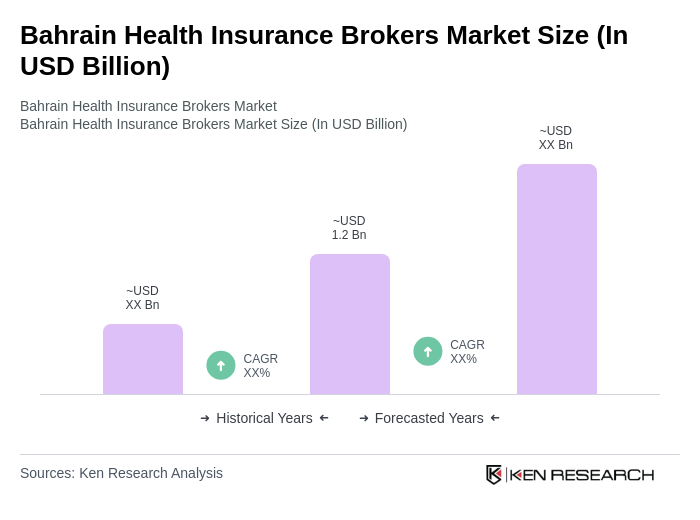
The Bahrain Health Insurance Brokers Market is valued at approximately USD 1.2 billion, reflecting a significant growth driven by rising healthcare costs, a growing population, and increased awareness of health insurance benefits among residents.

What makes us stand out is that our consultants follow Robust, Refine and Result (RRR) methodology. Robust for clear definitions, approaches and sanity checking, Refine for differentiating respondents' facts and opinions, and Result for presenting data with story.

We have set a benchmark in the industry by offering our clients with syndicated and customized market research reports featuring coverage of entire market as well as meticulous research and analyst insights.

While we don't replace traditional research, we flip the method upside down. Our dual approach of Top Bottom & Bottom Top ensures quality deliverable by not just verifying company fundamentals but also looking at the sector and macroeconomic factors.

With one step in the future, our research team constantly tries to show you the bigger picture. We help with some of the tough questions you may encounter along the way: How is the industry positioned? Best marketing channel? KPI's of competitors? By aligning every element, we help maximize success.

Our report gives you instant access to the answers and sources that other companies might choose to hide. We elaborate each steps of research methodology we have used and showcase you the sample size to earn your trust.

If you need any support, we are here! We pride ourselves on universe strength, data quality, and quick, friendly, and professional service.













