Region:Middle East
Author(s):Geetanshi
Product Code:KRAC3110
Pages:99
Published On:October 2025
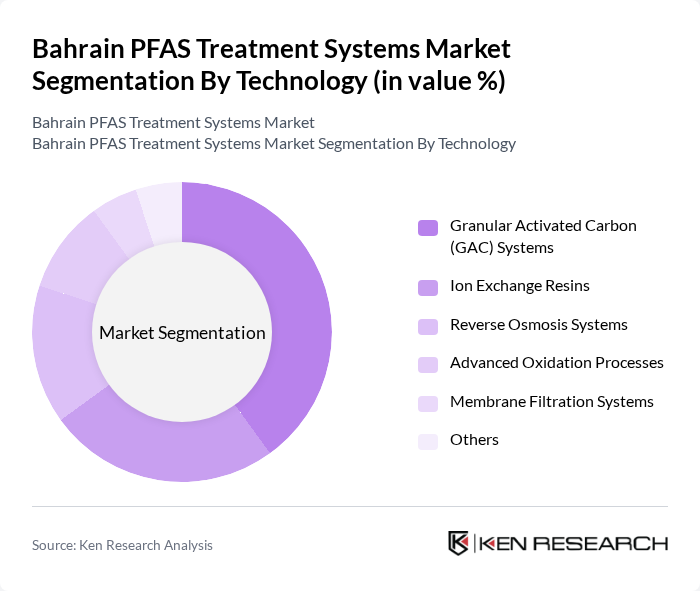
By Technology:The technology segment includes various methods used for PFAS treatment, such as Granular Activated Carbon (GAC) Systems, Ion Exchange Resins, Reverse Osmosis Systems, Advanced Oxidation Processes, Membrane Filtration Systems, and Others. Among these, Granular Activated Carbon (GAC) Systems dominate the market due to their effectiveness in adsorbing PFAS compounds from water. The growing preference for GAC systems is attributed to their cost-effectiveness and ease of operation, making them a popular choice for both municipal and industrial applications.
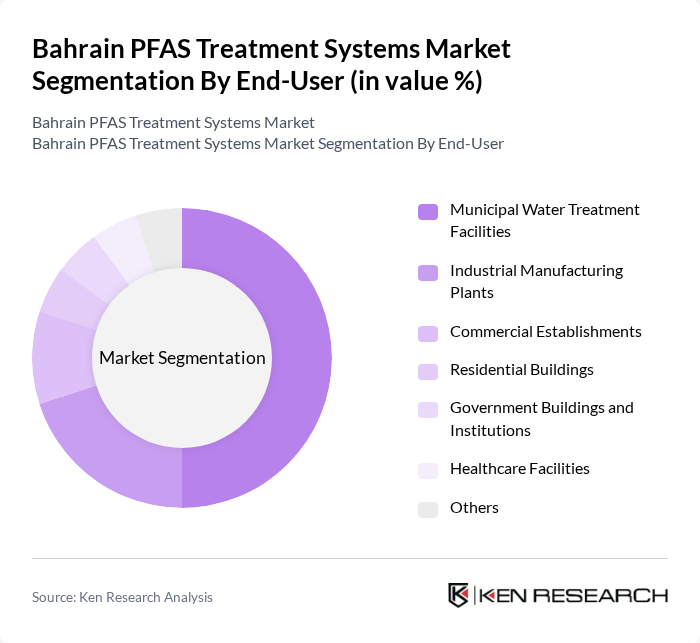
By End-User:The end-user segment encompasses various sectors utilizing PFAS treatment systems, including Municipal Water Treatment Facilities, Industrial Manufacturing Plants, Commercial Establishments, Residential Buildings, Government Buildings and Institutions, Healthcare Facilities, and Others. Municipal Water Treatment Facilities are the leading end-users, driven by the urgent need to ensure safe drinking water for the population. The increasing investments in water infrastructure and the implementation of stringent regulations further bolster the demand for PFAS treatment solutions in this sector.
The Bahrain PFAS Treatment Systems Market is characterized by a dynamic mix of regional and international players. Leading participants such as Veolia Environnement S.A., SUEZ Water Technologies & Solutions, Xylem Inc., Evoqua Water Technologies LLC, Pentair plc, Ecolab Inc., Aquatech International LLC, DuPont Water Solutions, Kurita Water Industries Ltd., Pall Corporation (Danaher Corporation), AECOM, Jacobs Engineering Group Inc., Golder Associates (WSP Global Inc.), Wood Group (Wood plc), Envirogen Technologies, Inc. contribute to innovation, geographic expansion, and service delivery in this space.
The future of the Bahrain PFAS treatment systems market appears promising, driven by increasing regulatory demands and technological innovations. As public awareness continues to rise, local governments are expected to prioritize investments in advanced treatment solutions. In future, the market is likely to see a surge in funding for research and development, fostering collaboration between private companies and academic institutions. This collaborative approach will enhance the effectiveness of treatment technologies, ensuring safer water supplies for the population and promoting sustainable practices in environmental management.
| Segment | Sub-Segments |
|---|---|
| By Technology | Granular Activated Carbon (GAC) Systems Ion Exchange Resins Reverse Osmosis Systems Advanced Oxidation Processes Membrane Filtration Systems Others |
| By End-User | Municipal Water Treatment Facilities Industrial Manufacturing Plants Commercial Establishments Residential Buildings Government Buildings and Institutions Healthcare Facilities Others |
| By Application | Drinking Water Treatment Wastewater Treatment Groundwater Remediation Industrial Process Water Treatment Point-of-Entry (POE) Systems Point-of-Use (POU) Systems Others |
| By Installation Type | Point-of-Entry (POE) Treatment Systems Point-of-Use (POU) Treatment Systems Centralized Treatment Systems Decentralized Treatment Systems Others |
| By Component | Filtration Media and Cartridges Membranes Pumps and Valves Control and Monitoring Systems Storage Tanks Others |
| By Service Type | System Design and Engineering Installation and Commissioning Maintenance and Support Testing and Monitoring Services Others |
| By Investment Source | Government Funding Private Sector Investment International Development Grants Public-Private Partnerships (PPP) Others |
| Scope Item/Segment | Sample Size | Target Respondent Profiles |
|---|---|---|
| Municipal Water Treatment Facilities | 45 | Water Treatment Managers, Environmental Compliance Officers |
| Industrial PFAS Users | 50 | Production Managers, Environmental Health and Safety Officers |
| Environmental Consulting Firms | 40 | Senior Consultants, Project Managers |
| Regulatory Bodies | 20 | Policy Makers, Environmental Analysts |
| Research Institutions | 30 | Research Scientists, Academic Professors |
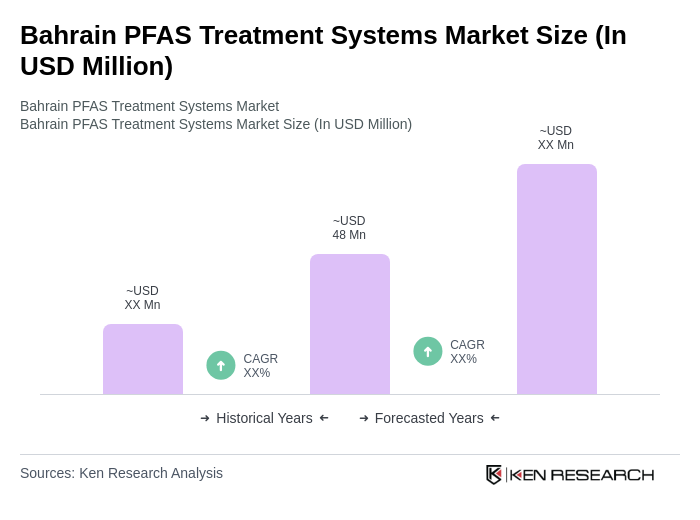
The Bahrain PFAS Treatment Systems Market is valued at approximately USD 48 million, reflecting a significant increase driven by regulatory scrutiny and public awareness regarding PFAS contamination and its health risks.

What makes us stand out is that our consultants follow Robust, Refine and Result (RRR) methodology. Robust for clear definitions, approaches and sanity checking, Refine for differentiating respondents' facts and opinions, and Result for presenting data with story.

We have set a benchmark in the industry by offering our clients with syndicated and customized market research reports featuring coverage of entire market as well as meticulous research and analyst insights.

While we don't replace traditional research, we flip the method upside down. Our dual approach of Top Bottom & Bottom Top ensures quality deliverable by not just verifying company fundamentals but also looking at the sector and macroeconomic factors.

With one step in the future, our research team constantly tries to show you the bigger picture. We help with some of the tough questions you may encounter along the way: How is the industry positioned? Best marketing channel? KPI's of competitors? By aligning every element, we help maximize success.

Our report gives you instant access to the answers and sources that other companies might choose to hide. We elaborate each steps of research methodology we have used and showcase you the sample size to earn your trust.

If you need any support, we are here! We pride ourselves on universe strength, data quality, and quick, friendly, and professional service.













