














Region:Central and South America
Author(s):Maitreayee
Product Code:KRO086
Pages:90
Published On:November 2025
By Type:The market is segmented into various types of smart cattle health monitoring wearables, including GPS Tracking Devices, Health Monitoring Sensors, Wearable Cameras, RFID Tags, and Others. Each of these subsegments plays a crucial role in enhancing cattle management and health monitoring.
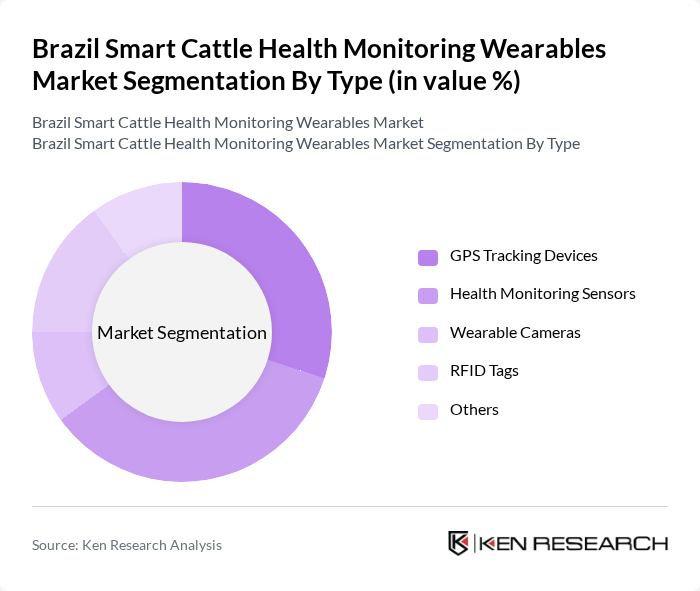
The Health Monitoring Sensors subsegment is currently dominating the market due to their critical role in tracking vital signs and health metrics of cattle. Farmers increasingly prefer these sensors for their ability to provide real-time data, enabling timely interventions and improving overall herd health. The growing trend towards precision agriculture and data-driven decision-making further supports the demand for these devices, making them essential for modern cattle management.
By End-User:The market is segmented based on end-users, including Large Scale Farms, Smallholder Farms, Veterinary Clinics, Research Institutions, and Others. Each segment has unique requirements and contributes differently to the overall market dynamics.
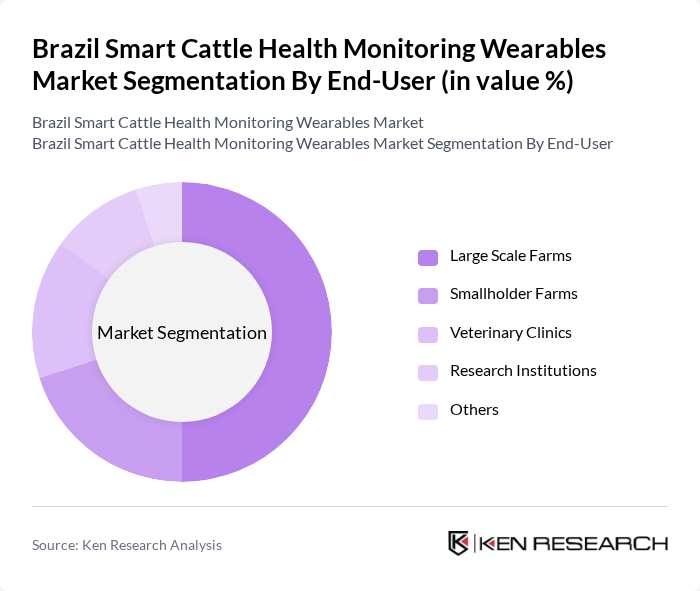
Large Scale Farms are the leading end-user segment, accounting for a significant portion of the market. These farms often have the resources to invest in advanced technologies and benefit from economies of scale. The increasing focus on maximizing productivity and ensuring animal welfare drives the adoption of smart wearables in these operations, making them a key player in the market.
The Brazil Smart Cattle Health Monitoring Wearables Market is characterized by a dynamic mix of regional and international players. Leading participants such as Allflex, Zoetis, Merck Animal Health, DeLaval, Cowlar, Smartbow, SenseTime, AgriWebb, Cattle Care Technologies, Vence, Connecterra, HerdDogg, EID Solutions, CowManager, Smart Cattle Solutions contribute to innovation, geographic expansion, and service delivery in this space.
The future of the Brazil smart cattle health monitoring wearables market appears promising, driven by technological innovations and increasing consumer demand for sustainable farming practices. As farmers become more educated about the benefits of these devices, adoption rates are expected to rise. Additionally, the integration of AI and IoT technologies will enhance data analytics capabilities, allowing for more precise herd management and health monitoring, ultimately leading to improved productivity and animal welfare.
| Segment | Sub-Segments |
|---|---|
| By Type | GPS Tracking Devices Health Monitoring Sensors Wearable Cameras RFID Tags Others |
| By End-User | Large Scale Farms Smallholder Farms Veterinary Clinics Research Institutions Others |
| By Application | Disease Detection Reproductive Health Monitoring Nutritional Monitoring Behavioral Monitoring Others |
| By Distribution Channel | Direct Sales Online Retail Distributors Agricultural Cooperatives Others |
| By Region | North Region Northeast Region Central-West Region Southeast Region South Region |
| By Technology | IoT-Enabled Devices Cloud-Based Solutions Mobile Applications Data Analytics Tools Others |
| By Price Range | Budget-Friendly Options Mid-Range Products Premium Products Others |
| Scope Item/Segment | Sample Size | Target Respondent Profiles |
|---|---|---|
| Cattle Ranchers Using Wearables | 150 | Farm Owners, Herd Managers |
| Veterinary Professionals | 100 | Veterinarians, Animal Health Consultants |
| Technology Developers in AgTech | 80 | Product Managers, R&D Engineers |
| Government Agricultural Officials | 60 | Policy Makers, Agricultural Extension Officers |
| Industry Experts and Analysts | 50 | Market Analysts, Research Scholars |
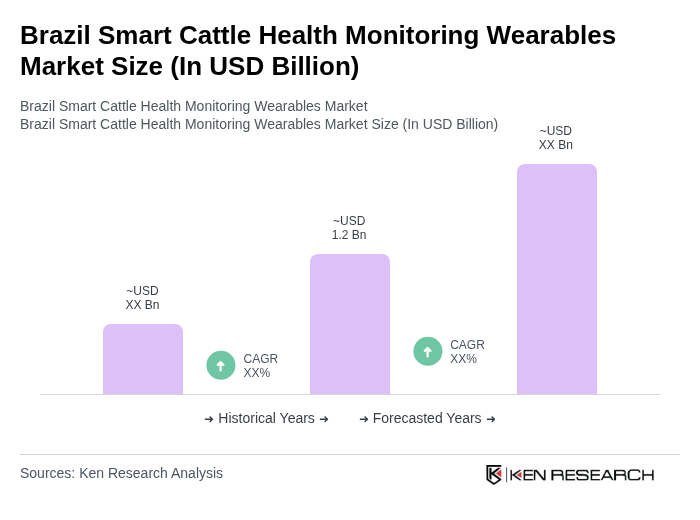
The Brazil Smart Cattle Health Monitoring Wearables Market is valued at approximately USD 1.2 billion, reflecting significant growth driven by technological adoption in agriculture and the increasing focus on cattle health management.

What makes us stand out is that our consultants follow Robust, Refine and Result (RRR) methodology. Robust for clear definitions, approaches and sanity checking, Refine for differentiating respondents' facts and opinions, and Result for presenting data with story.

We have set a benchmark in the industry by offering our clients with syndicated and customized market research reports featuring coverage of entire market as well as meticulous research and analyst insights.

While we don't replace traditional research, we flip the method upside down. Our dual approach of Top Bottom & Bottom Top ensures quality deliverable by not just verifying company fundamentals but also looking at the sector and macroeconomic factors.

With one step in the future, our research team constantly tries to show you the bigger picture. We help with some of the tough questions you may encounter along the way: How is the industry positioned? Best marketing channel? KPI's of competitors? By aligning every element, we help maximize success.

Our report gives you instant access to the answers and sources that other companies might choose to hide. We elaborate each steps of research methodology we have used and showcase you the sample size to earn your trust.

If you need any support, we are here! We pride ourselves on universe strength, data quality, and quick, friendly, and professional service.