Region:Central and South America
Author(s):Rebecca
Product Code:KRAB4120
Pages:86
Published On:October 2025
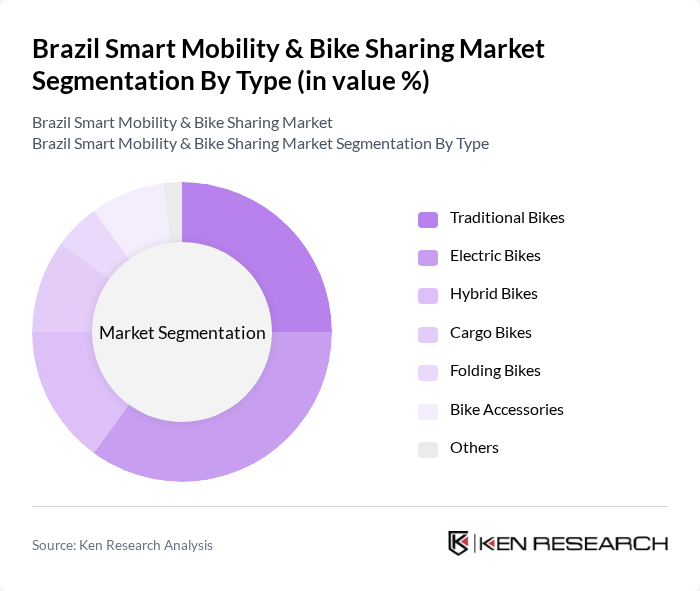
By Type:The market is segmented into various types of bikes, including traditional bikes, electric bikes, hybrid bikes, cargo bikes, folding bikes, bike accessories, and others. Among these, electric bikes are gaining significant traction due to their convenience and eco-friendliness, appealing to a broader audience. Traditional bikes remain popular for their affordability and simplicity, while cargo bikes are increasingly utilized for deliveries in urban areas. The demand for bike accessories is also on the rise as users seek to enhance their biking experience.
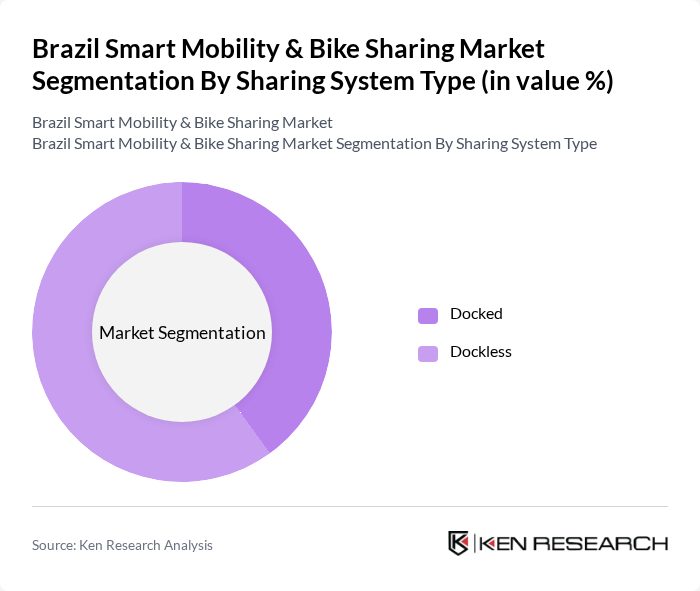
By Sharing System Type:The market is divided into docked and dockless bike-sharing systems. Docked systems have been traditionally popular due to their structured approach, allowing users to pick up and drop off bikes at designated stations. However, dockless systems are rapidly gaining popularity due to their flexibility and convenience, allowing users to park bikes anywhere within a designated area. This shift is driven by consumer preferences for ease of use and the growing trend of on-demand services.
The Brazil Smart Mobility & Bike Sharing Market is characterized by a dynamic mix of regional and international players. Leading participants such as Tembici, Bike Itaú, Grow Mobility, Loop, Movo, Mobike, Lime, Bike Sampa, Bike Rio, Zazcar, Pedal Urban, BiciGo, Bike Anjo, Ciclofaixa, Bike na Rua contribute to innovation, geographic expansion, and service delivery in this space.
The future of Brazil's smart mobility and bike sharing market appears promising, driven by increasing urbanization and government support for sustainable transport. In future, the integration of bike sharing with public transport systems is expected to enhance accessibility, encouraging more users to adopt this eco-friendly mode of transport. Furthermore, the rise of electric bike sharing is anticipated to attract a broader demographic, particularly in urban areas, fostering a shift towards greener commuting options.
| Segment | Sub-Segments |
|---|---|
| By Type | Traditional Bikes Electric Bikes Hybrid Bikes Cargo Bikes Folding Bikes Bike Accessories Others |
| By Sharing System Type | Docked Dockless |
| By End-User | Individual Users Corporate Users Government Agencies Educational Institutions Tourists Others |
| By Distribution Channel | Online Platforms Physical Rental Stations Mobile Apps Partnerships with Local Businesses Others |
| By Pricing Model | Subscription-Based Pay-Per-Ride Corporate Packages Student Discounts Others |
| By Geographic Coverage | Major Cities Suburban Areas Tourist Destinations University Campuses Others |
| By Fleet Size | Small Fleets Medium Fleets Large Fleets Others |
| By User Demographics | Age Groups Income Levels Urban vs Rural Others |
| Scope Item/Segment | Sample Size | Target Respondent Profiles |
|---|---|---|
| Urban Mobility Policy Makers | 100 | City Planners, Transportation Officials |
| Bike-sharing Operators | 60 | Business Development Managers, Operations Directors |
| Technology Providers for Smart Mobility | 50 | Product Managers, Technical Leads |
| End-users of Bike-sharing Services | 120 | Commuters, Students, Tourists |
| Environmental and Urban Studies Experts | 40 | Academics, Researchers, Sustainability Consultants |
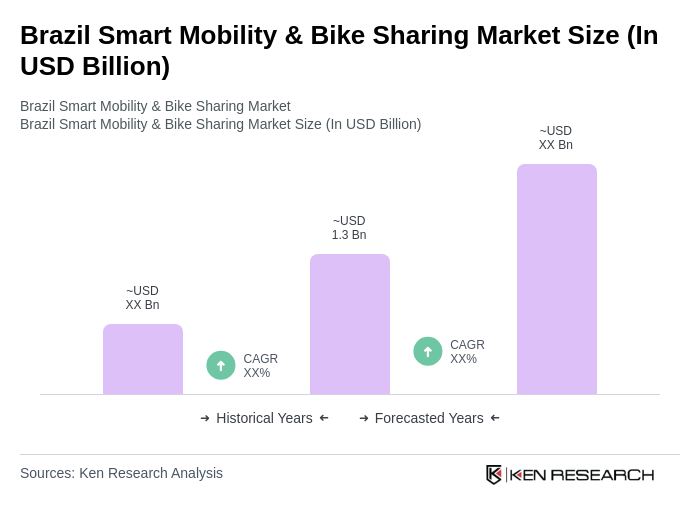
The Brazil Smart Mobility & Bike Sharing Market is valued at approximately USD 1.3 billion, driven by urbanization, government initiatives for sustainable transportation, and increasing consumer awareness of environmental issues.

What makes us stand out is that our consultants follow Robust, Refine and Result (RRR) methodology. Robust for clear definitions, approaches and sanity checking, Refine for differentiating respondents' facts and opinions, and Result for presenting data with story.

We have set a benchmark in the industry by offering our clients with syndicated and customized market research reports featuring coverage of entire market as well as meticulous research and analyst insights.

While we don't replace traditional research, we flip the method upside down. Our dual approach of Top Bottom & Bottom Top ensures quality deliverable by not just verifying company fundamentals but also looking at the sector and macroeconomic factors.

With one step in the future, our research team constantly tries to show you the bigger picture. We help with some of the tough questions you may encounter along the way: How is the industry positioned? Best marketing channel? KPI's of competitors? By aligning every element, we help maximize success.

Our report gives you instant access to the answers and sources that other companies might choose to hide. We elaborate each steps of research methodology we have used and showcase you the sample size to earn your trust.

If you need any support, we are here! We pride ourselves on universe strength, data quality, and quick, friendly, and professional service.













