About the Report
Base Year 2024Listen to the audio summary
Canada Latent Tuberculosis Infection Detection Market Overview
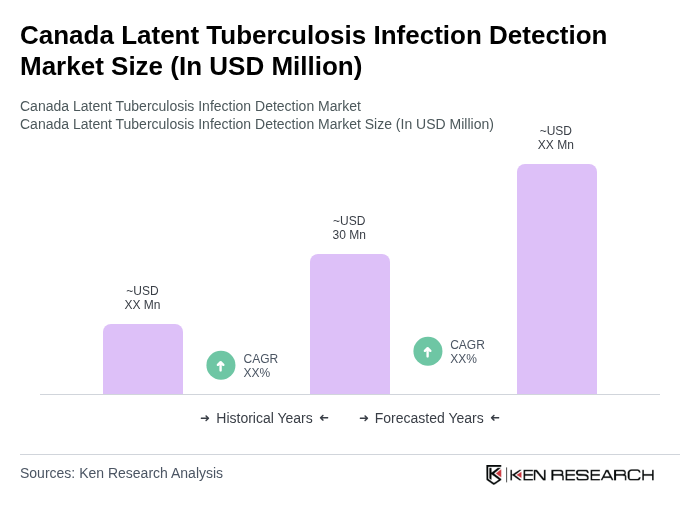
- The Canada Latent Tuberculosis Infection Detection Market is valued at USD 30 million, based on a five-year historical analysis. This growth is primarily driven by increasing awareness of tuberculosis (TB) screening, government initiatives to control TB, advancements in diagnostic technologies, high immigration from TB-endemic regions, and rising latent TB infections among indigenous populations and immigrants. The rising incidence of latent TB infections, particularly among high-risk populations, has further fueled demand for effective detection methods.
- Key players in this market include Ontario, British Columbia, and Quebec, which dominate due to their higher population densities and healthcare infrastructure. These provinces have implemented robust public health policies and screening programs, contributing to a higher demand for latent TB detection services. The presence of leading healthcare institutions and research facilities in these regions also supports market growth.
- The Immigration and Refugee Protection Regulations, 2002 amended by the Minister of Immigration, Refugees and Citizenship Canada, mandate routine latent TB screening for high-risk populations, including healthcare workers and immigrants from endemic regions through post-border enhanced screening using interferon-gamma release assays. This regulation requires testing for individuals from high-TB-risk countries with residency over six months, ensuring compliance through medical examination protocols to facilitate early detection and treatment of latent TB infections, thereby reducing the overall burden of tuberculosis in the country.
Canada Latent Tuberculosis Infection Detection Market Segmentation
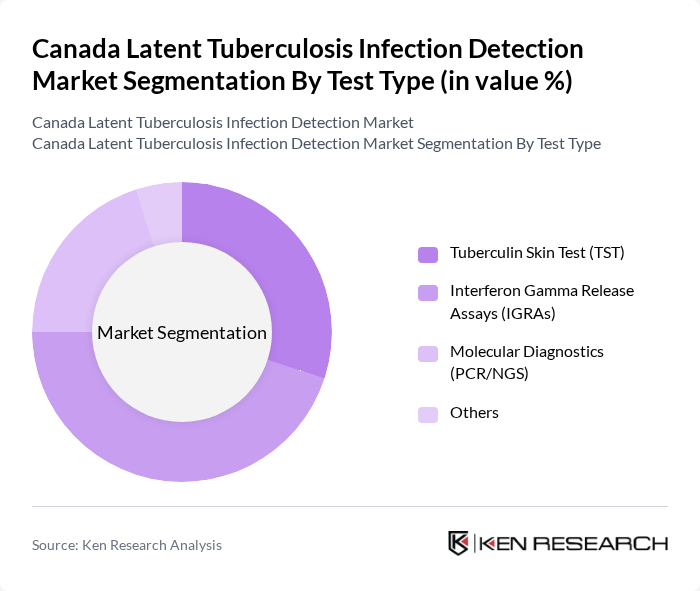
By Test Type:The market is segmented into various test types, including Tuberculin Skin Test (TST), Interferon Gamma Release Assays (IGRAs), Molecular Diagnostics (PCR/NGS), and others. Among these, the Interferon Gamma Release Assays (IGRAs) are gaining traction due to their higher specificity and convenience compared to traditional methods. The demand for molecular diagnostics is also on the rise, driven by technological advancements and the need for rapid results.
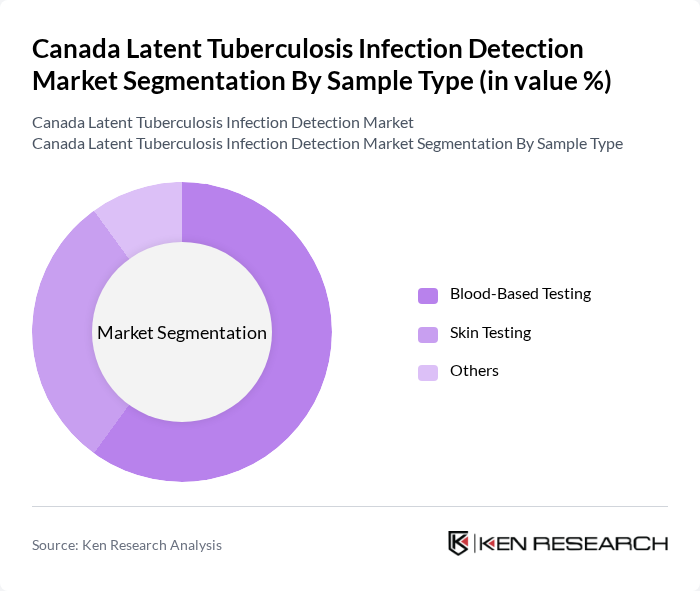
By Sample Type:The market is further segmented by sample type, including Blood-Based Testing, Skin Testing, and others. Blood-based testing is becoming increasingly popular due to its ease of use and ability to provide results without the need for patient follow-up, which is often required for skin testing. This shift in preference is influencing the overall market dynamics.
Canada Latent Tuberculosis Infection Detection Market Competitive Landscape
The Canada Latent Tuberculosis Infection Detection Market is characterized by a dynamic mix of regional and international players. Leading participants such as QIAGEN N.V., Abbott Laboratories, F. Hoffmann-La Roche Ltd, Becton, Dickinson and Company (BD), bioMérieux SA, Oxford Immunotec USA, Inc., ARKRAY, Inc., Thermo Fisher Scientific Inc., Siemens Healthineers, PerkinElmer, Inc. contribute to innovation, geographic expansion, and service delivery in this space.
Canada Latent Tuberculosis Infection Detection Market Industry Analysis
Growth Drivers
- Increasing Prevalence of Latent Tuberculosis Infections:In Canada, approximately 1.6 million individuals are estimated to be living with latent tuberculosis infections (LTBI) as of future. This rising prevalence is attributed to factors such as immigration from high-burden countries and increased screening efforts. The Canadian Tuberculosis Standards recommend routine screening for high-risk populations, which further drives the demand for effective detection methods. This growing patient base necessitates enhanced diagnostic capabilities to manage and treat LTBI effectively.
- Government Initiatives for TB Screening and Prevention:The Canadian government allocated CAD 25 million in future for tuberculosis prevention and control initiatives. This funding supports various programs aimed at increasing screening rates and improving access to diagnostic services, particularly in underserved communities. The implementation of national guidelines for TB screening has also led to a more structured approach to identifying and managing latent infections, thereby fostering a conducive environment for market growth.
- Advancements in Diagnostic Technologies:The Canadian healthcare sector is witnessing significant advancements in diagnostic technologies, with over CAD 20 million invested in research and development in future. Innovations such as rapid molecular testing and point-of-care diagnostics are enhancing the accuracy and speed of LTBI detection. These technologies not only improve patient outcomes but also reduce the burden on healthcare systems, making them a critical driver for the latent tuberculosis infection detection market in Canada.
Market Challenges
- Limited Access to Healthcare Facilities in Remote Areas:Approximately 1.3 million Canadians live in rural or remote areas where access to healthcare facilities is severely limited. This geographical barrier poses a significant challenge for TB screening and diagnosis, as many individuals may not receive timely testing or treatment. The lack of mobile health units and telehealth services in these regions exacerbates the issue, hindering efforts to control latent tuberculosis infections effectively.
- Stigma Associated with Tuberculosis Testing:Stigma surrounding tuberculosis remains a critical challenge in Canada, affecting approximately 35% of individuals who may require testing. This stigma can deter people from seeking diagnosis and treatment, leading to underreporting and untreated cases of LTBI. Public health campaigns are essential to address these misconceptions, but the persistence of stigma continues to hinder the overall effectiveness of TB control efforts in the country.
Canada Latent Tuberculosis Infection Detection Market Future Outlook
The future of the latent tuberculosis infection detection market in Canada appears promising, driven by ongoing advancements in diagnostic technologies and increased government funding. As healthcare providers adopt more innovative solutions, such as AI-driven diagnostics and telehealth services, the efficiency of TB detection is expected to improve significantly. Additionally, public awareness campaigns will likely reduce stigma, encouraging more individuals to seek testing and treatment, ultimately leading to better health outcomes and reduced transmission rates.
Market Opportunities
- Expansion of Telehealth Services for TB Detection:The rise of telehealth services presents a unique opportunity to enhance TB detection, particularly in remote areas. In future, telehealth consultations are projected to increase by 50%, allowing healthcare providers to reach underserved populations effectively. This expansion can facilitate timely diagnosis and treatment, ultimately improving public health outcomes related to latent tuberculosis infections.
- Development of Cost-Effective Diagnostic Solutions:There is a growing demand for cost-effective diagnostic solutions in Canada, particularly for low-income populations. With CAD 15 million earmarked for innovation in diagnostic technologies in future, companies that focus on developing affordable testing methods can tap into a significant market segment. This approach not only addresses economic barriers but also enhances access to essential TB screening services.
Scope of the Report
| Segment | Sub-Segments |
|---|---|
| By Test Type | Tuberculin Skin Test (TST) Interferon Gamma Release Assays (IGRAs) Molecular Diagnostics (PCR/NGS) Others |
| By Sample Type | Blood-Based Testing Skin Testing Others |
| By End-User | Diagnostic Laboratories Hospitals & Clinics Public Health Agencies Academic & Research Institutions Others |
| By Province | Ontario British Columbia Quebec Alberta Manitoba Saskatchewan Nova Scotia New Brunswick Prince Edward Island Newfoundland & Labrador Northwest Territories Nunavut Yukon |
Key Target Audience
Investors and Venture Capitalist Firms
Government and Regulatory Bodies (e.g., Health Canada, Public Health Agency of Canada)
Manufacturers and Producers of Diagnostic Equipment
Distributors and Retailers of Medical Supplies
Healthcare Providers and Clinics
Pharmaceutical Companies
Non-Governmental Organizations (NGOs) focused on Public Health
Health Insurance Companies
Players Mentioned in the Report:
QIAGEN N.V.
Abbott Laboratories
F. Hoffmann-La Roche Ltd
Becton, Dickinson and Company (BD)
bioMerieux SA
Oxford Immunotec USA, Inc.
ARKRAY, Inc.
Thermo Fisher Scientific Inc.
Siemens Healthineers
PerkinElmer, Inc.
Table of Contents
Market Assessment Phase
1. Executive Summary and Approach
2. Canada Latent Tuberculosis Infection Detection Market Overview
2.1 Key Insights and Strategic Recommendations
2.2 Canada Latent Tuberculosis Infection Detection Market Overview
2.3 Definition and Scope
2.4 Evolution of Market Ecosystem
2.5 Timeline of Key Regulatory Milestones
2.6 Value Chain & Stakeholder Mapping
2.7 Business Cycle Analysis
2.8 Policy & Incentive Landscape
3. Canada Latent Tuberculosis Infection Detection Market Analysis
3.1 Growth Drivers
3.1.1 Increasing prevalence of latent tuberculosis infections
3.1.2 Government initiatives for TB screening and prevention
3.1.3 Advancements in diagnostic technologies
3.1.4 Rising awareness about tuberculosis and its implications
3.2 Market Challenges
3.2.1 Limited access to healthcare facilities in remote areas
3.2.2 High costs associated with advanced diagnostic tools
3.2.3 Stigma associated with tuberculosis testing
3.2.4 Variability in healthcare policies across provinces
3.3 Market Opportunities
3.3.1 Expansion of telehealth services for TB detection
3.3.2 Collaborations with NGOs for outreach programs
3.3.3 Development of cost-effective diagnostic solutions
3.3.4 Increased funding for TB research and innovation
3.4 Market Trends
3.4.1 Shift towards point-of-care testing
3.4.2 Integration of AI in diagnostic processes
3.4.3 Focus on personalized medicine approaches
3.4.4 Growing emphasis on preventive healthcare
3.5 Government Regulation
3.5.1 National guidelines for TB screening
3.5.2 Funding programs for TB diagnostics
3.5.3 Regulations on the use of diagnostic technologies
3.5.4 Reporting requirements for TB cases
4. SWOT Analysis
5. Stakeholder Analysis
6. Porter's Five Forces Analysis
7. Canada Latent Tuberculosis Infection Detection Market Market Size, 2019-2024
7.1 By Value
7.2 By Volume
7.3 By Average Selling Price
8. Canada Latent Tuberculosis Infection Detection Market Segmentation
8.1 By Test Type
8.1.1 Tuberculin Skin Test (TST)
8.1.2 Interferon Gamma Release Assays (IGRAs)
8.1.3 Molecular Diagnostics (PCR/NGS)
8.1.4 Others
8.2 By Sample Type
8.2.1 Blood-Based Testing
8.2.2 Skin Testing
8.2.3 Others
8.3 By End-User
8.3.1 Diagnostic Laboratories
8.3.2 Hospitals & Clinics
8.3.3 Public Health Agencies
8.3.4 Academic & Research Institutions
8.3.5 Others
8.4 By Province
8.4.1 Ontario
8.4.2 British Columbia
8.4.3 Quebec
8.4.4 Alberta
8.4.5 Manitoba
8.4.6 Saskatchewan
8.4.7 Nova Scotia
8.4.8 New Brunswick
8.4.9 Prince Edward Island
8.4.10 Newfoundland & Labrador
8.4.11 Northwest Territories
8.4.12 Nunavut
8.4.13 Yukon
9. Canada Latent Tuberculosis Infection Detection Market Competitive Analysis
9.1 Market Share of Key Players
9.2 Cross Comparison of Key Players
9.2.1 Market Revenue (USD Million)
9.2.2 Year-over-Year Growth Rate (%)
9.2.3 Market Share (%)
9.2.4 Geographic Presence (Number of Countries)
9.2.5 Product Portfolio Breadth (Number of Approved Tests)
9.2.6 R&D Investment as % of Revenue
9.2.7 Regulatory Approvals (Health Canada Certifications)
9.2.8 Distribution Network Reach (Laboratories & Hospitals Served)
9.2.9 Customer Retention Rate (%)
9.2.10 Average Test Cost (CAD)
9.3 SWOT Analysis of Top Players
9.4 Pricing Analysis
9.5 Detailed Profile of Major Companies
9.5.1 QIAGEN N.V.
9.5.2 Abbott Laboratories
9.5.3 F. Hoffmann-La Roche Ltd
9.5.4 Becton, Dickinson and Company (BD)
9.5.5 bioMérieux SA
9.5.6 Oxford Immunotec USA, Inc.
9.5.7 ARKRAY, Inc.
9.5.8 Thermo Fisher Scientific Inc.
9.5.9 Siemens Healthineers
9.5.10 PerkinElmer, Inc.
10. Canada Latent Tuberculosis Infection Detection Market End-User Analysis
10.1 Procurement Behavior of Key Ministries
10.1.1 Ministry of Health
10.1.2 Provincial Health Authorities
10.1.3 Public Health Agency of Canada
10.1.4 Others
10.2 Corporate Spend on Infrastructure & Energy
10.2.1 Investment in Diagnostic Facilities
10.2.2 Funding for Research and Development
10.2.3 Budget Allocation for Public Health Initiatives
10.2.4 Others
10.3 Pain Point Analysis by End-User Category
10.3.1 Healthcare Providers
10.3.2 Patients
10.3.3 Public Health Officials
10.3.4 Others
10.4 User Readiness for Adoption
10.4.1 Awareness Levels
10.4.2 Training and Support Needs
10.4.3 Infrastructure Readiness
10.4.4 Others
10.5 Post-Deployment ROI and Use Case Expansion
10.5.1 Measurement of Effectiveness
10.5.2 Long-term Cost Savings
10.5.3 Expansion into New Use Cases
10.5.4 Others
11. Canada Latent Tuberculosis Infection Detection Market Future Size, 2025-2030
11.1 By Value
11.2 By Volume
11.3 By Average Selling Price
Go-To-Market Strategy Phase
1. Whitespace Analysis + Business Model Canvas
1.1 Market Gaps Identification
1.2 Business Model Development
2. Marketing and Positioning Recommendations
2.1 Branding Strategies
2.2 Product USPs
3. Distribution Plan
3.1 Urban Retail Strategies
3.2 Rural NGO Tie-ups
4. Channel & Pricing Gaps
4.1 Underserved Routes
4.2 Pricing Bands
5. Unmet Demand & Latent Needs
5.1 Category Gaps
5.2 Consumer Segments
6. Customer Relationship
6.1 Loyalty Programs
6.2 After-sales Service
7. Value Proposition
7.1 Sustainability
7.2 Integrated Supply Chains
8. Key Activities
8.1 Regulatory Compliance
8.2 Branding
8.3 Distribution Setup
9. Entry Strategy Evaluation
9.1 Domestic Market Entry Strategy
9.1.1 Product Mix
9.1.2 Pricing Band
9.1.3 Packaging
9.2 Export Entry Strategy
9.2.1 Target Countries
9.2.2 Compliance Roadmap
10. Entry Mode Assessment
10.1 Joint Ventures
10.2 Greenfield Investments
10.3 Mergers & Acquisitions
10.4 Distributor Model
11. Capital and Timeline Estimation
11.1 Capital Requirements
11.2 Timelines
12. Control vs Risk Trade-Off
12.1 Ownership vs Partnerships
13. Profitability Outlook
13.1 Breakeven Analysis
13.2 Long-term Sustainability
14. Potential Partner List
14.1 Distributors
14.2 Joint Ventures
14.3 Acquisition Targets
15. Execution Roadmap
15.1 Phased Plan for Market Entry
15.1.1 Market Setup
15.1.2 Market Entry
15.1.3 Growth Acceleration
15.1.4 Scale & Stabilize
15.2 Key Activities and Milestones
15.2.1 Activity Planning
15.2.2 Milestone Tracking
Research Methodology
Phase 1: Approach1
Desk Research
- Analysis of health reports from the Public Health Agency of Canada
- Review of academic journals and publications on latent tuberculosis infection (LTBI) detection methods
- Examination of market reports and white papers from health organizations and NGOs focused on tuberculosis
Primary Research
- Interviews with healthcare professionals specializing in infectious diseases and tuberculosis
- Surveys conducted with laboratory managers and technicians involved in LTBI testing
- Focus groups with public health officials to understand policy impacts on LTBI detection
Validation & Triangulation
- Cross-validation of findings through multiple data sources, including government health statistics
- Triangulation of qualitative insights from interviews with quantitative data from surveys
- Sanity checks performed by an expert panel comprising epidemiologists and market analysts
Phase 2: Market Size Estimation1
Top-down Assessment
- Estimation of the total addressable market based on national tuberculosis incidence rates
- Segmentation of the market by diagnostic methods, including skin tests and blood tests
- Incorporation of government health initiatives aimed at increasing LTBI screening
Bottom-up Modeling
- Collection of data on the number of LTBI tests conducted annually across Canada
- Cost analysis of LTBI detection methods, including laboratory and operational costs
- Volume x cost calculations to derive revenue estimates for the LTBI detection market
Forecasting & Scenario Analysis
- Multi-factor regression analysis considering factors such as population growth and healthcare funding
- Scenario modeling based on potential changes in public health policy and funding for tuberculosis programs
- Development of baseline, optimistic, and pessimistic market projections through 2030
Phase 3: CATI Sample Composition1
| Scope Item/Segment | Sample Size | Target Respondent Profiles |
|---|---|---|
| Healthcare Providers | 120 | Infectious Disease Specialists, General Practitioners |
| Laboratory Technicians | 100 | Lab Managers, Diagnostic Test Operators |
| Public Health Officials | 80 | Health Policy Advisors, Epidemiologists |
| Pharmaceutical Representatives | 70 | Sales Managers, Product Specialists |
| NGO Health Workers | 60 | Program Coordinators, Outreach Workers |
Frequently Asked Questions
What is the current value of the Canada Latent Tuberculosis Infection Detection Market?
The Canada Latent Tuberculosis Infection Detection Market is valued at approximately USD 30 million, reflecting a five-year historical analysis. This valuation is influenced by factors such as increased awareness of TB screening and government initiatives aimed at controlling tuberculosis.
What are the main drivers of growth in the Canada Latent Tuberculosis Infection Detection Market?
Which provinces are leading in the Canada Latent Tuberculosis Infection Detection Market?
What types of tests are used for latent tuberculosis infection detection in Canada?
Other Regional/Country Reports
Other Adjacent Reports
South Africa Infectious Disease Diagnostics Market
Philippines Molecular Diagnostics Market Size Share Growth Drivers Trends Opportunities & Forecast 2025–2030Mexico Immunodiagnostics Market
Japan Point-of-Care Testing Market
Egypt Respiratory Diagnostics Market
Kuwait Public Health Screening Market
KSA Healthcare IT Solutions Market
Saudi Arabia biotechnology market Size, Share, Growth Drivers, Trends, Opportunities & Forecast 2025–2030Brazil Diagnostic Equipment Market
Why Buy From Us?

What makes us stand out is that our consultants follow Robust, Refine and Result (RRR) methodology. Robust for clear definitions, approaches and sanity checking, Refine for differentiating respondents' facts and opinions, and Result for presenting data with story.

We have set a benchmark in the industry by offering our clients with syndicated and customized market research reports featuring coverage of entire market as well as meticulous research and analyst insights.

While we don't replace traditional research, we flip the method upside down. Our dual approach of Top Bottom & Bottom Top ensures quality deliverable by not just verifying company fundamentals but also looking at the sector and macroeconomic factors.

With one step in the future, our research team constantly tries to show you the bigger picture. We help with some of the tough questions you may encounter along the way: How is the industry positioned? Best marketing channel? KPI's of competitors? By aligning every element, we help maximize success.

Our report gives you instant access to the answers and sources that other companies might choose to hide. We elaborate each steps of research methodology we have used and showcase you the sample size to earn your trust.

If you need any support, we are here! We pride ourselves on universe strength, data quality, and quick, friendly, and professional service.