Kuwait Luxury Car Dealers Market
Published on: February 2026
Report Overview
Kuwait luxury car dealers marketOverview
Market Highlights
The Kuwait luxury car dealers market is characterized by a highly consolidated competitive structure dominated by established, family-owned automotive groups that hold long-standing franchise relationships with global premium and ultra-luxury OEMs. Large dealer groups command a disproportionate share of market activity through extensive brand portfolios, multi-location showroom networks, and vertically integrated aftersales operations, while mid-sized players focus on select premium marques to carve niche positioning through experience-led retailing and brand exclusivity. Smaller players primarily operate within certified pre-owned or single-brand formats, competing on responsiveness, relationship depth, and localized customer engagement rather than scale.
Global automotive innovation in the market is closely intertwined with localized execution, as dealer groups adapt OEM standards to Kuwait’s specific consumer preferences, climate conditions, and usage patterns. Product assortments, customization options, and service offerings are tailored to favor high-performance SUVs, luxury sedans, and bespoke configurations that align with regional driving behavior and lifestyle expectations. Dealer-led initiatives around personalization, concierge-style sales processes, and premium service experiences reinforce brand differentiation beyond the vehicle itself.
The distribution and aftersales ecosystem plays a central role in shaping competitive advantage, with dealership reach, service capacity, and turnaround efficiency directly influencing customer loyalty and repeat purchase behavior. Strong aftersales infrastructure, parts availability, and integrated service scheduling enable leading players to maximize lifetime customer value while stabilizing earnings across demand cycles. Operational strategies increasingly emphasize inventory discipline, financing penetration, digital lead conversion, and experience optimization, as competitive differentiation shifts from brand access toward execution excellence.
Looking ahead, competition in the Kuwait luxury car dealers market will continue to be shaped by the ability of players to balance global brand standards with local agility, leverage technology to enhance customer journeys, and optimize operational efficiency across sales and aftersales functions. Dealers that successfully integrate innovation with localized market intelligence are expected to sustain leadership positions and reinforce long-term competitiveness in the premium automotive retail landscape.
Ecosystem Matrix
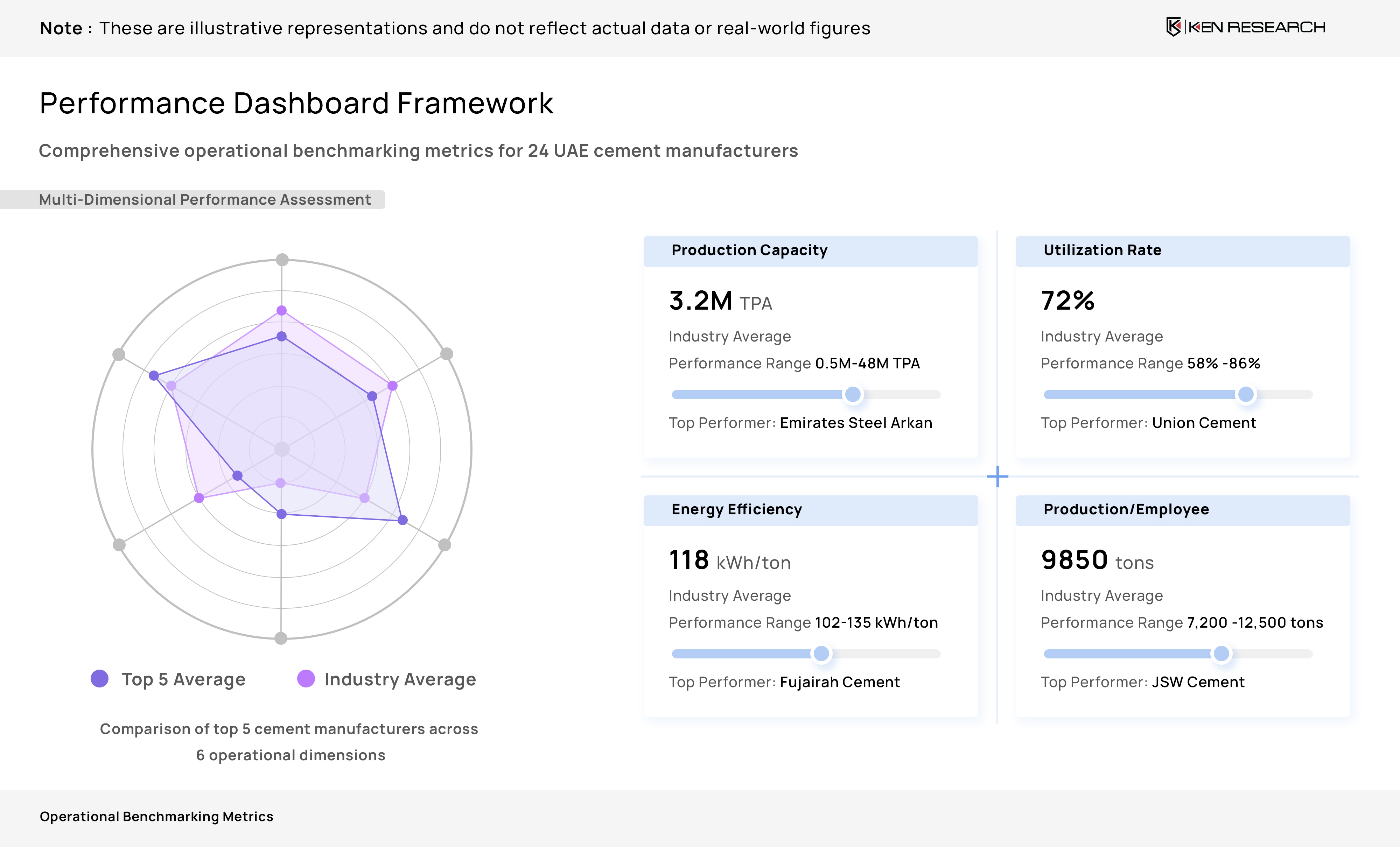
The ecosystem is concentrated among a handful of multi-brand dealer groups controlling premium OEM franchises, enabling stronger pricing power, wider showroom coverage, and deeper aftersales capture, while smaller units compete mainly through certified pre-owned inventory, faster turnarounds, and localized relationship selling.
Competitive intensity is highest where premium SUVs and ultra-luxury marques overlap, and differentiation is increasingly shaped by financing depth, trade-in capability, service throughput, and digital lead conversion, rather than only brand access or physical footprint.
Leading Player Profiles
Company Profile Overview
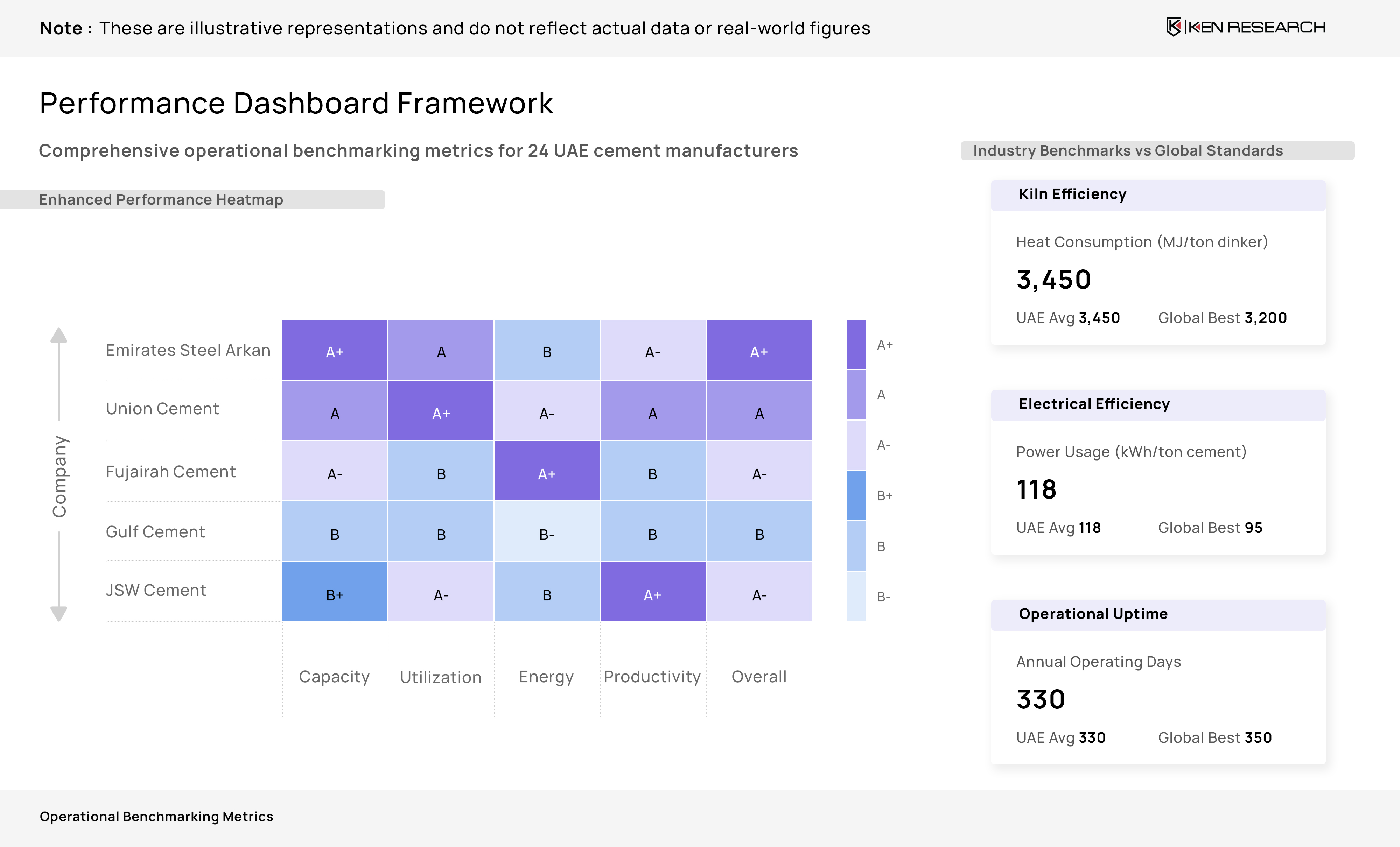
The leading players show a clear split between legacy dealer groups with decades of franchise depth and newer, brand-specific entities built around premium experience standards, with establishment timelines closely reflecting how fast Kuwait’s luxury retail model has professionalized.
Across profiles, competitive advantage clusters around authorized franchise rights, multi-site aftersales scale, and the ability to bundle finance, trade-in, and certified pre-owned programs, which together drive higher lifetime value per customer in Kuwait’s premium segment.
Key Operational Performance Metrics
Company Performance Overview
Unlock Market Insights
Dive deeper into production, distribution, and pricing intelligence.
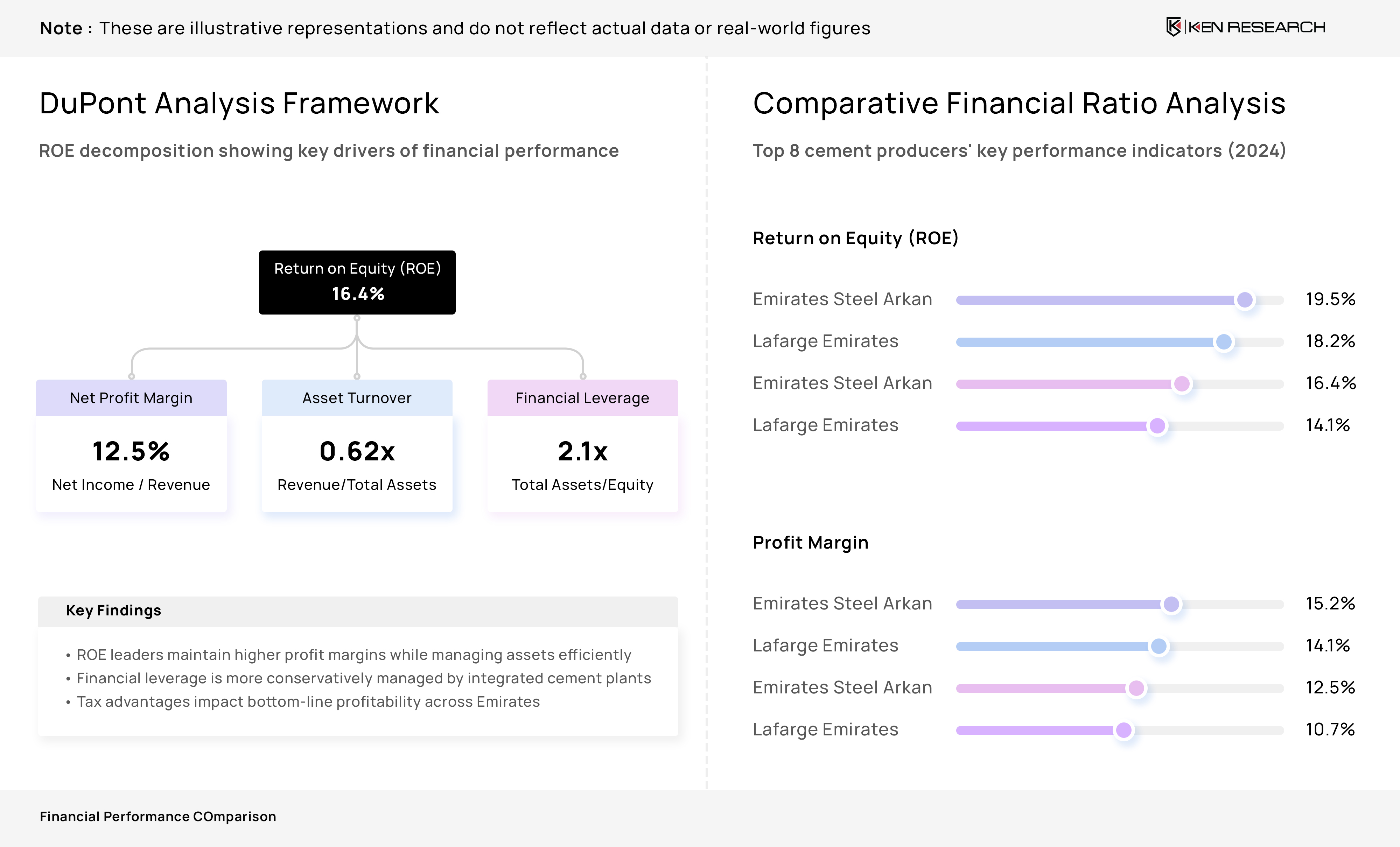
Get Customized ReportRevenue build in Kuwait luxury retail typically concentrates around pricing realization and new-to-used mix first, then the strength of F&I attachment and trade-in spread, with aftersales and parts acting as the compounding engine that stabilizes profitability across demand cycles.
Players with stronger fleet channels and digital lead pipelines are structurally better positioned to defend volumes without diluting headline pricing, especially when inventory tightens and consumers shift toward certified pre-owned and higher service utilization.
Core Financial Performance Metrics
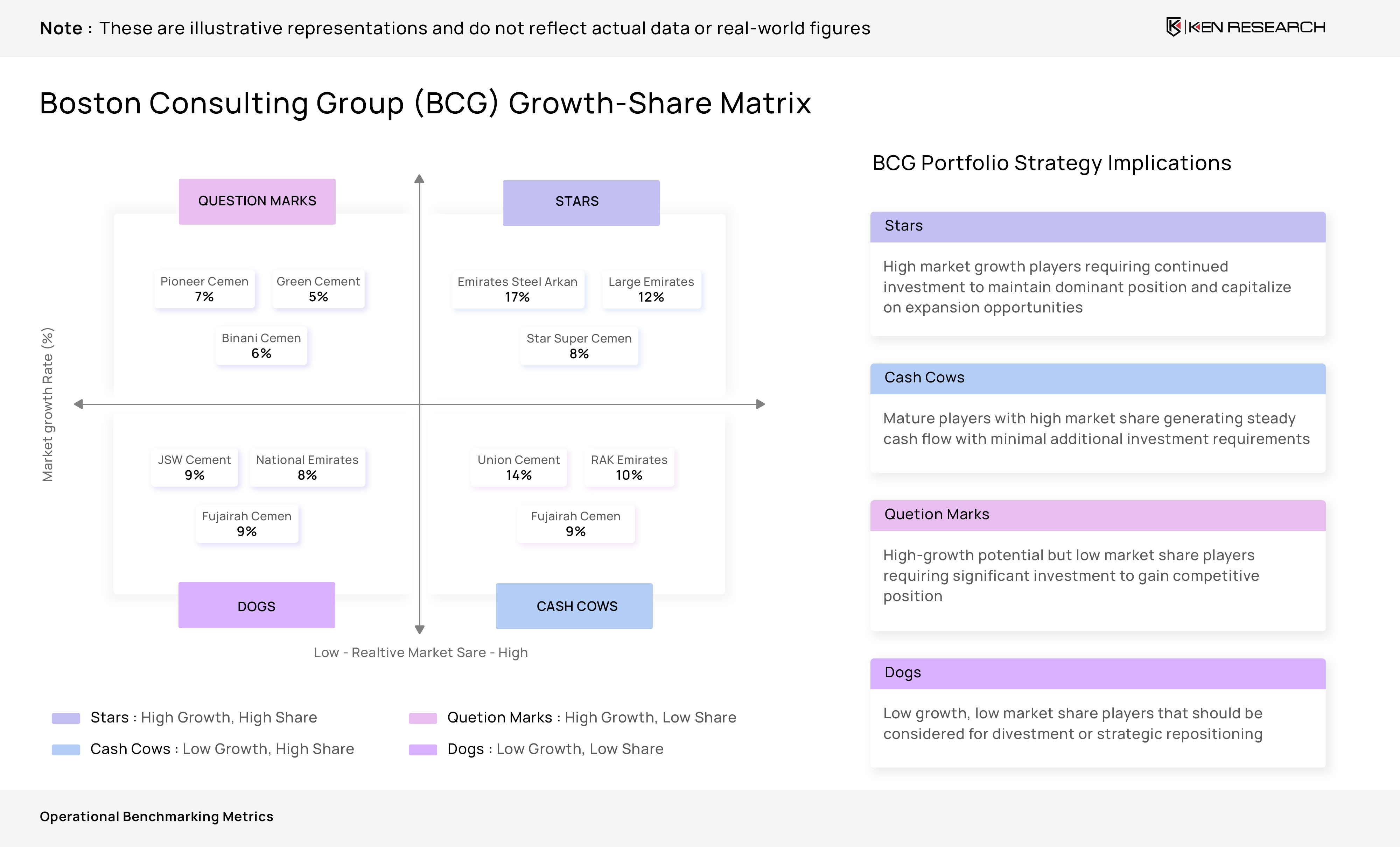
Financial benchmarking in Kuwait luxury auto retail typically reveals margin separation driven by aftersales absorption, COGS discipline on inventory and warranty provisioning, and the degree of recurring revenue from parts, service contracts, and certified programs rather than only top-line swings.
Players with stronger operating leverage tend to sustain EBITDA margin through a balanced mix of new, used, and aftersales, while those reliant on episodic vehicle sales face higher volatility in revenue growth and profitability during model-cycle and supply shifts.
Table of Contents
1. Ecosystem Matrix
1.1 Large Players
1.1.1 Mohamed Naser Al-Sayer & Sons (Toyota Kuwait, Lexus Kuwait)
1.1.2 Behbehani Motors Company
1.1.3 Ali Alghanim & Sons Automotive
1.1.4 Al Zayani Automotive
1.1.5 Al Mulla Automobiles Co. (Mercedes-Benz Kuwait)
1.1.6 Yusuf A. Alghanim & Sons Automotive (GM Kuwait)
1.1.7 Al Babtain Group
1.1.8 Kuwait Automotive Imports Co. (KAICO)
1.2 Medium Players
1.2.1 Fouad Alghanim & Sons Automotive (Audi, Lamborghini)
1.2.2 Al Mulla & Behbehani Motor Company W.L.L
1.2.3 BNK Automotive (Volvo Cars Kuwait)
1.2.4 Kuwait Automobile & Trading Co. (Ferrari Kuwait)
1.2.5 Abdulaziz Al-Ali Al-Mutawa Group
1.2.6 Al Qurain Automotive Trading Co.
1.3 Small Players
1.3.1 Cadillac Alghanim
1.3.2 Chevrolet Alghanim
1.3.3 Al Mulla Automobiles Certified Pre-Owned (CPO)
2. Leading Player Profiles
2.1 Parameters
2.1.1 Company Name
2.1.2 Group Name
2.1.3 Headquarters
2.1.4 Established Year
2.1.5 Core Services
2.1.6 Mode of Functioning
3. Key Operational Performance Metrics
3.1 Pricing (Avg Transaction Price, USD)
3.2 New Vehicle Units Sold (Units)
3.3 Used Vehicle Units Sold (Units)
3.4 Finance & Insurance Income (USD Mn)
3.5 Aftersales Service Revenue (USD Mn)
3.6 Parts & Accessories Revenue (USD Mn)
3.7 Trade-in Margin (USD Mn)
3.8 Fleet/Corporate Sales Revenue (USD Mn)
3.9 Online Sales Revenue (USD Mn)
4. Core Financial Performance Metrics
4.1 Parameters
4.1.1 Revenue (USD Mn)
4.1.2 Revenue Growth (%)
4.1.3 COGS (USD Mn)
4.1.4 COGS Growth (%)
4.1.5 EBITDA (USD Mn)
4.1.6 EBITDA Growth (%)
4.1.7 EBITDA Margin (%)
4.1.8 PAT (USD Mn)
4.1.9 PAT Margin (%)
5. Methodology
5.1 Approach
5.1.1 Desk Sources
5.1.2 Primary Interviews
5.1.3 Sanity Checking & Validation
5.2 Benchmarking Process
5.2.1 Data Collection
5.2.2 Primary Validation
5.2.3 Proxy KPI Modelling
5.2.4 Normalization & Indexing
5.2.5 Gap Analysis
5.2.6 Peer Review
5.3 Sample Composition
5.3.1 Scope Items
5.3.2 Sample Size
5.3.3 Target Respondents
Methodology
Ken Research will deploy its proprietary, multi layered research framework combining robust secondary research, targeted primary outreach, and rigorous data validation to deliver an authoritative competitive benchmarking analysis of theKuwait Luxury Car Dealers Market. The methodology is designed to ensure consistency, comparability, and decision-grade insights across dealer groups of varying scale, brand portfolios, and operating models.
Desk Sources
- Industry reports from proprietary databases and Ken Research internal archives to establish historical benchmarks, dealership economics, and luxury vehicle demand patterns in Kuwait
- Company annual reports, group disclosures, and regulatory filings to extract financial performance, dealership scale, and brand portfolio strategies
- Government publications and trade association releases for vehicle registrations, import regulations, and policy environment impacting luxury automotive retail
- Automotive trade magazines, OEM press releases, and regional business journals to track franchise movements, showroom expansions, and pricing dynamics
- Financial intelligence platforms such as Bloomberg and Capital IQ to benchmark group-level financial ratios and peer performance
- Digital intelligence tools including web traffic dashboards and lead analytics platforms to assess online discovery, inquiry generation, and digital retail traction
Primary Interviews
- CATI interviews and structured discussions with senior dealership management, including general managers and brand heads
- In-depth interviews with sales, aftersales, and finance leaders to validate revenue drivers, margin structure, and customer acquisition models
- Discussions with financing partners, insurance providers, and fleet buyers to understand deal structuring, credit penetration, and corporate sales dynamics
- Consultations with automotive industry experts, consultants, and OEM-aligned advisors to validate competitive positioning and operational practices
Sanity Checking & Validation
- Triangulation of findings through cross-verification of secondary data, primary insights, and proxy-based modeling outputs
- Proxy KPI synthesis using indicators such as vehicle throughput, showroom footprint, service bay capacity, brand mix, and digital lead flow to approximate revenues and operating scale
- Outlier analysis to identify abnormal performance metrics and reconcile deviations through targeted follow-up discussions
- Structured assumption tracking to document all estimation logic, limitations, and proxy dependencies
- Internal peer review of methodology, assumptions, and outputs by senior analysts prior to report finalization
An Inside Look At Our Custom Insights
Take a look at ourcustomized insights, tailored to yourmarket and business needs. Our benchmarking reports deliver data-driven comparisons of key players, helping you uncover opportunities, assess performance, and make confident strategic decisions.