UAE Automotive Batteries Market
Published on: January 2026
Report Overview
UAE Automotive Batteries Market Overview
Market Highlights
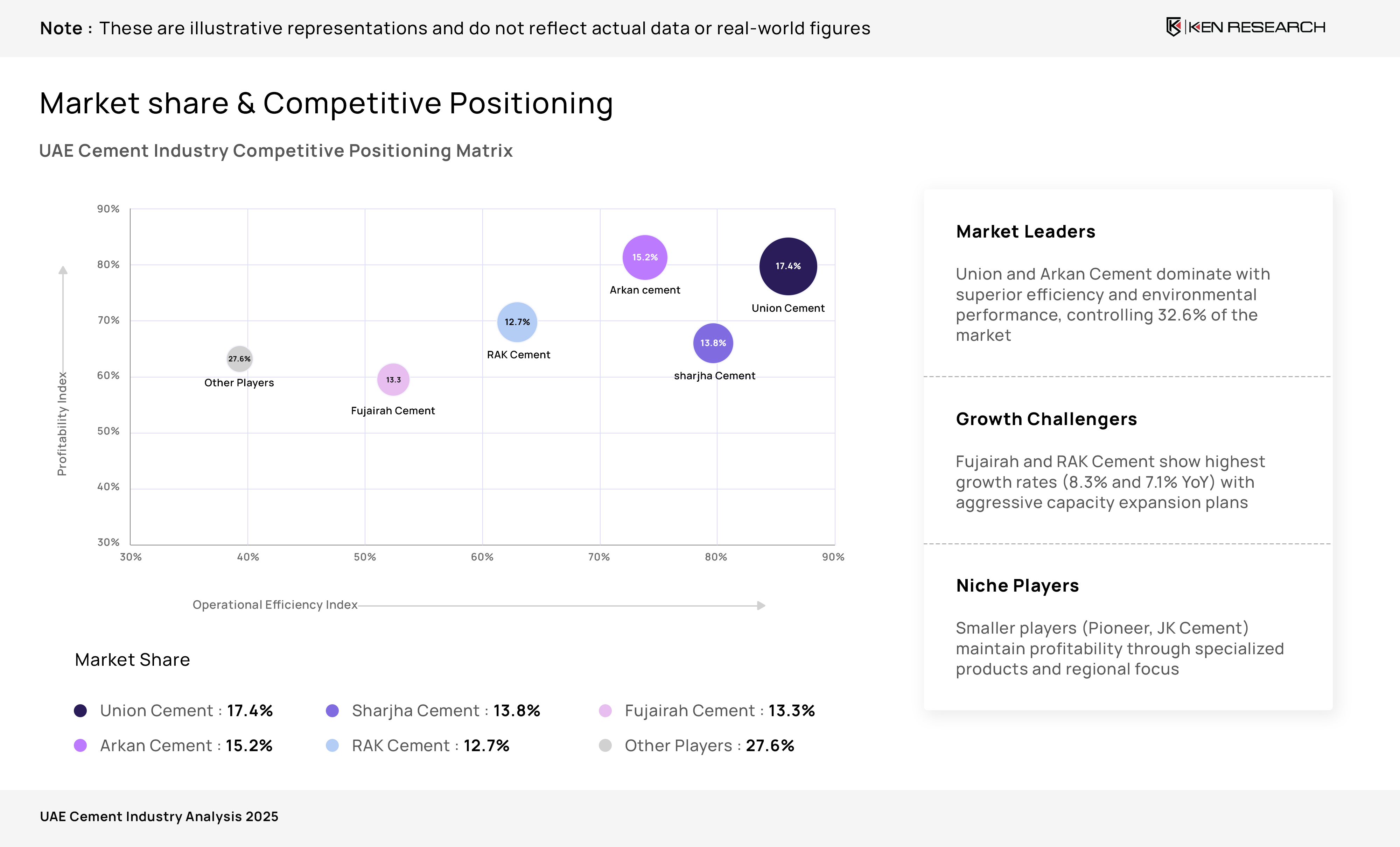
The UAE Automotive Batteries Market reflects a competitive mix of global manufacturers, regional suppliers, and agile local distributors. Multinational players provide technology leadership and brand strength, while regional and local firms compete through climate-adapted products, aftermarket focus, and close alignment with fleet and retail demand.
Global battery innovations shape performance expectations across the market, but competitive advantage depends on localized execution. Manufacturers and distributors adapt specifications, durability standards, and service offerings to suit regional operating conditions, usage intensity, and customer expectations within both OEM-aligned and replacement-driven segments.
Distribution reach and aftersales capability are critical differentiators in the UAE market. Extensive dealer networks, fast installation services, and reliable warranty support enhance accessibility and influence brand loyalty, particularly in an environment where uptime, convenience, and service responsiveness directly affect purchasing decisions.
Looking forward, market leadership will be driven by strategic agility that balances innovation with localization. Players integrating operational efficiency, technology adoption, and strong channel partnerships will be better positioned to sustain competitiveness and support long-term evolution within the UAE Automotive Batteries Market.
Ecosystem Matrix
Competitive differentiation is increasingly determined by pricing discipline, SKU availability (AGM/EFB vs flooded), and channel execution strength, as UAE replacement demand is time-sensitive and installation-led.
Market leadership typically consolidates among brands with structured distributor networks and among UAE service chains that control last-mile fitment, warranty handling, and repeat replacement cycles across passenger and fleet segments.
Leading Player Profiles
Company Profile Overview
The UAE market structure rewards players that combine brand strength with channel reliability—particularly those that maintain uninterrupted supply across common battery SKUs, enabling higher conversion rates in urgent replacement scenarios.
Mode-of-functioning differences create distinct advantage pockets: OEM and premium brands win on quality assurance and product mix, while UAE service chains win on last-mile installation capacity, turnaround time, and repeat customer retention.
Key Operational Performance Metrics
Company Performance Overview
Unlock Market Insights
Dive deeper into production, distribution, and pricing intelligence.
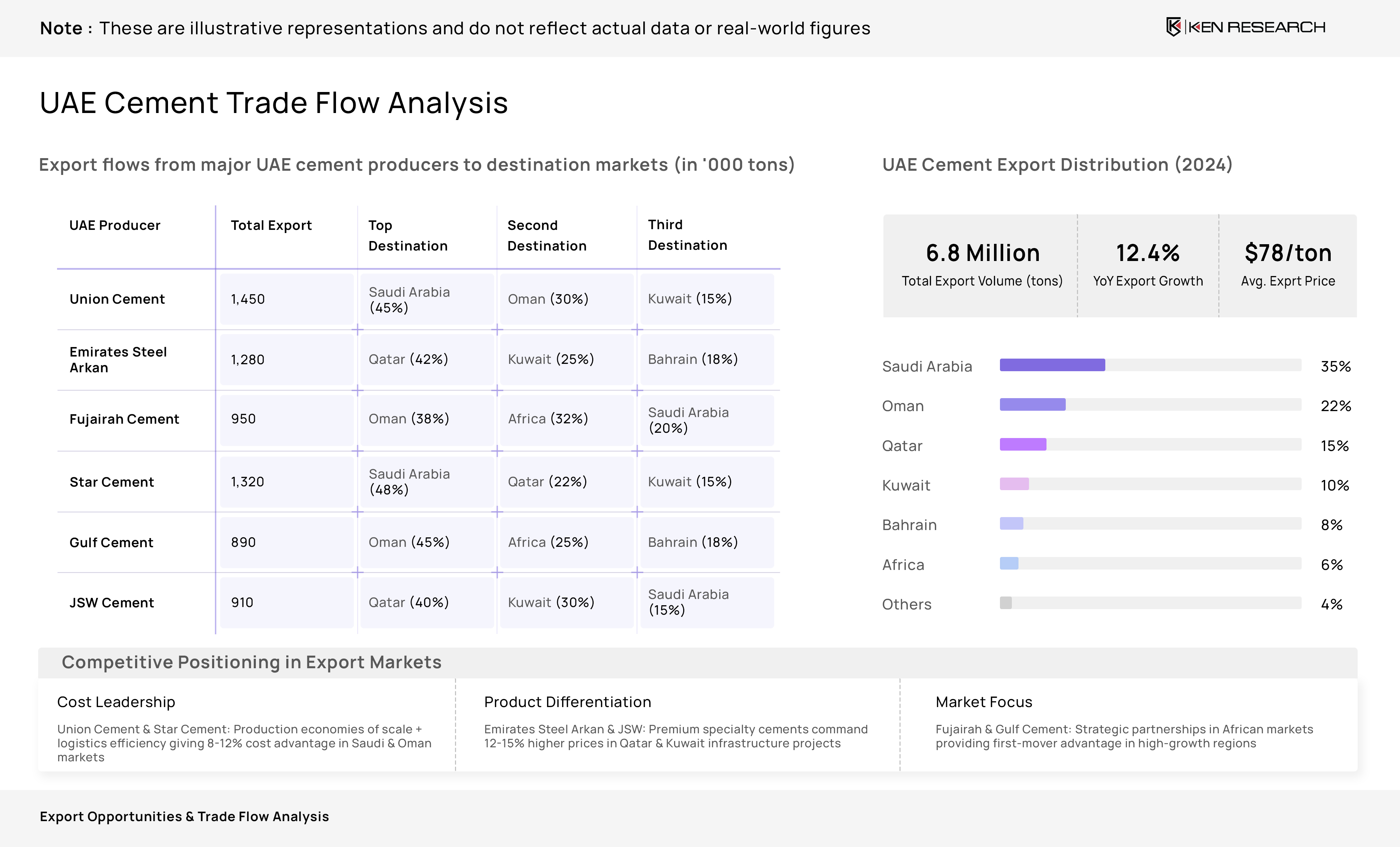
Get Customized ReportOperational benchmarking should prioritize the revenue engine KPIs—pricing, unit throughput, and outlet/installer coverage—since these directly govern conversion in a replacement-led market with high urgency and low switching costs at point of service.
Players with balanced exposure to retail replacement and fleet contracts typically achieve more stable volumes, while superior installer coverage and digital ordering capability can accelerate share capture in high-density urban corridors.
Core Financial Performance Metrics
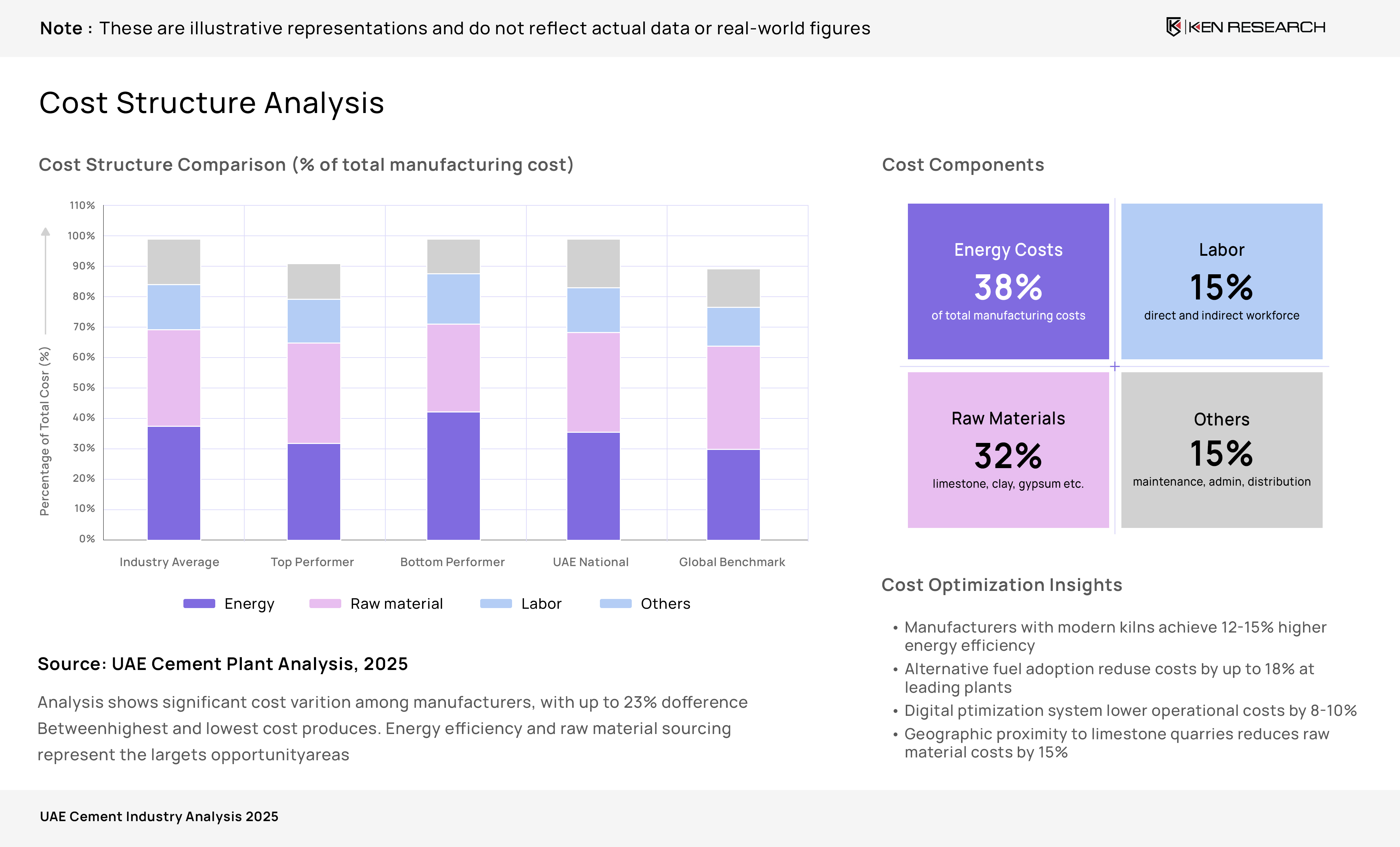
Financial benchmarking should focus on how effectively players translate operational scale into profitability—particularly the ability to defend margin through pricing power, product mix upgrades (AGM/EFB), and warranty cost control under competitive replacement dynamics.
EBITDA and PAT differentiation is typically driven by channel economics: brand owners benefit from mix and scale efficiencies, while UAE service networks improve profitability via installation-led revenue, higher conversion, and repeat customer cycles.
Table of Contents
1. Ecosystem Matrix
1.1. Large Players
1.1.1 Exide Industries
1.1.2 Amara Raja Energy & Mobility
1.1.3 GS Yuasa
1.1.4 Panasonic
1.1.5 Robert Bosch
1.1.6 Clarios
1.1.7 EnerSys
1.1.8 East Penn Manufacturing
1.2 Medium Players
1.2.1 Leoch International
1.2.2 Camel Group
1.2.3 The Furukawa Battery
1.2.4 Hankook AtlasBX
1.2.5 ACDelco
1.2.6 Mutlu Akü
1.3 Small Players
1.3.1 ENOC AutoPro
1.3.2 Al Masaood Group
1.3.3 Al-Futtaim Auto Centers
1.3.4 Speedex
2. Leading Player Profiles
2.1 Parameters
2.1.1 Company Name
2.1.2 Group Name
2.1.3 Global Headquarters
2.1.4 Establishment Year
2.1.5 Core Service
2.1.6 Mode of Functioning
3. Key Operational Performance Metrics
3.1 Battery Sales Revenue (USD Mn)
3.2 OEM / Dealer Supply Revenue (USD Mn)
3.3 Fleet & Commercial Contract Revenue (USD Mn)
3.4 Service & Installation Revenue (USD Mn)
3.5 Units Sold (Units)
3.6 Average Selling Price per Battery (USD)
3.7 Active Dealer / Outlet Network (Count)
3.8 Workshop / Installer Partner Coverage (Count)
3.9 Online Orders (Orders)
3.10 Trade-in / Recycling-Linked Revenue (USD Mn)
4. Core Financial Performance Metrics
4.1 Parameters
4.1.1 Revenue (USD Mn)
4.1.2 Revenue Growth (%)
4.1.3 COGS (USD Mn)
4.1.4 COGS Growth (%)
4.1.5 EBITDA (USD Mn)
4.1.6 EBITDA Growth (%)
4.1.7 EBITDA Margin (%)
4.1.8 PAT (USD Mn)
4.1.9 PAT Margin (%)
5. Methodology
5.1 Approach
5.1.1 Desk Sources
5.1.2 Primary Interviews
5.1.3 Sanity Checking & Validation
5.2 Benchmarking Process
5.2.1 Data Collection
5.2.2 Primary Validation
5.2.3 Proxy KPI Modelling
5.2.4 Normalization & Indexing
5.2.5 Gap Analysis
5.2.6 Peer Review
5.3 Sample Composition
5.3.1 Scope Items
5.3.2 Sample Size
5.3.3 Target Respondents
Methodology
Ken Research will deploy its proprietary, multi-layered research framework combining robust secondary research, targeted primary outreach, and rigorous data validation to deliver an authoritative competitive landscape analysis of the UAE Automotive Batteries Market. The approach ensures consistent benchmarking across global OEM brands and UAE-based service players, even where public disclosures are limited.
Desk Sources
- Industry reports from proprietary databases and Ken Research internal archives to establish historical benchmarks, replacement demand drivers, and market baselines.
- Company annual reports, investor presentations, statutory disclosures, and product catalogs to extract financials, product mix, capacity indicators, and strategic priorities.
- UAE government publications and trade-association releases to assess vehicle parc dynamics, trade flows, regulatory context, and recycling-related mandates.
- Trade magazines, journals, and e-articles to track competitive developments, technology shifts (AGM/EFB adoption), and pricing dynamics.
- Financial intelligence platforms such as Bloomberg and Capital IQ for standardized financial ratios and peer comparisons.
- Web traffic and app-usage dashboards (SimilarWeb, App Annie) to evaluate digital reach, online demand signals, and channel performance.
Primary Interviews
- CATI interviews and structured online surveys with category managers and R&D heads of battery manufacturers to validate product positioning and technology adoption.
- In-depth discussions with senior sales and marketing leaders at leading market participants to validate pricing, route-to-market, and growth priorities.
- Interviews with distributors and channel partners to validate pricing realization, volumes, warranty patterns, and regional demand trends.
- Consultations with industry analysts, consultants, and service providers for expert-level validation of market dynamics.
Sanity Checking & Validation
- Triangulation of estimates by cross-verifying secondary research outputs, primary inputs, and proxy-based model outputs.
- Proxy KPI synthesis using indicators such as installed vehicle base, outlet density, units sold per outlet, pricing per battery, and replacement cycles to approximate revenues.
- Outlier analysis to identify anomalous data points and reconcile them through targeted follow-up discussions.
- Assumption tracking through a structured log capturing all benchmarking assumptions, limitations, and proxy KPI sources.
- Internal peer review of methodology, analytical models, and key outputs prior to final report finalization.
An Inside Look At Our Custom Insights
Take a look at ourcustomized insights, tailored to yourmarket and business needs. Our benchmarking reports deliver data-driven comparisons of key players, helping you uncover opportunities, assess performance, and make confident strategic decisions.