Region:Europe
Author(s):Dev
Product Code:KRAB0357
Pages:98
Published On:August 2025
By Vehicle Type:
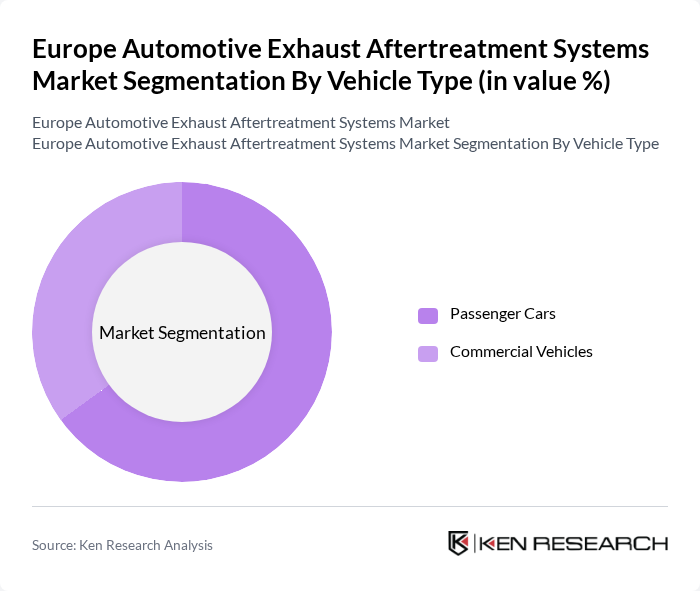
The vehicle type segmentation includes Passenger Cars and Commercial Vehicles. Passenger Cars dominate the market due to the high volume of personal vehicles on the road and increasing consumer awareness regarding emissions. The trend towards electric and hybrid vehicles is influencing the demand for advanced aftertreatment systems in this segment, as plug-in hybrids and range-extender vehicles still require exhaust treatment for internal combustion operation. Commercial Vehicles, while a smaller segment, are essential for meeting regulatory requirements in freight and logistics, driving innovation in exhaust technologies, especially for heavy-duty applications .
By Fuel Type:
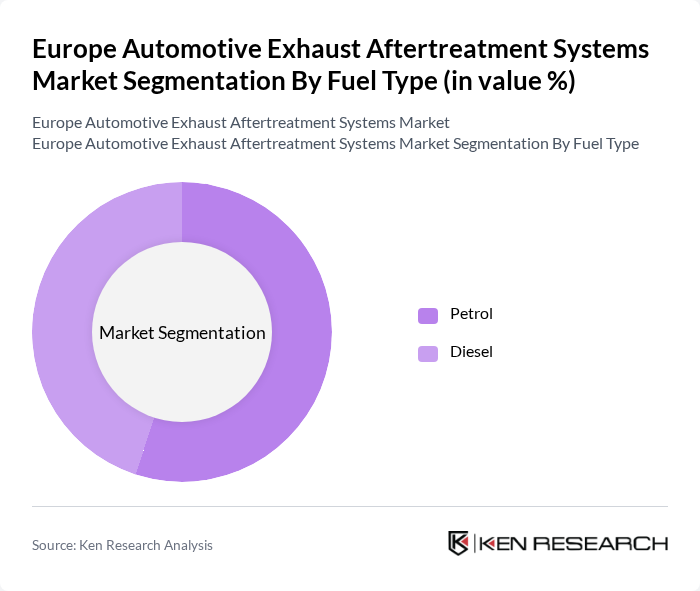
The fuel type segmentation includes Petrol and Diesel. Petrol vehicles are leading the market due to the increasing popularity of gasoline engines, which are often perceived as more environmentally friendly compared to diesel. However, Diesel vehicles still hold a significant share, particularly in commercial applications, where fuel efficiency and torque are critical. The shift towards alternative fuels and electrification is gradually changing the dynamics of this segment, but diesel remains important for long-haul and heavy-duty vehicles .
The Europe Automotive Exhaust Aftertreatment Systems Market is characterized by a dynamic mix of regional and international players. Leading participants such as Faurecia S.E., BASF SE, Johnson Matthey PLC, Eberspächer Group, Continental AG, Tenneco Inc., Delphi Technologies PLC, Denso Corporation, Aisin Seiki Co., Ltd., BorgWarner Inc., Honeywell International Inc., Magna International Inc., Valeo S.A., ZF Friedrichshafen AG, Knorr-Bremse AG, Cummins Inc., Umicore N.V., Corning Incorporated, Dinex Group, Katcon Global contribute to innovation, geographic expansion, and service delivery in this space .
The future of the Europe automotive exhaust aftertreatment systems market is poised for significant transformation, driven by ongoing regulatory changes and technological advancements. As the EU continues to tighten emission standards, manufacturers will increasingly adopt innovative aftertreatment solutions. Additionally, the rise of electric and hybrid vehicles will necessitate the development of new systems tailored to these technologies. The market is expected to witness a shift towards sustainable practices, with a focus on reducing environmental impact while enhancing vehicle performance and efficiency.
| Segment | Sub-Segments |
|---|---|
| By Vehicle Type | Passenger Cars Commercial Vehicles |
| By Fuel Type | Petrol Diesel |
| By Filter Type | Particulate Matter Control Systems Carbon Compounds Control Systems NOx Control Systems Emission Control Using Decision Matrix |
| By Country | Germany United Kingdom France Italy Rest of Europe |
| Scope Item/Segment | Sample Size | Target Respondent Profiles |
|---|---|---|
| Passenger Vehicle Manufacturers | 100 | Product Development Engineers, Compliance Managers |
| Commercial Vehicle Manufacturers | 80 | Technical Directors, Emissions Specialists |
| Aftermarket Parts Suppliers | 60 | Sales Managers, Product Line Managers |
| Regulatory Bodies | 40 | Policy Analysts, Environmental Compliance Officers |
| Research Institutions | 50 | Research Scientists, Automotive Technology Experts |
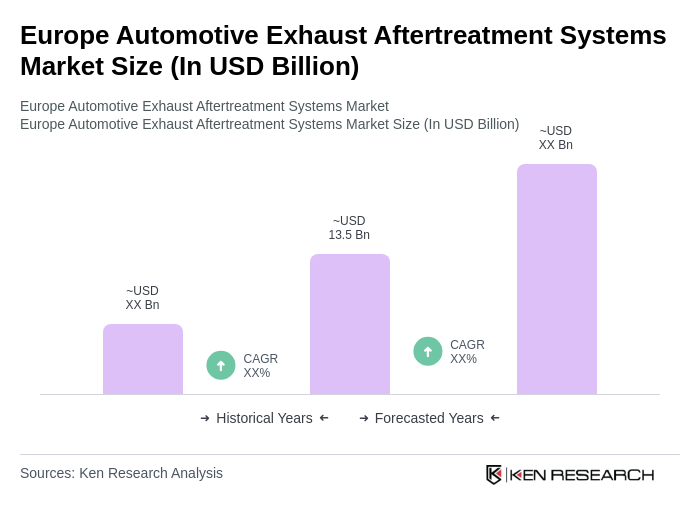
The Europe Automotive Exhaust Aftertreatment Systems Market is valued at approximately USD 13.5 billion, driven by stringent emission regulations, consumer demand for cleaner vehicles, and advancements in aftertreatment technologies.

What makes us stand out is that our consultants follow Robust, Refine and Result (RRR) methodology. Robust for clear definitions, approaches and sanity checking, Refine for differentiating respondents' facts and opinions, and Result for presenting data with story.

We have set a benchmark in the industry by offering our clients with syndicated and customized market research reports featuring coverage of entire market as well as meticulous research and analyst insights.

While we don't replace traditional research, we flip the method upside down. Our dual approach of Top Bottom & Bottom Top ensures quality deliverable by not just verifying company fundamentals but also looking at the sector and macroeconomic factors.

With one step in the future, our research team constantly tries to show you the bigger picture. We help with some of the tough questions you may encounter along the way: How is the industry positioned? Best marketing channel? KPI's of competitors? By aligning every element, we help maximize success.

Our report gives you instant access to the answers and sources that other companies might choose to hide. We elaborate each steps of research methodology we have used and showcase you the sample size to earn your trust.

If you need any support, we are here! We pride ourselves on universe strength, data quality, and quick, friendly, and professional service.













