Region:Middle East
Author(s):Rebecca
Product Code:KRAB8152
Pages:85
Published On:October 2025
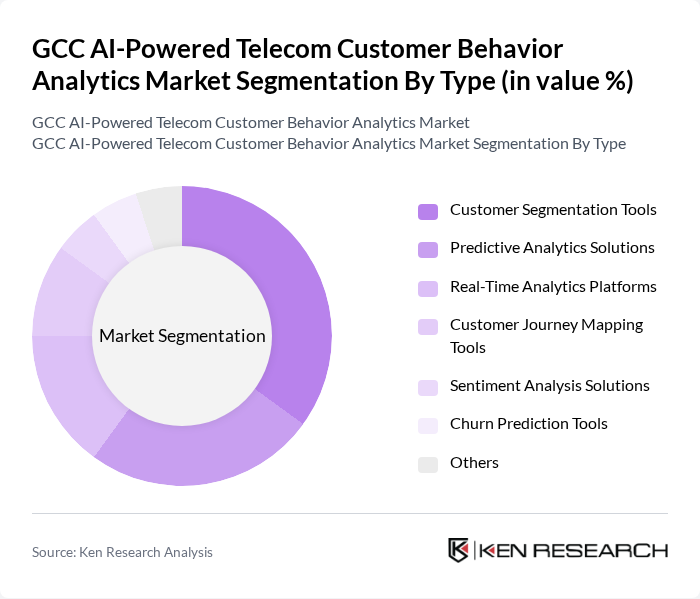
By Type:The market is segmented into various types of analytics tools that cater to different aspects of customer behavior analysis. The leading sub-segment is Customer Segmentation Tools, which allow telecom companies to categorize their customer base effectively, enabling targeted marketing strategies and personalized services. Predictive Analytics Solutions also hold significant importance, as they help in forecasting customer needs and behaviors, thus enhancing customer retention strategies. Other tools like Real-Time Analytics Platforms and Churn Prediction Tools are gaining traction as companies seek to respond swiftly to customer needs and reduce churn rates.
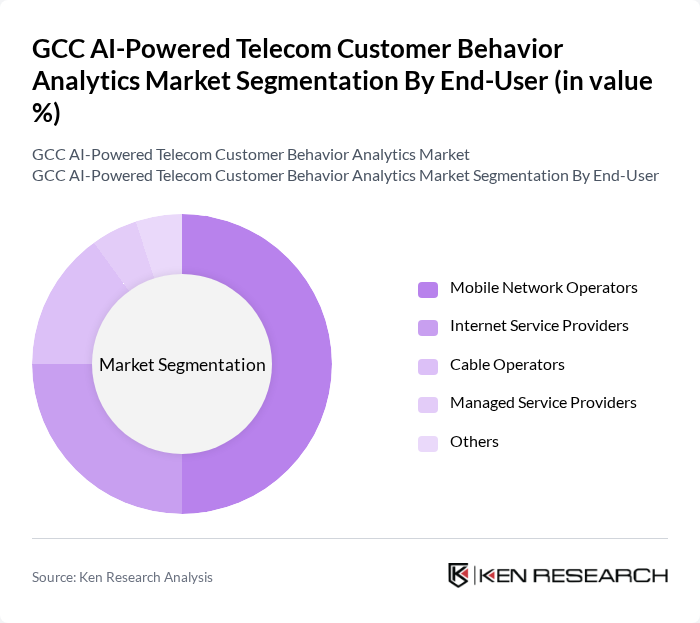
By End-User:The end-user segment includes various telecom service providers that utilize analytics tools to enhance their service offerings. Mobile Network Operators are the dominant players in this segment, leveraging customer behavior analytics to improve network performance and customer satisfaction. Internet Service Providers and Cable Operators also play significant roles, focusing on customer retention and service optimization. Managed Service Providers are increasingly adopting these analytics solutions to offer enhanced services to their clients, thus driving growth in this segment.
The GCC AI-Powered Telecom Customer Behavior Analytics Market is characterized by a dynamic mix of regional and international players. Leading participants such as Ericsson, Nokia, Huawei Technologies Co., Ltd., Cisco Systems, Inc., Amdocs, Oracle Corporation, IBM Corporation, SAP SE, ZTE Corporation, Telesign Corporation, Verint Systems Inc., Teradata Corporation, SAS Institute Inc., FICO, CSG International contribute to innovation, geographic expansion, and service delivery in this space.
The future of the GCC AI-powered telecom customer behavior analytics market appears promising, driven by technological advancements and increasing consumer expectations. As telecom operators continue to invest in AI and data analytics, the focus will shift towards enhancing customer engagement and retention strategies. The integration of IoT technologies is expected to further enrich customer insights, enabling operators to deliver more tailored services. Additionally, the ongoing digital transformation in the region will likely foster innovation and collaboration among industry players, paving the way for sustainable growth.
| Segment | Sub-Segments |
|---|---|
| By Type | Customer Segmentation Tools Predictive Analytics Solutions Real-Time Analytics Platforms Customer Journey Mapping Tools Sentiment Analysis Solutions Churn Prediction Tools Others |
| By End-User | Mobile Network Operators Internet Service Providers Cable Operators Managed Service Providers Others |
| By Application | Customer Experience Management Revenue Assurance Fraud Detection Network Optimization Others |
| By Deployment Mode | On-Premises Cloud-Based Hybrid |
| By Sales Channel | Direct Sales Online Sales Distributors Resellers |
| By Region | Saudi Arabia United Arab Emirates Qatar Kuwait Oman Bahrain Others |
| By Pricing Model | Subscription-Based Pay-Per-Use One-Time License Fee Freemium |
| Scope Item/Segment | Sample Size | Target Respondent Profiles |
|---|---|---|
| AI-Driven Customer Support Solutions | 150 | Customer Experience Managers, AI Implementation Leads |
| Predictive Analytics in Telecom | 100 | Data Analysts, Business Intelligence Managers |
| Telecom Customer Engagement Strategies | 120 | Marketing Directors, Product Managers |
| AI Impact on Customer Retention | 80 | Retention Specialists, Customer Insights Analysts |
| AI-Enhanced Network Management | 90 | Network Operations Managers, Technical Directors |
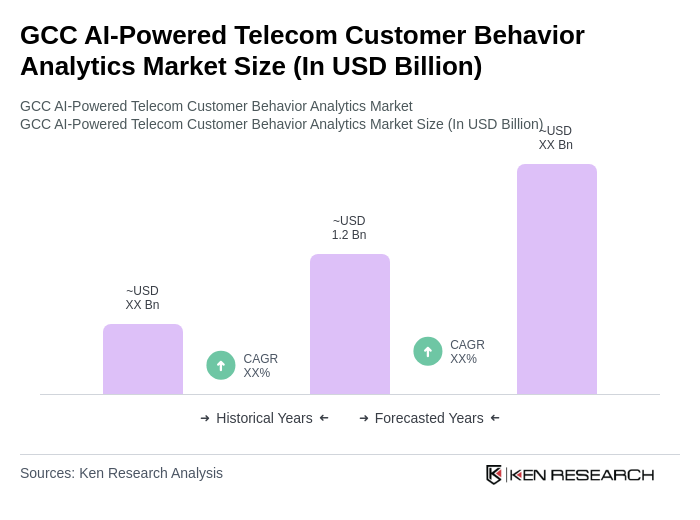
The GCC AI-Powered Telecom Customer Behavior Analytics Market is valued at approximately USD 1.2 billion, reflecting significant growth driven by the increasing adoption of AI technologies in telecommunications and the demand for data-driven insights into customer behavior.

What makes us stand out is that our consultants follow Robust, Refine and Result (RRR) methodology. Robust for clear definitions, approaches and sanity checking, Refine for differentiating respondents' facts and opinions, and Result for presenting data with story.

We have set a benchmark in the industry by offering our clients with syndicated and customized market research reports featuring coverage of entire market as well as meticulous research and analyst insights.

While we don't replace traditional research, we flip the method upside down. Our dual approach of Top Bottom & Bottom Top ensures quality deliverable by not just verifying company fundamentals but also looking at the sector and macroeconomic factors.

With one step in the future, our research team constantly tries to show you the bigger picture. We help with some of the tough questions you may encounter along the way: How is the industry positioned? Best marketing channel? KPI's of competitors? By aligning every element, we help maximize success.

Our report gives you instant access to the answers and sources that other companies might choose to hide. We elaborate each steps of research methodology we have used and showcase you the sample size to earn your trust.

If you need any support, we are here! We pride ourselves on universe strength, data quality, and quick, friendly, and professional service.













