About the Report
Base Year 2024GCC Building Construction Sealants Market Overview
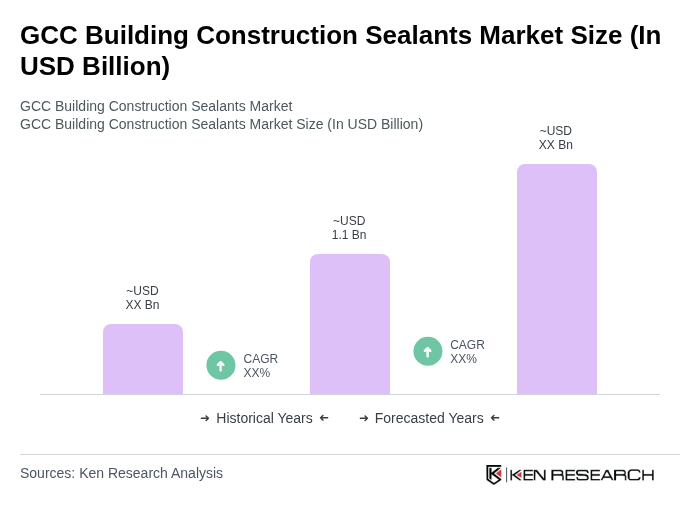
- The GCC Building Construction Sealants Market is valued at USD 1.1 billion, based on a five-year historical analysis. This growth is primarily driven by rapid urbanization, infrastructure development, and expanding construction activities across the Gulf Cooperation Council (GCC) countries. Increasing investments in residential and commercial construction, along with a rising focus on energy-efficient and sustainable building solutions, are major contributors to market demand. The adoption of high-performance and eco-friendly sealants is further accelerated by the region's emphasis on green building standards and large-scale infrastructure projects .
- Key players in this market include the United Arab Emirates, Saudi Arabia, and Qatar. The UAE leads due to its robust construction sector, driven by mega-projects, tourism, and smart city initiatives. Saudi Arabia follows closely, supported by its Vision 2030 program, which prioritizes infrastructure and urban development. Qatar's significant investments in infrastructure, especially those associated with major sporting events and urban expansion, have also contributed to its strong market position .
- The GCC region enforces regulations mandating the use of low-VOC (volatile organic compounds) sealants in construction projects to enhance indoor air quality and promote environmental sustainability. For example, the UAE’s "Green Building Regulations and Specifications" (Dubai Municipality, 2016, updated 2021) require the use of low-emission sealant products in new buildings, aligning with international standards for indoor air quality and environmental protection. These regulations encourage manufacturers to innovate and supply eco-friendly sealant solutions .
GCC Building Construction Sealants Market Segmentation
By Type:The market is segmented into various types of sealants, including Silicone Sealants, Polyurethane Sealants, Acrylic Sealants, Butyl Sealants, Polysulfide Sealants, Silyl Modified Polymer (SMP) Sealants, Hybrid Sealants, and Others. Each type serves specific applications and industries, catering to diverse consumer needs.
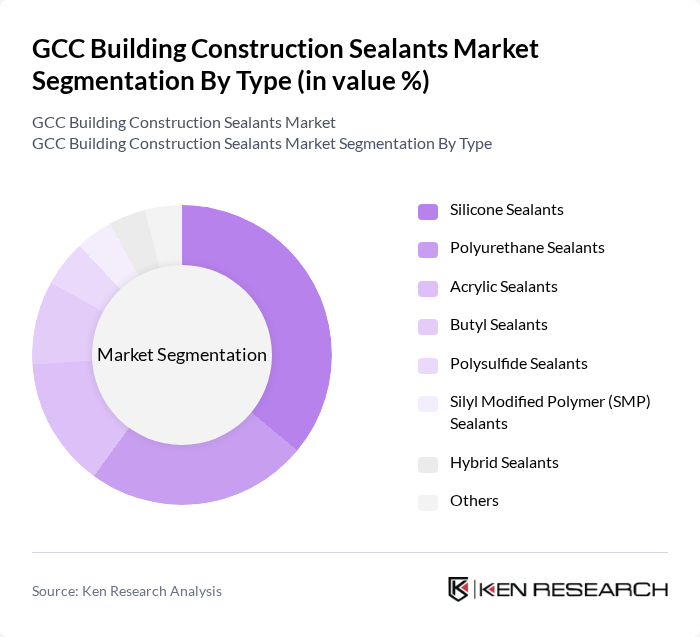
The Silicone Sealants segment dominates the market due to their versatility, excellent adhesion, and weather resistance, making them ideal for applications such as glazing, sealing, and bonding. Their ability to withstand extreme temperatures and environmental conditions is especially valued in the GCC, where climatic challenges are prevalent. Polyurethane Sealants follow, favored for their durability and flexibility in both construction and industrial applications .
By End-User:The market is segmented based on end-users, including Residential, Commercial, Industrial, Infrastructure & Public Works, Government & Utilities, and Others. Each segment reflects the diverse applications and requirements of sealants across different sectors.
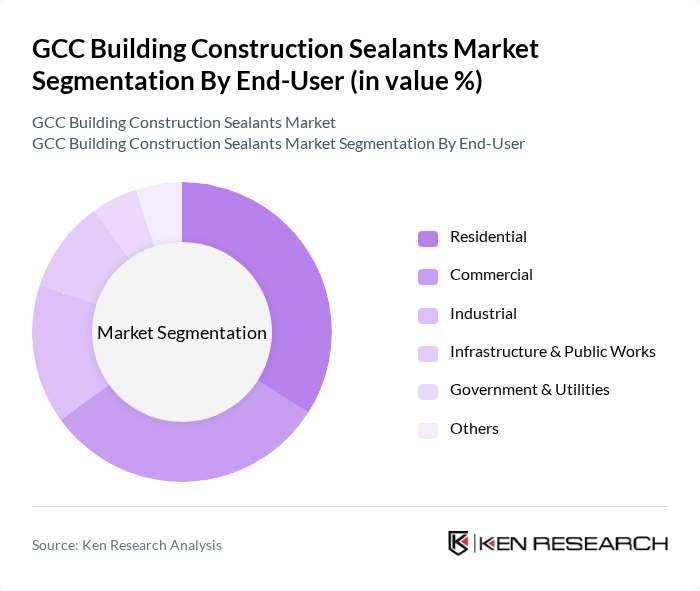
The Residential segment leads the market, driven by a surge in housing projects, renovations, and a growing focus on energy efficiency and weatherproofing in homes. The Commercial segment is also expanding, supported by investments in commercial real estate, hospitality, and infrastructure development across the GCC .
GCC Building Construction Sealants Market Competitive Landscape
The GCC Building Construction Sealants Market is characterized by a dynamic mix of regional and international players. Leading participants such as Sika AG, Henkel AG & Co. KGaA, BASF SE, Dow Inc., 3M Company, Bostik SA, RPM International Inc., PPG Industries, Inc., Tremco Incorporated, AkzoNobel N.V., Mapei S.p.A., Fosroc International Limited, Ardex Group, H.B. Fuller Company, Al Muqarram Group, National Adhesives Ltd. (Saudi Arabia), Jazeera Paints, Bond It (UAE), Gulf Sealants Company, and Sealant Technologies Middle East contribute to innovation, geographic expansion, and service delivery in this space.
GCC Building Construction Sealants Market Industry Analysis
Growth Drivers
- Increasing Demand for Sustainable Construction Materials:The GCC region is witnessing a significant shift towards sustainable construction, with the market for eco-friendly materials projected to reach $20 billion in future. This trend is driven by a growing awareness of environmental issues and the need for energy-efficient buildings. The UAE's Green Building Code, which mandates sustainable practices, is a key driver, influencing construction projects across the region and boosting the demand for advanced sealants that meet these standards.
- Rapid Urbanization and Infrastructure Development:The GCC countries are experiencing rapid urbanization, with urban populations expected to increase by 30% in future. This urban growth is accompanied by extensive infrastructure projects, including roads, bridges, and residential complexes, which require high-performance sealants. For instance, Saudi Arabia's Vision 2030 plan aims to invest $500 billion in infrastructure, creating a robust demand for construction materials, including sealants, to support these ambitious projects.
- Government Initiatives Promoting Construction Activities:Governments in the GCC are actively promoting construction through various initiatives. For example, Qatar's National Vision 2030 aims to diversify the economy and enhance infrastructure, leading to an estimated $200 billion investment in construction projects. Such initiatives not only stimulate demand for sealants but also encourage the adoption of innovative sealing solutions that comply with new building regulations and standards, further driving market growth.
Market Challenges
- Fluctuating Raw Material Prices:The sealants market faces challenges due to the volatility of raw material prices, particularly petrochemicals, which constitute a significant portion of sealant formulations. In future, the price of crude oil fluctuated between $70 and $90 per barrel, impacting production costs. This unpredictability can lead to increased prices for end consumers and may hinder the growth of the sealants market as manufacturers struggle to maintain profit margins.
- Stringent Environmental Regulations:The GCC region is tightening environmental regulations, particularly concerning volatile organic compounds (VOCs) in sealants. For instance, the UAE has implemented regulations limiting VOC emissions to 0.1 grams per liter for certain products. Compliance with these regulations requires manufacturers to invest in research and development, which can increase operational costs and pose challenges for smaller companies that may lack the resources to adapt quickly.
GCC Building Construction Sealants Market Future Outlook
The GCC Building Construction Sealants Market is poised for significant growth, driven by the increasing emphasis on sustainable construction practices and the integration of smart technologies. As urbanization accelerates, the demand for innovative sealing solutions that enhance energy efficiency and comply with stringent regulations will rise. Additionally, the shift towards prefabricated construction methods will create new opportunities for sealant manufacturers to develop specialized products tailored to these evolving construction techniques, ensuring a dynamic market landscape in the coming years.
Market Opportunities
- Expansion in the Green Building Sector:The green building sector is expected to grow significantly, with investments projected to reach $15 billion in future. This expansion presents opportunities for sealant manufacturers to develop eco-friendly products that meet the increasing demand for sustainable construction materials, aligning with global trends towards environmental responsibility and energy efficiency.
- Growth in the Repair and Maintenance Market:The repair and maintenance market in the GCC is anticipated to grow by 25% in future, driven by aging infrastructure and the need for renovations. This growth offers sealant manufacturers a lucrative opportunity to provide specialized products designed for maintenance applications, catering to both residential and commercial sectors, thereby enhancing their market presence.
Scope of the Report
| Segment | Sub-Segments |
|---|---|
| By Type | Silicone Sealants Polyurethane Sealants Acrylic Sealants Butyl Sealants Polysulfide Sealants Silyl Modified Polymer (SMP) Sealants Hybrid Sealants Others |
| By End-User | Residential Commercial Industrial Infrastructure & Public Works Government & Utilities Others |
| By Application | Window & Door Sealing Flooring Roofing & Waterproofing Curtain Wall & Façade Glazing Sanitary & Kitchen Expansion Joints Acoustics (Sound Transmission Limiting) Maintenance & Renovation Others |
| By Product Formulation | One-Component Sealants Two-Component Sealants Sealant Tapes Others |
| By Curing Mechanism | Moisture-Curing Sealants Heat-Curing Sealants Chemical-Curing Sealants Others |
| By Packaging Type | Cartridge Pail Drum Sausage Pack Others |
| By Distribution Channel | Direct Sales Distributors Online Sales Retail Stores Others |
Key Target Audience
Investors and Venture Capitalist Firms
Government and Regulatory Bodies (e.g., Ministry of Housing, Ministry of Municipal and Rural Affairs)
Manufacturers and Producers
Distributors and Retailers
Construction Companies and Contractors
Architectural and Design Firms
Building Material Suppliers
Real Estate Developers
Players Mentioned in the Report:
Sika AG
Henkel AG & Co. KGaA
BASF SE
Dow Inc.
3M Company
Bostik SA
RPM International Inc.
PPG Industries, Inc.
Tremco Incorporated
AkzoNobel N.V.
Mapei S.p.A.
Fosroc International Limited
Ardex Group
H.B. Fuller Company
Al Muqarram Group
National Adhesives Ltd. (Saudi Arabia)
Jazeera Paints
Bond It (UAE)
Gulf Sealants Company
Sealant Technologies Middle East
Table of Contents
Market Assessment Phase
1. Executive Summary and Approach
2. GCC Building Construction Sealants Market Overview
2.1 Key Insights and Strategic Recommendations
2.2 GCC Building Construction Sealants Market Overview
2.3 Definition and Scope
2.4 Evolution of Market Ecosystem
2.5 Timeline of Key Regulatory Milestones
2.6 Value Chain & Stakeholder Mapping
2.7 Business Cycle Analysis
2.8 Policy & Incentive Landscape
3. GCC Building Construction Sealants Market Analysis
3.1 Growth Drivers
3.1.1 Increasing demand for sustainable construction materials
3.1.2 Rapid urbanization and infrastructure development
3.1.3 Government initiatives promoting construction activities
3.1.4 Technological advancements in sealant formulations
3.2 Market Challenges
3.2.1 Fluctuating raw material prices
3.2.2 Stringent environmental regulations
3.2.3 Competition from alternative sealing solutions
3.2.4 Lack of awareness about advanced sealant products
3.3 Market Opportunities
3.3.1 Expansion in the green building sector
3.3.2 Growth in the repair and maintenance market
3.3.3 Increasing investments in commercial construction
3.3.4 Development of smart building technologies
3.4 Market Trends
3.4.1 Rising popularity of eco-friendly sealants
3.4.2 Integration of smart technologies in construction
3.4.3 Shift towards prefabricated construction methods
3.4.4 Increased focus on energy-efficient buildings
3.5 Government Regulation
3.5.1 Implementation of building codes and standards
3.5.2 Regulations on VOC emissions in sealants
3.5.3 Incentives for using sustainable materials
3.5.4 Compliance requirements for construction projects
4. SWOT Analysis
5. Stakeholder Analysis
6. Porter's Five Forces Analysis
7. GCC Building Construction Sealants Market Market Size, 2019-2024
7.1 By Value
7.2 By Volume
7.3 By Average Selling Price
8. GCC Building Construction Sealants Market Segmentation
8.1 By Type
8.1.1 Silicone Sealants
8.1.2 Polyurethane Sealants
8.1.3 Acrylic Sealants
8.1.4 Butyl Sealants
8.1.5 Polysulfide Sealants
8.1.6 Silyl Modified Polymer (SMP) Sealants
8.1.7 Hybrid Sealants
8.1.8 Others
8.2 By End-User
8.2.1 Residential
8.2.2 Commercial
8.2.3 Industrial
8.2.4 Infrastructure & Public Works
8.2.5 Government & Utilities
8.2.6 Others
8.3 By Application
8.3.1 Window & Door Sealing
8.3.2 Flooring
8.3.3 Roofing & Waterproofing
8.3.4 Curtain Wall & Façade Glazing
8.3.5 Sanitary & Kitchen
8.3.6 Expansion Joints
8.3.7 Acoustics (Sound Transmission Limiting)
8.3.8 Maintenance & Renovation
8.3.9 Others
8.4 By Product Formulation
8.4.1 One-Component Sealants
8.4.2 Two-Component Sealants
8.4.3 Sealant Tapes
8.4.4 Others
8.5 By Curing Mechanism
8.5.1 Moisture-Curing Sealants
8.5.2 Heat-Curing Sealants
8.5.3 Chemical-Curing Sealants
8.5.4 Others
8.6 By Packaging Type
8.6.1 Cartridge
8.6.2 Pail
8.6.3 Drum
8.6.4 Sausage Pack
8.6.5 Others
8.7 By Distribution Channel
8.7.1 Direct Sales
8.7.2 Distributors
8.7.3 Online Sales
8.7.4 Retail Stores
8.7.5 Others
9. GCC Building Construction Sealants Market Competitive Analysis
9.1 Market Share of Key Players
9.2 Cross Comparison of Key Players
9.2.1 Company Name
9.2.2 Group Size (Large, Medium, or Small as per industry convention)
9.2.3 Revenue Growth Rate (GCC Region)
9.2.4 Market Share in GCC Building Construction Sealants
9.2.5 Geographic Coverage (Number of GCC Countries Served)
9.2.6 Product Portfolio Breadth (Number of Sealant Types Offered)
9.2.7 Innovation Index (Patents, R&D Spend, New Product Launches)
9.2.8 Sustainability Score (Low-VOC, Green Certifications, Recycling Initiatives)
9.2.9 Distribution Network Strength (Number of Distributors/Channels in GCC)
9.2.10 Major Project References (Landmark GCC Construction Projects Supplied)
9.2.11 Pricing Strategy
9.2.12 Customer Satisfaction Score
9.3 SWOT Analysis of Top Players
9.4 Pricing Analysis
9.5 Detailed Profile of Major Companies
9.5.1 Sika AG
9.5.2 Henkel AG & Co. KGaA
9.5.3 BASF SE
9.5.4 Dow Inc.
9.5.5 3M Company
9.5.6 Bostik SA
9.5.7 RPM International Inc.
9.5.8 PPG Industries, Inc.
9.5.9 Tremco Incorporated
9.5.10 AkzoNobel N.V.
9.5.11 Mapei S.p.A.
9.5.12 Fosroc International Limited
9.5.13 Ardex Group
9.5.14 H.B. Fuller Company
9.5.15 Al Muqarram Group
9.5.16 National Adhesives Ltd. (Saudi Arabia)
9.5.17 Jazeera Paints
9.5.18 Bond It (UAE)
9.5.19 Gulf Sealants Company
9.5.20 Sealant Technologies Middle East
10. GCC Building Construction Sealants Market End-User Analysis
10.1 Procurement Behavior of Key Ministries
10.1.1 Government procurement policies
10.1.2 Budget allocation for construction projects
10.1.3 Evaluation criteria for sealant suppliers
10.1.4 Contracting processes and timelines
10.2 Corporate Spend on Infrastructure & Energy
10.2.1 Investment trends in construction
10.2.2 Budgeting for sealant procurement
10.2.3 Impact of economic conditions on spending
10.2.4 Strategic partnerships with suppliers
10.3 Pain Point Analysis by End-User Category
10.3.1 Quality concerns in sealant products
10.3.2 Availability of specialized sealants
10.3.3 Cost management in procurement
10.3.4 Technical support and service requirements
10.4 User Readiness for Adoption
10.4.1 Awareness of new sealant technologies
10.4.2 Training and support for end-users
10.4.3 Adoption barriers in traditional practices
10.4.4 Feedback mechanisms for product improvement
10.5 Post-Deployment ROI and Use Case Expansion
10.5.1 Measurement of performance metrics
10.5.2 Case studies of successful implementations
10.5.3 Long-term benefits of advanced sealants
10.5.4 Opportunities for product diversification
11. GCC Building Construction Sealants Market Future Size, 2025-2030
11.1 By Value
11.2 By Volume
11.3 By Average Selling Price
Go-To-Market Strategy Phase
1. Whitespace Analysis + Business Model Canvas
1.1 Market gaps and opportunities
1.2 Value proposition development
1.3 Revenue model identification
1.4 Key partnerships and resources
1.5 Customer segments and relationships
1.6 Cost structure analysis
1.7 Channels for market entry
2. Marketing and Positioning Recommendations
2.1 Branding strategies
2.2 Product USPs
2.3 Target market identification
2.4 Communication strategies
2.5 Digital marketing initiatives
2.6 Trade show participation
2.7 Customer engagement tactics
3. Distribution Plan
3.1 Urban retail strategies
3.2 Rural NGO tie-ups
3.3 E-commerce distribution channels
3.4 Direct sales force deployment
3.5 Logistics and supply chain management
3.6 Inventory management practices
3.7 Partnership with distributors
4. Channel & Pricing Gaps
4.1 Underserved routes in distribution
4.2 Pricing bands analysis
4.3 Competitor pricing strategies
4.4 Customer willingness to pay
4.5 Value-based pricing models
4.6 Discounts and promotions
4.7 Pricing transparency initiatives
5. Unmet Demand & Latent Needs
5.1 Category gaps in sealant offerings
5.2 Consumer segments with unmet needs
5.3 Innovations in product development
5.4 Market research insights
5.5 Feedback from end-users
5.6 Trends in consumer preferences
5.7 Future product development directions
6. Customer Relationship
6.1 Loyalty programs
6.2 After-sales service
6.3 Customer feedback mechanisms
6.4 Relationship management strategies
6.5 Community engagement initiatives
6.6 Customer education programs
6.7 Personalization of services
7. Value Proposition
7.1 Sustainability initiatives
7.2 Integrated supply chains
7.3 Cost-effectiveness of products
7.4 Quality assurance measures
7.5 Innovation in product offerings
7.6 Customer-centric approach
7.7 Long-term partnerships with clients
8. Key Activities
8.1 Regulatory compliance
8.2 Branding initiatives
8.3 Distribution setup
8.4 Market research and analysis
8.5 Training and development programs
8.6 Quality control processes
8.7 Stakeholder engagement
9. Entry Strategy Evaluation
9.1 Domestic Market Entry Strategy
9.1.1 Product mix considerations
9.1.2 Pricing band strategies
9.1.3 Packaging innovations
9.2 Export Entry Strategy
9.2.1 Target countries for expansion
9.2.2 Compliance roadmap for exports
10. Entry Mode Assessment
10.1 Joint Ventures
10.2 Greenfield Investments
10.3 Mergers & Acquisitions
10.4 Distributor Model
10.5 Risk assessment of entry modes
10.6 Strategic fit evaluation
10.7 Long-term sustainability considerations
11. Capital and Timeline Estimation
11.1 Capital requirements for market entry
11.2 Timelines for implementation
11.3 Financial projections
11.4 Funding sources
11.5 Cost management strategies
11.6 Milestones for tracking progress
11.7 Risk management plans
12. Control vs Risk Trade-Off
12.1 Ownership vs Partnerships
12.2 Risk assessment frameworks
12.3 Control mechanisms in partnerships
12.4 Long-term strategic goals
12.5 Flexibility in operational control
12.6 Exit strategies
12.7 Balancing control and risk
13. Profitability Outlook
13.1 Breakeven analysis
13.2 Long-term sustainability strategies
13.3 Profit margin optimization
13.4 Revenue diversificatio
Research Methodology
Phase 1: Approach1
Desk Research
- Industry reports from GCC construction associations and trade bodies
- Market analysis from government publications and economic surveys
- Technical specifications and product catalogs from sealant manufacturers
Primary Research
- Interviews with project managers in construction firms across the GCC
- Surveys with architects and engineers specializing in building materials
- Field visits to construction sites to observe sealant application practices
Validation & Triangulation
- Cross-validation of data from multiple industry sources and reports
- Triangulation of findings from primary interviews and secondary data
- Sanity checks through expert panels comprising industry veterans
Phase 2: Market Size Estimation1
Top-down Assessment
- Analysis of overall construction spending in the GCC region
- Segmentation of sealant usage by building type and application
- Incorporation of growth rates from government infrastructure projects
Bottom-up Modeling
- Volume estimates based on construction project data and sealant specifications
- Cost analysis derived from supplier pricing and procurement trends
- Estimation of market share based on regional demand and supply dynamics
Forecasting & Scenario Analysis
- Multi-variable regression analysis incorporating economic indicators
- Scenario modeling based on potential regulatory changes and market trends
- Projections for market growth under various economic conditions through 2030
Phase 3: CATI Sample Composition1
| Scope Item/Segment | Sample Size | Target Respondent Profiles |
|---|---|---|
| Residential Construction Projects | 100 | Project Managers, Site Supervisors |
| Commercial Building Developments | 80 | Architects, Construction Engineers |
| Infrastructure and Public Works | 70 | Government Officials, Urban Planners |
| Industrial Facility Construction | 60 | Facility Managers, Procurement Specialists |
| Renovation and Retrofitting Projects | 90 | Contractors, Building Inspectors |
Frequently Asked Questions
What is the current value of the GCC Building Construction Sealants Market?
The GCC Building Construction Sealants Market is valued at approximately USD 1.1 billion, driven by rapid urbanization, infrastructure development, and a growing focus on energy-efficient and sustainable building solutions across the Gulf Cooperation Council countries.
What factors are driving the growth of the GCC Building Construction Sealants Market?
Which countries are the leading players in the GCC Building Construction Sealants Market?
What types of sealants are available in the GCC Building Construction Sealants Market?
Other Regional/Country Reports
Indonesia Building Construction Sealants Market
Malaysia Building Construction Sealants Market
KSA Building Construction Sealants Market
APAC Building Construction Sealants Market
SEA Building Construction Sealants Market
Vietnam Building Construction Sealants Market
Other Adjacent Reports
KSA Construction Adhesives Market
Brazil Waterproofing Materials Market
Singapore Building Insulation Market
Malaysia Paints and Coatings Market
South Korea Roofing Materials Market
Oman Concrete Additives Market
Thailand Facade Cladding Market
South Korea Window Glazing Market
Japan Industrial Sealants Market
Indonesia Sustainable Building Materials Market
Why Buy From Us?

What makes us stand out is that our consultants follow Robust, Refine and Result (RRR) methodology. Robust for clear definitions, approaches and sanity checking, Refine for differentiating respondents' facts and opinions, and Result for presenting data with story.

We have set a benchmark in the industry by offering our clients with syndicated and customized market research reports featuring coverage of entire market as well as meticulous research and analyst insights.

While we don't replace traditional research, we flip the method upside down. Our dual approach of Top Bottom & Bottom Top ensures quality deliverable by not just verifying company fundamentals but also looking at the sector and macroeconomic factors.

With one step in the future, our research team constantly tries to show you the bigger picture. We help with some of the tough questions you may encounter along the way: How is the industry positioned? Best marketing channel? KPI's of competitors? By aligning every element, we help maximize success.

Our report gives you instant access to the answers and sources that other companies might choose to hide. We elaborate each steps of research methodology we have used and showcase you the sample size to earn your trust.

If you need any support, we are here! We pride ourselves on universe strength, data quality, and quick, friendly, and professional service.