Region:Middle East
Author(s):Rebecca
Product Code:KRAC4629
Pages:91
Published On:October 2025
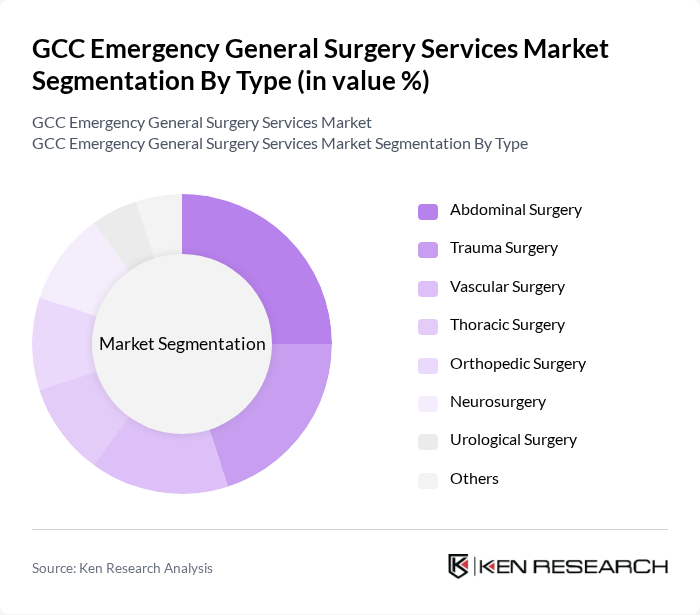
By Type:The market can be segmented into various types of surgeries, including Abdominal Surgery, Trauma Surgery, Vascular Surgery, Thoracic Surgery, Orthopedic Surgery, Neurosurgery, Urological Surgery, and Others. Each type addresses specific medical needs and conditions, contributing to the overall market dynamics. Abdominal Surgery and Trauma Surgery represent the largest segments, reflecting the high incidence of acute abdominal conditions and traumatic injuries in the region. Vascular and Thoracic Surgery are also significant due to the rising prevalence of cardiovascular and respiratory emergencies. Orthopedic and Neurosurgery are increasingly important as the region sees more complex trauma cases and an aging population .
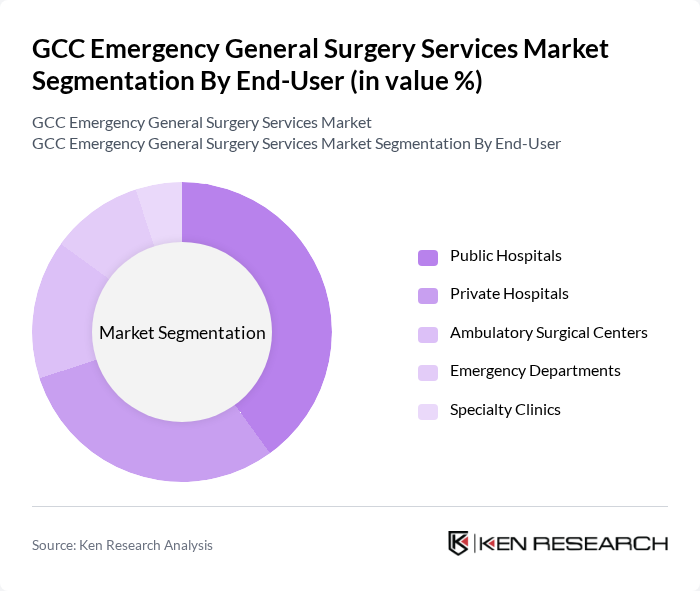
By End-User:The market is segmented based on end-users, including Public Hospitals, Private Hospitals, Ambulatory Surgical Centers, Emergency Departments, and Specialty Clinics. Each end-user category plays a crucial role in delivering emergency surgical services to patients. Public Hospitals dominate the market due to their extensive network and government funding, while Private Hospitals and Ambulatory Surgical Centers are expanding their emergency care offerings to cater to growing demand for specialized and rapid intervention. Emergency Departments are increasingly integrated with advanced triage and surgical capabilities, and Specialty Clinics are emerging as important providers for less complex emergency procedures .
The GCC Emergency General Surgery Services Market is characterized by a dynamic mix of regional and international players. Leading participants such as Cleveland Clinic Abu Dhabi, King Faisal Specialist Hospital & Research Centre, Hamad Medical Corporation, Mediclinic Middle East, Saudi German Hospital Group, Al Zahra Hospital Dubai, NMC Health, Aster DM Healthcare, Emirates Healthcare Group, Sidra Medicine, Burjeel Hospital, American Hospital Dubai, Al Noor Hospital, Healthpoint Hospital, Abu Dhabi Health Services Company (SEHA) contribute to innovation, geographic expansion, and service delivery in this space.
The future of emergency general surgery services in the GCC is poised for significant transformation, driven by technological advancements and increased healthcare investments. As the region continues to prioritize healthcare infrastructure, the integration of telemedicine and mobile emergency units will enhance service delivery. Additionally, the focus on patient-centered care will likely lead to improved outcomes and satisfaction, positioning the GCC as a leader in emergency surgical services in future.
| Segment | Sub-Segments |
|---|---|
| By Type | Abdominal Surgery Trauma Surgery Vascular Surgery Thoracic Surgery Orthopedic Surgery Neurosurgery Urological Surgery Others |
| By End-User | Public Hospitals Private Hospitals Ambulatory Surgical Centers Emergency Departments Specialty Clinics |
| By Patient Demographics | Adults Pediatrics Geriatrics |
| By Service Model | Inpatient Services Outpatient Services |
| By Geographic Coverage | Urban Areas Rural Areas |
| By Surgical Procedure Complexity | Simple Procedures Complex Procedures |
| By Insurance Coverage | Public Insurance Private Insurance Self-Pay |
| By Technology | Open Surgery Minimally Invasive Surgery (Laparoscopic/Robotic) Laser-Based Surgery |
| By Service Duration | Same-Day Surgery Short-Term Hospital Stay |
| By Service Provider | Board-Certified Surgeons Resident Physicians Nurse Practitioners |
| Scope Item/Segment | Sample Size | Target Respondent Profiles |
|---|---|---|
| General Surgery Departments | 100 | Surgeons, Department Heads |
| Emergency Room Operations | 80 | Emergency Physicians, Nursing Supervisors |
| Healthcare Procurement | 60 | Procurement Managers, Supply Chain Directors |
| Patient Experience in Emergency Care | 90 | Patients, Patient Advocates |
| Healthcare Policy and Regulation | 50 | Health Policy Analysts, Regulatory Affairs Managers |
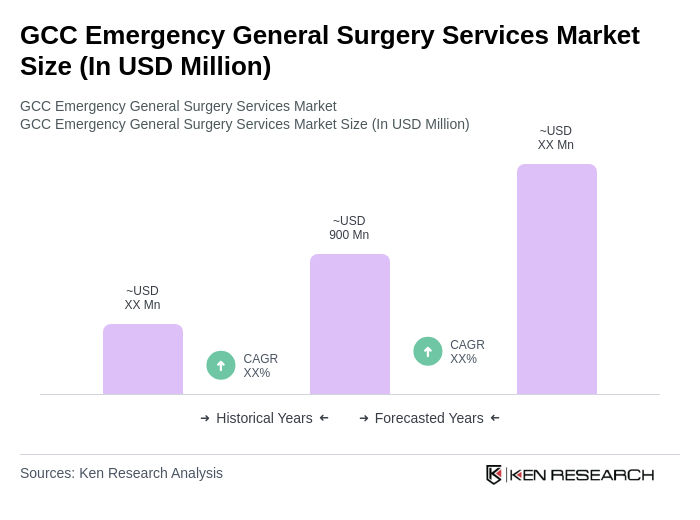
The GCC Emergency General Surgery Services Market is valued at approximately USD 900 million, reflecting a significant growth driven by factors such as chronic disease prevalence, road traffic accidents, and increased demand for emergency surgical procedures.

What makes us stand out is that our consultants follow Robust, Refine and Result (RRR) methodology. Robust for clear definitions, approaches and sanity checking, Refine for differentiating respondents' facts and opinions, and Result for presenting data with story.

We have set a benchmark in the industry by offering our clients with syndicated and customized market research reports featuring coverage of entire market as well as meticulous research and analyst insights.

While we don't replace traditional research, we flip the method upside down. Our dual approach of Top Bottom & Bottom Top ensures quality deliverable by not just verifying company fundamentals but also looking at the sector and macroeconomic factors.

With one step in the future, our research team constantly tries to show you the bigger picture. We help with some of the tough questions you may encounter along the way: How is the industry positioned? Best marketing channel? KPI's of competitors? By aligning every element, we help maximize success.

Our report gives you instant access to the answers and sources that other companies might choose to hide. We elaborate each steps of research methodology we have used and showcase you the sample size to earn your trust.

If you need any support, we are here! We pride ourselves on universe strength, data quality, and quick, friendly, and professional service.













