Ken Research Logo

Gcc Hirsutism Market Report Size, Share, Growth Drivers, Trends, Opportunities & Forecast 2025–2030

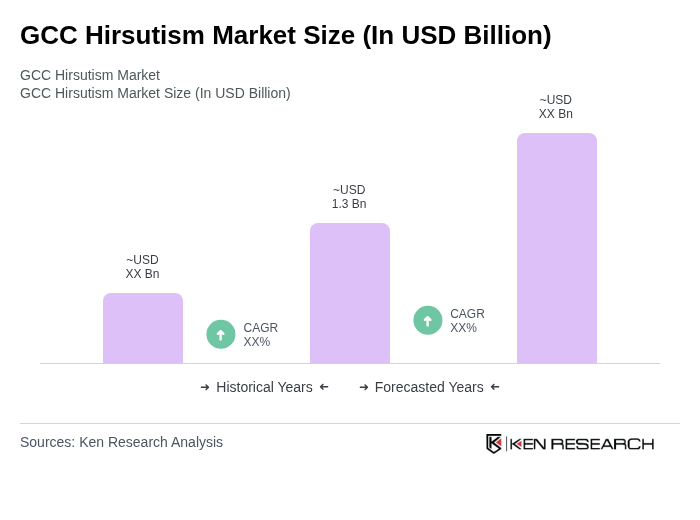
The GCC Hirsutism Market, worth USD 1.3 billion, is growing due to increasing PCOS prevalence, advancements in laser therapies, and expanding dermatology services across the region.

Region:Middle East

Author(s):Rebecca

Product Code:KRAD5049

Pages:80

Published On:December 2025
About the Report

Base Year 2024

GCC Hirsutism Market Overview

  • The GCC Hirsutism Market is valued at USD 1.3 billion, based on a five-year historical analysis, extrapolated from the share of the Middle East within the global hirsutism/hirsutism treatment market, which reached around USD 3.1–3.2 billion globally in recent assessments. This growth is primarily driven by increasing awareness of hirsutism as a medical condition and its association with underlying endocrine disorders, coupled with rising disposable incomes and a growing demand for aesthetic and dermatology treatments in Saudi Arabia, the United Arab Emirates, and other GCC countries. The market is also supported by advancements in treatment modalities, including pharmacological therapies (such as anti-androgens and combined oral contraceptives) and energy-based devices, particularly diode, Nd:YAG, and alexandrite laser systems used for long-term hair reduction.
  • Key players in this market are concentrated in countries like Saudi Arabia and the United Arab Emirates, where there is a high burden of risk factors for hirsutism such as polycystic ovary syndrome, obesity, and metabolic syndrome, driven by lifestyle and genetic predispositions. The urban population in these regions is increasingly seeking effective treatment options from dermatology, gynecology, and aesthetic clinics, contributing to the market's expansion through cash-pay laser procedures and prescription therapies. Additionally, the presence of advanced healthcare facilities, large private dermatology chains, medical tourism hubs (especially in the United Arab Emirates), and a growing number of specialized laser and aesthetic centers in GCC cities further bolster market growth.
  • In the GCC, national health authorities have progressively issued practice standards and device regulations that impact hirsutism care, including requirements for licensing of laser hair reduction equipment and professional qualifications for operators under frameworks such as the Unified Gulf Cooperation Council Medical Device Regulation issued by the Gulf Health Council and national medical device regulations enforced by ministries of health and health regulators in Saudi Arabia and the United Arab Emirates. These instruments outline obligations for registration, conformity assessment, and safe clinical use of medical and aesthetic devices, which in turn standardize aspects of hirsutism treatment protocols, enhance quality and safety in dermatology clinics and hospitals, and support evidence-based, supervised use of pharmacologic and energy-based interventions.
GCC Hirsutism Market Size

GCC Hirsutism Market Segmentation

By Etiology:The etiology of hirsutism can be categorized into several subsegments, including Polycystic Ovary Syndrome (PCOS)-related hirsutism, Idiopathic hirsutism, Adrenal and other endocrine disorders, and Drug-induced and other secondary causes. Among these, PCOS-related hirsutism is the most prevalent, accounting for a significant portion of cases, in line with global data showing PCOS as the leading cause of clinical hirsutism in women of reproductive age. This is largely due to the increasing incidence and diagnosis of PCOS in the GCC region, driven by rising obesity, insulin resistance, and sedentary lifestyles, coupled with genetic predispositions. The awareness and diagnosis of PCOS and related hyperandrogenic disorders have improved through broader gynecology and endocrinology screening, leading to a higher recognition of hirsutism as a symptom and thereby driving demand for both medical and aesthetic treatment options.
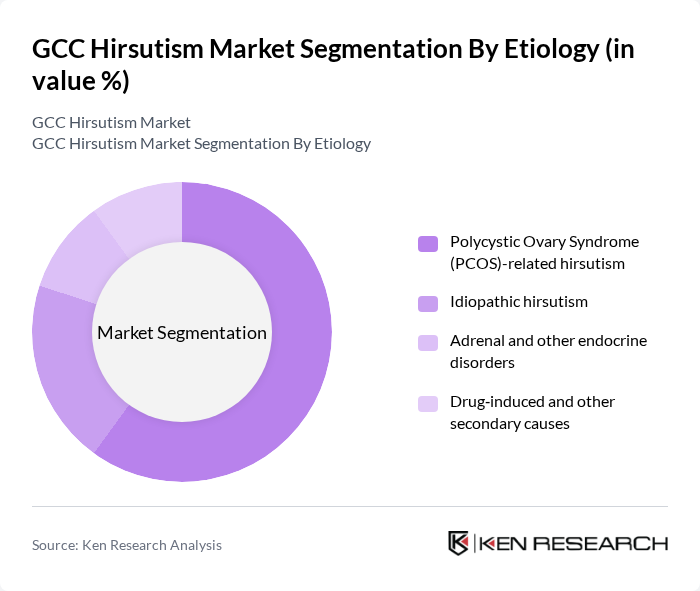
GCC Hirsutism Market segmentation by Etiology.

By Treatment Modality:The treatment modalities for hirsutism include Pharmacologic therapy (oral & topical anti-androgens), Energy-based devices – laser hair reduction, Energy-based devices – IPL & other light-based systems, Electrolysis and other permanent hair removal, and Cosmetic & temporary hair removal (waxing, depilatory creams, shaving). Among these, pharmacologic therapy is an essential treatment modality, particularly for women with underlying endocrine disorders such as PCOS, where combined oral contraceptives, anti-androgens, and insulin-sensitizing agents are widely used to address the hormonal drivers of excessive hair growth in line with global clinical practice patterns. However, energy-based devices for laser hair reduction account for a substantial share of overall intervention spending in hirsutism and unwanted hair management worldwide, reflecting strong patient preference for longer-term hair reduction and rapid uptake of diode and Nd:YAG laser platforms in private aesthetic centers, a trend also visible in GCC markets.
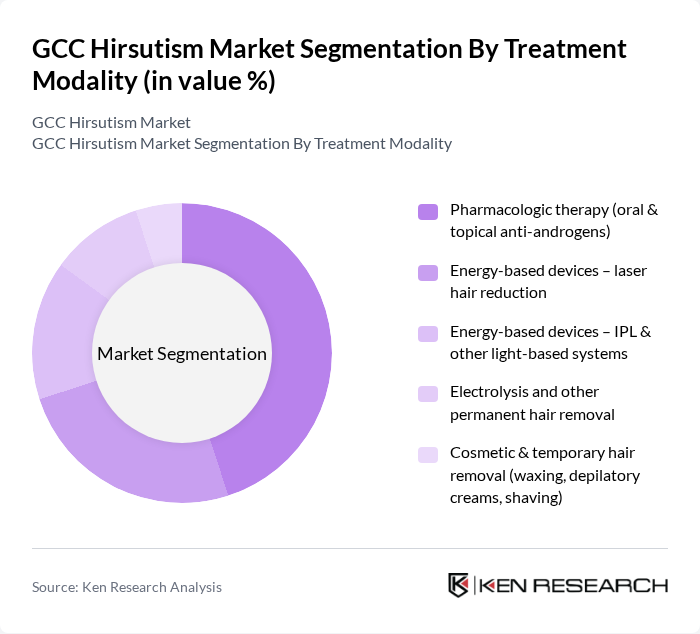
GCC Hirsutism Market segmentation by Treatment Modality.

GCC Hirsutism Market Competitive Landscape

The GCC Hirsutism Market is characterized by a dynamic mix of regional and international players. Leading participants such as Galderma S.A., Bayer AG, HRA Pharma (Perrigo Company plc), Sun Pharmaceutical Industries Ltd., Cipla Limited, Bausch Health Companies Inc. (including the former Valeant portfolio), Lumenis Be Ltd., Candela Corporation, Cutera, Inc., Alma Lasers Ltd., Procter & Gamble Company, L'Oréal S.A., Unilever PLC, Johnson & Johnson, and local GCC dermatology & aesthetic chains (e.g., Cosmesurge, Silkor, Kaya Skin Clinic) contribute to innovation, geographic expansion, and service delivery in this space.

Galderma S.A.

1981

Lausanne, Switzerland

Bayer AG

1863

Leverkusen, Germany

HRA Pharma (Perrigo Company plc)

1996

Paris, France

Sun Pharmaceutical Industries Ltd.

1993

Mumbai, India

Cipla Limited

1935

Mumbai, India

Company

Establishment Year

Headquarters

Scale of GCC presence (no. of clinics, centers, or distributor relationships)

GCC hirsutism?related revenue and 3?year CAGR

Installed base of energy?based devices in GCC (laser/IPL systems)

Average treatment price per session / per course (USD)

Patient volume per year in GCC (hirsutism cases treated)

Portfolio breadth (pharma, devices, and cosmetic solutions index)

GCC Hirsutism Market Industry Analysis

Growth Drivers

  • Increasing Awareness of Hirsutism Treatment Options:The GCC region has seen a significant rise in awareness regarding hirsutism treatment options, with educational campaigns leading to a 30% increase in consultations for hair removal procedures from 2022 to 2023. According to the World Health Organization, approximately 15% of women in the GCC experience hirsutism, prompting healthcare providers to enhance their outreach efforts. This growing awareness is expected to drive demand for effective treatment solutions, contributing to market growth.
  • Rising Prevalence of Hormonal Disorders:Hormonal disorders, particularly polycystic ovary syndrome (PCOS), are increasingly prevalent in the GCC, affecting around 10% of women of reproductive age. The International Diabetes Federation reported that the region has one of the highest rates of diabetes, which is linked to hormonal imbalances. This rising prevalence is expected to escalate the demand for hirsutism treatments, as women seek solutions to manage their symptoms effectively, thereby boosting market growth.
  • Growth in Cosmetic and Dermatological Procedures:The GCC has experienced a surge in cosmetic and dermatological procedures, with a reported 25% increase in such treatments from 2021 to 2023. The GCC cosmetic surgery market was valued at approximately $2.7 billion in future, according to industry reports. This growth is driven by a cultural shift towards aesthetic enhancement, leading to increased demand for hirsutism treatments as part of broader cosmetic procedures, thus positively impacting the market.

Market Challenges

  • High Treatment Costs:The cost of hirsutism treatments can be prohibitively high, with laser hair removal sessions averaging around $220 per session in the GCC. Many patients require multiple sessions, leading to total costs exceeding $1,200. This financial barrier limits access for a significant portion of the population, particularly in lower-income brackets, thereby hindering market growth and limiting treatment uptake among those affected by hirsutism.
  • Cultural Stigma Associated with Hirsutism:Cultural perceptions surrounding hirsutism can create significant barriers to treatment. In many GCC societies, there is a strong stigma attached to visible hair growth in women, leading to reluctance in seeking treatment. This stigma can result in a lack of open discussions about the condition, further complicating access to necessary healthcare services and limiting the market's potential for growth in addressing this health issue.

GCC Hirsutism Market Future Outlook

The future of the GCC hirsutism market appears promising, driven by advancements in treatment technologies and increasing acceptance of cosmetic procedures. As telemedicine continues to expand, patients will have greater access to consultations and treatment options. Additionally, the integration of artificial intelligence in treatment planning is expected to enhance personalized care, improving patient outcomes. These trends indicate a shift towards more accessible and effective solutions for managing hirsutism, fostering a more supportive environment for affected individuals.

Market Opportunities

  • Expansion of Telemedicine Services:The rise of telemedicine in the GCC presents a significant opportunity for the hirsutism market. With a projected 40% increase in telehealth consultations in future, patients can access specialized care from the comfort of their homes, reducing barriers to treatment and increasing overall patient engagement in managing hirsutism.
  • Development of Personalized Treatment Plans:There is a growing opportunity for developing personalized treatment plans tailored to individual hormonal profiles. As genetic testing becomes more accessible, healthcare providers can offer customized solutions, enhancing treatment efficacy and patient satisfaction, which is crucial for long-term market growth in the GCC region.

Scope of the Report

SegmentSub-Segments
By Etiology

Polycystic Ovary Syndrome (PCOS)-related hirsutism

Idiopathic hirsutism

Adrenal and other endocrine disorders

Drug?induced and other secondary causes

By Treatment Modality

Pharmacologic therapy (oral & topical anti?androgens)

Energy?based devices – laser hair reduction

Energy?based devices – IPL & other light?based systems

Electrolysis and other permanent hair removal

Cosmetic & temporary hair removal (waxing, depilatory creams, shaving)

By End-User Setting

Dermatology and aesthetic clinics

Hospitals & multispecialty centers

Medical spas & beauty centers

Home?use / over?the?counter products

By Patient Demographics

Adolescents and young adults (15–24 years)

Adults (25–39 years)

Middle?aged and above (40+ years)

Obese and metabolic?syndrome population segment

By Distribution Channel

Hospital & clinic pharmacies

Retail pharmacies

E?pharmacies and online platforms

Direct sales & aesthetic device distributors

By Country (GCC)

Saudi Arabia

United Arab Emirates

Qatar

Kuwait

Oman

Bahrain

By Treatment Duration

Single?session & short treatment courses (< 6 months)

Long?term and maintenance therapy (? 6 months)

Recurrent / retreatment cases

Key Target Audience

Investors and Venture Capitalist Firms

Government and Regulatory Bodies (e.g., Ministry of Health, Food and Drug Authority)

Pharmaceutical Manufacturers

Medical Device Manufacturers

Healthcare Providers and Clinics

Dermatology Associations

Health Insurance Companies

Market Access and Reimbursement Specialists

Players Mentioned in the Report:

Galderma S.A.

Bayer AG

HRA Pharma (Perrigo Company plc)

Sun Pharmaceutical Industries Ltd.

Cipla Limited

Bausch Health Companies Inc. (including the former Valeant portfolio)

Lumenis Be Ltd.

Candela Corporation

Cutera, Inc.

Alma Lasers Ltd.

Procter & Gamble Company

L'Oreal S.A.

Unilever PLC

Johnson & Johnson

Local GCC dermatology & aesthetic chains (e.g., Cosmesurge, Silkor, Kaya Skin Clinic)

Table of Contents

Market Assessment Phase

1. Executive Summary and Approach


2. GCC Hirsutism Market Overview

2.1 Key Insights and Strategic Recommendations

2.2 GCC Hirsutism Market Overview

2.3 Definition and Scope

2.4 Evolution of Market Ecosystem

2.5 Timeline of Key Regulatory Milestones

2.6 Value Chain & Stakeholder Mapping

2.7 Business Cycle Analysis

2.8 Policy & Incentive Landscape


3. GCC Hirsutism Market Analysis

3.1 Growth Drivers

3.1.1 Increasing awareness of hirsutism treatment options
3.1.2 Rising prevalence of hormonal disorders
3.1.3 Growth in cosmetic and dermatological procedures
3.1.4 Advancements in treatment technologies

3.2 Market Challenges

3.2.1 High treatment costs
3.2.2 Limited access to specialized healthcare
3.2.3 Cultural stigma associated with hirsutism
3.2.4 Variability in treatment efficacy

3.3 Market Opportunities

3.3.1 Expansion of telemedicine services
3.3.2 Development of personalized treatment plans
3.3.3 Increasing investment in research and development
3.3.4 Collaborations with beauty and wellness brands

3.4 Market Trends

3.4.1 Growing demand for minimally invasive procedures
3.4.2 Rise of natural and organic treatment options
3.4.3 Increased focus on mental health and well-being
3.4.4 Integration of AI in treatment planning

3.5 Government Regulation

3.5.1 Regulatory approvals for new treatment modalities
3.5.2 Guidelines for ethical marketing practices
3.5.3 Policies promoting women's health initiatives
3.5.4 Standards for clinical trials and patient safety

4. SWOT Analysis


5. Stakeholder Analysis


6. Porter's Five Forces Analysis


7. GCC Hirsutism Market Market Size, 2019-2024

7.1 By Value

7.2 By Volume

7.3 By Average Selling Price


8. GCC Hirsutism Market Segmentation

8.1 By Etiology

8.1.1 Polycystic Ovary Syndrome (PCOS)-related hirsutism
8.1.2 Idiopathic hirsutism
8.1.3 Adrenal and other endocrine disorders
8.1.4 Drug?induced and other secondary causes

8.2 By Treatment Modality

8.2.1 Pharmacologic therapy (oral & topical anti?androgens)
8.2.2 Energy?based devices – laser hair reduction
8.2.3 Energy?based devices – IPL & other light?based systems
8.2.4 Electrolysis and other permanent hair removal
8.2.5 Cosmetic & temporary hair removal (waxing, depilatory creams, shaving)

8.3 By End-User Setting

8.3.1 Dermatology and aesthetic clinics
8.3.2 Hospitals & multispecialty centers
8.3.3 Medical spas & beauty centers
8.3.4 Home?use / over?the?counter products

8.4 By Patient Demographics

8.4.1 Adolescents and young adults (15–24 years)
8.4.2 Adults (25–39 years)
8.4.3 Middle?aged and above (40+ years)
8.4.4 Obese and metabolic?syndrome population segment

8.5 By Distribution Channel

8.5.1 Hospital & clinic pharmacies
8.5.2 Retail pharmacies
8.5.3 E?pharmacies and online platforms
8.5.4 Direct sales & aesthetic device distributors

8.6 By Country (GCC)

8.6.1 Saudi Arabia
8.6.2 United Arab Emirates
8.6.3 Qatar
8.6.4 Kuwait
8.6.5 Oman
8.6.6 Bahrain

8.7 By Treatment Duration

8.7.1 Single?session & short treatment courses (< 6 months)
8.7.2 Long?term and maintenance therapy (? 6 months)
8.7.3 Recurrent / retreatment cases

9. GCC Hirsutism Market Competitive Analysis

9.1 Market Share of Key Players

9.2 Cross Comparison of Key Players

9.2.1 Company name and headquarters (global / GCC)
9.2.2 Scale of GCC presence (no. of clinics, centers, or distributor relationships)
9.2.3 GCC hirsutism?related revenue and 3?year CAGR
9.2.4 Installed base of energy?based devices in GCC (laser/IPL systems)
9.2.5 Average treatment price per session / per course (USD)
9.2.6 Patient volume per year in GCC (hirsutism cases treated)
9.2.7 Portfolio breadth (pharma, devices, and cosmetic solutions index)
9.2.8 Share of revenue from premium aesthetic offerings
9.2.9 Clinical outcome / satisfaction score (complication rate, retreatment rate, PROs)
9.2.10 New product & indication pipeline in GCC (approvals, launches, trials)

9.3 SWOT Analysis of Top Players

9.4 Pricing Analysis

9.5 Detailed Profile of Major Companies

9.5.1 Galderma S.A.
9.5.2 Bayer AG
9.5.3 HRA Pharma (Perrigo Company plc)
9.5.4 Sun Pharmaceutical Industries Ltd.
9.5.5 Cipla Limited
9.5.6 Bausch Health Companies Inc. (including the former Valeant portfolio)
9.5.7 Lumenis Be Ltd.
9.5.8 Candela Corporation
9.5.9 Cutera, Inc.
9.5.10 Alma Lasers Ltd.
9.5.11 Procter & Gamble Company
9.5.12 L'Oréal S.A.
9.5.13 Unilever PLC
9.5.14 Johnson & Johnson
9.5.15 Local GCC dermatology & aesthetic chains (e.g., Cosmesurge, Silkor, Kaya Skin Clinic)

10. GCC Hirsutism Market End-User Analysis

10.1 Procurement Behavior of Key Ministries

10.1.1 Budget Allocation for Women's Health
10.1.2 Procurement Processes
10.1.3 Collaboration with Healthcare Providers
10.1.4 Others

10.2 Corporate Spend on Infrastructure & Energy

10.2.1 Investment in Dermatology Clinics
10.2.2 Funding for Research Initiatives
10.2.3 Partnerships with Cosmetic Brands
10.2.4 Others

10.3 Pain Point Analysis by End-User Category

10.3.1 Access to Treatment
10.3.2 Affordability of Services
10.3.3 Awareness of Treatment Options
10.3.4 Others

10.4 User Readiness for Adoption

10.4.1 Attitudes Towards Treatment
10.4.2 Knowledge of Available Options
10.4.3 Willingness to Pay
10.4.4 Others

10.5 Post-Deployment ROI and Use Case Expansion

10.5.1 Measurement of Treatment Effectiveness
10.5.2 Long-term Patient Engagement
10.5.3 Expansion into New Markets
10.5.4 Others

11. GCC Hirsutism Market Future Size, 2025-2030

11.1 By Value

11.2 By Volume

11.3 By Average Selling Price


Go-To-Market Strategy Phase

1. Whitespace Analysis + Business Model Canvas

1.1 Market Gaps Identification

1.2 Value Proposition Development

1.3 Revenue Streams Analysis

1.4 Cost Structure Evaluation

1.5 Key Partnerships Exploration

1.6 Customer Segmentation

1.7 Channels of Distribution


2. Marketing and Positioning Recommendations

2.1 Branding Strategies

2.2 Product USPs


3. Distribution Plan

3.1 Urban Retail vs Rural NGO Tie-ups


4. Channel & Pricing Gaps

4.1 Underserved Routes

4.2 Pricing Bands


5. Unmet Demand & Latent Needs

5.1 Category Gaps

5.2 Consumer Segments


6. Customer Relationship

6.1 Loyalty Programs

6.2 After-sales Service


7. Value Proposition

7.1 Sustainability

7.2 Integrated Supply Chains


8. Key Activities

8.1 Regulatory Compliance

8.2 Branding

8.3 Distribution Setup


9. Entry Strategy Evaluation

9.1 Domestic Market Entry Strategy

9.1.1 Product Mix
9.1.2 Pricing Band
9.1.3 Packaging

9.2 Export Entry Strategy

9.2.1 Target Countries
9.2.2 Compliance Roadmap

10. Entry Mode Assessment

10.1 JV

10.2 Greenfield

10.3 M&A

10.4 Distributor Model


11. Capital and Timeline Estimation

11.1 Capital Requirements

11.2 Timelines


12. Control vs Risk Trade-Off

12.1 Ownership vs Partnerships


13. Profitability Outlook

13.1 Breakeven Analysis

13.2 Long-term Sustainability


14. Potential Partner List

14.1 Distributors

14.2 JVs

14.3 Acquisition Targets


15. Execution Roadmap

15.1 Phased Plan for Market Entry

15.1.1 Market Setup
15.1.2 Market Entry
15.1.3 Growth Acceleration
15.1.4 Scale & Stabilize

15.2 Key Activities and Milestones

15.2.1 Milestone Planning
15.2.2 Activity Tracking

Research Methodology

ApproachModellingSample

Phase 1: Approach1

Desk Research

  • Analysis of existing market reports and publications on hirsutism treatment options in the GCC region
  • Review of demographic and epidemiological data from health ministries and international health organizations
  • Examination of market trends and consumer behavior through online health forums and social media platforms

Primary Research

  • Interviews with dermatologists and endocrinologists specializing in hirsutism treatment
  • Surveys conducted with patients undergoing treatment for hirsutism to gather insights on preferences and experiences
  • Focus group discussions with healthcare professionals to understand treatment protocols and patient management strategies

Validation & Triangulation

  • Cross-validation of findings through multiple data sources, including clinical studies and market surveys
  • Triangulation of patient feedback with expert opinions to ensure comprehensive understanding of market dynamics
  • Sanity checks through expert panel reviews comprising healthcare professionals and market analysts

Phase 2: Market Size Estimation1

Top-down Assessment

  • Estimation of the total addressable market based on population demographics and prevalence rates of hirsutism in GCC countries
  • Segmentation of the market by treatment type, including pharmacological and non-pharmacological options
  • Incorporation of healthcare expenditure trends and insurance coverage analysis for hirsutism treatments

Bottom-up Modeling

  • Collection of sales data from pharmaceutical companies and clinics offering hirsutism treatments
  • Estimation of treatment costs and patient volume based on clinic capacity and patient flow
  • Analysis of market penetration rates for various treatment modalities across different GCC countries

Forecasting & Scenario Analysis

  • Multi-factor regression analysis incorporating factors such as population growth, healthcare access, and treatment advancements
  • Scenario modeling based on potential changes in healthcare policies and patient awareness initiatives
  • Development of baseline, optimistic, and pessimistic forecasts for market growth through 2030

Phase 3: CATI Sample Composition1

Scope Item/SegmentSample SizeTarget Respondent Profiles
Dermatology Clinics45Dermatologists, Clinic Managers
Endocrinology Practices40Endocrinologists, Nurse Practitioners
Pharmaceutical Distributors35Sales Representatives, Product Managers
Patient Advocacy Groups30Patient Coordinators, Community Outreach Managers
Health Insurance Providers40Policy Analysts, Claims Managers

Frequently Asked Questions

What is the current value of the GCC Hirsutism Market?

The GCC Hirsutism Market is valued at approximately USD 1.3 billion, based on a five-year historical analysis. This valuation reflects the region's share of the global hirsutism treatment market, which is estimated to be around USD 3.13.2 billion.

What factors are driving the growth of the GCC Hirsutism Market?

Which countries in the GCC have the highest demand for hirsutism treatments?

What are the main treatment modalities for hirsutism in the GCC?

Other Regional/Country Reports

Indonesia Hirsutism Market

Malaysia Hirsutism Market

KSA Hirsutism Market

APAC Hirsutism Market

SEA Hirsutism Market

Vietnam Hirsutism Market

Other Adjacent Reports

Belgium Polycystic Ovary Syndrome Treatment Market

UAE Laser Hair Removal Market

South Korea Aesthetic Dermatology Market

Belgium Endocrine Disorder Treatment Market

South Korea Womens Health Pharmaceuticals Market

KSA Cosmetic Procedure Market

Egypt Anti-Androgen Drug Market

Qatar Hair Reduction Device Market

Indonesia Dermatology Clinic Market

Japan Hormonal Imbalance Therapy Market

Why Buy From Us?

Refine Robust Result (RRR) Framework

What makes us stand out is that our consultants follow Robust, Refine and Result (RRR) methodology. Robust for clear definitions, approaches and sanity checking, Refine for differentiating respondents' facts and opinions, and Result for presenting data with story.

Our Reach Is Unmatched

We have set a benchmark in the industry by offering our clients with syndicated and customized market research reports featuring coverage of entire market as well as meticulous research and analyst insights.

Shifting the Research Paradigm

While we don't replace traditional research, we flip the method upside down. Our dual approach of Top Bottom & Bottom Top ensures quality deliverable by not just verifying company fundamentals but also looking at the sector and macroeconomic factors.

More Insights-Better Decisions

With one step in the future, our research team constantly tries to show you the bigger picture. We help with some of the tough questions you may encounter along the way: How is the industry positioned? Best marketing channel? KPI's of competitors? By aligning every element, we help maximize success.

Transparency and Trust

Our report gives you instant access to the answers and sources that other companies might choose to hide. We elaborate each steps of research methodology we have used and showcase you the sample size to earn your trust.

Round the Clock Support

If you need any support, we are here! We pride ourselves on universe strength, data quality, and quick, friendly, and professional service.

Why Clients Choose Us?

400000+
Reports in repository
150+
Consulting projects a year
100+
Analysts
8000+
Client Queries in 2022








