Region:Middle East
Author(s):Rebecca
Product Code:KRAD6154
Pages:99
Published On:December 2025
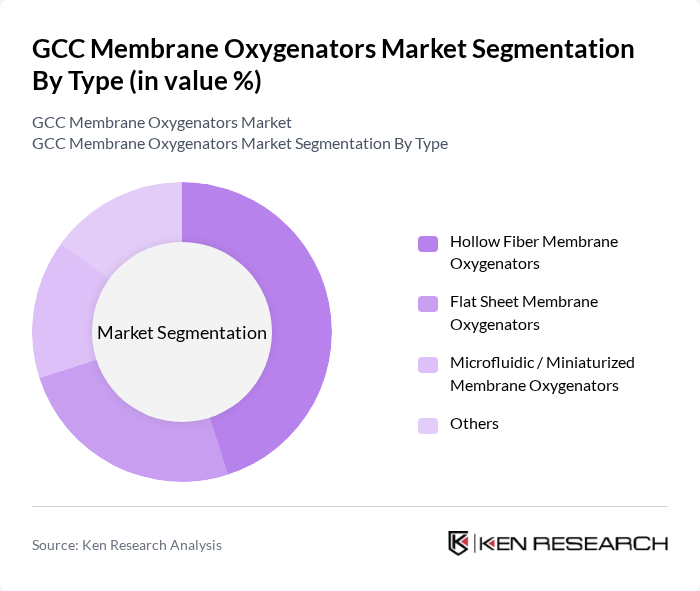
By Type:The market is segmented into various types of membrane oxygenators, including Hollow Fiber Membrane Oxygenators, Flat Sheet Membrane Oxygenators, Microfluidic / Miniaturized Membrane Oxygenators, and Others. Among these, Hollow Fiber Membrane Oxygenators are the most widely used due to their high efficiency and compact design, making them suitable for a variety of applications in both adult and pediatric patients. The increasing adoption of these devices in hospitals and surgical centers is a key factor driving their dominance in the market.
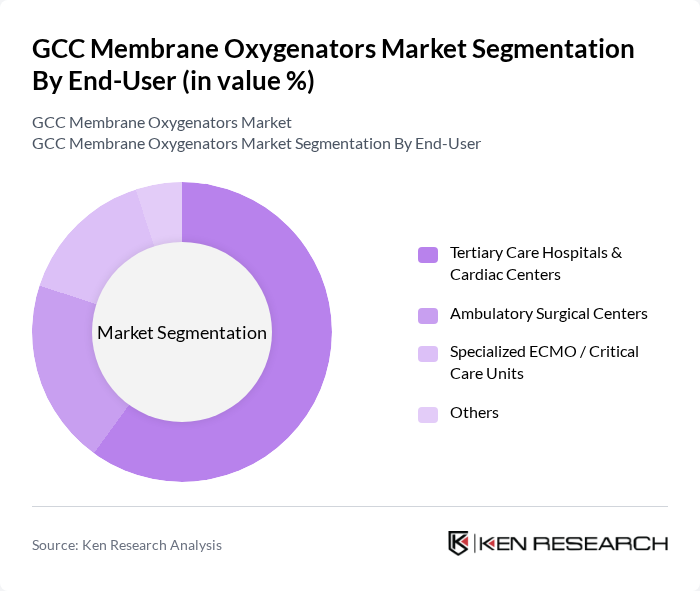
By End-User:The end-user segmentation includes Tertiary Care Hospitals & Cardiac Centers, Ambulatory Surgical Centers, Specialized ECMO / Critical Care Units, and Others. Tertiary Care Hospitals & Cardiac Centers dominate this segment due to their advanced facilities and higher patient volumes requiring complex procedures. The increasing number of cardiac surgeries and the need for specialized care in these institutions are driving the demand for membrane oxygenators, making them the leading end-user in the market.
The GCC Membrane Oxygenators Market is characterized by a dynamic mix of regional and international players. Leading participants such as Medtronic plc, Terumo Corporation, Getinge AB (including Maquet Cardiopulmonary), LivaNova PLC, Fresenius Medical Care AG & Co. KGaA, Nipro Corporation, XENIOS AG (Fresenius Medical Care), Asahi Kasei Medical Co., Ltd., Eurosets S.r.l., Medos Medizintechnik AG (XENIOS / Fresenius Medical Care), MC3 Cardiopulmonary (Ann Arbor, Michigan), Braile Biomédica, Abbott Laboratories, B. Braun Melsungen AG, Regional GCC Distributors and Importers (e.g., Gulf Medical Co., Al Faisaliah Medical Systems) contribute to innovation, geographic expansion, and service delivery in this space.
The future of the GCC membrane oxygenators market appears promising, driven by ongoing technological innovations and an increasing focus on patient-centric care. As healthcare providers prioritize advanced treatment options, the integration of artificial intelligence in oxygenation systems is expected to enhance efficiency and monitoring capabilities. Additionally, the rise of telemedicine and remote patient monitoring will likely create new avenues for the deployment of membrane oxygenators, ensuring better access to care for patients across the region.
| Segment | Sub-Segments |
|---|---|
| By Type | Hollow Fiber Membrane Oxygenators Flat Sheet Membrane Oxygenators Microfluidic / Miniaturized Membrane Oxygenators Others |
| By End-User | Tertiary Care Hospitals & Cardiac Centers Ambulatory Surgical Centers Specialized ECMO / Critical Care Units Others |
| By Application | Cardiopulmonary Bypass (CPB) in Cardiac Surgery Extracorporeal Membrane Oxygenation (ECMO) – Respiratory Support Extracorporeal Membrane Oxygenation (ECMO) – Cardiac Support & ECPR Others |
| By Material | Polypropylene Hollow Fiber Membranes Polymethylpentene (PMP) Membranes Silicone Membranes Others |
| By Distribution Channel | Direct Sales to Hospitals & Government Tenders Local Distributors / Importers Group Purchasing Organizations (GPOs) Online / E-procurement Portals Others |
| By Region | Saudi Arabia United Arab Emirates Qatar Kuwait Oman Bahrain Others (Rest of Middle East) |
| By Technology | Adult Membrane Oxygenators Pediatric & Neonatal Membrane Oxygenators Coated / Biocompatible Membrane Oxygenators Conventional Oxygenators Others |
| Scope Item/Segment | Sample Size | Target Respondent Profiles |
|---|---|---|
| Cardiac Surgery Departments | 120 | Cardiothoracic Surgeons, Perfusionists |
| Healthcare Procurement Units | 100 | Procurement Managers, Supply Chain Directors |
| Medical Device Distributors | 80 | Sales Managers, Product Specialists |
| Regulatory Bodies | 60 | Regulatory Affairs Managers, Compliance Officers |
| Healthcare Policy Makers | 50 | Health Economists, Policy Analysts |
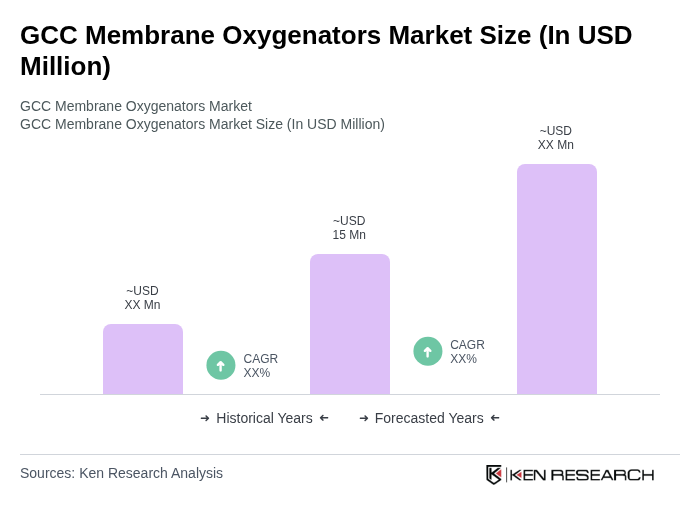
The GCC Membrane Oxygenators Market is valued at approximately USD 15 million, driven by the rising prevalence of cardiovascular diseases and advancements in medical technology, particularly in oxygenation solutions used in critical care settings.

What makes us stand out is that our consultants follow Robust, Refine and Result (RRR) methodology. Robust for clear definitions, approaches and sanity checking, Refine for differentiating respondents' facts and opinions, and Result for presenting data with story.

We have set a benchmark in the industry by offering our clients with syndicated and customized market research reports featuring coverage of entire market as well as meticulous research and analyst insights.

While we don't replace traditional research, we flip the method upside down. Our dual approach of Top Bottom & Bottom Top ensures quality deliverable by not just verifying company fundamentals but also looking at the sector and macroeconomic factors.

With one step in the future, our research team constantly tries to show you the bigger picture. We help with some of the tough questions you may encounter along the way: How is the industry positioned? Best marketing channel? KPI's of competitors? By aligning every element, we help maximize success.

Our report gives you instant access to the answers and sources that other companies might choose to hide. We elaborate each steps of research methodology we have used and showcase you the sample size to earn your trust.

If you need any support, we are here! We pride ourselves on universe strength, data quality, and quick, friendly, and professional service.













