Region:Middle East
Author(s):Geetanshi
Product Code:KRAC2324
Pages:88
Published On:October 2025
By Type:
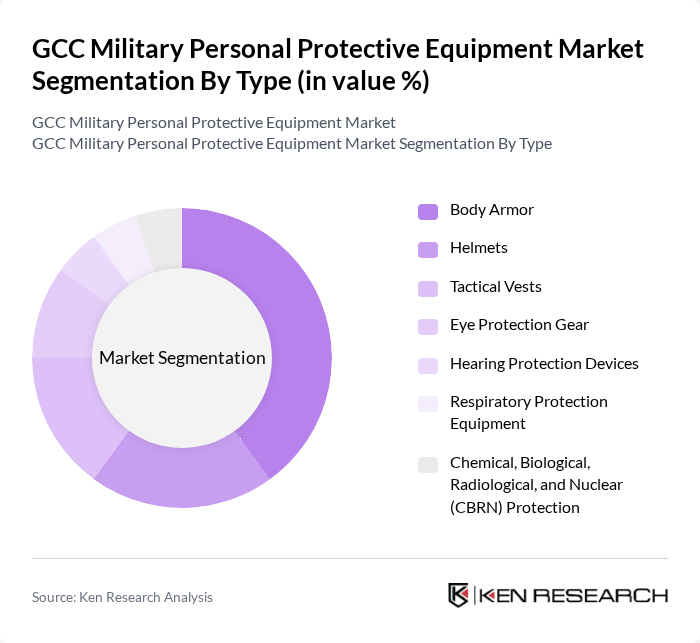
The market segmentation by type includes Body Armor, Helmets, Tactical Vests, Eye Protection Gear, Hearing Protection Devices, Respiratory Protection Equipment, and Chemical, Biological, Radiological, and Nuclear (CBRN) Protection. Among these, Body Armor is the leading sub-segment, driven by the increasing need for enhanced protection against ballistic threats. The rising incidence of armed conflicts and terrorist activities has led to a surge in demand for advanced body armor solutions, which are designed to provide maximum protection while ensuring mobility and comfort for the wearer. Globally, body armor dominates the product mix, and this trend is reflected in GCC procurement patterns, where lightweight, modular, and multi-threat solutions are prioritized. Respiratory protection is also gaining traction due to heightened awareness of CBRN threats and the integration of advanced filtration technologies.
By End-User:
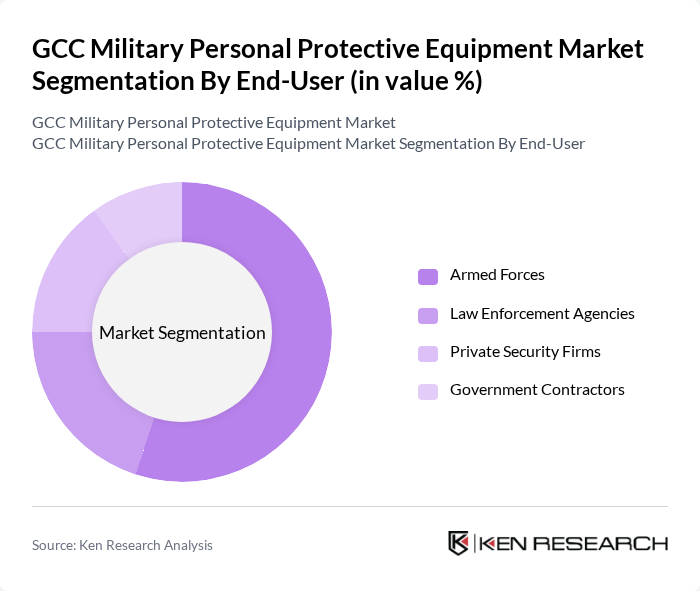
The end-user segmentation includes Armed Forces, Law Enforcement Agencies, Private Security Firms, and Government Contractors. The Armed Forces segment is the dominant player in this market, primarily due to the substantial investments made by governments in military modernization and readiness. The increasing focus on soldier safety and the need for advanced protective gear in combat situations have led to a significant rise in demand from this segment, further supported by ongoing military operations and training exercises. Globally, the army segment is the largest end-user, and this is consistent with GCC trends, where national defense budgets and modernization programs drive procurement.
The GCC Military Personal Protective Equipment Market is characterized by a dynamic mix of regional and international players. Leading participants such as BAE Systems, Rheinmetall AG, General Dynamics Corporation, Northrop Grumman Corporation, Thales Group, Safariland, LLC, Honeywell International Inc., 3M Company, DuPont de Nemours, Inc., Point Blank Enterprises, Inc., Armor Express, Avon Protection plc, MKU Limited, U.S. Armor Corporation, Tactical Assault Gear contribute to innovation, geographic expansion, and service delivery in this space.
The GCC military PPE market is poised for significant growth, driven by ongoing defense modernization efforts and the increasing need for advanced protective solutions. As countries in the region continue to invest in military capabilities, the demand for innovative and effective PPE will rise. Additionally, the integration of smart technologies and sustainable practices in manufacturing will shape the future landscape, ensuring that military personnel are equipped with the best possible gear to face evolving threats and challenges.
| Segment | Sub-Segments |
|---|---|
| By Type | Body Armor Helmets Tactical Vests Eye Protection Gear Hearing Protection Devices Respiratory Protection Equipment Chemical, Biological, Radiological, and Nuclear (CBRN) Protection |
| By End-User | Armed Forces Law Enforcement Agencies Private Security Firms Government Contractors |
| By Application | Combat Operations Training Exercises Peacekeeping Missions Disaster Response |
| By Distribution Channel | Direct Sales Online Retail Distributors Government Procurement |
| By Region | Saudi Arabia UAE Qatar Kuwait Oman Bahrain Others |
| By Price Range | Low-End Mid-Range High-End |
| By Material Type | Kevlar Steel Composite Materials Advanced Ceramics |
| Scope Item/Segment | Sample Size | Target Respondent Profiles |
|---|---|---|
| Military Procurement Officers | 40 | Defense Ministry Officials, Procurement Managers |
| End-Users of PPE | 60 | Military Personnel, Safety Officers |
| Defense Contractors | 40 | Product Managers, Sales Directors |
| Industry Experts | 30 | Military Technology Analysts, Consultants |
| Regulatory Bodies | 30 | Compliance Officers, Policy Makers |
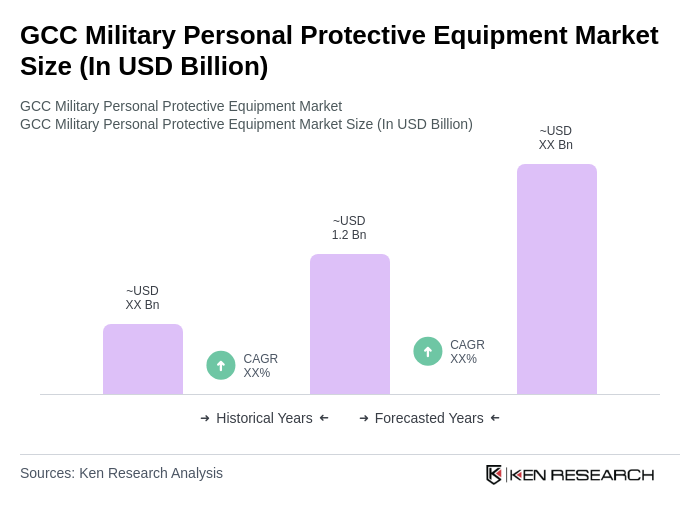
The GCC Military Personal Protective Equipment market is valued at approximately USD 1.2 billion, driven by increased defense budgets, security concerns, and military modernization efforts across the region.

What makes us stand out is that our consultants follow Robust, Refine and Result (RRR) methodology. Robust for clear definitions, approaches and sanity checking, Refine for differentiating respondents' facts and opinions, and Result for presenting data with story.

We have set a benchmark in the industry by offering our clients with syndicated and customized market research reports featuring coverage of entire market as well as meticulous research and analyst insights.

While we don't replace traditional research, we flip the method upside down. Our dual approach of Top Bottom & Bottom Top ensures quality deliverable by not just verifying company fundamentals but also looking at the sector and macroeconomic factors.

With one step in the future, our research team constantly tries to show you the bigger picture. We help with some of the tough questions you may encounter along the way: How is the industry positioned? Best marketing channel? KPI's of competitors? By aligning every element, we help maximize success.

Our report gives you instant access to the answers and sources that other companies might choose to hide. We elaborate each steps of research methodology we have used and showcase you the sample size to earn your trust.

If you need any support, we are here! We pride ourselves on universe strength, data quality, and quick, friendly, and professional service.













