GCC Reusable Period Panties Market Report Size Share Growth Drivers Trends Opportunities & Forecast 2025–2030

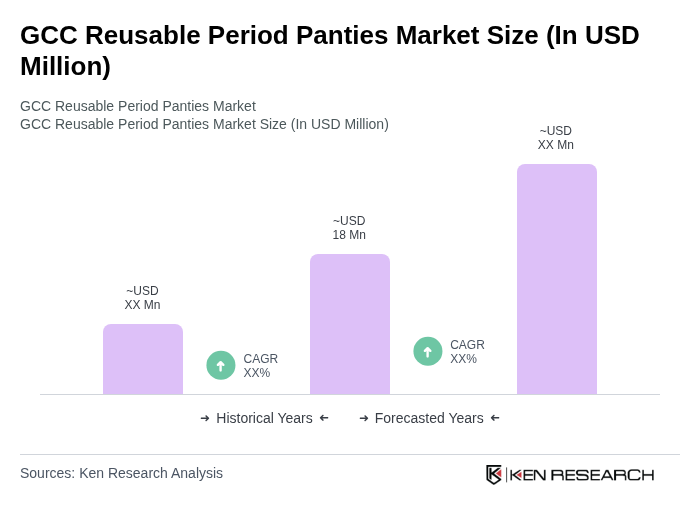
GCC Reusable Period Panties Market at USD 145M, growing due to demand for sustainable menstrual products, innovations in fabrics, and expanding e-commerce access.

Region:Middle East

Author(s):Geetanshi

Product Code:KRAA3410

Pages:96

Published On:January 2026
About the Report

Base Year 2024

GCC Reusable Period Panties Market Overview

  • The GCC Reusable Period Panties Market is valued at USD 145 million, based on a five-year historical analysis. This growth is primarily driven by increasing awareness of sustainable menstrual products, rising disposable incomes, a shift towards eco-friendly alternatives among consumers, and advancements in fabric technologies offering improved comfort and absorbency. The market has seen a significant uptick in demand as more women seek comfortable and environmentally responsible options for menstrual hygiene.
  • Key players in this market include the UAE and Saudi Arabia, which dominate due to their larger populations and higher purchasing power. The UAE's strong retail infrastructure and Saudi Arabia's growing focus on women's health and wellness contribute to their leadership in the market. Additionally, cultural shifts towards openness about menstrual health are fostering growth in these regions.
  • The UAE Federal Law No. 24 of 1999 on the Protection and Development of the Environment, issued by the Ministry of Climate Change and Environment, regulates sustainable products including textiles and waste reduction practices applicable to menstrual hygiene items like reusable period panties. This law mandates environmental impact assessments for manufacturing, compliance with waste minimization standards, and licensing for eco-friendly production facilities exceeding specified pollution thresholds.
GCC Reusable Period Panties Market Size

GCC Reusable Period Panties Market Segmentation

By Type:The market is segmented into various types of reusable period panties, including Organic Cotton, Bamboo Fabric, Microfiber, Hybrid Materials, and Others. Among these, Organic Cotton is gaining traction due to its natural properties and comfort, appealing to environmentally conscious consumers. Bamboo Fabric is also popular for its softness and moisture-wicking capabilities. Microfiber is favored for its affordability and durability, while Hybrid Materials combine the benefits of different fabrics. The "Others" category includes innovative materials that are emerging in the market.
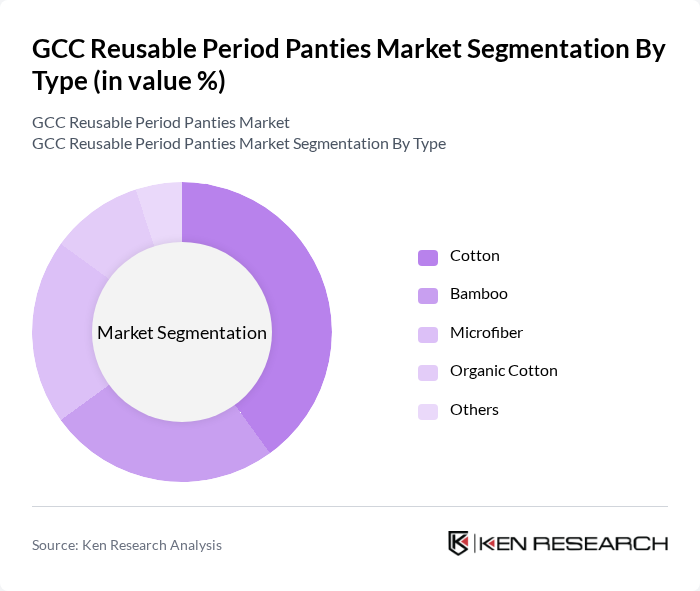
GCC Reusable Period Panties Market segmentation by Type.

By End-User:The end-user segmentation includes Teenagers, Adults, Postpartum Women, and Others. Teenagers are increasingly adopting reusable period panties due to their comfort and sustainability, often influenced by social media and peer recommendations. Adults represent a significant portion of the market, driven by a growing awareness of menstrual health and environmental issues. Postpartum Women are also a key segment, as they seek comfortable and reliable options during recovery. The "Others" category encompasses various demographics, including those with specific health needs.
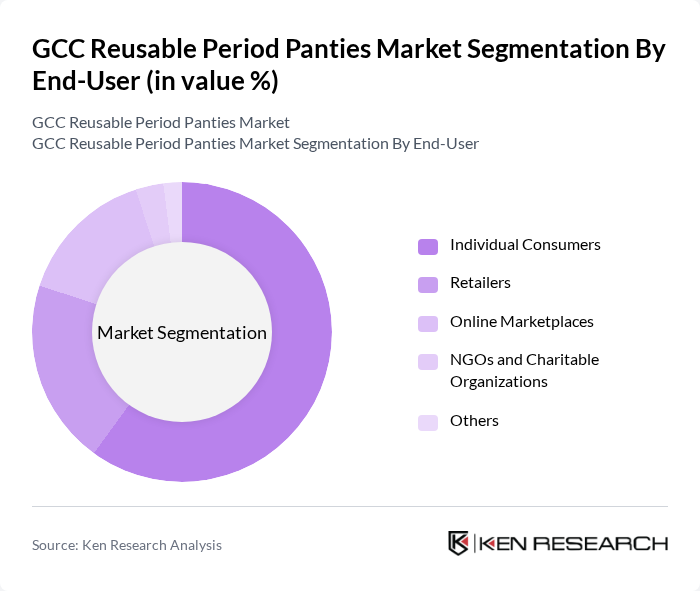
GCC Reusable Period Panties Market segmentation by End-User.

GCC Reusable Period Panties Market Competitive Landscape

The GCC Reusable Period Panties Market is characterized by a dynamic mix of regional and international players. Leading participants such as Thinx, Modibodi, Knix, Saalt, Ruby Love, Period Aisle, Aisle, Bloom & Nora, Panty Prop, Dear Kate, Eco Femme, Wuka, Femme International, Sckoon, Aisle contribute to innovation, geographic expansion, and service delivery in this space.

Thinx

2013

New York, USA

Modibodi

2013

Sydney, Australia

Knix

2013

Toronto, Canada

Saalt

2018

Utah, USA

Ruby Love

2012

New York, USA

Company

Establishment Year

Headquarters

Group Size (Large, Medium, or Small as per industry convention)

Revenue Growth Rate

Market Penetration Rate

Customer Retention Rate

Pricing Strategy

Product Return Rate

GCC Reusable Period Panties Market Industry Analysis

Growth Drivers

  • Increasing Awareness of Sustainable Menstrual Products:The GCC region has seen a significant rise in awareness regarding sustainable menstrual products, with a reported 60% of women expressing interest in eco-friendly options. This shift is driven by educational campaigns and social media, which have highlighted the environmental impact of traditional menstrual products. The World Bank estimates that the region's population growth will reach 60 million in future, further amplifying the demand for sustainable alternatives.
  • Rising Demand for Eco-Friendly Alternatives:The GCC's commitment to sustainability is reflected in the increasing demand for eco-friendly menstrual products. In future, the market for eco-friendly products is projected to grow by 15%, driven by government initiatives promoting green products. The UAE's Green Economy initiative aims to reduce waste by 75% in future, creating a favorable environment for reusable period panties, which align with these sustainability goals.
  • Expansion of E-Commerce Platforms for Accessibility:E-commerce in the GCC is projected to reach $30 billion in future, facilitating greater access to reusable period panties. The rise of online shopping, particularly among younger consumers, has made it easier for brands to reach their target audience. With 80% of the population using the internet, companies can leverage digital marketing strategies to promote their products effectively, enhancing market penetration and consumer engagement.

Market Challenges

  • Cultural Stigma Surrounding Menstrual Health:Cultural perceptions regarding menstruation pose a significant challenge in the GCC. Many women face societal taboos that discourage open discussions about menstrual health, leading to a lack of awareness about reusable products. According to a study, 50% of women in the region reported feeling uncomfortable discussing menstrual health, which hinders the adoption of innovative products like reusable period panties.
  • Limited Consumer Education on Product Benefits:Despite the growing interest in sustainable products, there remains a knowledge gap regarding the benefits of reusable period panties. A survey indicated that only 35% of women in the GCC are aware of the health and environmental advantages of these products. This lack of education can impede market growth, as consumers may opt for traditional products due to familiarity and perceived safety.

GCC Reusable Period Panties Market Future Outlook

The future of the GCC reusable period panties market appears promising, driven by increasing consumer awareness and a shift towards sustainable practices. As educational initiatives gain traction, more women are expected to embrace eco-friendly menstrual products. Additionally, the rise of e-commerce will facilitate greater accessibility, allowing brands to reach untapped markets. Innovations in product design and materials will further enhance consumer interest, positioning reusable period panties as a viable alternative to traditional menstrual products.

Market Opportunities

  • Potential for Product Innovation and Diversification:There is significant potential for innovation in the reusable period panties market, with opportunities to develop products that cater to diverse consumer needs. By introducing features such as customizable designs and enhanced absorbency, brands can attract a broader audience, tapping into the growing demand for personalized menstrual solutions.
  • Collaborations with Health Organizations for Awareness:Collaborating with health organizations can enhance awareness and education about reusable period panties. By partnering with NGOs and health advocates, brands can leverage established networks to disseminate information, thereby increasing consumer trust and encouraging adoption of these sustainable products in the GCC region.

Scope of the Report

SegmentSub-Segments
By Type

Organic Cotton

Bamboo Fabric

Microfiber

Hybrid Materials

Others

By End-User

Teenagers

Adults

Postpartum Women

Others

By Distribution Channel

Online Retail

Supermarkets/Hypermarkets

Specialty Stores

Pharmacies

Others

By Price Range

Budget

Mid-Range

Premium

Others

By Brand Loyalty

Brand Loyal Customers

Price-Sensitive Customers

Quality-Conscious Customers

Others

By Material Composition

Natural Fibers

Synthetic Fibers

Blended Fabrics

Others

By Geographic Distribution

UAE

Saudi Arabia

Qatar

Kuwait

Oman

Bahrain

Others

Key Target Audience

Investors and Venture Capitalist Firms

Government and Regulatory Bodies (e.g., Ministry of Health, Ministry of Commerce)

Manufacturers and Producers

Distributors and Retailers

Non-Governmental Organizations (NGOs) focused on women's health

Health and Wellness Brands

Environmental Advocacy Groups

Financial Institutions

Players Mentioned in the Report:

Thinx

Modibodi

Knix

Saalt

Ruby Love

Period Aisle

Aisle

Bloom & Nora

Panty Prop

Dear Kate

Eco Femme

Wuka

Femme International

Sckoon

Table of Contents

Market Assessment Phase

1. Executive Summary and Approach


2. GCC Reusable Period Panties Market Overview

2.1 Key Insights and Strategic Recommendations

2.2 GCC Reusable Period Panties Market Overview

2.3 Definition and Scope

2.4 Evolution of Market Ecosystem

2.5 Timeline of Key Regulatory Milestones

2.6 Value Chain & Stakeholder Mapping

2.7 Business Cycle Analysis

2.8 Policy & Incentive Landscape


3. GCC Reusable Period Panties Market Analysis

3.1 Growth Drivers

3.1.1 Increasing awareness of sustainable menstrual products
3.1.2 Rising demand for eco-friendly alternatives
3.1.3 Growing health consciousness among consumers
3.1.4 Expansion of e-commerce platforms for accessibility

3.2 Market Challenges

3.2.1 Cultural stigma surrounding menstrual health
3.2.2 Limited consumer education on product benefits
3.2.3 Competition from traditional menstrual products
3.2.4 Regulatory hurdles in product approval

3.3 Market Opportunities

3.3.1 Potential for product innovation and diversification
3.3.2 Collaborations with health organizations for awareness
3.3.3 Expansion into untapped markets within the GCC
3.3.4 Increasing online marketing strategies

3.4 Market Trends

3.4.1 Shift towards subscription-based purchasing models
3.4.2 Rise in influencer marketing for product promotion
3.4.3 Growing interest in biodegradable materials
3.4.4 Increased focus on product customization

3.5 Government Regulation

3.5.1 Standards for menstrual product safety
3.5.2 Import regulations for health products
3.5.3 Tax incentives for eco-friendly products
3.5.4 Guidelines for advertising menstrual health products

4. SWOT Analysis


5. Stakeholder Analysis


6. Porter's Five Forces Analysis


7. GCC Reusable Period Panties Market Market Size, 2019-2024

7.1 By Value

7.2 By Volume

7.3 By Average Selling Price


8. GCC Reusable Period Panties Market Segmentation

8.1 By Type

8.1.1 Organic Cotton
8.1.2 Bamboo Fabric
8.1.3 Microfiber
8.1.4 Hybrid Materials
8.1.5 Others

8.2 By End-User

8.2.1 Teenagers
8.2.2 Adults
8.2.3 Postpartum Women
8.2.4 Others

8.3 By Distribution Channel

8.3.1 Online Retail
8.3.2 Supermarkets/Hypermarkets
8.3.3 Specialty Stores
8.3.4 Pharmacies
8.3.5 Others

8.4 By Price Range

8.4.1 Budget
8.4.2 Mid-Range
8.4.3 Premium
8.4.4 Others

8.5 By Brand Loyalty

8.5.1 Brand Loyal Customers
8.5.2 Price-Sensitive Customers
8.5.3 Quality-Conscious Customers
8.5.4 Others

8.6 By Material Composition

8.6.1 Natural Fibers
8.6.2 Synthetic Fibers
8.6.3 Blended Fabrics
8.6.4 Others

8.7 By Geographic Distribution

8.7.1 UAE
8.7.2 Saudi Arabia
8.7.3 Qatar
8.7.4 Kuwait
8.7.5 Oman
8.7.6 Bahrain
8.7.7 Others

9. GCC Reusable Period Panties Market Competitive Analysis

9.1 Market Share of Key Players

9.2 Cross Comparison of Key Players

9.2.1 Company Name
9.2.2 Group Size (Large, Medium, or Small as per industry convention)
9.2.3 Revenue Growth Rate
9.2.4 Market Penetration Rate
9.2.5 Customer Retention Rate
9.2.6 Pricing Strategy
9.2.7 Product Return Rate
9.2.8 Brand Recognition Score
9.2.9 Customer Satisfaction Index
9.2.10 Distribution Efficiency

9.3 SWOT Analysis of Top Players

9.4 Pricing Analysis

9.5 Detailed Profile of Major Companies

9.5.1 Thinx
9.5.2 Modibodi
9.5.3 Knix
9.5.4 Saalt
9.5.5 Ruby Love
9.5.6 Period Aisle
9.5.7 Aisle
9.5.8 Bloom & Nora
9.5.9 Panty Prop
9.5.10 Dear Kate
9.5.11 Eco Femme
9.5.12 Wuka
9.5.13 Femme International
9.5.14 Sckoon
9.5.15 Aisle

10. GCC Reusable Period Panties Market End-User Analysis

10.1 Procurement Behavior of Key Ministries

10.1.1 Budget Allocation for Menstrual Health
10.1.2 Procurement Processes and Regulations
10.1.3 Supplier Selection Criteria
10.1.4 Contract Management Practices

10.2 Corporate Spend on Infrastructure & Energy

10.2.1 Investment in Sustainable Products
10.2.2 Budgeting for Employee Health Initiatives
10.2.3 Partnerships with Health Organizations
10.2.4 Others

10.3 Pain Point Analysis by End-User Category

10.3.1 Product Accessibility Issues
10.3.2 Quality Concerns
10.3.3 Affordability Challenges
10.3.4 Cultural Sensitivity

10.4 User Readiness for Adoption

10.4.1 Awareness Levels
10.4.2 Willingness to Switch from Traditional Products
10.4.3 Feedback from Early Adopters
10.4.4 Others

10.5 Post-Deployment ROI and Use Case Expansion

10.5.1 Cost Savings Analysis
10.5.2 User Experience Feedback
10.5.3 Potential for Product Line Expansion
10.5.4 Others

11. GCC Reusable Period Panties Market Future Size, 2025-2030

11.1 By Value

11.2 By Volume

11.3 By Average Selling Price


Go-To-Market Strategy Phase

1. Whitespace Analysis + Business Model Canvas

1.1 Market Gaps Identification

1.2 Business Model Framework


2. Marketing and Positioning Recommendations

2.1 Branding Strategies

2.2 Product USPs


3. Distribution Plan

3.1 Urban Retail vs Rural NGO Tie-ups


4. Channel & Pricing Gaps

4.1 Underserved Routes

4.2 Pricing Bands


5. Unmet Demand & Latent Needs

5.1 Category Gaps

5.2 Consumer Segments


6. Customer Relationship

6.1 Loyalty Programs

6.2 After-Sales Service


7. Value Proposition

7.1 Sustainability

7.2 Integrated Supply Chains


8. Key Activities

8.1 Regulatory Compliance

8.2 Branding

8.3 Distribution Setup


9. Entry Strategy Evaluation

9.1 Domestic Market Entry Strategy

9.1.1 Product Mix
9.1.2 Pricing Band
9.1.3 Packaging

9.2 Export Entry Strategy

9.2.1 Target Countries
9.2.2 Compliance Roadmap

10. Entry Mode Assessment

10.1 JV

10.2 Greenfield

10.3 M&A

10.4 Distributor Model


11. Capital and Timeline Estimation

11.1 Capital Requirements

11.2 Timelines


12. Control vs Risk Trade-Off

12.1 Ownership vs Partnerships


13. Profitability Outlook

13.1 Breakeven Analysis

13.2 Long-Term Sustainability


14. Potential Partner List

14.1 Distributors

14.2 JVs

14.3 Acquisition Targets


15. Execution Roadmap

15.1 Phased Plan for Market Entry

15.1.1 Market Setup
15.1.2 Market Entry
15.1.3 Growth Acceleration
15.1.4 Scale & Stabilize

15.2 Key Activities and Milestones

15.2.1 Milestone Planning
15.2.2 Activity Tracking

Research Methodology

ApproachModellingSample

Phase 1: Approach1

Desk Research

  • Market reports from industry associations focused on sustainable textiles
  • Government publications on waste management and textile recycling initiatives in the GCC
  • Academic journals and articles discussing consumer behavior towards reusable menstrual products

Primary Research

  • Interviews with product managers at leading manufacturers of reusable period panties
  • Surveys conducted with consumers to gauge awareness and purchasing behavior
  • Focus groups with women to discuss preferences and perceptions of reusable menstrual products

Validation & Triangulation

  • Cross-validation of findings with sales data from major retailers in the GCC
  • Triangulation of consumer insights with expert opinions from gynecologists and health professionals
  • Sanity checks through feedback from industry stakeholders and market analysts

Phase 2: Market Size Estimation1

Top-down Assessment

  • Analysis of the overall feminine hygiene market size in the GCC
  • Estimation of market share for reusable period panties based on global trends
  • Incorporation of demographic data to assess potential market penetration rates

Bottom-up Modeling

  • Volume estimates based on production capacities of key manufacturers in the region
  • Pricing analysis to determine average selling prices of reusable period panties
  • Consumer purchase frequency and average spend calculations to derive market value

Forecasting & Scenario Analysis

  • Trend analysis using historical data on the adoption of sustainable products
  • Scenario modeling based on potential regulatory changes and environmental initiatives
  • Projections of market growth under different consumer acceptance rates through 2030

Phase 3: CATI Sample Composition1

Scope Item/SegmentSample SizeTarget Respondent Profiles
Consumer Awareness and Attitudes120Women aged 18-45, Urban Residents
Retail Insights on Reusable Products80Store Managers, Category Buyers
Health Professionals' Perspectives60Gynecologists, Health Educators
Manufacturers' Market Strategies50Product Development Managers, Marketing Directors
Environmental Impact Awareness70Sustainability Advocates, Eco-conscious Consumers

Frequently Asked Questions

What is the current value of the GCC Reusable Period Panties Market?

The GCC Reusable Period Panties Market is valued at approximately USD 145 million, reflecting a growing demand for sustainable menstrual products driven by increased consumer awareness and advancements in fabric technologies.

What factors are driving the growth of the GCC Reusable Period Panties Market?

Which countries are leading in the GCC Reusable Period Panties Market?

What types of materials are used in reusable period panties?

Other Regional/Country Reports

Indonesia Reusable Period Panties Market

Malaysia Reusable Period Panties Market

KSA Reusable Period Panties Market

APAC Reusable Period Panties Market

SEA Reusable Period Panties Market

Vietnam Reusable Period Panties Market

Other Adjacent Reports

Malaysia Feminine Hygiene Products Market

Egypt Menstrual Cup Market

South Korea Reusable Sanitary Pad Market

Bahrain Sustainable Apparel Market

Mexico Womens Intimate Apparel Market

KSA Organic Cotton Fabric Market

Qatar Bamboo Fabric Market

Egypt Postpartum Care Products Market

Qatar Eco-Friendly Personal Care Market

Germany Womens Health Products Market

Why Buy From Us?

Refine Robust Result (RRR) Framework

What makes us stand out is that our consultants follow Robust, Refine and Result (RRR) methodology. Robust for clear definitions, approaches and sanity checking, Refine for differentiating respondents' facts and opinions, and Result for presenting data with story.

Our Reach Is Unmatched

We have set a benchmark in the industry by offering our clients with syndicated and customized market research reports featuring coverage of entire market as well as meticulous research and analyst insights.

Shifting the Research Paradigm

While we don't replace traditional research, we flip the method upside down. Our dual approach of Top Bottom & Bottom Top ensures quality deliverable by not just verifying company fundamentals but also looking at the sector and macroeconomic factors.

More Insights-Better Decisions

With one step in the future, our research team constantly tries to show you the bigger picture. We help with some of the tough questions you may encounter along the way: How is the industry positioned? Best marketing channel? KPI's of competitors? By aligning every element, we help maximize success.

Transparency and Trust

Our report gives you instant access to the answers and sources that other companies might choose to hide. We elaborate each steps of research methodology we have used and showcase you the sample size to earn your trust.

Round the Clock Support

If you need any support, we are here! We pride ourselves on universe strength, data quality, and quick, friendly, and professional service.

Why Clients Choose Us?

400000+
Reports in repository
150+
Consulting projects a year
100+
Analysts
8000+
Client Queries in 2022








