About the Report
Base Year 2024Global Action Figures Market Overview
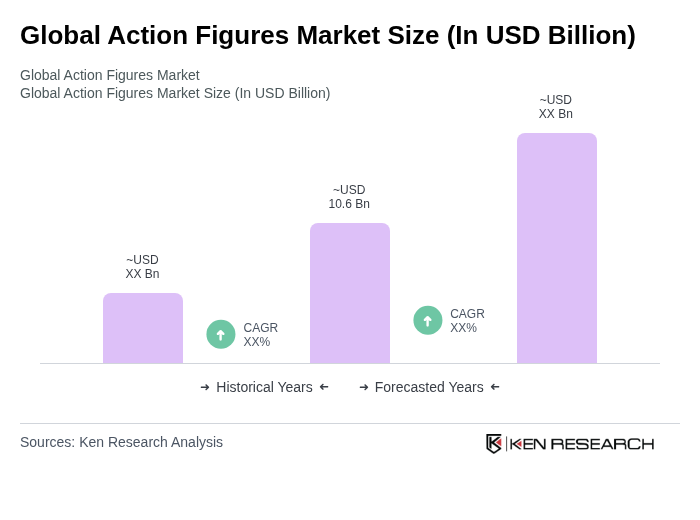
- The Global Action Figures Market is valued at USD 10.6 billion, based on a five-year historical analysis. This growth is primarily driven by the increasing popularity of superhero franchises, animated series, and video games, which have significantly boosted consumer demand for action figures, alongside nostalgia-driven purchases, collectibility for adult collectors, licensing partnerships, and enhanced design innovations. Additionally, the rise of online retail platforms has made these products more accessible to a broader audience, further contributing to market expansion.
- North America led by the United States and East Asia led by Japan dominate the Global Action Figures Market due to their strong entertainment industries, including blockbuster movies and anime culture. The U.S. is home to major toy manufacturers and a vast consumer base, while Japan's rich history of anime and manga has cultivated a dedicated fan base for collectible figures. These countries' cultural influence and innovation in character design play a crucial role in their market leadership.
- The Consumer Product Safety Improvement Act of 2008, issued by the U.S. Consumer Product Safety Commission, regulates toys including action figures by setting limits on lead and phthalates content, requiring third-party testing for certification, and mandating tracking labels for products intended for children 12 years and younger. Manufacturers must ensure compliance through certification based on testing that verifies adherence to safety standards for mechanical, physical, chemical, and flammability hazards, thereby enhancing consumer confidence in the market.
Global Action Figures Market Segmentation
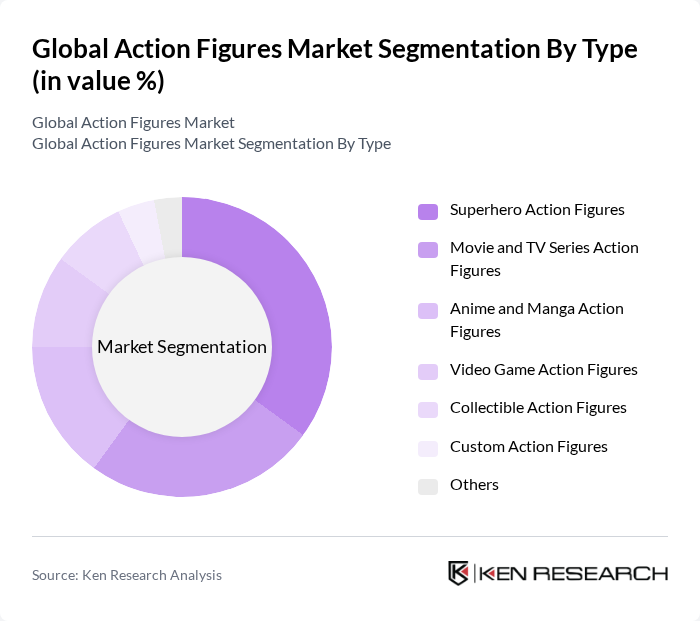
By Type:The action figures market can be segmented into various types, including Superhero Action Figures, Movie and TV Series Action Figures, Anime and Manga Action Figures, Video Game Action Figures, Collectible Action Figures, Custom Action Figures, and Others. Among these, Superhero Action Figures dominate the market due to the immense popularity of superhero franchises in movies and comics, driving consumer interest and sales. The trend of collecting these figures has also gained traction, particularly among adults, contributing to their market leadership.
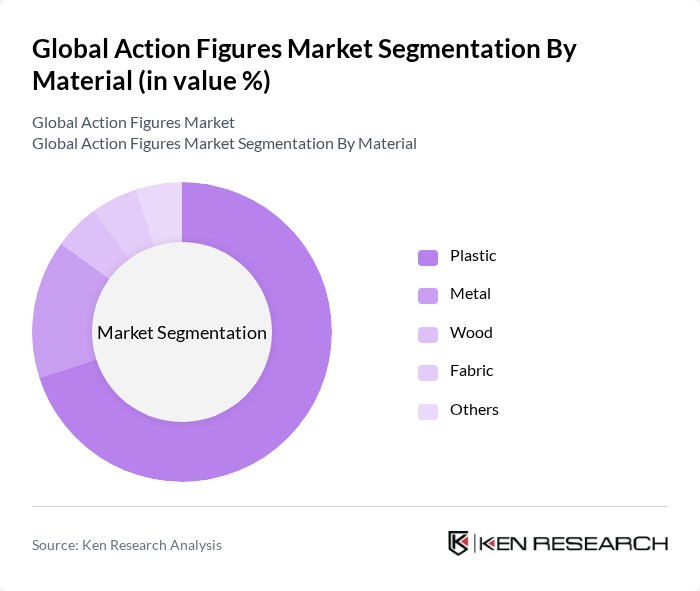
By Material:The action figures market is also segmented by material, including Plastic, Metal, Wood, Fabric, and Others. Plastic is the most widely used material due to its versatility, cost-effectiveness, and ability to be molded into intricate designs. The durability and lightweight nature of plastic figures make them particularly appealing to consumers, especially in the children’s segment, where playability is a key factor.
Global Action Figures Market Competitive Landscape
The Global Action Figures Market is characterized by a dynamic mix of regional and international players. Leading participants such as Hasbro, Inc., Mattel, Inc., Bandai Namco Holdings Inc., Funko, Inc., NECA (National Entertainment Collectibles Association), McFarlane Toys, LEGO Group, Spin Master Corp., Playmates Toys, Inc., Diamond Select Toys, Jazwares, LLC, Kotobukiya Co., Ltd., Sideshow Collectibles, McFarlane Toys, Tamashii Nations contribute to innovation, geographic expansion, and service delivery in this space.
Global Action Figures Market Industry Analysis
Growth Drivers
- Increasing Popularity of Collectibles:The collectibles market has seen significant growth, with the global collectibles market valued at approximately $400 billion in future. This trend is driven by millennials and Gen Z consumers, who are increasingly investing in action figures as a form of nostalgia and investment. The rise of online platforms has facilitated this trend, allowing collectors to easily buy, sell, and trade figures, thus expanding the market's reach and engagement.
- Rise of Franchise-Based Action Figures:Franchise-based action figures, particularly those linked to popular movies and TV shows, have surged in demand. In future, the global box office revenue reached $50 billion, with franchises like Marvel and Star Wars leading the way. This success translates into increased sales of related action figures, as fans seek to own tangible representations of their favorite characters, driving market growth significantly in the collectible segment.
- Expansion of E-commerce Platforms:E-commerce sales in the toy industry reached $25 billion in future, reflecting a 20% increase from the previous year. The convenience of online shopping has made it easier for consumers to access a wider variety of action figures, including limited editions and exclusive releases. This shift towards digital retail is expected to continue, further enhancing market accessibility and driving sales growth in the action figures sector.
Market Challenges
- Intense Competition:The action figures market is characterized by intense competition, with numerous players vying for market share. In future, the top five companies accounted for over 65% of the market, leading to price wars and reduced profit margins. Smaller companies struggle to compete, often resulting in market consolidation, which can stifle innovation and limit consumer choices in the long run.
- Fluctuating Raw Material Prices:The action figures industry is heavily reliant on plastic and other raw materials, which have seen price volatility due to global supply chain disruptions. In future, the price of polyethylene, a key material, increased by 25% compared to the previous year. This fluctuation can lead to increased production costs, forcing manufacturers to either absorb the costs or pass them on to consumers, potentially impacting sales.
Global Action Figures Market Future Outlook
The future of the action figures market appears promising, driven by evolving consumer preferences and technological advancements. As the demand for eco-friendly products rises, manufacturers are likely to innovate with sustainable materials. Additionally, the integration of augmented reality features into action figures could enhance consumer engagement, creating immersive experiences. These trends suggest a dynamic market landscape, where adaptability and innovation will be crucial for success in the coming years.
Market Opportunities
- Expansion into Emerging Markets:Emerging markets, particularly in Asia and Latin America, present significant growth opportunities. With a combined population of over 4 billion, these regions are witnessing a rise in disposable income, leading to increased spending on toys and collectibles. Companies that strategically enter these markets can tap into a growing consumer base eager for action figures.
- Customization and Personalization Trends:The trend towards customization in consumer products is gaining traction, with 70% of consumers expressing interest in personalized items. Action figure manufacturers can leverage this trend by offering customizable options, allowing consumers to create unique figures. This approach not only enhances customer satisfaction but also fosters brand loyalty, driving repeat purchases and long-term growth.
Scope of the Report
| Segment | Sub-Segments |
|---|---|
| By Type | Superhero Action Figures Movie and TV Series Action Figures Anime and Manga Action Figures Video Game Action Figures Collectible Action Figures Custom Action Figures Others |
| By Material | Plastic Metal Wood Fabric Others |
| By Age Group | Children (0-12 years) Teenagers (13-19 years) Adults (20+ years) Others |
| By Distribution Channel | Online Retail Specialty Stores Department Stores Toy Stores Others |
| By Region | North America Europe Asia-Pacific Latin America Middle East & Africa |
| By Price Range | Low-End (Under $10) Mid-Range ($10-$50) High-End (Above $50) Others |
| By Brand | Established Brands Emerging Brands Licensed Brands Others |
Key Target Audience
Investors and Venture Capitalist Firms
Government and Regulatory Bodies (e.g., U.S. Consumer Product Safety Commission, European Commission)
Manufacturers and Producers
Distributors and Retailers
Licensing Agencies
Market Analysts and Industry Experts
Trade Associations
Financial Institutions
Players Mentioned in the Report:
Hasbro, Inc.
Mattel, Inc.
Bandai Namco Holdings Inc.
Funko, Inc.
NECA (National Entertainment Collectibles Association)
McFarlane Toys
LEGO Group
Spin Master Corp.
Playmates Toys, Inc.
Diamond Select Toys
Jazwares, LLC
Kotobukiya Co., Ltd.
Sideshow Collectibles
Tamashii Nations
Table of Contents
Market Assessment Phase
1. Executive Summary and Approach
2. Global Action Figures Market Overview
2.1 Key Insights and Strategic Recommendations
2.2 Global Action Figures Market Overview
2.3 Definition and Scope
2.4 Evolution of Market Ecosystem
2.5 Timeline of Key Regulatory Milestones
2.6 Value Chain & Stakeholder Mapping
2.7 Business Cycle Analysis
2.8 Policy & Incentive Landscape
3. Global Action Figures Market Analysis
3.1 Growth Drivers
3.1.1 Increasing Popularity of Collectibles
3.1.2 Rise of Franchise-Based Action Figures
3.1.3 Expansion of E-commerce Platforms
3.1.4 Growing Interest in Nostalgia Products
3.2 Market Challenges
3.2.1 Intense Competition
3.2.2 Fluctuating Raw Material Prices
3.2.3 Changing Consumer Preferences
3.2.4 Counterfeit Products
3.3 Market Opportunities
3.3.1 Expansion into Emerging Markets
3.3.2 Collaborations with Entertainment Franchises
3.3.3 Customization and Personalization Trends
3.3.4 Integration of Technology in Action Figures
3.4 Market Trends
3.4.1 Rise of Eco-Friendly Materials
3.4.2 Increased Focus on Limited Editions
3.4.3 Growth of Subscription Box Services
3.4.4 Social Media Influencer Marketing
3.5 Government Regulation
3.5.1 Safety Standards for Toys
3.5.2 Import Tariffs on Action Figures
3.5.3 Environmental Regulations on Packaging
3.5.4 Intellectual Property Laws
4. SWOT Analysis
5. Stakeholder Analysis
6. Porter's Five Forces Analysis
7. Global Action Figures Market Market Size, 2019-2024
7.1 By Value
7.2 By Volume
7.3 By Average Selling Price
8. Global Action Figures Market Segmentation
8.1 By Type
8.1.1 Superhero Action Figures
8.1.2 Movie and TV Series Action Figures
8.1.3 Anime and Manga Action Figures
8.1.4 Video Game Action Figures
8.1.5 Collectible Action Figures
8.1.6 Custom Action Figures
8.1.7 Others
8.2 By Material
8.2.1 Plastic
8.2.2 Metal
8.2.3 Wood
8.2.4 Fabric
8.2.5 Others
8.3 By Age Group
8.3.1 Children (0-12 years)
8.3.2 Teenagers (13-19 years)
8.3.3 Adults (20+ years)
8.3.4 Others
8.4 By Distribution Channel
8.4.1 Online Retail
8.4.2 Specialty Stores
8.4.3 Department Stores
8.4.4 Toy Stores
8.4.5 Others
8.5 By Region
8.5.1 North America
8.5.2 Europe
8.5.3 Asia-Pacific
8.5.4 Latin America
8.5.5 Middle East & Africa
8.6 By Price Range
8.6.1 Low-End (Under $10)
8.6.2 Mid-Range ($10-$50)
8.6.3 High-End (Above $50)
8.6.4 Others
8.7 By Brand
8.7.1 Established Brands
8.7.2 Emerging Brands
8.7.3 Licensed Brands
8.7.4 Others
9. Global Action Figures Market Competitive Analysis
9.1 Market Share of Key Players
9.2 Cross Comparison of Key Players
9.2.1 Company Name
9.2.2 Group Size (Large, Medium, or Small as per industry convention)
9.2.3 Revenue Growth Rate
9.2.4 Market Penetration Rate
9.2.5 Customer Retention Rate
9.2.6 Product Diversification Index
9.2.7 Pricing Strategy
9.2.8 Brand Equity Score
9.2.9 Distribution Network Efficiency
9.2.10 Customer Satisfaction Index
9.3 SWOT Analysis of Top Players
9.4 Pricing Analysis
9.5 Detailed Profile of Major Companies
9.5.1 Hasbro, Inc.
9.5.2 Mattel, Inc.
9.5.3 Bandai Namco Holdings Inc.
9.5.4 Funko, Inc.
9.5.5 NECA (National Entertainment Collectibles Association)
9.5.6 McFarlane Toys
9.5.7 LEGO Group
9.5.8 Spin Master Corp.
9.5.9 Playmates Toys, Inc.
9.5.10 Diamond Select Toys
9.5.11 Jazwares, LLC
9.5.12 Kotobukiya Co., Ltd.
9.5.13 Sideshow Collectibles
9.5.14 McFarlane Toys
9.5.15 Tamashii Nations
10. Global Action Figures Market End-User Analysis
10.1 Procurement Behavior of Key Ministries
10.1.1 Government Procurement Policies
10.1.2 Budget Allocations for Toys
10.1.3 Supplier Selection Criteria
10.1.4 Contracting Processes
10.2 Corporate Spend on Infrastructure & Energy
10.2.1 Investment in Toy Manufacturing
10.2.2 R&D Expenditure
10.2.3 Marketing Budgets
10.2.4 Distribution Costs
10.3 Pain Point Analysis by End-User Category
10.3.1 Quality Concerns
10.3.2 Availability of Products
10.3.3 Pricing Issues
10.3.4 Customer Service Challenges
10.4 User Readiness for Adoption
10.4.1 Awareness of New Products
10.4.2 Willingness to Pay
10.4.3 Feedback Mechanisms
10.4.4 Adoption Barriers
10.5 Post-Deployment ROI and Use Case Expansion
10.5.1 Performance Metrics
10.5.2 Customer Feedback Analysis
10.5.3 Market Expansion Opportunities
10.5.4 Long-term Engagement Strategies
11. Global Action Figures Market Future Size, 2025-2030
11.1 By Value
11.2 By Volume
11.3 By Average Selling Price
Go-To-Market Strategy Phase
1. Whitespace Analysis + Business Model Canvas
1.1 Market Gaps Identification
1.2 Value Proposition Development
1.3 Revenue Streams Analysis
1.4 Cost Structure Evaluation
1.5 Key Partnerships Exploration
1.6 Customer Segmentation
1.7 Channels of Distribution
2. Marketing and Positioning Recommendations
2.1 Branding Strategies
2.2 Product USPs
3. Distribution Plan
3.1 Urban Retail vs Rural NGO Tie-ups
4. Channel & Pricing Gaps
4.1 Underserved Routes
4.2 Pricing Bands
5. Unmet Demand & Latent Needs
5.1 Category Gaps
5.2 Consumer Segments
6. Customer Relationship
6.1 Loyalty Programs
6.2 After-sales Service
7. Value Proposition
7.1 Sustainability
7.2 Integrated Supply Chains
8. Key Activities
8.1 Regulatory Compliance
8.2 Branding
8.3 Distribution Setup
9. Entry Strategy Evaluation
9.1 Domestic Market Entry Strategy
9.1.1 Product Mix
9.1.2 Pricing Band
9.1.3 Packaging
9.2 Export Entry Strategy
9.2.1 Target Countries
9.2.2 Compliance Roadmap
10. Entry Mode Assessment
10.1 JV
10.2 Greenfield
10.3 M&A
10.4 Distributor Model
11. Capital and Timeline Estimation
11.1 Capital Requirements
11.2 Timelines
12. Control vs Risk Trade-Off
12.1 Ownership vs Partnerships
13. Profitability Outlook
13.1 Breakeven Analysis
13.2 Long-term Sustainability
14. Potential Partner List
14.1 Distributors
14.2 JVs
14.3 Acquisition Targets
15. Execution Roadmap
15.1 Phased Plan for Market Entry
15.1.1 Market Setup
15.1.2 Market Entry
15.1.3 Growth Acceleration
15.1.4 Scale & Stabilize
15.2 Key Activities and Milestones
15.2.1 Milestone Planning
15.2.2 Activity Tracking
Research Methodology
Phase 1: Approach1
Desk Research
- Market reports from industry associations and trade publications
- Analysis of sales data from major action figure manufacturers
- Consumer trend reports focusing on toy and collectibles markets
Primary Research
- Interviews with product managers at leading toy companies
- Surveys targeting collectors and hobbyists in online forums
- Focus groups with parents and children to understand purchasing behavior
Validation & Triangulation
- Cross-validation of findings with sales data from retail partners
- Triangulation of consumer insights with expert opinions from industry veterans
- Sanity checks through feedback from market analysts and consultants
Phase 2: Market Size Estimation1
Top-down Assessment
- Estimation of global market size based on historical sales data
- Segmentation by product type, including licensed and non-licensed figures
- Incorporation of regional growth trends and demographic shifts
Bottom-up Modeling
- Volume estimates based on unit sales from major retailers
- Cost analysis of production and distribution for various action figure lines
- Calculation of market share for emerging brands and niche players
Forecasting & Scenario Analysis
- Multi-variable forecasting using historical growth rates and market drivers
- Scenario analysis based on economic conditions and consumer spending patterns
- Development of baseline, optimistic, and pessimistic market projections through 2030
Phase 3: CATI Sample Composition1
| Scope Item/Segment | Sample Size | Target Respondent Profiles |
|---|---|---|
| Retail Action Figure Sales | 120 | Store Managers, Sales Associates |
| Collector Insights | 100 | Action Figure Collectors, Hobby Shop Owners |
| Market Trends in Licensing | 80 | Licensing Managers, Brand Strategists |
| Consumer Preferences | 100 | Parents, Children aged 6-12 |
| Online Retail Dynamics | 90 | E-commerce Managers, Digital Marketing Specialists |
Frequently Asked Questions
What is the current value of the Global Action Figures Market?
The Global Action Figures Market is valued at approximately USD 10.6 billion, driven by the popularity of superhero franchises, animated series, and video games, alongside nostalgia and collectibility among adult consumers.
Which regions dominate the Global Action Figures Market?
What are the main types of action figures available in the market?
What materials are commonly used to manufacture action figures?
Other Regional/Country Reports
Indonesia Action Figures Market
Malaysia Action Figures Market
APAC Action Figures Market
SEA Action Figures Market
Other Adjacent Reports
Belgium Collectibles Market
Malaysia Licensed Merchandise Market
South Korea Video Game Merchandise Market
Kuwait Anime Merchandise Market
Qatar Toy Manufacturing Market
Germany Dolls Market
Oman Pop Culture Merchandise Market
Europe Comic Book Market Size, Share & Forecast, By Format, Genre & Distribution Channel, 2026-2032UAE E-commerce Toy Market
Malaysia Entertainment Licensing Market
Why Buy From Us?

What makes us stand out is that our consultants follow Robust, Refine and Result (RRR) methodology. Robust for clear definitions, approaches and sanity checking, Refine for differentiating respondents' facts and opinions, and Result for presenting data with story.

We have set a benchmark in the industry by offering our clients with syndicated and customized market research reports featuring coverage of entire market as well as meticulous research and analyst insights.

While we don't replace traditional research, we flip the method upside down. Our dual approach of Top Bottom & Bottom Top ensures quality deliverable by not just verifying company fundamentals but also looking at the sector and macroeconomic factors.

With one step in the future, our research team constantly tries to show you the bigger picture. We help with some of the tough questions you may encounter along the way: How is the industry positioned? Best marketing channel? KPI's of competitors? By aligning every element, we help maximize success.

Our report gives you instant access to the answers and sources that other companies might choose to hide. We elaborate each steps of research methodology we have used and showcase you the sample size to earn your trust.

If you need any support, we are here! We pride ourselves on universe strength, data quality, and quick, friendly, and professional service.