About the Report
Base Year 2024Global Antibiotic Resistance Market Overview
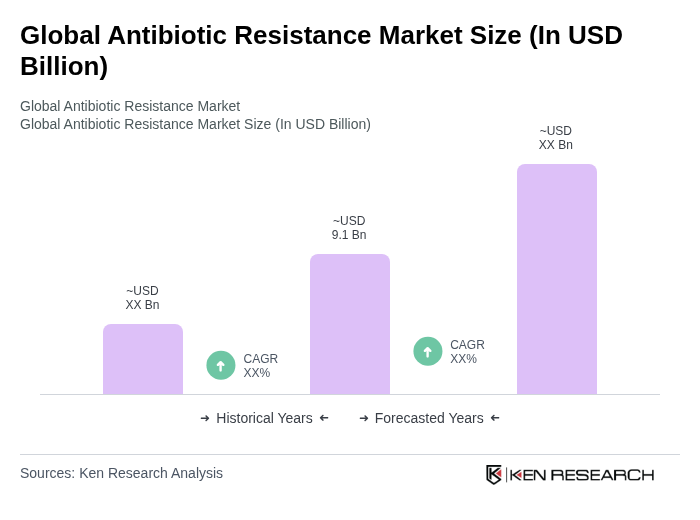
- The Global Antibiotic Resistance Market is valued at USD 9.1 billion, based on a five-year historical analysis. This growth is primarily driven by the increasing prevalence of antibiotic-resistant infections, rising healthcare expenditure, and the urgent need for new antibiotic development. The market is also influenced by the growing awareness of antibiotic stewardship programs, the adoption of rapid diagnostic technologies, and increased funding for antimicrobial research, all aimed at reducing resistance rates.
- Key players in this market include the United States, Germany, and the United Kingdom. The dominance of these countries is attributed to their advanced healthcare infrastructure, significant investments in research and development, and stringent regulatory frameworks that promote innovation in antibiotic therapies. Additionally, the high burden of antibiotic-resistant infections in these regions further drives market growth. North America holds the largest market share, while Asia-Pacific is the fastest-growing region due to rising incidences of resistant infections and expanding healthcare access.
- In 2023, the European Union implemented the“One Health Action Plan against Antimicrobial Resistance”(European Commission, 2023), which aims to tackle antibiotic resistance through a comprehensive approach involving human health, animal health, and the environment. This initiative includes measures to promote the prudent use of antibiotics, enhance surveillance systems, and strengthen infection prevention and control, thereby supporting the overall market for antibiotic resistance solutions.
Global Antibiotic Resistance Market Segmentation
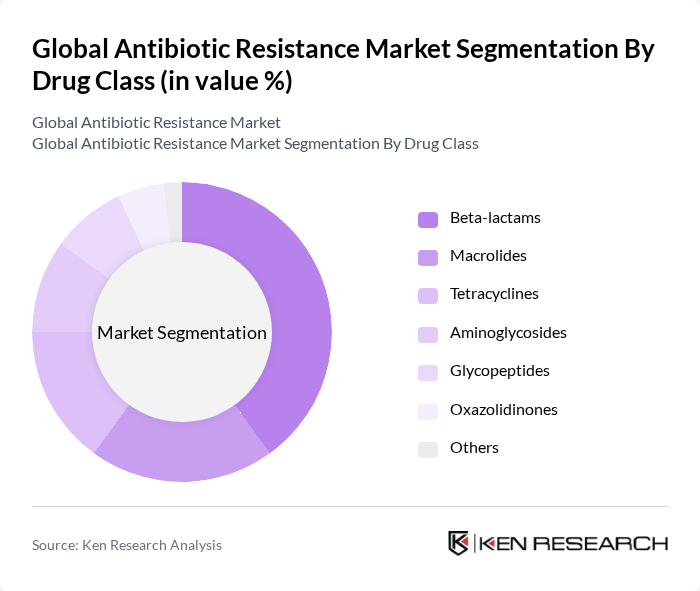
By Drug Class:This segmentation includes various classes of antibiotics that are used to combat resistant bacterial infections. The major subsegments are Beta-lactams, Macrolides, Tetracyclines, Aminoglycosides, Glycopeptides, Oxazolidinones, and Others. Among these,Beta-lactams remain the most widely useddue to their effectiveness against a broad range of bacteria and their established history in clinical use. Recent market trends show increasing demand for oxazolidinones and glycopeptides, driven by the rise of multidrug-resistant pathogens and the need for novel therapies.
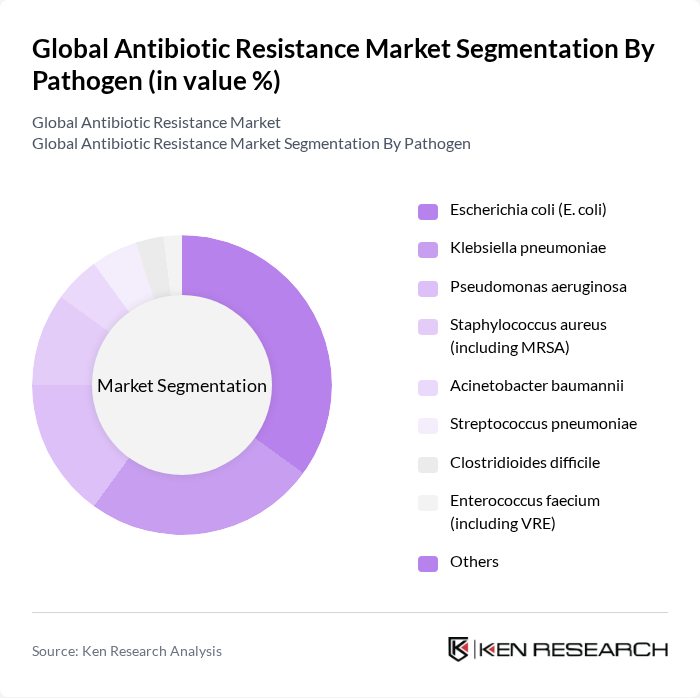
By Pathogen:This segmentation focuses on the specific pathogens that are responsible for antibiotic-resistant infections. The key subsegments include Escherichia coli (E. coli), Klebsiella pneumoniae, Pseudomonas aeruginosa, Staphylococcus aureus (including MRSA), Acinetobacter baumannii, Streptococcus pneumoniae, Clostridioides difficile, Enterococcus faecium (including VRE), and Others.E. coli is the leading pathogendue to its prevalence in urinary tract infections and its increasing resistance to multiple antibiotics. Rising rates of multidrug-resistant Klebsiella pneumoniae and Acinetobacter baumannii are also driving market demand for novel therapeutics.
Global Antibiotic Resistance Market Competitive Landscape
The Global Antibiotic Resistance Market is characterized by a dynamic mix of regional and international players. Leading participants such as Pfizer Inc., Merck & Co., Inc., Johnson & Johnson, Roche Holding AG, GlaxoSmithKline plc, Novartis AG, AstraZeneca plc, Sanofi S.A., Eli Lilly and Company, Bayer AG, AbbVie Inc., Shionogi & Co., Ltd., Basilea Pharmaceutica Ltd., Paratek Pharmaceuticals, Inc., Melinta Therapeutics, Inc. contribute to innovation, geographic expansion, and service delivery in this space.
Global Antibiotic Resistance Market Industry Analysis
Growth Drivers
- Increasing Prevalence of Antibiotic-Resistant Infections:The World Health Organization reported that antibiotic-resistant infections cause approximately 700,000 deaths annually, with projections suggesting this could rise to 10 million in future if no action is taken. The global burden of these infections is expected to increase, necessitating urgent development of new antibiotics. This alarming trend drives demand for innovative solutions, prompting pharmaceutical companies to invest heavily in antibiotic research and development to combat resistance.
- Rising Awareness and Initiatives for Antibiotic Stewardship:Governments and health organizations are increasingly implementing antibiotic stewardship programs to combat resistance. For instance, the U.S. Centers for Disease Control and Prevention allocated approximately USD 160 million in future to enhance these initiatives. Such programs aim to optimize antibiotic use, reduce unnecessary prescriptions, and educate healthcare professionals and the public, thereby fostering a more responsible approach to antibiotic consumption and driving market growth.
- Advancements in Diagnostic Technologies:The global market for rapid diagnostic tests is projected to reach USD 5.5 billion in future, driven by technological advancements that enable quicker identification of antibiotic-resistant pathogens. These innovations facilitate timely treatment decisions, reducing the duration of hospital stays and improving patient outcomes. As healthcare providers increasingly adopt these technologies, the demand for effective antibiotics to treat identified infections will rise, further propelling market growth.
Market Challenges
- High Costs of Antibiotic Development:The average cost to develop a new antibiotic is estimated at approximately USD 1.5 billion, with lengthy development timelines often exceeding a decade. This financial burden discourages pharmaceutical companies from investing in antibiotic research, especially given the limited market returns due to pricing pressures and generic competition. Consequently, the high costs present a significant barrier to the introduction of new antibiotics, hindering market progress.
- Regulatory Hurdles and Lengthy Approval Processes:The regulatory landscape for antibiotic development is complex, with stringent requirements for clinical trials and safety evaluations. The average time for regulatory approval is estimated to remain around 10 years, significantly delaying market entry for new antibiotics. These lengthy processes can deter investment and innovation, posing a challenge to addressing the urgent need for effective treatments against resistant infections.
Global Antibiotic Resistance Market Future Outlook
The future of the antibiotic resistance market is poised for transformation, driven by a combination of technological advancements and increased collaboration among stakeholders. As personalized medicine gains traction, tailored antibiotic therapies are expected to emerge, enhancing treatment efficacy. Additionally, the rise of telemedicine and remote diagnostics will facilitate quicker identification of infections, further supporting the development of targeted therapies. These trends indicate a proactive approach to combating antibiotic resistance, fostering innovation and improving patient outcomes.
Market Opportunities
- Development of Novel Antibiotic Therapies:There is a significant opportunity for pharmaceutical companies to invest in the development of novel antibiotics, particularly those targeting multi-drug resistant bacteria. With an estimated 2 million infections caused by resistant bacteria annually in the U.S., the demand for innovative therapies is critical. This presents a lucrative market for companies willing to navigate the challenges of antibiotic development.
- Expansion of Rapid Diagnostic Testing:The rapid diagnostic testing market is expected to grow significantly, with a projected value of USD 5.5 billion in future. Companies that focus on developing and implementing these technologies can capitalize on the increasing need for quick and accurate identification of infections. This will not only enhance treatment outcomes but also drive demand for effective antibiotics, creating a symbiotic growth opportunity.
Scope of the Report
| Segment | Sub-Segments |
|---|---|
| By Drug Class | Beta-lactams Macrolides Tetracyclines Aminoglycosides Glycopeptides Oxazolidinones Others |
| By Pathogen | Escherichia coli (E. coli) Klebsiella pneumoniae Pseudomonas aeruginosa Staphylococcus aureus (including MRSA) Acinetobacter baumannii Streptococcus pneumoniae Clostridioides difficile Enterococcus faecium (including VRE) Others |
| By Disease/Indication | Complicated Urinary Tract Infections (CUTI) Clostridioides difficile Infection (CDI) Acute Bacterial Skin and Skin Structure Infections (ABSSSI) Hospital-Acquired and Ventilator-Associated Bacterial Pneumonia (HABP/VABP) Community-Acquired Bacterial Pneumonia (CABP) Complicated Intra-Abdominal Infection (cIAI) Bloodstream Infection (BSI) Others |
| By Mechanism of Action | Cell Wall Synthesis Inhibitors Protein Synthesis Inhibitors RNA Synthesis Inhibitors DNA Synthesis Inhibitors Others |
| By End-User | Hospitals Outpatient Clinics Long-term Care Facilities Home Healthcare Others |
| By Distribution Channel | Hospital Pharmacies Retail Pharmacies Online Pharmacies Others |
| By Region | North America Europe Asia-Pacific Latin America Middle East & Africa |
Key Target Audience
Investors and Venture Capitalist Firms
Government and Regulatory Bodies (e.g., World Health Organization, U.S. Food and Drug Administration)
Pharmaceutical Manufacturers
Biotechnology Companies
Healthcare Providers and Hospitals
Public Health Organizations
Non-Governmental Organizations (NGOs) focused on health
Insurance Companies and Payers
Players Mentioned in the Report:
Pfizer Inc.
Merck & Co., Inc.
Johnson & Johnson
Roche Holding AG
GlaxoSmithKline plc
Novartis AG
AstraZeneca plc
Sanofi S.A.
Eli Lilly and Company
Bayer AG
AbbVie Inc.
Shionogi & Co., Ltd.
Basilea Pharmaceutica Ltd.
Paratek Pharmaceuticals, Inc.
Melinta Therapeutics, Inc.
Table of Contents
Market Assessment Phase
1. Executive Summary and Approach
2. Global Antibiotic Resistance Market Overview
2.1 Key Insights and Strategic Recommendations
2.2 Global Antibiotic Resistance Market Overview
2.3 Definition and Scope
2.4 Evolution of Market Ecosystem
2.5 Timeline of Key Regulatory Milestones
2.6 Value Chain & Stakeholder Mapping
2.7 Business Cycle Analysis
2.8 Policy & Incentive Landscape
3. Global Antibiotic Resistance Market Analysis
3.1 Growth Drivers
3.1.1 Increasing prevalence of antibiotic-resistant infections
3.1.2 Rising awareness and initiatives for antibiotic stewardship
3.1.3 Advancements in diagnostic technologies
3.1.4 Growing investment in research and development
3.2 Market Challenges
3.2.1 High costs of antibiotic development
3.2.2 Regulatory hurdles and lengthy approval processes
3.2.3 Limited pipeline of new antibiotics
3.2.4 Public perception and misinformation about antibiotics
3.3 Market Opportunities
3.3.1 Development of novel antibiotic therapies
3.3.2 Expansion of rapid diagnostic testing
3.3.3 Collaborations between public and private sectors
3.3.4 Increased funding for antibiotic resistance research
3.4 Market Trends
3.4.1 Shift towards personalized medicine
3.4.2 Growth of telemedicine and remote diagnostics
3.4.3 Rising focus on alternative therapies (e.g., phage therapy)
3.4.4 Increased regulatory support for antibiotic development
3.5 Government Regulation
3.5.1 Implementation of antibiotic stewardship programs
3.5.2 Regulations on antibiotic use in agriculture
3.5.3 Guidelines for clinical trials of new antibiotics
3.5.4 Policies promoting research and development incentives
4. SWOT Analysis
5. Stakeholder Analysis
6. Porter's Five Forces Analysis
7. Global Antibiotic Resistance Market Market Size, 2019-2024
7.1 By Value
7.2 By Volume
7.3 By Average Selling Price
8. Global Antibiotic Resistance Market Segmentation
8.1 By Drug Class
8.1.1 Beta-lactams
8.1.2 Macrolides
8.1.3 Tetracyclines
8.1.4 Aminoglycosides
8.1.5 Glycopeptides
8.1.6 Oxazolidinones
8.1.7 Others
8.2 By Pathogen
8.2.1 Escherichia coli (E. coli)
8.2.2 Klebsiella pneumoniae
8.2.3 Pseudomonas aeruginosa
8.2.4 Staphylococcus aureus (including MRSA)
8.2.5 Acinetobacter baumannii
8.2.6 Streptococcus pneumoniae
8.2.7 Clostridioides difficile
8.2.8 Enterococcus faecium (including VRE)
8.2.9 Others
8.3 By Disease/Indication
8.3.1 Complicated Urinary Tract Infections (CUTI)
8.3.2 Clostridioides difficile Infection (CDI)
8.3.3 Acute Bacterial Skin and Skin Structure Infections (ABSSSI)
8.3.4 Hospital-Acquired and Ventilator-Associated Bacterial Pneumonia (HABP/VABP)
8.3.5 Community-Acquired Bacterial Pneumonia (CABP)
8.3.6 Complicated Intra-Abdominal Infection (cIAI)
8.3.7 Bloodstream Infection (BSI)
8.3.8 Others
8.4 By Mechanism of Action
8.4.1 Cell Wall Synthesis Inhibitors
8.4.2 Protein Synthesis Inhibitors
8.4.3 RNA Synthesis Inhibitors
8.4.4 DNA Synthesis Inhibitors
8.4.5 Others
8.5 By End-User
8.5.1 Hospitals
8.5.2 Outpatient Clinics
8.5.3 Long-term Care Facilities
8.5.4 Home Healthcare
8.5.5 Others
8.6 By Distribution Channel
8.6.1 Hospital Pharmacies
8.6.2 Retail Pharmacies
8.6.3 Online Pharmacies
8.6.4 Others
8.7 By Region
8.7.1 North America
8.7.2 Europe
8.7.3 Asia-Pacific
8.7.4 Latin America
8.7.5 Middle East & Africa
9. Global Antibiotic Resistance Market Competitive Analysis
9.1 Market Share of Key Players
9.2 Cross Comparison of Key Players
9.2.1 Company Name
9.2.2 Group Size (Large, Medium, or Small as per industry convention)
9.2.3 Revenue from Antibiotic Resistance Portfolio
9.2.4 R&D Expenditure on Antimicrobial Resistance
9.2.5 Number of Approved Antibiotic Resistance Products
9.2.6 Pipeline Candidates (Preclinical & Clinical)
9.2.7 Geographic Market Presence
9.2.8 Strategic Collaborations & Partnerships
9.2.9 Regulatory Approval Success Rate
9.2.10 Time-to-Market for New Antibiotics
9.2.11 Market Penetration Rate
9.2.12 Pricing & Reimbursement Status
9.2.13 Distribution Network Strength
9.2.14 Intellectual Property Portfolio (Patents)
9.3 SWOT Analysis of Top Players
9.4 Pricing Analysis
9.5 Detailed Profile of Major Companies
9.5.1 Pfizer Inc.
9.5.2 Merck & Co., Inc.
9.5.3 Johnson & Johnson
9.5.4 Roche Holding AG
9.5.5 GlaxoSmithKline plc
9.5.6 Novartis AG
9.5.7 AstraZeneca plc
9.5.8 Sanofi S.A.
9.5.9 Eli Lilly and Company
9.5.10 Bayer AG
9.5.11 AbbVie Inc.
9.5.12 Shionogi & Co., Ltd.
9.5.13 Basilea Pharmaceutica Ltd.
9.5.14 Paratek Pharmaceuticals, Inc.
9.5.15 Melinta Therapeutics, Inc.
10. Global Antibiotic Resistance Market End-User Analysis
10.1 Procurement Behavior of Key Ministries
10.1.1 Government Procurement Policies
10.1.2 Budget Allocations for Antibiotic Programs
10.1.3 Collaboration with Healthcare Providers
10.1.4 Monitoring and Evaluation Mechanisms
10.2 Corporate Spend on Infrastructure & Energy
10.2.1 Investment in Healthcare Infrastructure
10.2.2 Funding for Antibiotic Research
10.2.3 Expenditure on Training and Development
10.2.4 Others
10.3 Pain Point Analysis by End-User Category
10.3.1 Challenges in Accessing Antibiotics
10.3.2 Issues with Antibiotic Resistance Management
10.3.3 Cost-related Barriers
10.3.4 Others
10.4 User Readiness for Adoption
10.4.1 Awareness of Antibiotic Resistance
10.4.2 Training Needs for Healthcare Professionals
10.4.3 Readiness for New Treatment Protocols
10.4.4 Others
10.5 Post-Deployment ROI and Use Case Expansion
10.5.1 Evaluation of Treatment Outcomes
10.5.2 Cost Savings from Effective Antibiotic Use
10.5.3 Expansion into New Therapeutic Areas
10.5.4 Others
11. Global Antibiotic Resistance Market Future Size, 2025-2030
11.1 By Value
11.2 By Volume
11.3 By Average Selling Price
Go-To-Market Strategy Phase
1. Whitespace Analysis + Business Model Canvas
1.1 Market Gaps Identification
1.2 Business Model Development
2. Marketing and Positioning Recommendations
2.1 Branding Strategies
2.2 Product USPs
3. Distribution Plan
3.1 Urban Retail Strategies
3.2 Rural NGO Tie-ups
4. Channel & Pricing Gaps
4.1 Underserved Routes
4.2 Pricing Bands
5. Unmet Demand & Latent Needs
5.1 Category Gaps
5.2 Consumer Segments
6. Customer Relationship
6.1 Loyalty Programs
6.2 After-sales Service
7. Value Proposition
7.1 Sustainability Initiatives
7.2 Integrated Supply Chains
8. Key Activities
8.1 Regulatory Compliance
8.2 Branding
8.3 Distribution Setup
9. Entry Strategy Evaluation
9.1 Domestic Market Entry Strategy
9.1.1 Product Mix
9.1.2 Pricing Band
9.1.3 Packaging
9.2 Export Entry Strategy
9.2.1 Target Countries
9.2.2 Compliance Roadmap
10. Entry Mode Assessment
10.1 JV
10.2 Greenfield
10.3 M&A
10.4 Distributor Model
11. Capital and Timeline Estimation
11.1 Capital Requirements
11.2 Timelines
12. Control vs Risk Trade-Off
12.1 Ownership vs Partnerships
13. Profitability Outlook
13.1 Breakeven Analysis
13.2 Long-term Sustainability
14. Potential Partner List
14.1 Distributors
14.2 JVs
14.3 Acquisition Targets
15. Execution Roadmap
15.1 Phased Plan for Market Entry
15.1.1 Market Setup
15.1.2 Market Entry
15.1.3 Growth Acceleration
15.1.4 Scale & Stabilize
15.2 Key Activities and Milestones
15.2.1 Milestone Planning
15.2.2 Activity Tracking
Research Methodology
Phase 1: Approach1
Desk Research
- Analysis of global antibiotic resistance reports from WHO and CDC
- Review of market reports and white papers from healthcare research organizations
- Examination of academic journals and publications on antibiotic resistance trends
Primary Research
- Interviews with microbiologists and infectious disease specialists
- Surveys with pharmaceutical executives involved in antibiotic development
- Focus groups with healthcare professionals on antibiotic usage and resistance patterns
Validation & Triangulation
- Cross-validation of data from multiple healthcare databases and publications
- Triangulation of findings from primary interviews and secondary data sources
- Sanity checks through expert panels comprising industry veterans and researchers
Phase 2: Market Size Estimation1
Top-down Assessment
- Estimation of global antibiotic sales and market share by therapeutic class
- Analysis of regional antibiotic consumption patterns and resistance rates
- Incorporation of government healthcare spending and initiatives against antibiotic resistance
Bottom-up Modeling
- Volume estimates based on production data from leading pharmaceutical companies
- Cost analysis of antibiotic development and market entry barriers
- Assessment of market penetration rates for new antibiotic therapies
Forecasting & Scenario Analysis
- Multi-factor regression analysis incorporating resistance trends and healthcare policies
- Scenario modeling based on potential regulatory changes and public health initiatives
- Baseline, optimistic, and pessimistic forecasts through 2035
Phase 3: CATI Sample Composition1
| Scope Item/Segment | Sample Size | Target Respondent Profiles |
|---|---|---|
| Pharmaceutical Development | 100 | R&D Managers, Clinical Trial Coordinators |
| Healthcare Providers | 90 | Infectious Disease Physicians, Pharmacists |
| Regulatory Affairs | 60 | Regulatory Affairs Specialists, Compliance Officers |
| Public Health Organizations | 50 | Public Health Officials, Epidemiologists |
| Antibiotic Stewardship Programs | 40 | Program Coordinators, Healthcare Administrators |
Frequently Asked Questions
What is the current value of the Global Antibiotic Resistance Market?
The Global Antibiotic Resistance Market is valued at approximately USD 9.1 billion, reflecting a significant increase driven by the rising prevalence of antibiotic-resistant infections and the urgent need for new antibiotic development.
What factors are driving the growth of the Global Antibiotic Resistance Market?
Which regions are leading in the Global Antibiotic Resistance Market?
What is the One Health Action Plan against Antimicrobial Resistance?
Other Regional/Country Reports
Indonesia Antibiotic Resistance Market
Malaysia Antibiotic Resistance Market
APAC Antibiotic Resistance Market
SEA Antibiotic Resistance Market
Vietnam Antibiotic Resistance Market
Other Adjacent Reports
Brazil Antimicrobial Stewardship Market
Kuwait Infectious Disease Diagnostics Market
South Korea Pharmaceutical R&D Market
Belgium Biotechnology Therapeutics Market
Belgium Vaccine Development Market
Vietnam Hospital Infection Control Market
Philippines Rapid Diagnostic Testing Market
South Africa Multidrug-Resistant Pathogens Market
South Korea Clinical Microbiology Market
Philippines Personalized Medicine Market
Why Buy From Us?

What makes us stand out is that our consultants follow Robust, Refine and Result (RRR) methodology. Robust for clear definitions, approaches and sanity checking, Refine for differentiating respondents' facts and opinions, and Result for presenting data with story.

We have set a benchmark in the industry by offering our clients with syndicated and customized market research reports featuring coverage of entire market as well as meticulous research and analyst insights.

While we don't replace traditional research, we flip the method upside down. Our dual approach of Top Bottom & Bottom Top ensures quality deliverable by not just verifying company fundamentals but also looking at the sector and macroeconomic factors.

With one step in the future, our research team constantly tries to show you the bigger picture. We help with some of the tough questions you may encounter along the way: How is the industry positioned? Best marketing channel? KPI's of competitors? By aligning every element, we help maximize success.

Our report gives you instant access to the answers and sources that other companies might choose to hide. We elaborate each steps of research methodology we have used and showcase you the sample size to earn your trust.

If you need any support, we are here! We pride ourselves on universe strength, data quality, and quick, friendly, and professional service.