About the Report
Base Year 2024Listen to the audio summary
Global Audio Mixers Console Market Overview
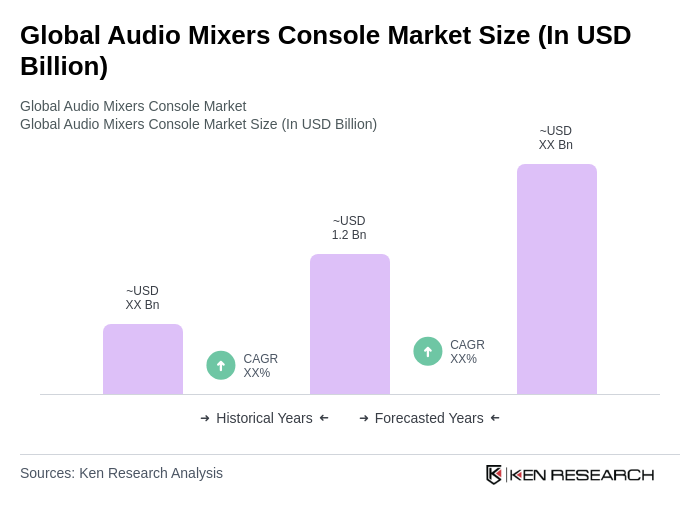
- The Global Audio Mixers Console Market is valued at USD 1.2 billion, based on a five-year historical analysis. This growth is primarily driven by the increasing demand for high-quality audio production in sectors such as music, film, broadcasting, and live events. The rise of digital content creation, live streaming, and the expansion of home studios have further fueled the need for advanced audio mixing solutions, supporting robust market expansion .
- Key players in this market are concentrated in regions such as North America and Europe, where the presence of established music and entertainment industries drives demand. Countries like the United States and Germany dominate due to their advanced technological infrastructure and a high concentration of professional audio production facilities, making them pivotal in shaping market trends .
- In 2023, the Federal Communications Commission (FCC) in the United States issued the "Audio Loudness Control Act, 2023," mandating all broadcasting stations to comply with enhanced audio quality standards. This regulation requires broadcasters to upgrade their audio mixing equipment to meet specified loudness and clarity benchmarks, thereby accelerating the adoption of modern audio mixers in the industry .
Global Audio Mixers Console Market Segmentation
By Type:The market is segmented into various types of audio mixers, including Analog Mixers, Digital Mixers, Hybrid Mixers, Portable Mixers, Studio Mixers, Live Sound Mixers, and Others. Each type serves different user needs and preferences, influencing their market share and growth potential .
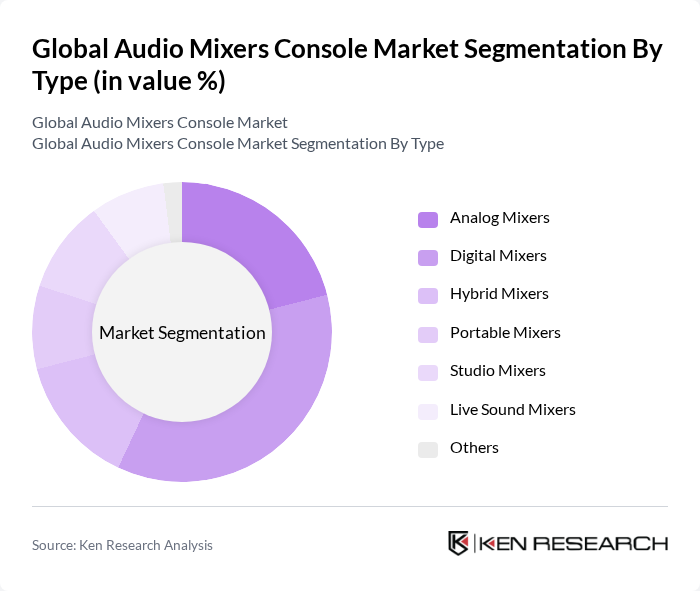
The Digital Mixers segment is currently dominating the market due to their advanced features, ease of use, and integration with digital audio workstations (DAWs). The growing trend of home studios and the rise of content creators have significantly increased the demand for digital mixers, which offer superior sound quality, flexibility, and remote control capabilities via software applications. Additionally, advancements in digital signal processing (DSP) technology and touchscreen interfaces have made digital mixers highly appealing to both professionals and amateurs .
By End-User:The market is segmented based on end-users, including Professional Audio Production, Broadcasting, Live Events, Home Studios, Educational Institutions, and Others. Each segment reflects the diverse applications of audio mixers across various industries .
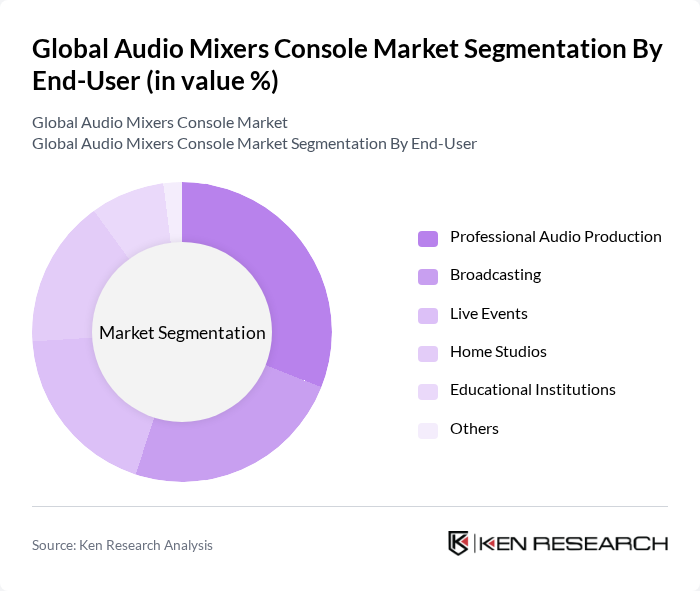
The Professional Audio Production segment leads the market, driven by the increasing demand for high-quality audio in music, film, and streaming content. The rise of OTT platforms, independent music production, and the need for professional sound in content creation have further propelled this segment. Additionally, advancements in technology and the availability of affordable, high-performance audio mixing solutions have made it easier for professionals and independent creators to invest in advanced equipment .
Global Audio Mixers Console Market Competitive Landscape
The Global Audio Mixers Console Market is characterized by a dynamic mix of regional and international players. Leading participants such as Yamaha Corporation, Allen & Heath, Behringer (Music Tribe), Mackie (LOUD Audio, LLC), Soundcraft (Harman International), Avid Technology, Inc., PreSonus Audio Electronics, Roland Corporation, Korg Inc., TASCAM (TEAC Corporation), Zoom Corporation, Midas Consoles (Music Tribe), QSC, LLC, Alesis (inMusic Brands, Inc.), RME Audio (Audio AG), Solid State Logic (SSL), Audient Ltd., Rupert Neve Designs, Trident Audio Developments, API Audio (Automated Processes Inc.), Harrison Consoles, Wunder Audio, Lawo AG, DigiCo, AEQ, Omnitronic, Samson Technologies, Numark (inMusic Brands, Inc.), iZotope, Inc., RØDE Microphones contribute to innovation, geographic expansion, and service delivery in this space.
Global Audio Mixers Console Market Industry Analysis
Growth Drivers
- Increasing Demand for Live Sound Events:The global live sound market is projected to reach $6.5 billion in future, driven by a surge in concerts and events. In future, the number of live music events increased by 15%, reflecting a growing consumer preference for live experiences. This trend is bolstered by the recovery from the pandemic, with venues reporting a 20% increase in attendance, necessitating advanced audio mixing solutions to enhance sound quality and audience engagement.
- Growth in the Music Production Industry:The global music production market is expected to grow to $23 billion in future, fueled by the rise of independent artists and home studios. In future, the number of music production software users increased by 30%, indicating a shift towards digital platforms. This growth drives demand for high-quality audio mixers, as producers seek to create professional-grade sound from home, further expanding the market for audio mixing consoles.
- Advancements in Audio Technology:The audio technology sector is witnessing rapid innovation, with investments in R&D reaching $1.2 billion in future. New features such as digital signal processing and wireless connectivity are becoming standard in audio mixers. These advancements enhance user experience and sound quality, leading to increased adoption among both professionals and amateurs. As technology evolves, the demand for sophisticated audio mixing solutions continues to rise, driving market growth.
Market Challenges
- High Competition Among Manufacturers:The audio mixer market is characterized by intense competition, with over 50 key players vying for market share. In future, the top five manufacturers accounted for 40% of the market, leading to price wars and reduced profit margins. This competitive landscape forces companies to continuously innovate and differentiate their products, which can strain resources and impact overall market stability.
- Rapid Technological Changes:The audio mixing industry faces challenges from rapid technological advancements, with new products emerging every year. In future, 60% of audio professionals reported feeling pressured to upgrade their equipment frequently. This fast-paced environment can lead to obsolescence of existing products, making it difficult for manufacturers to maintain a competitive edge while managing production costs and inventory effectively.
Global Audio Mixers Console Market Future Outlook
The future of the audio mixers console market appears promising, driven by the increasing integration of artificial intelligence and cloud-based solutions. As more consumers embrace DIY audio production, the demand for user-friendly, innovative mixers is expected to rise. Additionally, the expansion into emerging markets, particularly in Asia-Pacific, presents significant growth potential. Companies that adapt to these trends and invest in sustainable practices will likely capture a larger share of the evolving market landscape.
Market Opportunities
- Expansion into Emerging Markets:Emerging markets, particularly in Asia and Africa, are experiencing a surge in demand for audio equipment. With a projected growth rate of 12% in these regions in future, companies can capitalize on this trend by tailoring products to local preferences and price points, thus expanding their customer base and increasing revenue opportunities.
- Integration of AI in Audio Mixing:The integration of AI technology in audio mixing is creating new opportunities for innovation. AI-driven features can enhance sound quality and streamline the mixing process, appealing to both professionals and amateurs. As AI adoption in audio production grows, companies that invest in these technologies can differentiate themselves and capture a significant market share.
Scope of the Report
| Segment | Sub-Segments |
|---|---|
| By Type | Analog Mixers Digital Mixers Hybrid Mixers Portable Mixers Studio Mixers Live Sound Mixers Others |
| By End-User | Professional Audio Production Broadcasting Live Events Home Studios Educational Institutions Others |
| By Application | Music Production Film and Television Podcasting Live Streaming Others |
| By Distribution Channel | Online Retail Offline Retail Direct Sales Distributors Others |
| By Price Range | Budget Mixers Mid-Range Mixers High-End Mixers Others |
| By Brand | Established Brands Emerging Brands Private Labels Others |
| By Region | North America Europe Asia-Pacific Latin America Middle East & Africa Others |
Key Target Audience
Investors and Venture Capitalist Firms
Government and Regulatory Bodies (e.g., Federal Communications Commission, National Telecommunications and Information Administration)
Manufacturers and Producers
Distributors and Retailers
Audio Equipment Rental Companies
Broadcasting and Media Companies
Event Management Firms
Audio Engineering and Production Firms
Players Mentioned in the Report:
Yamaha Corporation
Allen & Heath
Behringer (Music Tribe)
Mackie (LOUD Audio, LLC)
Soundcraft (Harman International)
Avid Technology, Inc.
PreSonus Audio Electronics
Roland Corporation
Korg Inc.
TASCAM (TEAC Corporation)
Zoom Corporation
Midas Consoles (Music Tribe)
QSC, LLC
Alesis (inMusic Brands, Inc.)
RME Audio (Audio AG)
Solid State Logic (SSL)
Audient Ltd.
Rupert Neve Designs
Trident Audio Developments
API Audio (Automated Processes Inc.)
Harrison Consoles
Wunder Audio
Lawo AG
DigiCo
AEQ
Omnitronic
Samson Technologies
Numark (inMusic Brands, Inc.)
iZotope, Inc.
RDE Microphones
Table of Contents
Market Assessment Phase
1. Executive Summary and Approach
2. Global Audio Mixers Console Market Overview
2.1 Key Insights and Strategic Recommendations
2.2 Global Audio Mixers Console Market Overview
2.3 Definition and Scope
2.4 Evolution of Market Ecosystem
2.5 Timeline of Key Regulatory Milestones
2.6 Value Chain & Stakeholder Mapping
2.7 Business Cycle Analysis
2.8 Policy & Incentive Landscape
3. Global Audio Mixers Console Market Analysis
3.1 Growth Drivers
3.1.1 Increasing demand for live sound events
3.1.2 Growth in the music production industry
3.1.3 Advancements in audio technology
3.1.4 Rising popularity of home studios
3.2 Market Challenges
3.2.1 High competition among manufacturers
3.2.2 Rapid technological changes
3.2.3 Price sensitivity among consumers
3.2.4 Supply chain disruptions
3.3 Market Opportunities
3.3.1 Expansion into emerging markets
3.3.2 Integration of AI in audio mixing
3.3.3 Growth of online music streaming platforms
3.3.4 Development of eco-friendly products
3.4 Market Trends
3.4.1 Increasing use of digital mixers
3.4.2 Shift towards compact and portable mixers
3.4.3 Rise of cloud-based audio solutions
3.4.4 Growing interest in DIY audio production
3.5 Government Regulation
3.5.1 Compliance with safety standards
3.5.2 Environmental regulations on manufacturing
3.5.3 Import/export tariffs affecting pricing
3.5.4 Intellectual property protections
4. SWOT Analysis
5. Stakeholder Analysis
6. Porter's Five Forces Analysis
7. Global Audio Mixers Console Market Market Size, 2019-2024
7.1 By Value
7.2 By Volume
7.3 By Average Selling Price
8. Global Audio Mixers Console Market Segmentation
8.1 By Type
8.1.1 Analog Mixers
8.1.2 Digital Mixers
8.1.3 Hybrid Mixers
8.1.4 Portable Mixers
8.1.5 Studio Mixers
8.1.6 Live Sound Mixers
8.1.7 Others
8.2 By End-User
8.2.1 Professional Audio Production
8.2.2 Broadcasting
8.2.3 Live Events
8.2.4 Home Studios
8.2.5 Educational Institutions
8.2.6 Others
8.3 By Application
8.3.1 Music Production
8.3.2 Film and Television
8.3.3 Podcasting
8.3.4 Live Streaming
8.3.5 Others
8.4 By Distribution Channel
8.4.1 Online Retail
8.4.2 Offline Retail
8.4.3 Direct Sales
8.4.4 Distributors
8.4.5 Others
8.5 By Price Range
8.5.1 Budget Mixers
8.5.2 Mid-Range Mixers
8.5.3 High-End Mixers
8.5.4 Others
8.6 By Brand
8.6.1 Established Brands
8.6.2 Emerging Brands
8.6.3 Private Labels
8.6.4 Others
8.7 By Region
8.7.1 North America
8.7.2 Europe
8.7.3 Asia-Pacific
8.7.4 Latin America
8.7.5 Middle East & Africa
8.7.6 Others
9. Global Audio Mixers Console Market Competitive Analysis
9.1 Market Share of Key Players
9.2 KPIs for Cross Comparison of Key Players
9.2.1 Company Name
9.2.2 Group Size (Large, Medium, or Small as per industry convention)
9.2.3 Revenue Growth Rate (YoY %)
9.2.4 Market Share (%)
9.2.5 Geographic Presence (Number of countries/regions served)
9.2.6 Product Portfolio Breadth (Number of mixer models/types)
9.2.7 R&D Investment (% of revenue)
9.2.8 Distribution Channel Diversity (Online, Offline, Direct, Indirect)
9.2.9 Brand Recognition Index (Survey/industry ranking)
9.2.10 Customer Satisfaction Score (NPS or equivalent)
9.3 SWOT Analysis of Top Players
9.4 Pricing Analysis
9.5 List of Major Companies
9.5.1 Yamaha Corporation
9.5.2 Allen & Heath
9.5.3 Behringer (Music Tribe)
9.5.4 Mackie (LOUD Audio, LLC)
9.5.5 Soundcraft (Harman International)
9.5.6 Avid Technology, Inc.
9.5.7 PreSonus Audio Electronics
9.5.8 Roland Corporation
9.5.9 Korg Inc.
9.5.10 TASCAM (TEAC Corporation)
9.5.11 Zoom Corporation
9.5.12 Midas Consoles (Music Tribe)
9.5.13 QSC, LLC
9.5.14 Alesis (inMusic Brands, Inc.)
9.5.15 RME Audio (Audio AG)
9.5.16 Solid State Logic (SSL)
9.5.17 Audient Ltd.
9.5.18 Rupert Neve Designs
9.5.19 Trident Audio Developments
9.5.20 API Audio (Automated Processes Inc.)
9.5.21 Harrison Consoles
9.5.22 Wunder Audio
9.5.23 Lawo AG
9.5.24 DigiCo
9.5.25 AEQ
9.5.26 Omnitronic
9.5.27 Samson Technologies
9.5.28 Numark (inMusic Brands, Inc.)
9.5.29 iZotope, Inc.
9.5.30 RØDE Microphones
10. Global Audio Mixers Console Market End-User Analysis
10.1 Procurement Behavior of Key Ministries
10.1.1 Budget Allocation Trends
10.1.2 Decision-Making Processes
10.1.3 Preferred Suppliers
10.1.4 Contracting Practices
10.2 Corporate Spend on Infrastructure & Energy
10.2.1 Investment Trends
10.2.2 Budget Prioritization
10.2.3 Spending Patterns
10.3 Pain Point Analysis by End-User Category
10.3.1 Technical Support Needs
10.3.2 Cost Management Issues
10.3.3 Product Reliability Concerns
10.4 User Readiness for Adoption
10.4.1 Training Requirements
10.4.2 Technology Familiarity
10.4.3 Adoption Barriers
10.5 Post-Deployment ROI and Use Case Expansion
10.5.1 Performance Metrics
10.5.2 User Feedback Mechanisms
10.5.3 Future Use Cases
11. Global Audio Mixers Console Market Future Size, 2025-2030
11.1 By Value
11.2 By Volume
11.3 By Average Selling Price
Go-To-Market Strategy Phase
1. Whitespace Analysis + Business Model Canvas
1.1 Market Gaps Identification
1.2 Value Proposition Development
1.3 Revenue Streams Analysis
1.4 Customer Segmentation
1.5 Key Partnerships
1.6 Cost Structure Analysis
1.7 Channels of Distribution
2. Marketing and Positioning Recommendations
2.1 Branding Strategies
2.2 Product USPs
3. Distribution Plan
3.1 Urban Retail vs Rural NGO Tie-ups
4. Channel & Pricing Gaps
4.1 Underserved Routes
4.2 Pricing Bands
5. Unmet Demand & Latent Needs
5.1 Category Gaps
5.2 Consumer Segments
6. Customer Relationship
6.1 Loyalty Programs
6.2 After-sales Service
7. Value Proposition
7.1 Sustainability
7.2 Integrated Supply Chains
8. Key Activities
8.1 Regulatory Compliance
8.2 Branding
8.3 Distribution Setup
9. Entry Strategy Evaluation
9.1 Domestic Market Entry Strategy
9.1.1 Product Mix
9.1.2 Pricing Band
9.1.3 Packaging
9.2 Export Entry Strategy
9.2.1 Target Countries
9.2.2 Compliance Roadmap
10. Entry Mode Assessment
10.1 JV
10.2 Greenfield
10.3 M&A
10.4 Distributor Model
11. Capital and Timeline Estimation
11.1 Capital Requirements
11.2 Timelines
12. Control vs Risk Trade-Off
12.1 Ownership vs Partnerships
13. Profitability Outlook
13.1 Breakeven Analysis
13.2 Long-term Sustainability
14. Potential Partner List
14.1 Distributors
14.2 JVs
14.3 Acquisition Targets
15. Execution Roadmap
15.1 Phased Plan for Market Entry
15.1.1 Market Setup
15.1.2 Market Entry
15.1.3 Growth Acceleration
15.1.4 Scale & Stabilize
15.2 Key Activities and Milestones
15.2.1 Milestone Planning
15.2.2 Activity Tracking
Research Methodology
Phase 1: Approach1
Desk Research
- Industry reports from audio equipment associations and market research firms
- Analysis of sales data from leading audio mixer manufacturers
- Review of technological advancements and trends in audio mixing technology
Primary Research
- Interviews with audio engineers and sound technicians in various sectors
- Surveys with music production studios and broadcasting companies
- Field interviews with event organizers and live sound professionals
Validation & Triangulation
- Cross-validation of findings through multiple industry sources and expert opinions
- Triangulation of data from sales figures, user feedback, and market trends
- Sanity checks conducted through expert panel discussions and reviews
Phase 2: Market Size Estimation1
Top-down Assessment
- Market size derived from global audio equipment sales and growth rates
- Segmentation by end-user applications such as live events, studios, and broadcasting
- Incorporation of regional market dynamics and consumer preferences
Bottom-up Modeling
- Volume estimates based on production capacities of major audio mixer manufacturers
- Operational cost analysis based on pricing strategies and market demand
- Revenue projections based on unit sales and average selling prices
Forecasting & Scenario Analysis
- Multi-factor regression analysis incorporating technological advancements and market trends
- Scenario modeling based on economic conditions and industry growth drivers
- Baseline, optimistic, and pessimistic forecasts through 2030
Phase 3: CATI Sample Composition1
| Scope Item/Segment | Sample Size | Target Respondent Profiles |
|---|---|---|
| Live Sound Production | 100 | Sound Engineers, Event Managers |
| Broadcasting and Media | 80 | Broadcast Technicians, Studio Managers |
| Music Production Studios | 70 | Music Producers, Audio Technicians |
| Educational Institutions | 40 | Audio Program Coordinators, Instructors |
| Corporate AV Solutions | 60 | AV Managers, Corporate Event Planners |
Frequently Asked Questions
What is the current value of the Global Audio Mixers Console Market?
The Global Audio Mixers Console Market is valued at approximately USD 1.2 billion, driven by the increasing demand for high-quality audio production across various sectors, including music, film, broadcasting, and live events.
What factors are driving the growth of the audio mixers console market?
Which regions dominate the Global Audio Mixers Console Market?
What types of audio mixers are available in the market?
Other Regional/Country Reports
Indonesia Audio Mixers Console Market
Malaysia Audio Mixers Console Market
APAC Audio Mixers Console Market
SEA Audio Mixers Console Market
Why Buy From Us?

What makes us stand out is that our consultants follow Robust, Refine and Result (RRR) methodology. Robust for clear definitions, approaches and sanity checking, Refine for differentiating respondents' facts and opinions, and Result for presenting data with story.

We have set a benchmark in the industry by offering our clients with syndicated and customized market research reports featuring coverage of entire market as well as meticulous research and analyst insights.

While we don't replace traditional research, we flip the method upside down. Our dual approach of Top Bottom & Bottom Top ensures quality deliverable by not just verifying company fundamentals but also looking at the sector and macroeconomic factors.

With one step in the future, our research team constantly tries to show you the bigger picture. We help with some of the tough questions you may encounter along the way: How is the industry positioned? Best marketing channel? KPI's of competitors? By aligning every element, we help maximize success.

Our report gives you instant access to the answers and sources that other companies might choose to hide. We elaborate each steps of research methodology we have used and showcase you the sample size to earn your trust.

If you need any support, we are here! We pride ourselves on universe strength, data quality, and quick, friendly, and professional service.