About the Report
Base Year 2024Listen to the audio summary
Global Automotive Dashboard Market Overview
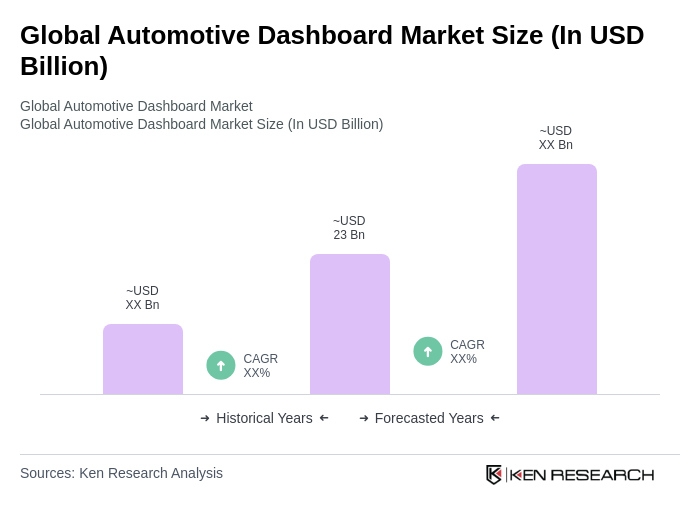
- The Global Automotive Dashboard Market is valued at approximately USD 23 billion, based on a five-year analysis. Growth is primarily driven by the increasing demand for advanced driver-assistance systems (ADAS), the rise of electric vehicles (EVs), and the integration of infotainment systems in vehicles. Additional drivers include the adoption of lightweight materials, digital displays, and consumer preferences for enhanced connectivity and digital interfaces in automobiles .
- Key players in this market include the United States, Germany, and Japan, which dominate due to their strong automotive manufacturing sectors, technological advancements, and established supply chains. These countries are home to major automotive companies and benefit from robust R&D infrastructure and partnerships with technology providers .
- In 2023, the European Union introduced regulations mandating the inclusion of advanced safety features such as lane departure warning, emergency braking, and driver drowsiness detection in all new vehicles. These regulatory measures are designed to enhance road safety and reduce accidents, thereby accelerating demand for sophisticated dashboard technologies that support these features .
Global Automotive Dashboard Market Segmentation
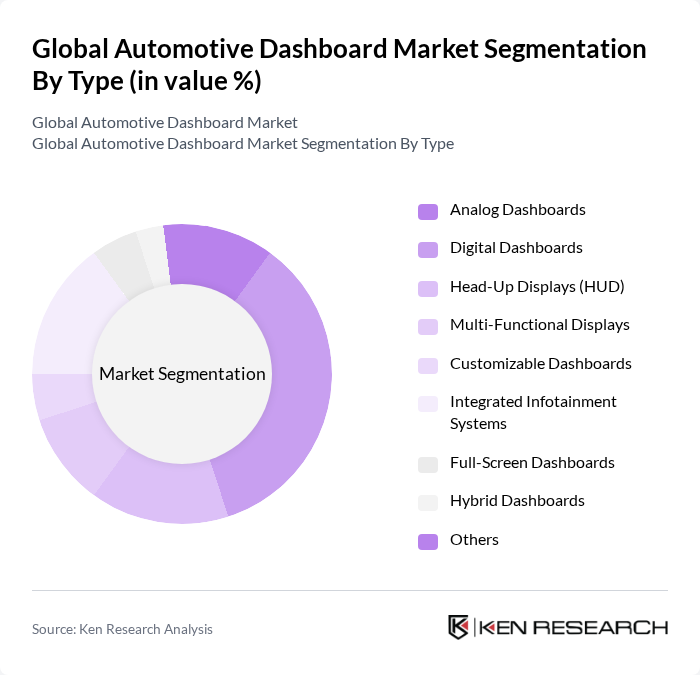
By Type:The market is segmented into Analog Dashboards, Digital Dashboards, Head-Up Displays (HUD), Multi-Functional Displays, Customizable Dashboards, Integrated Infotainment Systems, Full-Screen Dashboards, Hybrid Dashboards, and Others. Among these,Digital Dashboardsare gaining significant traction due to their ability to provide real-time data, enhanced user interfaces, and integration with ADAS and infotainment systems. The shift towards digitalization in vehicles is further propelled by consumer demand for interactive, customizable, and information-rich driving experiences .
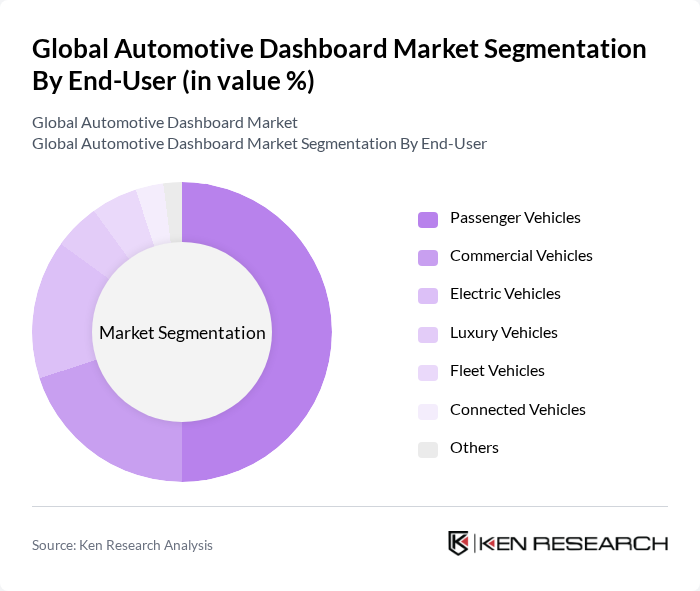
By End-User:The end-user segmentation includes Passenger Vehicles, Commercial Vehicles, Electric Vehicles, Luxury Vehicles, Fleet Vehicles, Connected Vehicles, and Others. ThePassenger Vehiclessegment holds the largest share due to the high volume of global personal vehicle sales. Increasing consumer preference for advanced features, digital interfaces, and safety technologies in personal vehicles is driving the demand for sophisticated dashboard solutions .
Global Automotive Dashboard Market Competitive Landscape
The Global Automotive Dashboard Market is characterized by a dynamic mix of regional and international players. Leading participants such as Denso Corporation, Continental AG, Visteon Corporation, Robert Bosch GmbH, Panasonic Corporation, Harman International Industries, Inc., Nippon Seiki Co., Ltd., Yazaki Corporation, Aptiv PLC, LG Electronics Inc., Valeo SA, Magneti Marelli S.p.A., Aisin Corporation, Clarion Co., Ltd., JVC Kenwood Corporation, Garmin Ltd., Mitsubishi Electric Corporation, Pioneer Corporation, Alps Alpine Co., Ltd., and Hyundai Mobis Co., Ltd. contribute to innovation, geographic expansion, and service delivery in this space .
Global Automotive Dashboard Market Industry Analysis
Growth Drivers
- Increasing Demand for Advanced Driver-Assistance Systems (ADAS):The global ADAS market is projected to reach $83 billion in future, driven by a surge in safety regulations and consumer demand for enhanced vehicle safety. In future, approximately 40% of new vehicles sold in developed markets were equipped with ADAS features. This trend is expected to continue, as governments worldwide implement stricter safety standards, thereby increasing the integration of advanced dashboards that support these systems.
- Rising Consumer Preference for Digital Dashboards:As of future, over 60% of consumers expressed a preference for digital dashboards over traditional analog displays, according to a recent automotive technology survey. This shift is fueled by the desire for enhanced connectivity and personalization in vehicles. The increasing availability of high-resolution displays and intuitive interfaces is expected to further drive this trend, with manufacturers investing heavily in digital dashboard technologies to meet consumer expectations.
- Growth in Electric Vehicle (EV) Adoption:The global electric vehicle market is anticipated to grow to 26 million units in future, reflecting a compound annual growth rate of 22%. This surge in EV adoption is significantly influencing the automotive dashboard market, as EVs require advanced dashboard technologies to monitor battery performance and energy consumption. Consequently, manufacturers are focusing on developing dashboards that cater specifically to the unique needs of electric vehicles, enhancing user experience and functionality.
Market Challenges
- High Costs of Advanced Dashboard Technologies:The integration of advanced technologies in automotive dashboards often results in elevated production costs. For instance, the average cost of high-end digital displays can exceed $1,000 per unit, which poses a significant barrier for manufacturers, especially in price-sensitive markets. This challenge is compounded by the need for continuous investment in research and development to keep pace with technological advancements, further straining budgets.
- Rapid Technological Changes Leading to Obsolescence:The automotive industry is characterized by rapid technological advancements, which can render existing dashboard technologies obsolete within a short timeframe. For example, the introduction of new display technologies, such as OLED and microLED, can quickly outdate older systems. This constant evolution necessitates ongoing investment in upgrades and innovations, creating financial pressure on manufacturers to stay competitive in a fast-paced market.
Global Automotive Dashboard Market Future Outlook
The automotive dashboard market is poised for significant transformation, driven by the increasing integration of connectivity features and user-centric designs. As vehicles become more connected, the demand for dashboards that support real-time data sharing and enhanced user interfaces will rise. Additionally, the focus on sustainability will push manufacturers to explore eco-friendly materials and production methods, aligning with global environmental goals. This evolution will create a dynamic landscape for innovation and competition in the automotive dashboard sector.
Market Opportunities
- Expansion in Emerging Markets:Emerging markets, particularly in Asia-Pacific, are witnessing a rapid increase in vehicle ownership, with an estimated 15 million new vehicles expected to be sold in future. This growth presents a significant opportunity for dashboard manufacturers to introduce affordable, feature-rich solutions tailored to local consumer preferences, thereby capturing a larger market share.
- Integration of AI and Machine Learning in Dashboards:The incorporation of AI and machine learning technologies into automotive dashboards is set to enhance user experience significantly. In future, it is projected that 30% of new vehicles will feature AI-driven interfaces, allowing for personalized user experiences and predictive analytics. This trend offers dashboard manufacturers a chance to innovate and differentiate their products in a competitive market.
Scope of the Report
| Segment | Sub-Segments |
|---|---|
| By Type | Analog Dashboards Digital Dashboards Head-Up Displays (HUD) Multi-Functional Displays Customizable Dashboards Integrated Infotainment Systems Full-Screen Dashboards Hybrid Dashboards Others |
| By End-User | Passenger Vehicles Commercial Vehicles Electric Vehicles Luxury Vehicles Fleet Vehicles Connected Vehicles Others |
| By Component | Display Units (LCD, TFT-LCD, OLED) Control Units Sensors Software Connectivity Modules Camera-based Driver Monitoring Others |
| By Sales Channel | OEMs Aftermarket Online Retail Physical Retail Others |
| By Distribution Mode | Direct Sales Distributors Online Platforms Retail Outlets Others |
| By Price Range | Budget Mid-Range Premium Luxury Others |
| By Application | Navigation Vehicle Diagnostics Entertainment Communication Safety & Driver Assistance Others |
| By Geography | North America Europe Asia Pacific Middle East & Africa Latin America |
Key Target Audience
Investors and Venture Capitalist Firms
Government and Regulatory Bodies (e.g., National Highway Traffic Safety Administration, Environmental Protection Agency)
Automotive Manufacturers and OEMs
Suppliers and Component Manufacturers
Telematics Service Providers
Automotive Aftermarket Service Providers
Insurance Companies
Fleet Management Companies
Players Mentioned in the Report:
Denso Corporation
Continental AG
Visteon Corporation
Robert Bosch GmbH
Panasonic Corporation
Harman International Industries, Inc.
Nippon Seiki Co., Ltd.
Yazaki Corporation
Aptiv PLC
LG Electronics Inc.
Valeo SA
Magneti Marelli S.p.A.
Aisin Corporation
Clarion Co., Ltd.
JVC Kenwood Corporation
Garmin Ltd.
Mitsubishi Electric Corporation
Pioneer Corporation
Alps Alpine Co., Ltd.
Hyundai Mobis Co., Ltd.
Table of Contents
Market Assessment Phase
1. Executive Summary and Approach
2. Global Automotive Dashboard Market Overview
2.1 Key Insights and Strategic Recommendations
2.2 Global Automotive Dashboard Market Overview
2.3 Definition and Scope
2.4 Evolution of Market Ecosystem
2.5 Timeline of Key Regulatory Milestones
2.6 Value Chain & Stakeholder Mapping
2.7 Business Cycle Analysis
2.8 Policy & Incentive Landscape
3. Global Automotive Dashboard Market Analysis
3.1 Growth Drivers
3.1.1 Increasing demand for advanced driver-assistance systems (ADAS)
3.1.2 Rising consumer preference for digital dashboards
3.1.3 Growth in electric vehicle (EV) adoption
3.1.4 Technological advancements in automotive displays
3.2 Market Challenges
3.2.1 High costs of advanced dashboard technologies
3.2.2 Rapid technological changes leading to obsolescence
3.2.3 Supply chain disruptions affecting production
3.2.4 Regulatory compliance complexities
3.3 Market Opportunities
3.3.1 Expansion in emerging markets
3.3.2 Integration of AI and machine learning in dashboards
3.3.3 Development of customizable dashboard solutions
3.3.4 Partnerships with tech companies for innovation
3.4 Market Trends
3.4.1 Shift towards connected vehicles
3.4.2 Increasing focus on user experience and interface design
3.4.3 Adoption of augmented reality (AR) in dashboards
3.4.4 Sustainability initiatives influencing dashboard materials
3.5 Government Regulation
3.5.1 Emission standards impacting dashboard technology
3.5.2 Safety regulations for driver information systems
3.5.3 Data privacy laws affecting connected dashboards
3.5.4 Incentives for electric vehicle dashboard integration
4. SWOT Analysis
5. Stakeholder Analysis
6. Porter's Five Forces Analysis
7. Global Automotive Dashboard Market Market Size, 2019-2024
7.1 By Value
7.2 By Volume
7.3 By Average Selling Price
8. Global Automotive Dashboard Market Segmentation
8.1 By Type
8.1.1 Analog Dashboards
8.1.2 Digital Dashboards
8.1.3 Head-Up Displays (HUD)
8.1.4 Multi-Functional Displays
8.1.5 Customizable Dashboards
8.1.6 Integrated Infotainment Systems
8.1.7 Full-Screen Dashboards
8.1.8 Hybrid Dashboards
8.1.9 Others
8.2 By End-User
8.2.1 Passenger Vehicles
8.2.2 Commercial Vehicles
8.2.3 Electric Vehicles
8.2.4 Luxury Vehicles
8.2.5 Fleet Vehicles
8.2.6 Connected Vehicles
8.2.7 Others
8.3 By Component
8.3.1 Display Units (LCD, TFT-LCD, OLED)
8.3.2 Control Units
8.3.3 Sensors
8.3.4 Software
8.3.5 Connectivity Modules
8.3.6 Camera-based Driver Monitoring
8.3.7 Others
8.4 By Sales Channel
8.4.1 OEMs
8.4.2 Aftermarket
8.4.3 Online Retail
8.4.4 Physical Retail
8.4.5 Others
8.5 By Distribution Mode
8.5.1 Direct Sales
8.5.2 Distributors
8.5.3 Online Platforms
8.5.4 Retail Outlets
8.5.5 Others
8.6 By Price Range
8.6.1 Budget
8.6.2 Mid-Range
8.6.3 Premium
8.6.4 Luxury
8.6.5 Others
8.7 By Application
8.7.1 Navigation
8.7.2 Vehicle Diagnostics
8.7.3 Entertainment
8.7.4 Communication
8.7.5 Safety & Driver Assistance
8.7.6 Others
8.8 By Geography
8.8.1 North America
8.8.2 Europe
8.8.3 Asia Pacific
8.8.4 Middle East & Africa
8.8.5 Latin America
9. Global Automotive Dashboard Market Competitive Analysis
9.1 Market Share of Key Players
9.2 Cross Comparison of Key Players
9.2.1 Company Name
9.2.2 Group Size (Large, Medium, or Small as per industry convention)
9.2.3 Revenue Growth Rate
9.2.4 Market Penetration Rate (by region and vehicle segment)
9.2.5 Product Portfolio Breadth (analog, digital, HUD, infotainment, etc.)
9.2.6 R&D Investment Ratio
9.2.7 Product Innovation Rate
9.2.8 OEM Partnership Count
9.2.9 Distribution Efficiency
9.2.10 Brand Recognition Score
9.2.11 Customer Satisfaction Index
9.2.12 Sustainability Initiatives (eco-friendly materials, recycling, etc.)
9.3 SWOT Analysis of Top Players
9.4 Pricing Analysis
9.5 Detailed Profile of Major Companies
9.5.1 Denso Corporation
9.5.2 Continental AG
9.5.3 Visteon Corporation
9.5.4 Robert Bosch GmbH
9.5.5 Panasonic Corporation
9.5.6 Harman International Industries, Inc.
9.5.7 Nippon Seiki Co., Ltd.
9.5.8 Yazaki Corporation
9.5.9 Aptiv PLC
9.5.10 LG Electronics Inc.
9.5.11 Valeo SA
9.5.12 Magneti Marelli S.p.A.
9.5.13 Aisin Corporation
9.5.14 Clarion Co., Ltd.
9.5.15 JVC Kenwood Corporation
9.5.16 Garmin Ltd.
9.5.17 Mitsubishi Electric Corporation
9.5.18 Pioneer Corporation
9.5.19 Alps Alpine Co., Ltd.
9.5.20 Hyundai Mobis Co., Ltd.
10. Global Automotive Dashboard Market End-User Analysis
10.1 Procurement Behavior of Key Ministries
10.1.1 Government Fleet Procurement Trends
10.1.2 Budget Allocations for Vehicle Technologies
10.1.3 Evaluation Criteria for Dashboard Technologies
10.2 Corporate Spend on Infrastructure & Energy
10.2.1 Investment in Smart Vehicle Technologies
10.2.2 Budgeting for Dashboard Upgrades
10.2.3 Corporate Sustainability Initiatives
10.3 Pain Point Analysis by End-User Category
10.3.1 User Interface Complexity
10.3.2 Integration with Existing Systems
10.3.3 Cost of Upgrades
10.4 User Readiness for Adoption
10.4.1 Training Needs for New Technologies
10.4.2 Acceptance of Digital Dashboards
10.4.3 Feedback Mechanisms for Improvement
10.5 Post-Deployment ROI and Use Case Expansion
10.5.1 Measurement of User Satisfaction
10.5.2 Analysis of Cost Savings
10.5.3 Opportunities for Feature Expansion
11. Global Automotive Dashboard Market Future Size, 2025-2030
11.1 By Value
11.2 By Volume
11.3 By Average Selling Price
Go-To-Market Strategy Phase
1. Whitespace Analysis + Business Model Canvas
1.1 Market Gaps Identification
1.2 Value Proposition Development
1.3 Revenue Streams Analysis
1.4 Customer Segmentation
1.5 Key Partnerships
1.6 Cost Structure Analysis
1.7 Channels of Distribution
2. Marketing and Positioning Recommendations
2.1 Branding Strategies
2.2 Product USPs
2.3 Target Audience Identification
2.4 Communication Strategies
2.5 Digital Marketing Approaches
2.6 Customer Engagement Tactics
3. Distribution Plan
3.1 Urban Retail Strategies
3.2 Rural NGO Tie-Ups
3.3 E-commerce Integration
3.4 Direct Sales Approaches
3.5 Partnership with Distributors
4. Channel & Pricing Gaps
4.1 Underserved Routes
4.2 Pricing Bands Analysis
4.3 Competitor Pricing Strategies
4.4 Customer Willingness to Pay
4.5 Value-Based Pricing Models
5. Unmet Demand & Latent Needs
5.1 Category Gaps Identification
5.2 Consumer Segments Analysis
5.3 Emerging Trends in Consumer Preferences
5.4 Feedback from Current Users
6. Customer Relationship
6.1 Loyalty Programs
6.2 After-Sales Service Enhancements
6.3 Customer Feedback Mechanisms
6.4 Community Engagement Initiatives
7. Value Proposition
7.1 Sustainability Initiatives
7.2 Integrated Supply Chains
7.3 Customization Options
7.4 Technological Innovations
8. Key Activities
8.1 Regulatory Compliance
8.2 Branding Initiatives
8.3 Distribution Setup
8.4 Training and Development
9. Entry Strategy Evaluation
9.1 Domestic Market Entry Strategy
9.1.1 Product Mix Considerations
9.1.2 Pricing Band Strategies
9.1.3 Packaging Innovations
9.2 Export Entry Strategy
9.2.1 Target Countries Analysis
9.2.2 Compliance Roadmap Development
10. Entry Mode Assessment
10.1 Joint Ventures
10.2 Greenfield Investments
10.3 Mergers & Acquisitions
10.4 Distributor Model Evaluation
11. Capital and Timeline Estimation
11.1 Capital Requirements Analysis
11.2 Timelines for Market Entry
12. Control vs Risk Trade-Off
12.1 Ownership vs Partnerships
12.2 Risk Management Strategies
13. Profitability Outlook
13.1 Breakeven Analysis
13.2 Long-Term Sustainability Strategies
14. Potential Partner List
14.1 Distributors
14.2 Joint Ventures
14.3 Acquisition Targets
15. Execution Roadmap
15.1 Phased Plan for Market Entry
15.1.1 Market Setup
15.1.2 Market Entry
15.1.3 Growth Acceleration
15.1.4 Scale & Stabilize
15.2 Key Activities and Milestones
15.2.1 Milestone Planning
15.2.2 Activity Tracking
Research Methodology
Phase 1: Approach1
Desk Research
- Industry reports from automotive associations and market research firms
- Analysis of government publications on automotive regulations and standards
- Review of financial reports and press releases from leading automotive dashboard manufacturers
Primary Research
- Interviews with product managers at automotive OEMs and Tier 1 suppliers
- Surveys with automotive technology experts and industry analysts
- Field interviews with automotive engineers specializing in dashboard design
Validation & Triangulation
- Cross-validation of data through multiple industry sources and expert opinions
- Triangulation of market trends using sales data, production statistics, and consumer insights
- Sanity checks conducted through expert panel discussions and feedback sessions
Phase 2: Market Size Estimation1
Top-down Assessment
- Estimation of market size based on global automotive production figures
- Segmentation by vehicle type (passenger cars, commercial vehicles) and dashboard technology (analog, digital)
- Incorporation of trends in electric vehicles and autonomous driving technologies
Bottom-up Modeling
- Volume estimates derived from production data of dashboard components
- Cost analysis based on pricing models of dashboard systems and components
- Calculation of market size using unit sales multiplied by average selling prices
Forecasting & Scenario Analysis
- Multi-variable forecasting using historical growth rates and emerging technology adoption
- Scenario analysis based on regulatory impacts and shifts in consumer preferences
- Development of baseline, optimistic, and pessimistic market projections through 2030
Phase 3: CATI Sample Composition1
| Scope Item/Segment | Sample Size | Target Respondent Profiles |
|---|---|---|
| Passenger Vehicle Dashboard Systems | 120 | Product Managers, Design Engineers |
| Commercial Vehicle Instrumentation | 90 | Fleet Managers, Technical Directors |
| Electric Vehicle Dashboard Technologies | 60 | R&D Specialists, Automotive Engineers |
| Aftermarket Dashboard Solutions | 50 | Retail Managers, Sales Executives |
| Dashboard User Experience Research | 70 | UX Designers, Consumer Insights Analysts |
Frequently Asked Questions
What is the current value of the Global Automotive Dashboard Market?
The Global Automotive Dashboard Market is valued at approximately USD 23 billion, driven by the demand for advanced driver-assistance systems (ADAS), electric vehicles (EVs), and infotainment systems integration in vehicles.
What are the key drivers of growth in the automotive dashboard market?
Which countries dominate the Global Automotive Dashboard Market?
What regulations have impacted the automotive dashboard market in 2023?
Other Regional/Country Reports
Indonesia Automotive Dashboard Market
Malaysia Automotive Dashboard Market
APAC Automotive Dashboard Market
SEA Automotive Dashboard Market
Why Buy From Us?

What makes us stand out is that our consultants follow Robust, Refine and Result (RRR) methodology. Robust for clear definitions, approaches and sanity checking, Refine for differentiating respondents' facts and opinions, and Result for presenting data with story.

We have set a benchmark in the industry by offering our clients with syndicated and customized market research reports featuring coverage of entire market as well as meticulous research and analyst insights.

While we don't replace traditional research, we flip the method upside down. Our dual approach of Top Bottom & Bottom Top ensures quality deliverable by not just verifying company fundamentals but also looking at the sector and macroeconomic factors.

With one step in the future, our research team constantly tries to show you the bigger picture. We help with some of the tough questions you may encounter along the way: How is the industry positioned? Best marketing channel? KPI's of competitors? By aligning every element, we help maximize success.

Our report gives you instant access to the answers and sources that other companies might choose to hide. We elaborate each steps of research methodology we have used and showcase you the sample size to earn your trust.

If you need any support, we are here! We pride ourselves on universe strength, data quality, and quick, friendly, and professional service.