Region:Global
Author(s):Geetanshi
Product Code:KRAA0159
Pages:81
Published On:August 2025
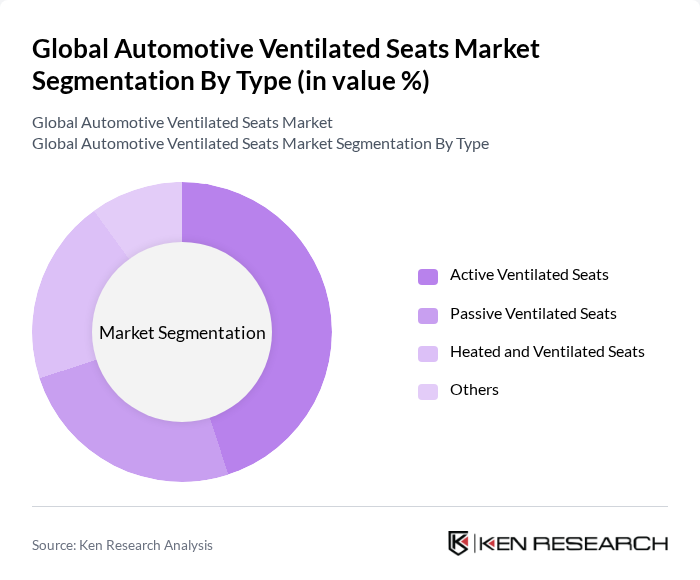
By Type:The market is segmented into Active Ventilated Seats, Passive Ventilated Seats, Heated and Ventilated Seats, and Others. Among these, Active Ventilated Seats are gaining significant traction due to their ability to provide personalized comfort through adjustable airflow and temperature settings. This segment is particularly popular in luxury vehicles, where consumers prioritize comfort and advanced features. Passive Ventilated Seats, while still relevant, are less favored as they do not offer the same level of customization. Heated and Ventilated Seats are also popular, especially in regions with extreme weather conditions, as they provide dual functionality. The Others category includes niche products that cater to specific consumer needs .
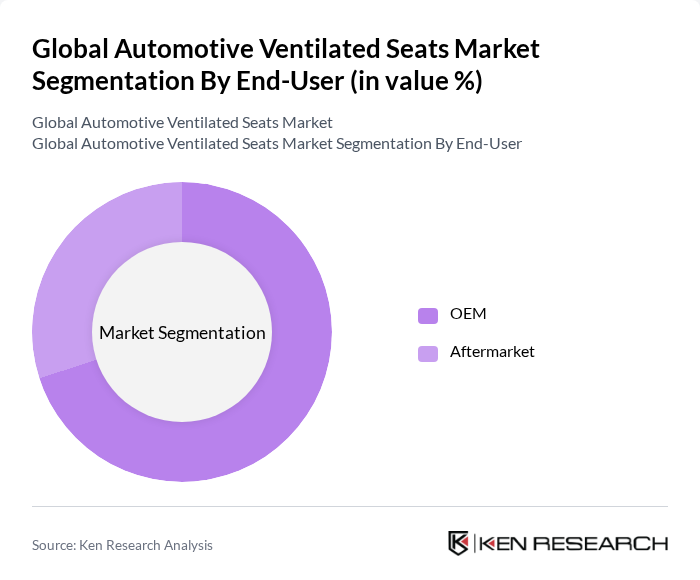
By End-User:The market is divided into OEM and Aftermarket segments. The OEM segment is the dominant player, driven by the increasing integration of advanced seating technologies in new vehicle models. Automakers are focusing on enhancing passenger comfort and safety, leading to a surge in demand for ventilated seats in new vehicles. The Aftermarket segment, while smaller, is growing as consumers seek to upgrade their existing vehicles with modern comfort features. This trend is particularly evident in regions with a high density of older vehicles, where consumers are looking to enhance their driving experience .
The Global Automotive Ventilated Seats Market is characterized by a dynamic mix of regional and international players. Leading participants such as Adient plc, Lear Corporation, Faurecia (FORVIA Group), Gentherm Incorporated, Toyota Boshoku Corporation, Magna International Inc., Johnson Controls International plc, Aisin Corporation, Dura Automotive Systems, Kongsberg Automotive ASA, Continental AG, Hyundai Transys, TS TECH Co., Ltd., NHK Spring Co., Ltd., TACHI-S Co., Ltd. contribute to innovation, geographic expansion, and service delivery in this space.
The future of the automotive ventilated seats market appears promising, driven by increasing consumer demand for comfort and health benefits. As electric vehicle adoption accelerates, manufacturers are likely to incorporate advanced seating technologies to enhance user experience. Additionally, the rise of autonomous vehicles presents opportunities for innovative seating solutions that prioritize comfort and personalization, aligning with evolving consumer preferences and technological advancements in the automotive sector.
| Segment | Sub-Segments |
|---|---|
| By Type | Active Ventilated Seats Passive Ventilated Seats Heated and Ventilated Seats Others |
| By End-User | OEM Aftermarket |
| By Vehicle Type | Passenger Vehicles Commercial Vehicles Luxury Vehicles Others |
| By Material | Leather Fabric Synthetic Materials Others |
| By Distribution Channel | OEMs Aftermarket |
| By Region | North America Europe Asia-Pacific Latin America Middle East & Africa |
| By Technology | Airflow Technology Climate Control Technology Smart Technology Integration Others |
| Scope Item/Segment | Sample Size | Target Respondent Profiles |
|---|---|---|
| OEMs in Passenger Vehicles | 100 | Product Development Managers, Design Engineers |
| Suppliers of Automotive Seating Components | 80 | Sales Directors, Supply Chain Managers |
| Luxury Vehicle Manufacturers | 60 | Marketing Managers, R&D Heads |
| Automotive Aftermarket Retailers | 50 | Store Managers, Product Buyers |
| Automotive Technology Innovators | 40 | CTOs, Innovation Managers |
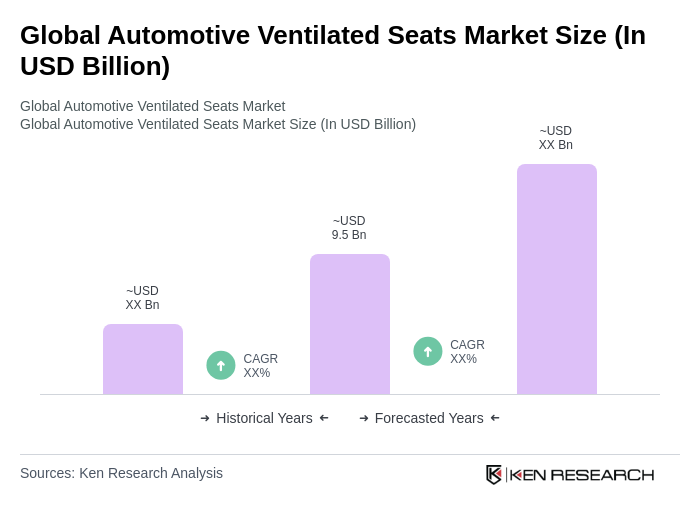
The Global Automotive Ventilated Seats Market is valued at approximately USD 9.5 billion, reflecting a significant growth trend driven by consumer demand for comfort and luxury features in vehicles, as well as advancements in automotive technology.

What makes us stand out is that our consultants follow Robust, Refine and Result (RRR) methodology. Robust for clear definitions, approaches and sanity checking, Refine for differentiating respondents' facts and opinions, and Result for presenting data with story.

We have set a benchmark in the industry by offering our clients with syndicated and customized market research reports featuring coverage of entire market as well as meticulous research and analyst insights.

While we don't replace traditional research, we flip the method upside down. Our dual approach of Top Bottom & Bottom Top ensures quality deliverable by not just verifying company fundamentals but also looking at the sector and macroeconomic factors.

With one step in the future, our research team constantly tries to show you the bigger picture. We help with some of the tough questions you may encounter along the way: How is the industry positioned? Best marketing channel? KPI's of competitors? By aligning every element, we help maximize success.

Our report gives you instant access to the answers and sources that other companies might choose to hide. We elaborate each steps of research methodology we have used and showcase you the sample size to earn your trust.

If you need any support, we are here! We pride ourselves on universe strength, data quality, and quick, friendly, and professional service.













