About the Report
Base Year 2024Listen to the audio summary
Global Bonsai Market Overview
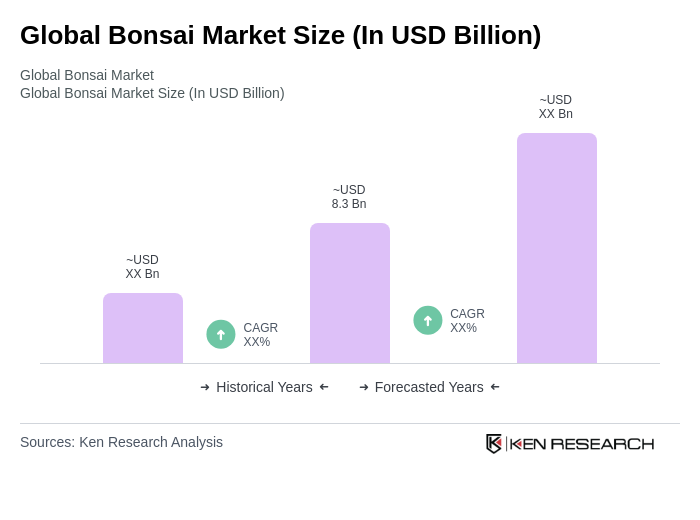
- The Global Bonsai Market is valued at USD 8.3 billion, based on a five-year historical analysis. This growth is primarily driven by increasing consumer interest in gardening, home decor, and the therapeutic benefits associated with bonsai cultivation. The rising trend of urban gardening, the popularity of indoor plants, and the surge in demand for decorative and aesthetic plants have significantly contributed to the market's expansion. The market is further supported by technological advancements in online retail and logistics, making bonsai products more accessible to a global audience .
- Key players in this market includeJapan, the United States, and China. Japan is renowned for its traditional bonsai art and skilled craftsmanship, while the United States has seen a surge in bonsai enthusiasts and hobbyists, particularly in urban areas. China, with its rich cultural heritage and growing interest in gardening, has also emerged as a significant player in the bonsai market. The Asia-Pacific region collectively holds the largest market share due to cultural heritage, skilled labor, and well-developed supply chains .
- In 2023, the U.S. Department of Agriculture (USDA) updated theNational Organic Program (NOP) Final Rule, 2023, which includes requirements for sustainable horticulture practices. These regulations cover the production, handling, and labeling of organic plants, including bonsai trees, and aim to encourage environmentally friendly gardening methods and reduce the carbon footprint associated with plant production. Compliance with the NOP requires certified organic operations to implement conservation practices, soil health management, and responsible use of inputs .
Global Bonsai Market Segmentation
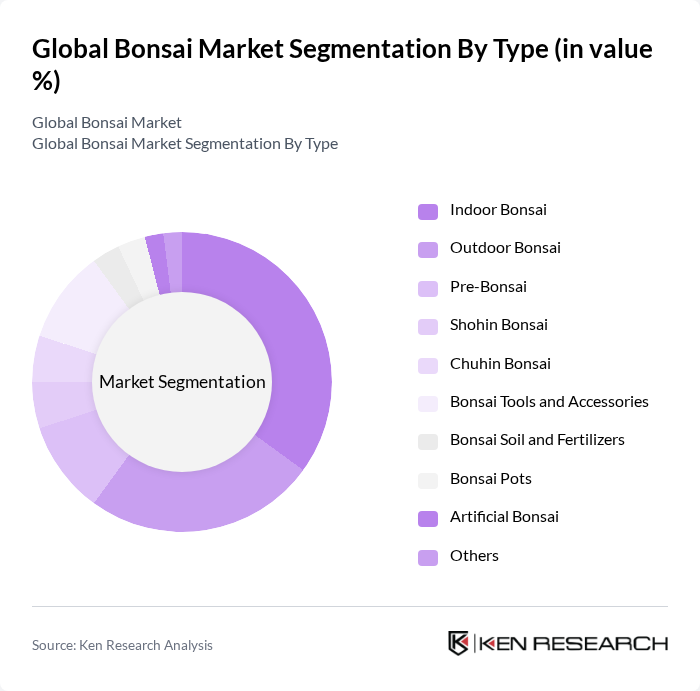
By Type:The bonsai market can be segmented into various types, including Indoor Bonsai, Outdoor Bonsai, Pre-Bonsai, Shohin Bonsai, Chuhin Bonsai, Bonsai Tools and Accessories, Bonsai Soil and Fertilizers, Bonsai Pots, Artificial Bonsai, and Others. Among these,Indoor Bonsaihas gained significant popularity due to the increasing trend of indoor gardening, urban living, and the growing awareness of the mental health benefits associated with plant care.Outdoor Bonsaialso holds a substantial share, particularly in regions with favorable climates for outdoor gardening. The demand forBonsai Tools and Accessoriescontinues to rise as enthusiasts seek to enhance their gardening experience. Recent trends also highlight the growing adoption of e-commerce platforms for bonsai tools, pots, and related accessories, driven by convenience and product variety .
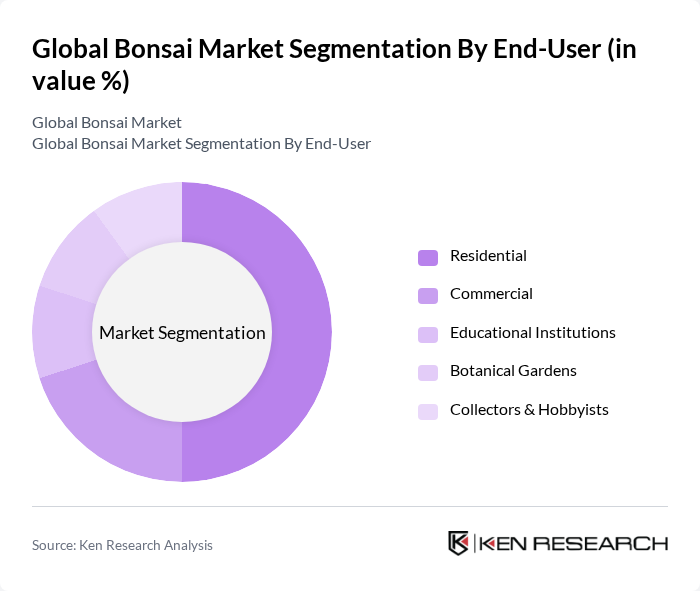
By End-User:The bonsai market is segmented by end-user into Residential, Commercial, Educational Institutions, Botanical Gardens, and Collectors & Hobbyists. TheResidentialsegment dominates the market, driven by the increasing trend of home gardening, urbanization, and the desire for aesthetic indoor spaces.Collectors & Hobbyistsalso represent a significant portion of the market, as they seek unique and rare bonsai varieties.Commercialestablishments, including hotels, restaurants, and offices, are increasingly incorporating bonsai into their decor, further boosting market growth. Educational institutions and botanical gardens play a role in promoting bonsai culture and education .
Global Bonsai Market Competitive Landscape
The Global Bonsai Market is characterized by a dynamic mix of regional and international players. Leading participants such as Bonsai Boy of New York, Brussel's Bonsai Nursery, Eastern Leaf, Bonsai Outlet, Bonsai Empire, Gardener's Supply Company, Loder Bonsai BV, Bonsai Design, The Bonsai Company, House of Bonsai, California Bonsai Studio, Bonsai Tree (South Africa), The Bonsai Shop (Australia), Bonsai4Me, and Pacific Nurseries contribute to innovation, geographic expansion, and service delivery in this space.
Global Bonsai Market Industry Analysis
Growth Drivers
- Increasing Interest in Indoor Gardening:The indoor gardening trend has surged, with over 30% of households in None engaging in some form of indoor plant care. This interest is driven by urbanization, where 83% of the population lives in cities, leading to a demand for space-efficient plants like bonsai. The global indoor gardening market is projected to reach USD 100 billion in future, indicating a robust environment for bonsai cultivation and sales.
- Rising Awareness of Environmental Benefits:Environmental consciousness is growing, with 72% of consumers in None recognizing the air-purifying benefits of indoor plants. This awareness is supported by studies showing that indoor plants can reduce indoor air pollutants by up to 87% within 24 hours. As consumers increasingly seek sustainable living solutions, the demand for bonsai trees, which require less space and resources, is expected to rise significantly.
- Growth in E-commerce for Plant Sales:E-commerce sales of plants in None have increased by 42% in the past year, driven by the convenience of online shopping. Major platforms report that bonsai trees are among the top-selling items, with sales reaching USD 500 million in future. This trend is expected to continue as more consumers prefer purchasing plants online, enhancing accessibility and variety for bonsai enthusiasts.
Market Challenges
- Limited Awareness Among New Consumers:Despite the growing interest in bonsai, approximately 60% of potential new consumers in None remain unaware of the specific care requirements for these trees. This lack of knowledge can lead to high rates of plant mortality, discouraging new buyers. Educational initiatives are essential to bridge this gap and promote sustainable bonsai ownership, which currently faces significant barriers to entry.
- High Maintenance Requirements:Bonsai trees require meticulous care, with 52% of owners reporting challenges in maintaining optimal conditions. Factors such as specific watering needs, pruning, and pest management contribute to this complexity. The average cost of maintaining a bonsai tree can reach USD 200 annually, which may deter potential buyers who are unprepared for the commitment involved in bonsai cultivation.
Global Bonsai Market Future Outlook
The future of the bonsai market in None appears promising, driven by increasing consumer interest in sustainable living and indoor gardening. As e-commerce continues to expand, more consumers will have access to a variety of bonsai options. Additionally, educational programs and workshops are likely to enhance consumer knowledge, fostering a deeper appreciation for bonsai care. This evolving landscape suggests a vibrant market with potential for growth and innovation in the coming years.
Market Opportunities
- Expansion of Online Retail Platforms:The rise of online retail presents a significant opportunity for bonsai sales, with e-commerce projected to account for 27% of total plant sales in None in future. This shift allows for broader market reach and the ability to cater to niche customer segments, enhancing overall sales potential for bonsai retailers.
- Development of Bonsai Care Products:The market for bonsai care products, including specialized fertilizers and tools, is expected to grow, with an estimated value of USD 150 million in future. This growth is driven by the increasing number of bonsai enthusiasts seeking to improve their plant care practices, creating a lucrative opportunity for manufacturers and retailers in this niche market.
Scope of the Report
| Segment | Sub-Segments |
|---|---|
| By Type | Indoor Bonsai Outdoor Bonsai Pre-Bonsai Shohin Bonsai Chuhin Bonsai Bonsai Tools and Accessories Bonsai Soil and Fertilizers Bonsai Pots Artificial Bonsai Others |
| By End-User | Residential Commercial Educational Institutions Botanical Gardens Collectors & Hobbyists |
| By Sales Channel | Online Retail Garden Centers Specialty Stores Direct Sales Wholesale Distributors |
| By Price Range | Low-End Bonsai Mid-Range Bonsai High-End Bonsai |
| By Region | North America Europe Asia-Pacific Latin America Middle East & Africa |
| By Application | Home Decor Gifts and Souvenirs Landscaping Therapeutic Uses Corporate & Hospitality |
| By Distribution Mode | Direct Distribution Indirect Distribution Franchise Models E-commerce Platforms Others |
Key Target Audience
Investors and Venture Capitalist Firms
Government and Regulatory Bodies (e.g., U.S. Department of Agriculture, European Commission)
Manufacturers and Producers
Distributors and Retailers
Landscape Architects and Designers
Botanical Gardens and Arboretums
Horticultural Societies and Clubs
Financial Institutions
Players Mentioned in the Report:
Bonsai Boy of New York
Brussel's Bonsai Nursery
Eastern Leaf
Bonsai Outlet
Bonsai Empire
Gardener's Supply Company
Loder Bonsai BV
Bonsai Design
The Bonsai Company
House of Bonsai
California Bonsai Studio
Bonsai Tree (South Africa)
The Bonsai Shop (Australia)
Bonsai4Me
Pacific Nurseries
Table of Contents
Market Assessment Phase
1. Executive Summary and Approach
2. Global Bonsai Market Overview
2.1 Key Insights and Strategic Recommendations
2.2 Global Bonsai Market Overview
2.3 Definition and Scope
2.4 Evolution of Market Ecosystem
2.5 Timeline of Key Regulatory Milestones
2.6 Value Chain & Stakeholder Mapping
2.7 Business Cycle Analysis
2.8 Policy & Incentive Landscape
3. Global Bonsai Market Analysis
3.1 Growth Drivers
3.1.1 Increasing Interest in Indoor Gardening
3.1.2 Rising Awareness of Environmental Benefits
3.1.3 Growth in E-commerce for Plant Sales
3.1.4 Cultural Significance and Aesthetic Appeal
3.2 Market Challenges
3.2.1 Limited Awareness Among New Consumers
3.2.2 High Maintenance Requirements
3.2.3 Vulnerability to Pests and Diseases
3.2.4 Seasonal Demand Fluctuations
3.3 Market Opportunities
3.3.1 Expansion of Online Retail Platforms
3.3.2 Development of Bonsai Care Products
3.3.3 Workshops and Educational Programs
3.3.4 Collaborations with Interior Designers
3.4 Market Trends
3.4.1 Increasing Popularity of Miniature Plants
3.4.2 Integration of Technology in Plant Care
3.4.3 Sustainable Sourcing of Bonsai Trees
3.4.4 Customization and Personalization Trends
3.5 Government Regulation
3.5.1 Import Regulations on Plant Species
3.5.2 Environmental Protection Laws
3.5.3 Certification Requirements for Nurseries
3.5.4 Guidelines for Sustainable Cultivation
4. SWOT Analysis
5. Stakeholder Analysis
6. Porter's Five Forces Analysis
7. Global Bonsai Market Market Size, 2019-2024
7.1 By Value
7.2 By Volume
7.3 By Average Selling Price
8. Global Bonsai Market Segmentation
8.1 By Type
8.1.1 Indoor Bonsai
8.1.2 Outdoor Bonsai
8.1.3 Pre-Bonsai
8.1.4 Shohin Bonsai
8.1.5 Chuhin Bonsai
8.1.6 Bonsai Tools and Accessories
8.1.7 Bonsai Soil and Fertilizers
8.1.8 Bonsai Pots
8.1.9 Artificial Bonsai
8.1.10 Others
8.2 By End-User
8.2.1 Residential
8.2.2 Commercial
8.2.3 Educational Institutions
8.2.4 Botanical Gardens
8.2.5 Collectors & Hobbyists
8.3 By Sales Channel
8.3.1 Online Retail
8.3.2 Garden Centers
8.3.3 Specialty Stores
8.3.4 Direct Sales
8.3.5 Wholesale Distributors
8.4 By Price Range
8.4.1 Low-End Bonsai
8.4.2 Mid-Range Bonsai
8.4.3 High-End Bonsai
8.5 By Region
8.5.1 North America
8.5.2 Europe
8.5.3 Asia-Pacific
8.5.4 Latin America
8.5.5 Middle East & Africa
8.6 By Application
8.6.1 Home Decor
8.6.2 Gifts and Souvenirs
8.6.3 Landscaping
8.6.4 Therapeutic Uses
8.6.5 Corporate & Hospitality
8.7 By Distribution Mode
8.7.1 Direct Distribution
8.7.2 Indirect Distribution
8.7.3 Franchise Models
8.7.4 E-commerce Platforms
8.7.5 Others
9. Global Bonsai Market Competitive Analysis
9.1 Market Share of Key Players
9.2 KPIs for Cross Comparison of Key Players
9.2.1 Annual Revenue (USD)
9.2.2 Volume of Bonsai Trees Sold
9.2.3 Geographic Footprint (Number of Countries/Regions Served)
9.2.4 Online Sales Penetration (%)
9.2.5 Product Portfolio Breadth (Number of Bonsai Species/Varieties)
9.2.6 Customer Retention Rate (%)
9.2.7 Average Order Value (USD)
9.2.8 Brand Recognition Score
9.2.9 Supply Chain Efficiency (Order Fulfillment Time)
9.2.10 Customer Satisfaction Index (Survey/Rating)
9.3 SWOT Analysis of Top Players
9.4 Pricing Analysis
9.5 Detailed Profile of Major Companies
9.5.1 Bonsai Boy of New York
9.5.2 Brussel's Bonsai Nursery
9.5.3 Eastern Leaf
9.5.4 Bonsai Outlet
9.5.5 Bonsai Empire
9.5.6 Gardener's Supply Company
9.5.7 Loder Bonsai BV
9.5.8 Bonsai Design
9.5.9 The Bonsai Company
9.5.10 House of Bonsai
9.5.11 California Bonsai Studio
9.5.12 Bonsai Tree (South Africa)
9.5.13 The Bonsai Shop (Australia)
9.5.14 Bonsai4Me
9.5.15 Pacific Nurseries
10. Global Bonsai Market End-User Analysis
10.1 Procurement Behavior of Key Ministries
10.1.1 Interest in Sustainable Practices
10.1.2 Budget Allocation for Green Initiatives
10.1.3 Collaboration with Local Nurseries
10.2 Corporate Spend on Infrastructure & Energy
10.2.1 Investment in Green Spaces
10.2.2 Sponsorship of Botanical Events
10.3 Pain Point Analysis by End-User Category
10.3.1 Maintenance Challenges for Residential Users
10.3.2 Cost Concerns for Commercial Buyers
10.4 User Readiness for Adoption
10.4.1 Awareness of Bonsai Care Techniques
10.4.2 Availability of Resources and Support
10.5 Post-Deployment ROI and Use Case Expansion
10.5.1 Long-term Value of Bonsai in Decor
10.5.2 Potential for Upselling Related Products
11. Global Bonsai Market Future Size, 2025-2030
11.1 By Value
11.2 By Volume
11.3 By Average Selling Price
Go-To-Market Strategy Phase
1. Whitespace Analysis + Business Model Canvas
1.1 Market Gaps Identification
1.2 Value Proposition Development
1.3 Revenue Streams Analysis
1.4 Customer Segmentation
1.5 Key Partnerships
1.6 Cost Structure
1.7 Channels of Distribution
2. Marketing and Positioning Recommendations
2.1 Branding Strategies
2.2 Product USPs
3. Distribution Plan
3.1 Urban Retail vs Rural NGO Tie-ups
4. Channel & Pricing Gaps
4.1 Underserved Routes
4.2 Pricing Bands
5. Unmet Demand & Latent Needs
5.1 Category Gaps
5.2 Consumer Segments
6. Customer Relationship
6.1 Loyalty Programs
6.2 After-sales Service
7. Value Proposition
7.1 Sustainability
7.2 Integrated Supply Chains
8. Key Activities
8.1 Regulatory Compliance
8.2 Branding
8.3 Distribution Setup
9. Entry Strategy Evaluation
9.1 Domestic Market Entry Strategy
9.1.1 Product Mix
9.1.2 Pricing Band
9.1.3 Packaging
9.2 Export Entry Strategy
9.2.1 Target Countries
9.2.2 Compliance Roadmap
10. Entry Mode Assessment
10.1 JV
10.2 Greenfield
10.3 M&A
10.4 Distributor Model
11. Capital and Timeline Estimation
11.1 Capital Requirements
11.2 Timelines
12. Control vs Risk Trade-Off
12.1 Ownership vs Partnerships
13. Profitability Outlook
13.1 Breakeven Analysis
13.2 Long-term Sustainability
14. Potential Partner List
14.1 Distributors
14.2 JVs
14.3 Acquisition Targets
15. Execution Roadmap
15.1 Phased Plan for Market Entry
15.1.1 Market Setup
15.1.2 Market Entry
15.1.3 Growth Acceleration
15.1.4 Scale & Stabilize
15.2 Key Activities and Milestones
15.2.1 Activity Planning
15.2.2 Milestone Tracking
Research Methodology
Phase 1: Approach1
Desk Research
- Analysis of industry reports from horticultural associations and bonsai societies
- Review of market trends and statistics from agricultural and botanical journals
- Examination of import/export data from customs and trade databases related to bonsai products
Primary Research
- Interviews with bonsai nursery owners and horticulturists
- Surveys conducted with bonsai enthusiasts and collectors through online platforms
- Field visits to bonsai exhibitions and trade shows for firsthand insights
Validation & Triangulation
- Cross-validation of findings with multiple sources including trade publications and expert opinions
- Triangulation of data from consumer surveys, sales figures, and industry forecasts
- Sanity checks through expert panel discussions with bonsai market specialists
Phase 2: Market Size Estimation1
Top-down Assessment
- Estimation of the global bonsai market size based on horticultural market growth rates
- Segmentation analysis by region, species, and product type (tools, pots, soil)
- Incorporation of trends in urban gardening and sustainable practices influencing bonsai sales
Bottom-up Modeling
- Volume estimates derived from sales data of leading bonsai nurseries and retailers
- Cost analysis based on average pricing of bonsai trees and related accessories
- Calculation of market size using unit sales multiplied by average selling prices
Forecasting & Scenario Analysis
- Multi-factor regression analysis incorporating demographic trends and gardening interest
- Scenario modeling based on economic conditions and consumer spending on leisure activities
- Baseline, optimistic, and pessimistic forecasts through 2030 considering market dynamics
Phase 3: CATI Sample Composition1
| Scope Item/Segment | Sample Size | Target Respondent Profiles |
|---|---|---|
| Bonsai Retail Market | 70 | Retail Owners, Store Managers |
| Bonsai Enthusiasts and Collectors | 60 | Hobbyists, Club Members |
| Bonsai Product Suppliers | 50 | Wholesale Distributors, Importers |
| Landscape Architects and Designers | 40 | Landscape Professionals, Garden Designers |
| Botanical Gardens and Institutions | 40 | Curators, Educational Program Coordinators |
Frequently Asked Questions
What is the current value of the Global Bonsai Market?
The Global Bonsai Market is valued at approximately USD 8.3 billion, reflecting a significant growth trend driven by increasing consumer interest in gardening, home decor, and the therapeutic benefits of bonsai cultivation.
Which regions are the key players in the Global Bonsai Market?
What factors are driving the growth of the Bonsai Market?
What are the main challenges faced by the Bonsai Market?
Other Regional/Country Reports
Indonesia Bonsai Market
Malaysia Bonsai Market
APAC Bonsai Market
SEA Bonsai Market
Why Buy From Us?

What makes us stand out is that our consultants follow Robust, Refine and Result (RRR) methodology. Robust for clear definitions, approaches and sanity checking, Refine for differentiating respondents' facts and opinions, and Result for presenting data with story.

We have set a benchmark in the industry by offering our clients with syndicated and customized market research reports featuring coverage of entire market as well as meticulous research and analyst insights.

While we don't replace traditional research, we flip the method upside down. Our dual approach of Top Bottom & Bottom Top ensures quality deliverable by not just verifying company fundamentals but also looking at the sector and macroeconomic factors.

With one step in the future, our research team constantly tries to show you the bigger picture. We help with some of the tough questions you may encounter along the way: How is the industry positioned? Best marketing channel? KPI's of competitors? By aligning every element, we help maximize success.

Our report gives you instant access to the answers and sources that other companies might choose to hide. We elaborate each steps of research methodology we have used and showcase you the sample size to earn your trust.

If you need any support, we are here! We pride ourselves on universe strength, data quality, and quick, friendly, and professional service.