Region:Global
Author(s):Rebecca
Product Code:KRAC9708
Pages:95
Published On:November 2025
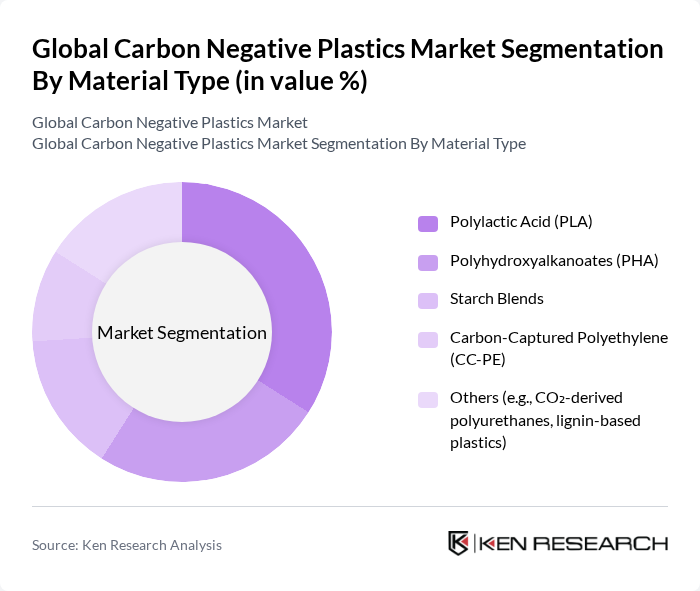
By Material Type:The material types in the carbon-negative plastics market include Polylactic Acid (PLA), Polyhydroxyalkanoates (PHA), Starch Blends, Carbon-Captured Polyethylene (CC-PE), and Others (e.g., CO?-derived polyurethanes, lignin-based plastics). Among these, Polylactic Acid (PLA) is the leading subsegment due to its widespread application in packaging and consumer goods, driven by increasing consumer preference for biodegradable materials. PLA accounted for the largest market share among carbon-negative plastics, supported by its cost-competitiveness, compostability, and regulatory backing in major markets.
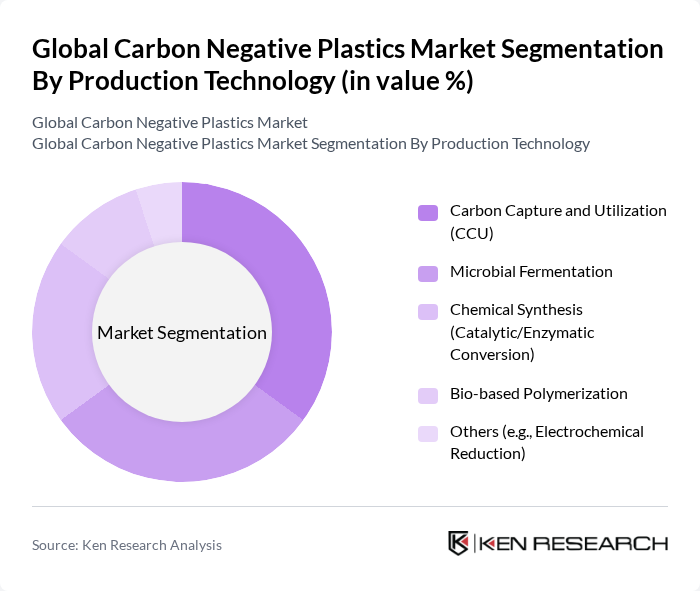
By Production Technology:The production technologies for carbon-negative plastics include Carbon Capture and Utilization (CCU), Microbial Fermentation, Chemical Synthesis (Catalytic/Enzymatic Conversion), Bio-based Polymerization, and Others (e.g., Electrochemical Reduction). Carbon Capture and Utilization (CCU) is the dominant technology, as it effectively utilizes captured carbon emissions to produce sustainable materials, aligning with global carbon reduction goals. Microbial fermentation and catalytic conversion are also widely adopted due to advances in biotechnology and enzyme engineering.
The Global Carbon Negative Plastics Market is characterized by a dynamic mix of regional and international players. Leading participants such as BASF SE, NatureWorks LLC, Novamont S.p.A., Bio-on S.p.A., Braskem S.A., TotalEnergies Corbion, Green Dot Bioplastics, Inc., Trellis Earth Products, Inc., Danimer Scientific, Inc., Mitsubishi Chemical Group Corporation, Eastman Chemical Company, Covestro AG, RWDC Industries Pte Ltd, Full Cycle Bioplastics, Inc., Genomatica, Inc. contribute to innovation, geographic expansion, and service delivery in this space.
The future of carbon negative plastics in None appears promising, driven by increasing environmental consciousness and technological advancements. As consumers become more informed about sustainability, demand for eco-friendly products is expected to rise. Additionally, ongoing government regulations will likely encourage innovation and investment in sustainable materials. Companies that adapt to these trends and focus on developing cost-effective, high-quality carbon negative plastics will be well-positioned to capture market share and contribute to a greener economy.
| Segment | Sub-Segments |
|---|---|
| By Material Type | Polylactic Acid (PLA) Polyhydroxyalkanoates (PHA) Starch Blends Carbon-Captured Polyethylene (CC-PE) Others (e.g., CO?-derived polyurethanes, lignin-based plastics) |
| By Production Technology | Carbon Capture and Utilization (CCU) Microbial Fermentation Chemical Synthesis (Catalytic/Enzymatic Conversion) Bio-based Polymerization Others (e.g., Electrochemical Reduction) |
| By Application | Packaging Automotive Components Consumer Goods Construction Materials Textiles & Fibers Electronics & Electrical Others (e.g., Agricultural Films, Medical Devices) |
| By End-Use Industry | Food & Beverage Retail & E-commerce Automotive Healthcare Agriculture Others |
| By Region | North America Europe Asia-Pacific Latin America Middle East & Africa |
| By Policy Support | Subsidies for Sustainable Products Tax Incentives Grants for Research and Development Others |
| Scope Item/Segment | Sample Size | Target Respondent Profiles |
|---|---|---|
| Packaging Industry Insights | 100 | Product Managers, Sustainability Coordinators |
| Consumer Goods Sector Feedback | 80 | Brand Managers, Marketing Directors |
| Automotive Applications Research | 60 | Engineering Managers, Procurement Specialists |
| Retail Sector Consumer Preferences | 70 | Retail Managers, Customer Experience Leaders |
| Environmental Policy Impact Assessment | 50 | Policy Makers, Environmental Consultants |
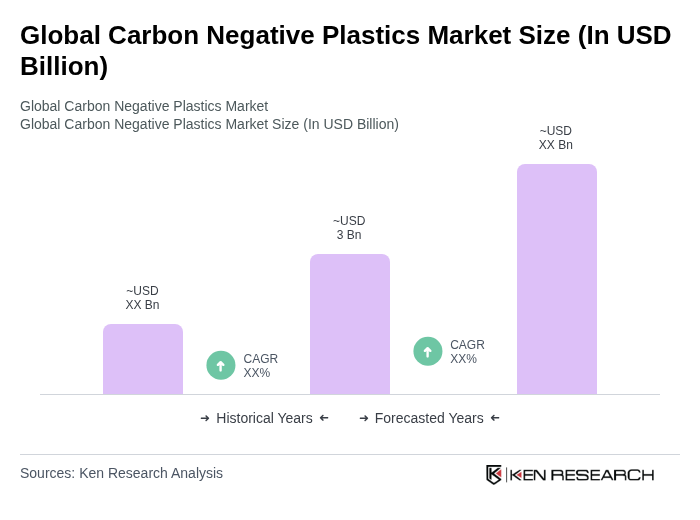
The Global Carbon Negative Plastics Market is currently valued at approximately USD 3 billion, driven by increasing environmental concerns, regulatory pressures, and advancements in sustainable materials technology.

What makes us stand out is that our consultants follow Robust, Refine and Result (RRR) methodology. Robust for clear definitions, approaches and sanity checking, Refine for differentiating respondents' facts and opinions, and Result for presenting data with story.

We have set a benchmark in the industry by offering our clients with syndicated and customized market research reports featuring coverage of entire market as well as meticulous research and analyst insights.

While we don't replace traditional research, we flip the method upside down. Our dual approach of Top Bottom & Bottom Top ensures quality deliverable by not just verifying company fundamentals but also looking at the sector and macroeconomic factors.

With one step in the future, our research team constantly tries to show you the bigger picture. We help with some of the tough questions you may encounter along the way: How is the industry positioned? Best marketing channel? KPI's of competitors? By aligning every element, we help maximize success.

Our report gives you instant access to the answers and sources that other companies might choose to hide. We elaborate each steps of research methodology we have used and showcase you the sample size to earn your trust.

If you need any support, we are here! We pride ourselves on universe strength, data quality, and quick, friendly, and professional service.













