Region:Global
Author(s):Rebecca
Product Code:KRAC0237
Pages:92
Published On:August 2025
By Type:The CPOE systems market can be segmented into four main types: Standalone CPOE Systems, Integrated CPOE Systems, Web-Based CPOE Systems, and Cloud-Based CPOE Systems. Among these, Integrated CPOE Systems are gaining significant traction due to their ability to seamlessly connect with existing healthcare IT systems, enhancing workflow efficiency and data accuracy. Integrated systems are preferred in large hospital networks for their interoperability and support of complex clinical workflows .

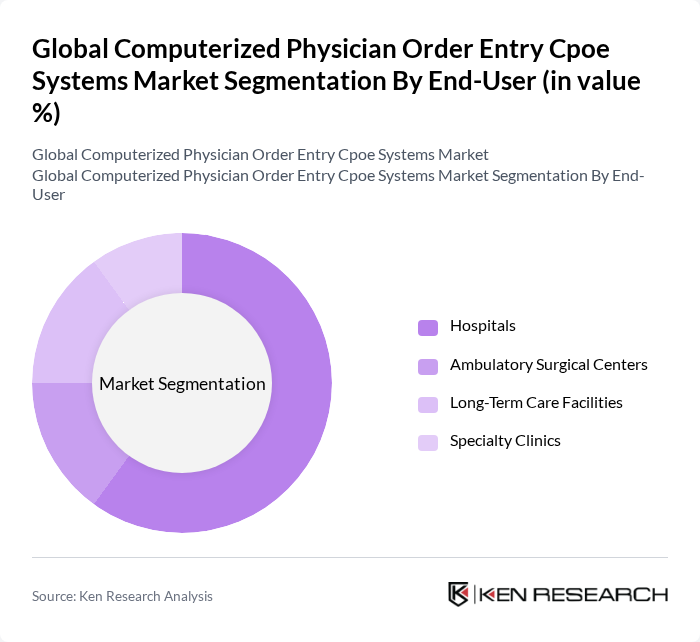
By End-User:The end-user segmentation includes Hospitals, Ambulatory Surgical Centers, Long-Term Care Facilities, and Specialty Clinics. Hospitals are the leading end-users of CPOE systems, driven by the need for improved patient safety, reduced medication errors, and enhanced operational efficiency. Hospitals benefit most from CPOE adoption due to high patient volumes and complex medication management needs .
The Global Computerized Physician Order Entry CPOE Systems Market is characterized by a dynamic mix of regional and international players. Leading participants such as Epic Systems Corporation, Oracle Cerner, Allscripts Healthcare Solutions, Inc., MEDITECH (Medical Information Technology, Inc.), McKesson Corporation, Siemens Healthineers, Athenahealth, Inc., NextGen Healthcare, Inc., GE HealthCare, Philips Healthcare, Oracle Corporation, IBM Watson Health, eClinicalWorks LLC, Infor Healthcare, MEDHOST, Inc. contribute to innovation, geographic expansion, and service delivery in this space.
The future of CPOE systems is poised for significant transformation, driven by technological advancements and evolving healthcare needs. As healthcare providers increasingly focus on value-based care, the integration of artificial intelligence and machine learning into CPOE systems is expected to enhance clinical decision-making. Furthermore, the growing emphasis on interoperability standards will facilitate seamless data exchange, improving patient outcomes and operational efficiency across healthcare facilities.
| Segment | Sub-Segments |
|---|---|
| By Type | Standalone CPOE Systems Integrated CPOE Systems Web-Based CPOE Systems Cloud-Based CPOE Systems |
| By End-User | Hospitals Ambulatory Surgical Centers Long-Term Care Facilities Specialty Clinics |
| By Component | Software Hardware Services |
| By Deployment Mode | On-Premise Cloud-Based |
| By Pricing Model | Subscription-Based One-Time License Fee |
| By User Type | Physicians Nurses Pharmacists |
| By Application | Medication Management Clinical Task Management Diagnostics (Lab/Radiology Orders) Patient Monitoring |
| Scope Item/Segment | Sample Size | Target Respondent Profiles |
|---|---|---|
| Hospital CPOE System Implementation | 120 | IT Managers, Clinical Informatics Specialists |
| Physician User Experience | 90 | Physicians, Nurse Practitioners |
| Healthcare Administrator Insights | 60 | Hospital Administrators, Chief Information Officers |
| CPOE System Vendor Feedback | 50 | Product Managers, Sales Executives |
| Regulatory Compliance Perspectives | 40 | Compliance Officers, Quality Assurance Managers |
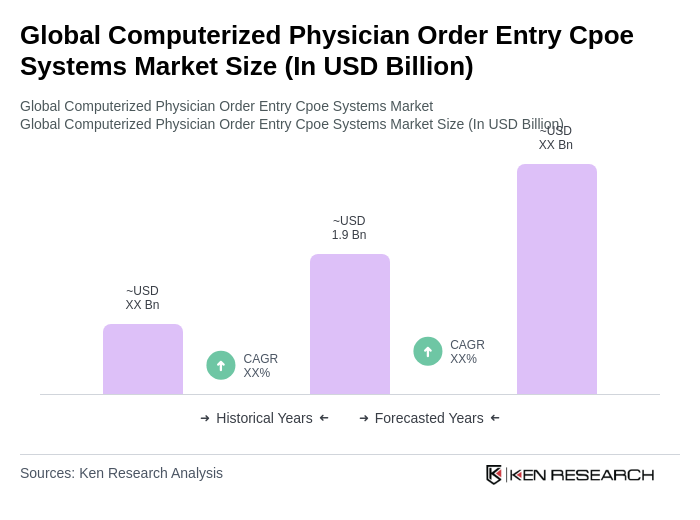
The Global CPOE Systems Market is valued at approximately USD 1.9 billion, reflecting a significant growth trend driven by the adoption of electronic health records, improved patient safety, and the demand for efficient healthcare delivery systems.

What makes us stand out is that our consultants follow Robust, Refine and Result (RRR) methodology. Robust for clear definitions, approaches and sanity checking, Refine for differentiating respondents' facts and opinions, and Result for presenting data with story.

We have set a benchmark in the industry by offering our clients with syndicated and customized market research reports featuring coverage of entire market as well as meticulous research and analyst insights.

While we don't replace traditional research, we flip the method upside down. Our dual approach of Top Bottom & Bottom Top ensures quality deliverable by not just verifying company fundamentals but also looking at the sector and macroeconomic factors.

With one step in the future, our research team constantly tries to show you the bigger picture. We help with some of the tough questions you may encounter along the way: How is the industry positioned? Best marketing channel? KPI's of competitors? By aligning every element, we help maximize success.

Our report gives you instant access to the answers and sources that other companies might choose to hide. We elaborate each steps of research methodology we have used and showcase you the sample size to earn your trust.

If you need any support, we are here! We pride ourselves on universe strength, data quality, and quick, friendly, and professional service.













