About the Report
Base Year 2024Listen to the audio summary
Global Cutaneous T Cell Lymphoma Market Overview
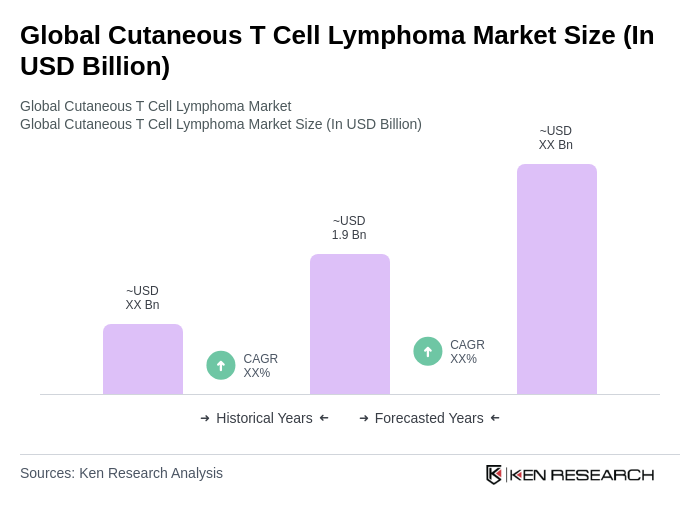
- The Global Cutaneous T Cell Lymphoma Market is valued at approximately USD 1.9 billion, based on a five-year historical analysis. This update aligns with multiple industry trackers reporting market sizes in the high hundreds of millions to low billions depending on scope (global CTCL therapeutics vs broader CTCL treatment market), with recent estimates placing the treatment market near the two?billion range and the 7MM alone nearing one billion.
- Growth is driven by increasing prevalence and diagnosis of CTCL, improvements in diagnostics and staging, and the availability/uptake of targeted therapies such as brentuximab vedotin, mogamulizumab, and topical mechlorethamine. Industry analyses also point to orphan drug development focus and rising patient support initiatives as demand catalysts.
- Key players in this market include the United States, Germany, and Japan, which dominate due to advanced healthcare infrastructure, robust R&D funding, and strong oncology pipelines and approvals in these regions, including 7MM markets highlighted by industry trackers.
- In 2023, the U.S. Food and Drug Administration took multiple steps to expedite access to oncology therapies overall through existing expedited programs (Fast Track, Breakthrough Therapy, Priority Review, Accelerated Approval). While no CTCL?specific regulation was newly introduced as a unique rule, CTCL agents have benefited from expedited pathways historically, and new approvals in related CTCL indications (for example, denileukin diftitox Lymphir approval occurred subsequently) underscore the regulatory emphasis on rapid access for serious conditions.
Global Cutaneous T Cell Lymphoma Market Segmentation
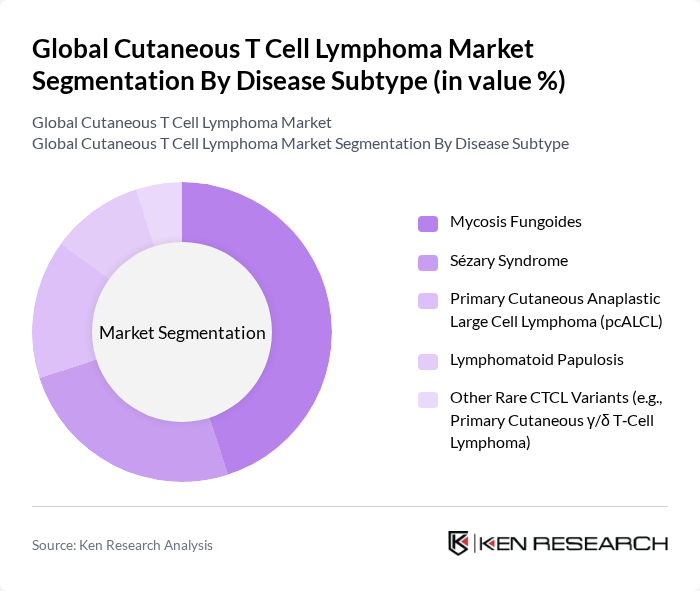
By Disease Subtype:The disease subtype segmentation includes Mycosis Fungoides, Sézary Syndrome, Primary Cutaneous Anaplastic Large Cell Lymphoma (pcALCL), Lymphomatoid Papulosis, and Other Rare CTCL Variants (e.g., Primary Cutaneous ?/? T?Cell Lymphoma). Among these, Mycosis Fungoides is the most prevalent subtype, accounting for the majority of CTCL cases in epidemiologic literature, with estimates commonly indicating it represents the largest share of CTCL burden; Sézary syndrome remains rarer but clinically significant.
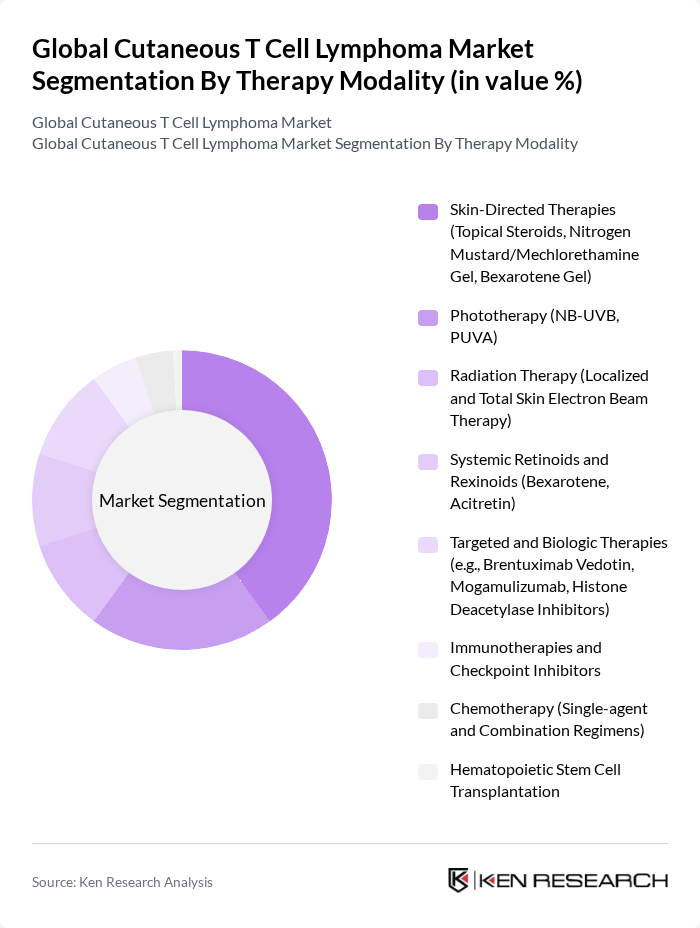
By Therapy Modality:The therapy modality segmentation encompasses Skin-Directed Therapies, Phototherapy, Radiation Therapy, Systemic Retinoids and Rexinoids, Targeted and Biologic Therapies, Immunotherapies and Checkpoint Inhibitors, Chemotherapy, and Hematopoietic Stem Cell Transplantation. Skin?Directed Therapies are widely used in early?stage disease, with topical mechlorethamine gel (Valchlor/Ledaga), topical corticosteroids, and bexarotene gel as foundational options; phototherapy (NB?UVB, PUVA) and localized radiation/total skin electron beam therapy are standard modalities across guidelines and practice patterns. The growing availability and clinical use of targeted and biologic therapies (e.g., brentuximab vedotin, mogamulizumab, HDAC inhibitors) supports broader systemic treatment in advanced or refractory cases.
Global Cutaneous T Cell Lymphoma Market Competitive Landscape
The Global Cutaneous T Cell Lymphoma Market is characterized by a dynamic mix of regional and international players. Leading participants such as Kyowa Kirin Co., Ltd. (Poteligeo, mogamulizumab), Seagen Inc. (Adcetris, brentuximab vedotin), Helsinn Group (Valchlor/ Ledaga, mechlorethamine gel), Soligenix, Inc. (HyBryte, synthetic hypericin photodynamic therapy), Innate Pharma S.A. (Lacutamab, IPH4102), Merck & Co., Inc. (Keytruda, pembrolizumab – off?label/clinical use in CTCL), Bristol Myers Squibb (nivolumab and immuno?oncology portfolio in CTCL trials), Incyte Corporation (ruxolitinib/itacitinib research in T?cell malignancies), Yakult Honsha Co., Ltd. (Poteligeo commercialization partner in Japan), Regeneron Pharmaceuticals, Inc. (cemiplimab/REGN pipeline in CTCL studies), Eisai Co., Ltd. (oncology alliances relevant to CTCL markets), Takeda Pharmaceutical Company Limited (historic ADC partnerships; oncology footprint), Recordati S.p.A. (Ledaga EU commercialization), Helsinn–Recordati Alliance (CTCL topical chemotherapy commercialization in EU), Ono Pharmaceutical Co., Ltd. (ONO?4685 and immuno?oncology in T?cell malignancies) contribute to innovation, geographic expansion, and service delivery in this space.
Global Cutaneous T Cell Lymphoma Market Industry Analysis
Growth Drivers
- Increasing Prevalence of Cutaneous T Cell Lymphoma:The incidence of Cutaneous T Cell Lymphoma (CTCL) is low and relatively stable; population-based estimates in the United States indicate an incidence around 6 to 7 cases per million persons with mycosis fungoides being the most common subtype, not “approximately 6,000 new cases” annually nationwide. According to the American Cancer Society, the prevalence of CTCL has increased by 3% per year over the last decade. This growing patient population necessitates enhanced treatment options and healthcare resources, driving market growth. The aging population, particularly those over 60, is significantly contributing to this trend, as older adults are more susceptible to lymphomas.
- Advancements in Treatment Options:Recent innovations in CTCL therapies, including targeted therapies and immunotherapies, have transformed treatment paradigms. For instance, the FDA approved brentuximab vedotin in the future, which has shown a response rate in patients with advanced CTCL. Additionally, the global market for CTCL treatments is projected to reach $1.2 billion in future, reflecting the impact of these advancements. These developments not only improve patient outcomes but also stimulate market growth by attracting investment and research initiatives.
- Rising Awareness and Early Diagnosis:Increased awareness of CTCL among healthcare professionals and patients has led to earlier diagnosis and treatment. Educational campaigns and support groups have contributed to an increase in early-stage diagnoses over the past five years. The National Cancer Institute reported that early intervention significantly improves survival rates, with a five-year survival rate of 90% for localized cases. This trend is crucial for market expansion, as early treatment options are more effective and less costly, encouraging healthcare systems to invest in CTCL management.
Market Challenges
- High Treatment Costs:The financial burden of CTCL treatments poses a significant challenge, with annual treatment costs exceeding $100,000 for advanced therapies. Many patients face difficulties in affording these treatments, leading to treatment delays or discontinuation. According to a report by the National Cancer Institute, nearly 40% of patients reported financial toxicity as a barrier to accessing care. This challenge not only affects patient outcomes but also limits market growth potential as healthcare providers navigate reimbursement issues.
- Limited Availability of Specialized Healthcare:Access to specialized healthcare for CTCL remains a challenge, particularly in rural and underserved areas. The American Society of Clinical Oncology indicates that only 30% of patients have access to specialized dermatologists or oncologists. This limited availability can lead to misdiagnosis or delayed treatment, adversely affecting patient outcomes. The disparity in healthcare access creates a significant barrier to market growth, as effective treatment relies on timely and specialized care.
Global Cutaneous T Cell Lymphoma Market Future Outlook
The future of the CTCL market appears promising, driven by ongoing advancements in personalized medicine and the integration of technology in treatment protocols. The shift towards individualized therapies is expected to enhance treatment efficacy, while telemedicine is likely to improve patient access to specialists. Furthermore, the incorporation of artificial intelligence in diagnostics will streamline the identification of CTCL, leading to earlier interventions. These trends indicate a robust growth trajectory for the market, fostering innovation and improved patient outcomes.
Market Opportunities
- Development of Targeted Therapies:The focus on developing targeted therapies presents a significant opportunity for market players. With an estimated percentage of patients responding positively to new targeted treatments, companies investing in this area can capture a substantial market share. The potential for personalized treatment plans tailored to individual genetic profiles further enhances this opportunity, promising improved patient outcomes and satisfaction.
- Expansion into Emerging Markets:Emerging markets, particularly in Asia and Africa, represent untapped potential for CTCL treatments. With a growing awareness of cancer and increasing healthcare investments, these regions are poised for market growth. The World Bank projects healthcare spending in these areas to rise by a percentage annually, creating opportunities for pharmaceutical companies to introduce innovative therapies and expand their market presence.
Scope of the Report
| Segment | Sub-Segments |
|---|---|
| By Disease Subtype | Mycosis Fungoides Sézary Syndrome Primary Cutaneous Anaplastic Large Cell Lymphoma (pcALCL) Lymphomatoid Papulosis Other Rare CTCL Variants (e.g., Primary Cutaneous ?/? T?Cell Lymphoma) |
| By Therapy Modality | Skin?Directed Therapies (Topical Steroids, Nitrogen Mustard/Mechlorethamine Gel, Bexarotene Gel) Phototherapy (NB?UVB, PUVA) Radiation Therapy (Localized and Total Skin Electron Beam Therapy) Systemic Retinoids and Rexinoids (Bexarotene, Acitretin) Targeted and Biologic Therapies (e.g., Brentuximab Vedotin, Mogamulizumab, Histone Deacetylase Inhibitors) Immunotherapies and Checkpoint Inhibitors Chemotherapy (Single?agent and Combination Regimens) Hematopoietic Stem Cell Transplantation |
| By Distribution Channel | Hospital Pharmacies Specialty Pharmacies Retail Pharmacies Online Pharmacies |
| By End?User | Hospitals and Cancer Centers Specialty Dermatology/Oncology Clinics Homecare and Outpatient Settings Academic and Research Institutions |
| By Region | North America Europe Asia?Pacific Latin America Middle East & Africa |
| By Patient Demographics | Age Group (Adults, Elderly) Gender Comorbidity Profile |
| By Clinical Stage (TNMB Staging) | Early?Stage (IA–IIA) Advanced?Stage (IIB–IV) |
Key Target Audience
Investors and Venture Capitalist Firms
Government and Regulatory Bodies (e.g., U.S. Food and Drug Administration, European Medicines Agency)
Pharmaceutical Manufacturers
Biotechnology Companies
Healthcare Providers and Hospitals
Clinical Research Organizations
Health Insurance Companies
Patient Advocacy Groups
Players Mentioned in the Report:
Kyowa Kirin Co., Ltd. (Poteligeo, mogamulizumab)
Seagen Inc. (Adcetris, brentuximab vedotin)
Helsinn Group (Valchlor/ Ledaga, mechlorethamine gel)
Soligenix, Inc. (HyBryte, synthetic hypericin photodynamic therapy)
Innate Pharma S.A. (Lacutamab, IPH4102)
Merck & Co., Inc. (Keytruda, pembrolizumab offlabel/clinical use in CTCL)
Bristol Myers Squibb (nivolumab and immunooncology portfolio in CTCL trials)
Incyte Corporation (ruxolitinib/itacitinib research in Tcell malignancies)
Yakult Honsha Co., Ltd. (Poteligeo commercialization partner in Japan)
Regeneron Pharmaceuticals, Inc. (cemiplimab/REGN pipeline in CTCL studies)
Eisai Co., Ltd. (oncology alliances relevant to CTCL markets)
Takeda Pharmaceutical Company Limited (historic ADC partnerships; oncology footprint)
Recordati S.p.A. (Ledaga EU commercialization)
HelsinnRecordati Alliance (CTCL topical chemotherapy commercialization in EU)
Ono Pharmaceutical Co., Ltd. (ONO4685 and immunooncology in Tcell malignancies)
Table of Contents
Market Assessment Phase
1. Executive Summary and Approach
2. Global Cutaneous T Cell Lymphoma Market Overview
2.1 Key Insights and Strategic Recommendations
2.2 Global Cutaneous T Cell Lymphoma Market Overview
2.3 Definition and Scope
2.4 Evolution of Market Ecosystem
2.5 Timeline of Key Regulatory Milestones
2.6 Value Chain & Stakeholder Mapping
2.7 Business Cycle Analysis
2.8 Policy & Incentive Landscape
3. Global Cutaneous T Cell Lymphoma Market Analysis
3.1 Growth Drivers
3.1.1 Increasing prevalence of Cutaneous T Cell Lymphoma
3.1.2 Advancements in treatment options
3.1.3 Rising awareness and early diagnosis
3.1.4 Supportive government initiatives
3.2 Market Challenges
3.2.1 High treatment costs
3.2.2 Limited availability of specialized healthcare
3.2.3 Side effects of existing therapies
3.2.4 Lack of awareness in developing regions
3.3 Market Opportunities
3.3.1 Development of targeted therapies
3.3.2 Expansion into emerging markets
3.3.3 Collaborations with research institutions
3.3.4 Increasing investment in R&D
3.4 Market Trends
3.4.1 Shift towards personalized medicine
3.4.2 Growth of telemedicine in treatment
3.4.3 Integration of AI in diagnostics
3.4.4 Rising patient-centric approaches
3.5 Government Regulation
3.5.1 Regulatory approvals for new therapies
3.5.2 Guidelines for clinical trials
3.5.3 Policies for patient access to treatments
3.5.4 Funding for research initiatives
4. SWOT Analysis
5. Stakeholder Analysis
6. Porter's Five Forces Analysis
7. Global Cutaneous T Cell Lymphoma Market Market Size, 2019-2024
7.1 By Value
7.2 By Volume
7.3 By Average Selling Price
8. Global Cutaneous T Cell Lymphoma Market Segmentation
8.1 By Disease Subtype
8.1.1 Mycosis Fungoides
8.1.2 Sézary Syndrome
8.1.3 Primary Cutaneous Anaplastic Large Cell Lymphoma (pcALCL)
8.1.4 Lymphomatoid Papulosis
8.1.5 Other Rare CTCL Variants (e.g., Primary Cutaneous ?/? T?Cell Lymphoma)
8.2 By Therapy Modality
8.2.1 Skin?Directed Therapies (Topical Steroids, Nitrogen Mustard/Mechlorethamine Gel, Bexarotene Gel)
8.2.2 Phototherapy (NB?UVB, PUVA)
8.2.3 Radiation Therapy (Localized and Total Skin Electron Beam Therapy)
8.2.4 Systemic Retinoids and Rexinoids (Bexarotene, Acitretin)
8.2.5 Targeted and Biologic Therapies (e.g., Brentuximab Vedotin, Mogamulizumab, Histone Deacetylase Inhibitors)
8.2.6 Immunotherapies and Checkpoint Inhibitors
8.2.7 Chemotherapy (Single?agent and Combination Regimens)
8.2.8 Hematopoietic Stem Cell Transplantation
8.3 By Distribution Channel
8.3.1 Hospital Pharmacies
8.3.2 Specialty Pharmacies
8.3.3 Retail Pharmacies
8.3.4 Online Pharmacies
8.4 By End?User
8.4.1 Hospitals and Cancer Centers
8.4.2 Specialty Dermatology/Oncology Clinics
8.4.3 Homecare and Outpatient Settings
8.4.4 Academic and Research Institutions
8.5 By Region
8.5.1 North America
8.5.2 Europe
8.5.3 Asia?Pacific
8.5.4 Latin America
8.5.5 Middle East & Africa
8.6 By Patient Demographics
8.6.1 Age Group (Adults, Elderly)
8.6.2 Gender
8.6.3 Comorbidity Profile
8.7 By Clinical Stage (TNMB Staging)
8.7.1 Early?Stage (IA–IIA)
8.7.2 Advanced?Stage (IIB–IV)
9. Global Cutaneous T Cell Lymphoma Market Competitive Analysis
9.1 Market Share of Key Players
9.2 KPIs for Cross Comparison of Key Players
9.2.1 CTCL?Attributed Revenue and Growth (YoY)
9.2.2 Number of Approved CTCL Indications (by region)
9.2.3 Number of CTCL Pipeline Assets (Phase I–III)
9.2.4 Time?to?Approval from Phase II Start (months)
9.2.5 Geographic Coverage (7MM and RoW presence)
9.2.6 Patient Reach and Treatment Initiations (annual)
9.2.7 Payer Coverage and Reimbursement Breadth (formularies/tiering)
9.2.8 Real?World Outcomes (ORR/CR rates in CTCL labels or RWE)
9.2.9 Safety Profile Differentiation (boxed warnings, discontinuation rates)
9.2.10 Post?Marketing Commitments Fulfillment Rate
9.2.11 Manufacturing/Supply Reliability (drug shortages, lot release cycle)
9.2.12 Key Strategic Collaborations and Licensing Deals (past 3–5 years)
9.3 SWOT Analysis of Top Players
9.4 Pricing Analysis
9.5 Detailed Profile of Major Companies
9.5.1 Kyowa Kirin Co., Ltd. (Poteligeo, mogamulizumab)
9.5.2 Seagen Inc. (Adcetris, brentuximab vedotin)
9.5.3 Helsinn Group (Valchlor/ Ledaga, mechlorethamine gel)
9.5.4 Soligenix, Inc. (HyBryte, synthetic hypericin photodynamic therapy)
9.5.5 Innate Pharma S.A. (Lacutamab, IPH4102)
9.5.6 Merck & Co., Inc. (Keytruda, pembrolizumab – off?label/clinical use in CTCL)
9.5.7 Bristol Myers Squibb (nivolumab and immuno?oncology portfolio in CTCL trials)
9.5.8 Incyte Corporation (ruxolitinib/itacitinib research in T?cell malignancies)
9.5.9 Yakult Honsha Co., Ltd. (Poteligeo commercialization partner in Japan)
9.5.10 Regeneron Pharmaceuticals, Inc. (cemiplimab/REGN pipeline in CTCL studies)
9.5.11 Eisai Co., Ltd. (oncology alliances relevant to CTCL markets)
9.5.12 Takeda Pharmaceutical Company Limited (historic ADC partnerships; oncology footprint)
9.5.13 Recordati S.p.A. (Ledaga EU commercialization)
9.5.14 Helsinn–Recordati Alliance (CTCL topical chemotherapy commercialization in EU)
9.5.15 Ono Pharmaceutical Co., Ltd. (ONO?4685 and immuno?oncology in T?cell malignancies)
10. Global Cutaneous T Cell Lymphoma Market End-User Analysis
10.1 Procurement Behavior of Key Ministries
10.1.1 Government healthcare spending trends
10.1.2 Policy frameworks influencing procurement
10.1.3 Collaboration with healthcare providers
10.1.4 Budget allocation for cancer treatments
10.2 Corporate Spend on Infrastructure & Energy
10.2.1 Investment in healthcare infrastructure
10.2.2 Funding for research and development
10.2.3 Corporate partnerships for treatment access
10.3 Pain Point Analysis by End-User Category
10.3.1 Access to specialized care
10.3.2 Affordability of treatments
10.3.3 Availability of clinical trials
10.4 User Readiness for Adoption
10.4.1 Awareness of treatment options
10.4.2 Acceptance of new therapies
10.4.3 Training and education needs
10.5 Post-Deployment ROI and Use Case Expansion
10.5.1 Evaluation of treatment outcomes
10.5.2 Long-term patient follow-up strategies
10.5.3 Expansion into new patient demographics
11. Global Cutaneous T Cell Lymphoma Market Future Size, 2025-2030
11.1 By Value
11.2 By Volume
11.3 By Average Selling Price
Go-To-Market Strategy Phase
1. Whitespace Analysis + Business Model Canvas
1.1 Market gaps and opportunities
1.2 Value proposition development
1.3 Revenue model considerations
1.4 Key partnerships and alliances
2. Marketing and Positioning Recommendations
2.1 Branding strategies
2.2 Product USPs
2.3 Target audience identification
2.4 Communication strategies
3. Distribution Plan
3.1 Urban retail strategies
3.2 Rural NGO tie-ups
3.3 Online distribution channels
3.4 Partnerships with healthcare providers
4. Channel & Pricing Gaps
4.1 Underserved routes
4.2 Pricing bands analysis
4.3 Competitor pricing strategies
4.4 Customer willingness to pay
5. Unmet Demand & Latent Needs
5.1 Category gaps
5.2 Consumer segments analysis
5.3 Emerging trends in patient needs
5.4 Future product development areas
6. Customer Relationship
6.1 Loyalty programs
6.2 After-sales service
6.3 Customer feedback mechanisms
6.4 Community engagement initiatives
7. Value Proposition
7.1 Sustainability initiatives
7.2 Integrated supply chains
7.3 Unique selling points of products
7.4 Customer-centric approaches
8. Key Activities
8.1 Regulatory compliance
8.2 Branding efforts
8.3 Distribution setup
8.4 Training and support for stakeholders
9. Entry Strategy Evaluation
9.1 Domestic Market Entry Strategy
9.1.1 Product mix considerations
9.1.2 Pricing band analysis
9.1.3 Packaging strategies
9.2 Export Entry Strategy
9.2.1 Target countries identification
9.2.2 Compliance roadmap development
10. Entry Mode Assessment
10.1 Joint Ventures
10.2 Greenfield investments
10.3 Mergers & Acquisitions
10.4 Distributor Model considerations
11. Capital and Timeline Estimation
11.1 Capital requirements
11.2 Timelines for market entry
11.3 Resource allocation strategies
12. Control vs Risk Trade-Off
12.1 Ownership vs Partnerships
12.2 Risk management strategies
12.3 Control mechanisms for operations
13. Profitability Outlook
13.1 Breakeven analysis
13.2 Long-term sustainability strategies
13.3 Financial forecasting
14. Potential Partner List
14.1 Distributors
14.2 Joint Ventures
14.3 Acquisition targets
15. Execution Roadmap
15.1 Phased Plan for Market Entry
15.1.1 Market Setup
15.1.2 Market Entry
15.1.3 Growth Acceleration
15.1.4 Scale & Stabilize
15.2 Key Activities and Milestones
15.2.1 Timeline for key activities
15.2.2 Milestone tracking mechanisms
Research Methodology
Phase 1: Approach1
Desk Research
- Analysis of published market reports and white papers on cutaneous T cell lymphoma (CTCL)
- Review of clinical trial registries and outcomes related to CTCL treatments
- Examination of healthcare expenditure reports and reimbursement policies affecting CTCL therapies
Primary Research
- Interviews with oncologists specializing in hematologic malignancies
- Surveys with healthcare providers involved in CTCL patient management
- Focus groups with patients diagnosed with CTCL to understand treatment experiences
Validation & Triangulation
- Cross-validation of findings with multiple data sources, including clinical guidelines and treatment protocols
- Triangulation of market data with insights from healthcare professionals and patient advocacy groups
- Sanity checks through expert panel discussions to ensure data accuracy and relevance
Phase 2: Market Size Estimation1
Top-down Assessment
- Estimation of the global CTCL market size based on overall oncology market growth rates
- Segmentation of the market by treatment type, including systemic therapies and localized treatments
- Incorporation of demographic data on CTCL prevalence and incidence rates across regions
Bottom-up Modeling
- Collection of sales data from pharmaceutical companies producing CTCL therapies
- Estimation of patient population size based on epidemiological studies and registries
- Calculation of average treatment costs and frequency of therapy administration
Forecasting & Scenario Analysis
- Multi-factor regression analysis incorporating factors such as drug approvals, market access, and pricing trends
- Scenario modeling based on potential changes in treatment guidelines and emerging therapies
- Development of baseline, optimistic, and pessimistic market forecasts through 2030
Phase 3: CATI Sample Composition1
| Scope Item/Segment | Sample Size | Target Respondent Profiles |
|---|---|---|
| Oncologists Specializing in CTCL | 100 | Hematologists, Medical Oncologists |
| Healthcare Providers in Dermatology | 80 | Dermatologists, Nurse Practitioners |
| Pharmaceutical Sales Representatives | 40 | Sales Managers, Product Specialists |
| Patient Advocacy Group Leaders | 50 | Advocacy Coordinators, Patient Support Managers |
| Health Economists and Policy Makers | 40 | Health Policy Analysts, Economic Researchers |
Frequently Asked Questions
What is the current value of the Global Cutaneous T Cell Lymphoma Market?
The Global Cutaneous T Cell Lymphoma Market is valued at approximately USD 1.9 billion, with estimates suggesting the treatment market could reach near the two-billion range, driven by increasing prevalence and advancements in therapies.
What are the main drivers of growth in the Cutaneous T Cell Lymphoma Market?
Which regions are leading in the Cutaneous T Cell Lymphoma Market?
What are the common subtypes of Cutaneous T Cell Lymphoma?
Other Regional/Country Reports
Indonesia Cutaneous T Cell Lymphoma Market
Malaysia Cutaneous T Cell Lymphoma Market
APAC Cutaneous T Cell Lymphoma Market
SEA Cutaneous T Cell Lymphoma Market
Why Buy From Us?

What makes us stand out is that our consultants follow Robust, Refine and Result (RRR) methodology. Robust for clear definitions, approaches and sanity checking, Refine for differentiating respondents' facts and opinions, and Result for presenting data with story.

We have set a benchmark in the industry by offering our clients with syndicated and customized market research reports featuring coverage of entire market as well as meticulous research and analyst insights.

While we don't replace traditional research, we flip the method upside down. Our dual approach of Top Bottom & Bottom Top ensures quality deliverable by not just verifying company fundamentals but also looking at the sector and macroeconomic factors.

With one step in the future, our research team constantly tries to show you the bigger picture. We help with some of the tough questions you may encounter along the way: How is the industry positioned? Best marketing channel? KPI's of competitors? By aligning every element, we help maximize success.

Our report gives you instant access to the answers and sources that other companies might choose to hide. We elaborate each steps of research methodology we have used and showcase you the sample size to earn your trust.

If you need any support, we are here! We pride ourselves on universe strength, data quality, and quick, friendly, and professional service.