Global Dipeptide Peptidase 4 Inhibitors Market

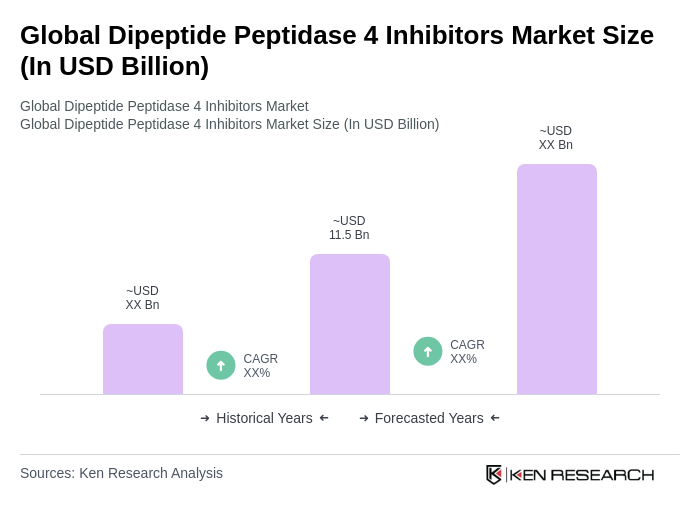
The Global Dipeptide Peptidase 4 Inhibitors Market, valued at USD 11.5 billion, is growing due to increasing diabetes cases, innovative therapies, and demand in North America and Europe.

Region:Global

Author(s):Shubham

Product Code:KRAC0727

Pages:81

Published On:August 2025
About the Report

Base Year 2024

Global Dipeptide Peptidase 4 Inhibitors Market Overview

  • The Global Dipeptide Peptidase 4 Inhibitors Market is valued at USD 11.5 billion, based on a five-year historical analysis. This growth is primarily driven by the increasing prevalence of type 2 diabetes and the rising demand for effective glycemic control therapies. The market is also supported by advancements in drug formulations and the growing awareness of diabetes management among healthcare professionals and patients.
  • Key players in this market are predominantly located in North America and Europe, with the United States and Germany being the most significant contributors. The dominance of these regions can be attributed to their robust healthcare infrastructure, high investment in research and development, and a large patient population suffering from diabetes, which drives the demand for innovative treatment options.
  • In 2023, the U.S. Food and Drug Administration (FDA) implemented new guidelines for the approval of Dipeptide Peptidase 4 inhibitors, emphasizing the need for comprehensive clinical data demonstrating long-term efficacy and safety. This regulation aims to enhance patient safety and ensure that new therapies meet stringent efficacy standards before reaching the market.
Global Dipeptide Peptidase 4 Inhibitors Market Size

Global Dipeptide Peptidase 4 Inhibitors Market Segmentation

By Type:The market is segmented into various types of Dipeptide Peptidase 4 inhibitors, including Sitagliptin, Saxagliptin, Linagliptin, Alogliptin, Vildagliptin, Teneligliptin, Anagliptin, Gemigliptin, Evogliptin, and Others. Among these, Sitagliptin has emerged as the leading sub-segment due to its established efficacy and widespread acceptance among healthcare providers. The increasing number of prescriptions and favorable clinical outcomes associated with Sitagliptin contribute to its dominance in the market.
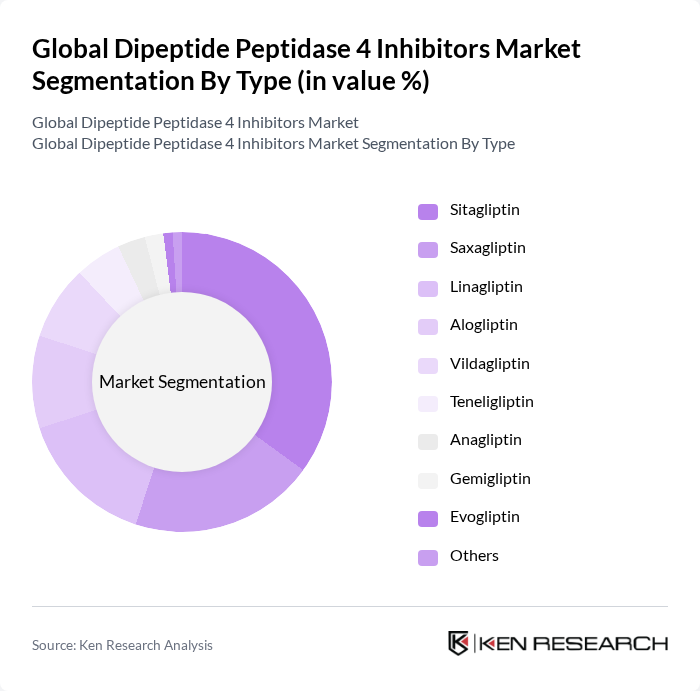
Global Dipeptide Peptidase 4 Inhibitors Market segmentation by Type.

By Application:The applications of Dipeptide Peptidase 4 inhibitors include Type 2 Diabetes Management, Combination Therapy (e.g., with Metformin, SGLT2 inhibitors), Patients with Renal Impairment Management, and Elderly Glycemic Control. The Type 2 Diabetes Management segment is the most significant, driven by the increasing incidence of diabetes globally. The growing focus on personalized medicine and combination therapies further enhances the demand for these inhibitors in managing diabetes effectively.
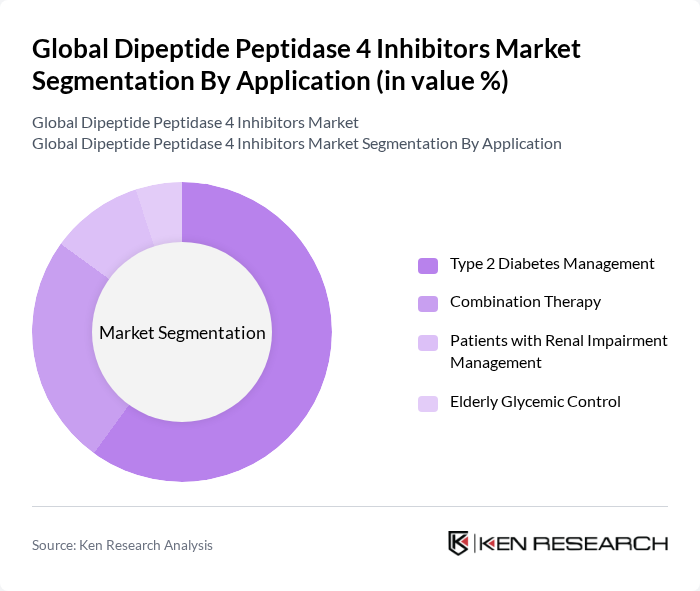
Global Dipeptide Peptidase 4 Inhibitors Market segmentation by Application.

Global Dipeptide Peptidase 4 Inhibitors Market Competitive Landscape

The Global Dipeptide Peptidase 4 Inhibitors Market is characterized by a dynamic mix of regional and international players. Leading participants such as Merck & Co., Inc. (Januvia/Sitagliptin), AstraZeneca PLC (Onglyza/Saxagliptin; Kombiglyze XR), Boehringer Ingelheim GmbH (Tradjenta/Linagliptin; Jentadueto), Takeda Pharmaceutical Company Limited (Nesina/Alogliptin; Kazano; Oseni), Novartis AG (Galvus/Vildagliptin; Eucreas), Eli Lilly and Company (co-developer/co-marketer with Boehringer Ingelheim), Bristol Myers Squibb (historic co-developer of Saxagliptin), Sun Pharmaceutical Industries Ltd. (generics incl. Teneligliptin), Lupin Limited (generic DPP-4 portfolio), Glenmark Pharmaceuticals Ltd. (Teneligliptin; combinations), Teva Pharmaceutical Industries Ltd. (global generics), Sandoz Group AG (generics and biosimilars), Dr. Reddy’s Laboratories Ltd. (generic DPP-4s), Daiichi Sankyo Company, Limited (select APAC markets), Astellas Pharma Inc. (regional partnerships/licensing) contribute to innovation, geographic expansion, and service delivery in this space.

Merck & Co., Inc.

1891

Rahway, New Jersey, USA

AstraZeneca PLC

1999

Cambridge, England

Boehringer Ingelheim GmbH

1885

Ingelheim am Rhein, Germany

Takeda Pharmaceutical Company Limited

1781

Tokyo, Japan

Novartis AG

1996

Basel, Switzerland

Company

Establishment Year

Headquarters

Portfolio Breadth (number of DPP-4 molecules/brands)

Global Market Share in DPP-4 (%)

Revenue from DPP-4 Inhibitors (USD, latest FY)

YoY Revenue Growth in DPP-4 Portfolio (%)

Geographic Coverage (countries/regions marketed)

Patent/Exclusivity Status by Molecule

Global Dipeptide Peptidase 4 Inhibitors Market Industry Analysis

Growth Drivers

  • Increasing Prevalence of Diabetes:The World Health Organization reported that approximately 422 million people worldwide were living with diabetes in 2014, a number that has likely increased to over 537 million by future. This rising prevalence is driving demand for effective treatments, including dipeptide peptidase 4 inhibitors, which are crucial for managing blood sugar levels. The growing diabetic population necessitates innovative therapies to improve patient outcomes and reduce healthcare costs associated with diabetes complications.
  • Rising Demand for Effective Diabetes Management:The global diabetes management market is projected to reach $27 billion by future, reflecting a significant increase in the demand for effective therapies. Dipeptide peptidase 4 inhibitors are gaining traction due to their efficacy in controlling blood glucose levels and minimizing side effects. As healthcare providers seek to enhance patient adherence and outcomes, the demand for these inhibitors is expected to rise, further propelling market growth in the None region.
  • Advancements in Drug Formulations:Recent advancements in drug formulations have led to the development of more effective and safer dipeptide peptidase 4 inhibitors. For instance, the introduction of once-daily dosing regimens has improved patient compliance significantly. According to industry reports, the global investment in pharmaceutical R&D reached $200 billion in future, indicating a strong focus on innovation. These advancements are crucial for addressing the unmet needs of diabetes patients and expanding the market for these inhibitors.

Market Challenges

  • High Cost of Drug Development:The average cost of developing a new drug has escalated to approximately $2.8 billion, according to the Tufts Center for the Study of Drug Development. This high cost poses a significant barrier for companies looking to invest in dipeptide peptidase 4 inhibitors. The lengthy development timelines and the need for extensive clinical trials further complicate the financial landscape, potentially limiting the number of new entrants in the market.
  • Stringent Regulatory Requirements:Regulatory bodies, such as the FDA and EMA, impose rigorous standards for drug approval, which can delay market entry. The average time for drug approval can exceed 11 years, as reported by the FDA. These stringent requirements can deter investment in the development of new dipeptide peptidase 4 inhibitors, particularly in the None region, where regulatory pathways may be less established, leading to increased uncertainty for pharmaceutical companies.

Global Dipeptide Peptidase 4 Inhibitors Market Future Outlook

The future of the dipeptide peptidase 4 inhibitors market appears promising, driven by increasing healthcare investments and a growing focus on personalized medicine. As the prevalence of diabetes continues to rise, pharmaceutical companies are likely to prioritize the development of innovative therapies tailored to individual patient needs. Additionally, the integration of digital health solutions and telemedicine is expected to enhance patient engagement and adherence, further supporting market growth in the None region.

Market Opportunities

  • Expansion into Emerging Markets:Emerging markets present significant growth opportunities for dipeptide peptidase 4 inhibitors, with an estimated 65% of the global diabetic population residing in these regions. By future, healthcare expenditure in these markets is projected to reach $1.7 trillion, creating a favorable environment for pharmaceutical companies to introduce their products and expand their market share.
  • Development of Combination Therapies:The trend towards combination therapies is gaining momentum, as they offer enhanced efficacy and improved patient compliance. Research indicates that combination therapies can lead to a 35% improvement in glycemic control compared to monotherapy. This presents a lucrative opportunity for companies to innovate and develop new formulations that combine dipeptide peptidase 4 inhibitors with other diabetes medications, catering to diverse patient needs.

Scope of the Report

SegmentSub-Segments
By Type

Sitagliptin

Saxagliptin

Linagliptin

Alogliptin

Vildagliptin

Teneligliptin

Anagliptin

Gemigliptin

Evogliptin

Others

By Application

Type 2 Diabetes Management

Combination Therapy (e.g., with Metformin, SGLT2 inhibitors)

Patients with Renal Impairment Management

Elderly Glycemic Control

By Distribution Channel

Hospital Pharmacies

Retail Pharmacies

Online Pharmacies

By End-User

Hospitals

Clinics

Homecare Settings

Ambulatory Surgical Centers

By Region

North America

Europe

Asia-Pacific

Latin America

Middle East & Africa

By Patient Demographics

Adults

Elderly

Pediatric (off-label/rare use)

By Pricing Tier

Branded

Generic

Key Target Audience

Investors and Venture Capitalist Firms

Government and Regulatory Bodies (e.g., U.S. Food and Drug Administration, European Medicines Agency)

Pharmaceutical Manufacturers

Biotechnology Companies

Contract Research Organizations

Healthcare Providers and Institutions

Pharmaceutical Distributors

Health Insurance Companies

Players Mentioned in the Report:

Merck & Co., Inc. (Januvia/Sitagliptin)

AstraZeneca PLC (Onglyza/Saxagliptin; Kombiglyze XR)

Boehringer Ingelheim GmbH (Tradjenta/Linagliptin; Jentadueto)

Takeda Pharmaceutical Company Limited (Nesina/Alogliptin; Kazano; Oseni)

Novartis AG (Galvus/Vildagliptin; Eucreas)

Eli Lilly and Company (co-developer/co-marketer with Boehringer Ingelheim)

Bristol Myers Squibb (historic co-developer of Saxagliptin)

Sun Pharmaceutical Industries Ltd. (generics incl. Teneligliptin)

Lupin Limited (generic DPP-4 portfolio)

Glenmark Pharmaceuticals Ltd. (Teneligliptin; combinations)

Teva Pharmaceutical Industries Ltd. (global generics)

Sandoz Group AG (generics and biosimilars)

Dr. Reddys Laboratories Ltd. (generic DPP-4s)

Daiichi Sankyo Company, Limited (select APAC markets)

Astellas Pharma Inc. (regional partnerships/licensing)

Table of Contents

Market Assessment Phase

1. Executive Summary and Approach


2. Global Dipeptide Peptidase 4 Inhibitors Market Overview

2.1 Key Insights and Strategic Recommendations

2.2 Global Dipeptide Peptidase 4 Inhibitors Market Overview

2.3 Definition and Scope

2.4 Evolution of Market Ecosystem

2.5 Timeline of Key Regulatory Milestones

2.6 Value Chain & Stakeholder Mapping

2.7 Business Cycle Analysis

2.8 Policy & Incentive Landscape


3. Global Dipeptide Peptidase 4 Inhibitors Market Analysis

3.1 Growth Drivers

3.1.1 Increasing prevalence of diabetes
3.1.2 Rising demand for effective diabetes management
3.1.3 Advancements in drug formulations
3.1.4 Growing awareness of chronic diseases

3.2 Market Challenges

3.2.1 High cost of drug development
3.2.2 Stringent regulatory requirements
3.2.3 Competition from alternative therapies
3.2.4 Market access barriers in emerging economies

3.3 Market Opportunities

3.3.1 Expansion into emerging markets
3.3.2 Development of combination therapies
3.3.3 Increasing investment in R&D
3.3.4 Collaborations with healthcare providers

3.4 Market Trends

3.4.1 Shift towards personalized medicine
3.4.2 Growth of telemedicine and digital health
3.4.3 Focus on preventive healthcare
3.4.4 Integration of AI in drug development

3.5 Government Regulation

3.5.1 Approval processes for new drugs
3.5.2 Pricing regulations for pharmaceuticals
3.5.3 Guidelines for clinical trials
3.5.4 Policies promoting generic drug use

4. SWOT Analysis


5. Stakeholder Analysis


6. Porter's Five Forces Analysis


7. Global Dipeptide Peptidase 4 Inhibitors Market Market Size, 2019-2024

7.1 By Value

7.2 By Volume

7.3 By Average Selling Price


8. Global Dipeptide Peptidase 4 Inhibitors Market Segmentation

8.1 By Type

8.1.1 Sitagliptin
8.1.2 Saxagliptin
8.1.3 Linagliptin
8.1.4 Alogliptin
8.1.5 Vildagliptin
8.1.6 Teneligliptin
8.1.7 Anagliptin
8.1.8 Gemigliptin
8.1.9 Evogliptin
8.1.10 Others

8.2 By Application

8.2.1 Type 2 Diabetes Management
8.2.2 Combination Therapy (e.g., with Metformin, SGLT2 inhibitors)
8.2.3 Patients with Renal Impairment Management
8.2.4 Elderly Glycemic Control

8.3 By Distribution Channel

8.3.1 Hospital Pharmacies
8.3.2 Retail Pharmacies
8.3.3 Online Pharmacies

8.4 By End-User

8.4.1 Hospitals
8.4.2 Clinics
8.4.3 Homecare Settings
8.4.4 Ambulatory Surgical Centers

8.5 By Region

8.5.1 North America
8.5.2 Europe
8.5.3 Asia-Pacific
8.5.4 Latin America
8.5.5 Middle East & Africa

8.6 By Patient Demographics

8.6.1 Adults
8.6.2 Elderly
8.6.3 Pediatric (off-label/rare use)

8.7 By Pricing Tier

8.7.1 Branded
8.7.2 Generic

9. Global Dipeptide Peptidase 4 Inhibitors Market Competitive Analysis

9.1 Market Share of Key Players

9.2 Cross Comparison of Key Players

9.2.1 Company Name
9.2.2 Portfolio Breadth (number of DPP-4 molecules/brands)
9.2.3 Global Market Share in DPP-4 (%)
9.2.4 Revenue from DPP-4 Inhibitors (USD, latest FY)
9.2.5 YoY Revenue Growth in DPP-4 Portfolio (%)
9.2.6 Geographic Coverage (countries/regions marketed)
9.2.7 Patent/Exclusivity Status by Molecule
9.2.8 Average Selling Price vs. Market (index)
9.2.9 Share of Generics vs. Branded in Portfolio (%)
9.2.10 Clinical/Real-World Evidence Depth (no. of pivotal/RWE studies)
9.2.11 Partnerships and Co-marketing Agreements (count)
9.2.12 Supply Reliability (manufacturing sites, API security)
9.2.13 Regulatory Footprint (approvals/filings across FDA/EMA/PMDA/NMPA)
9.2.14 Pharmacovigilance/Label Updates in Past 3 Years (count)

9.3 SWOT Analysis of Top Players

9.4 Pricing Analysis

9.5 Detailed Profile of Major Companies

9.5.1 Merck & Co., Inc. (Januvia/Sitagliptin)
9.5.2 AstraZeneca PLC (Onglyza/Saxagliptin; Kombiglyze XR)
9.5.3 Boehringer Ingelheim GmbH (Tradjenta/Linagliptin; Jentadueto)
9.5.4 Takeda Pharmaceutical Company Limited (Nesina/Alogliptin; Kazano; Oseni)
9.5.5 Novartis AG (Galvus/Vildagliptin; Eucreas)
9.5.6 Eli Lilly and Company (co-developer/co-marketer with Boehringer Ingelheim)
9.5.7 Bristol Myers Squibb (historic co-developer of Saxagliptin)
9.5.8 Sun Pharmaceutical Industries Ltd. (generics incl. Teneligliptin)
9.5.9 Lupin Limited (generic DPP-4 portfolio)
9.5.10 Glenmark Pharmaceuticals Ltd. (Teneligliptin; combinations)
9.5.11 Teva Pharmaceutical Industries Ltd. (global generics)
9.5.12 Sandoz Group AG (generics and biosimilars)
9.5.13 Dr. Reddy’s Laboratories Ltd. (generic DPP-4s)
9.5.14 Daiichi Sankyo Company, Limited (select APAC markets)
9.5.15 Astellas Pharma Inc. (regional partnerships/licensing)

10. Global Dipeptide Peptidase 4 Inhibitors Market End-User Analysis

10.1 Procurement Behavior of Key Ministries

10.1.1 Budget Allocation for Diabetes Management
10.1.2 Preference for Generic vs. Branded Drugs
10.1.3 Evaluation Criteria for Drug Procurement

10.2 Corporate Spend on Infrastructure & Energy

10.2.1 Investment in Healthcare Infrastructure
10.2.2 Funding for Diabetes Research Initiatives

10.3 Pain Point Analysis by End-User Category

10.3.1 Accessibility of Medications
10.3.2 Affordability of Treatments
10.3.3 Availability of Healthcare Services

10.4 User Readiness for Adoption

10.4.1 Awareness of Dipeptide Peptidase 4 Inhibitors
10.4.2 Willingness to Switch Medications

10.5 Post-Deployment ROI and Use Case Expansion

10.5.1 Measurement of Treatment Efficacy
10.5.2 Long-term Cost Savings Analysis

11. Global Dipeptide Peptidase 4 Inhibitors Market Future Size, 2025-2030

11.1 By Value

11.2 By Volume

11.3 By Average Selling Price


Go-To-Market Strategy Phase

1. Whitespace Analysis + Business Model Canvas

1.1 Market Gaps Identification

1.2 Business Model Framework


2. Marketing and Positioning Recommendations

2.1 Branding Strategies

2.2 Product USPs


3. Distribution Plan

3.1 Urban Retail Strategies

3.2 Rural NGO Tie-ups


4. Channel & Pricing Gaps

4.1 Underserved Routes

4.2 Pricing Bands Analysis


5. Unmet Demand & Latent Needs

5.1 Category Gaps

5.2 Consumer Segments


6. Customer Relationship

6.1 Loyalty Programs

6.2 After-sales Service


7. Value Proposition

7.1 Sustainability Initiatives

7.2 Integrated Supply Chains


8. Key Activities

8.1 Regulatory Compliance

8.2 Branding Efforts

8.3 Distribution Setup


9. Entry Strategy Evaluation

9.1 Domestic Market Entry Strategy

9.1.1 Product Mix Considerations
9.1.2 Pricing Band Strategy
9.1.3 Packaging Innovations

9.2 Export Entry Strategy

9.2.1 Target Countries Identification
9.2.2 Compliance Roadmap Development

10. Entry Mode Assessment

10.1 Joint Ventures

10.2 Greenfield Investments

10.3 Mergers & Acquisitions

10.4 Distributor Model Evaluation


11. Capital and Timeline Estimation

11.1 Capital Requirements Analysis

11.2 Timelines for Market Entry


12. Control vs Risk Trade-Off

12.1 Ownership vs Partnerships


13. Profitability Outlook

13.1 Breakeven Analysis

13.2 Long-term Sustainability Strategies


14. Potential Partner List

14.1 Distributors

14.2 Joint Ventures

14.3 Acquisition Targets


15. Execution Roadmap

15.1 Phased Plan for Market Entry

15.1.1 Market Setup Activities
15.1.2 Market Entry Steps
15.1.3 Growth Acceleration Tactics
15.1.4 Scale & Stabilize Strategies

15.2 Key Activities and Milestones

15.2.1 Milestone Planning
15.2.2 Activity Tracking

Research Methodology

ApproachModellingSample

Phase 1: Approach1

Desk Research

  • Analysis of market reports from pharmaceutical industry associations and journals
  • Review of scientific literature on Dipeptide Peptidase 4 inhibitors and their therapeutic applications
  • Examination of regulatory documents and guidelines from health authorities regarding drug approvals

Primary Research

  • Interviews with key opinion leaders in endocrinology and diabetes management
  • Surveys with pharmaceutical sales representatives and marketing teams
  • Field interviews with healthcare professionals prescribing Dipeptide Peptidase 4 inhibitors

Validation & Triangulation

  • Cross-validation of findings through multiple data sources including clinical trial results
  • Triangulation of market data with sales figures from pharmaceutical companies
  • Sanity checks through expert panel reviews and feedback from industry stakeholders

Phase 2: Market Size Estimation1

Top-down Assessment

  • Estimation of market size based on global diabetes prevalence and treatment rates
  • Segmentation of market by region, drug class, and patient demographics
  • Incorporation of trends in healthcare spending and insurance coverage for diabetes medications

Bottom-up Modeling

  • Collection of sales data from leading pharmaceutical companies producing Dipeptide Peptidase 4 inhibitors
  • Estimation of patient adherence rates and treatment duration for chronic conditions
  • Volume x price analysis based on historical sales data and projected growth rates

Forecasting & Scenario Analysis

  • Multi-factor regression analysis incorporating factors such as population growth and lifestyle changes
  • Scenario modeling based on potential market disruptions, including new drug approvals and patent expirations
  • Development of baseline, optimistic, and pessimistic forecasts through 2030

Phase 3: CATI Sample Composition1

Scope Item/SegmentSample SizeTarget Respondent Profiles
Endocrinologists100Diabetes Specialists, Clinical Researchers
Pharmaceutical Sales Representatives80Sales Managers, Product Specialists
Healthcare Providers120General Practitioners, Nurse Practitioners
Patients on Dipeptide Peptidase 4 Inhibitors140Diabetes Patients, Caregivers
Pharmacy Managers70Pharmacists, Inventory Managers

Frequently Asked Questions

What is the current value of the Global Dipeptide Peptidase 4 Inhibitors Market?

The Global Dipeptide Peptidase 4 Inhibitors Market is valued at approximately USD 11.5 billion, driven by the increasing prevalence of type 2 diabetes and the demand for effective glycemic control therapies.

What factors are driving the growth of the Dipeptide Peptidase 4 Inhibitors Market?

Which regions are the largest contributors to the Dipeptide Peptidase 4 Inhibitors Market?

What are the main types of Dipeptide Peptidase 4 inhibitors available in the market?

Other Regional/Country Reports

Qatar Dipeptide Peptidase 4 Inhibitors Market Report Size Share Growth Drivers Trends Opportunities & Forecast 2025–2030UAE Dipeptide Peptidase 4 Inhibitors MarketKSA Dipeptide Peptidase 4 Inhibitors Market

Indonesia Dipeptide Peptidase 4 Inhibitors Market

Malaysia Dipeptide Peptidase 4 Inhibitors Market

APAC Dipeptide Peptidase 4 Inhibitors Market

Why Buy From Us?

Refine Robust Result (RRR) Framework

What makes us stand out is that our consultants follow Robust, Refine and Result (RRR) methodology. Robust for clear definitions, approaches and sanity checking, Refine for differentiating respondents' facts and opinions, and Result for presenting data with story.

Our Reach Is Unmatched

We have set a benchmark in the industry by offering our clients with syndicated and customized market research reports featuring coverage of entire market as well as meticulous research and analyst insights.

Shifting the Research Paradigm

While we don't replace traditional research, we flip the method upside down. Our dual approach of Top Bottom & Bottom Top ensures quality deliverable by not just verifying company fundamentals but also looking at the sector and macroeconomic factors.

More Insights-Better Decisions

With one step in the future, our research team constantly tries to show you the bigger picture. We help with some of the tough questions you may encounter along the way: How is the industry positioned? Best marketing channel? KPI's of competitors? By aligning every element, we help maximize success.

Transparency and Trust

Our report gives you instant access to the answers and sources that other companies might choose to hide. We elaborate each steps of research methodology we have used and showcase you the sample size to earn your trust.

Round the Clock Support

If you need any support, we are here! We pride ourselves on universe strength, data quality, and quick, friendly, and professional service.

Why Clients Choose Us?

400000+
Reports in repository
150+
Consulting projects a year
100+
Analysts
8000+
Client Queries in 2022








