Region:Global
Author(s):Dev
Product Code:KRAD0564
Pages:90
Published On:August 2025
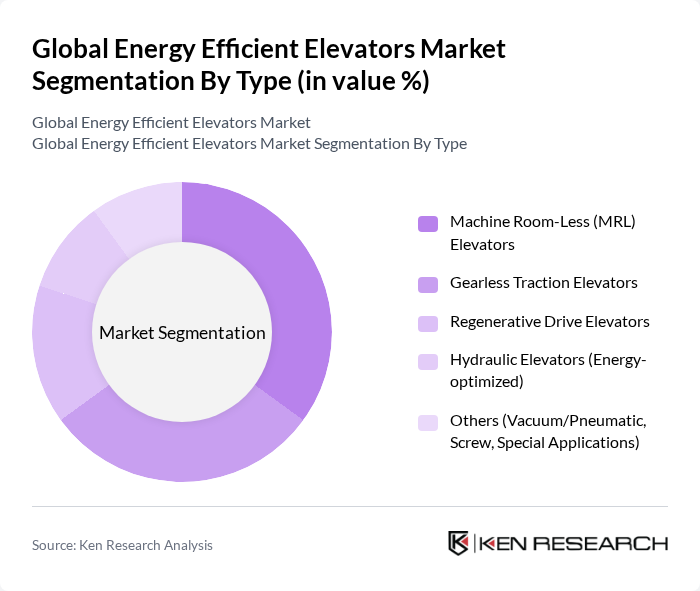
By Type:The market is segmented into various types of elevators, including Machine Room-Less (MRL) Elevators, Gearless Traction Elevators, Regenerative Drive Elevators, Hydraulic Elevators (Energy-optimized), and Others (Vacuum/Pneumatic, Screw, Special Applications). MRL elevators continue to gain traction due to space savings, gearless traction machines, and lower standby power requirements, making them a preferred option in urban infill and modernization projects. Gearless traction elevators are widely adopted for energy performance and lifecycle cost benefits, particularly when paired with regenerative drives and VVVF control. The overall shift toward modernization and energy optimization (regen adoption, destination control, LED/auto-standby) is shaping specification choices in both new installs and retrofits.
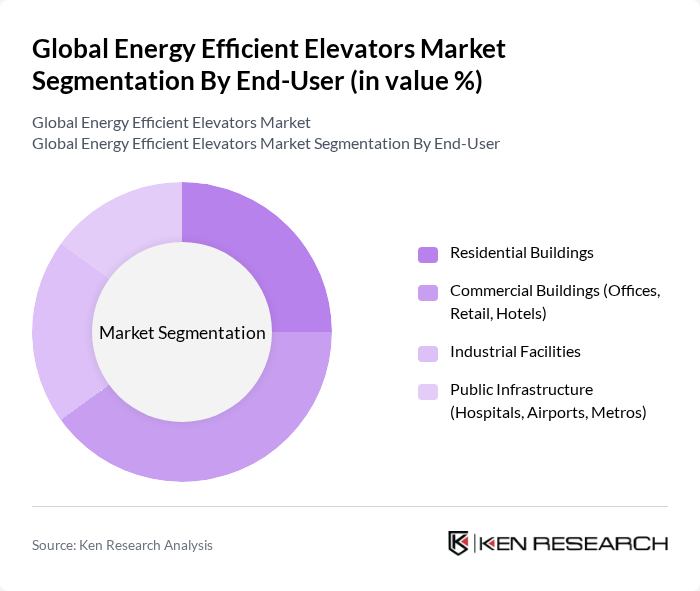
By End-User:The market is categorized based on end-users, including Residential Buildings, Commercial Buildings (Offices, Retail, Hotels), Industrial Facilities, and Public Infrastructure (Hospitals, Airports, Metros). The Commercial Buildings segment is currently leading the market due to the increasing number of high-rise buildings and the growing emphasis on energy-efficient solutions in urban environments. Residential Buildings are also witnessing a rise in demand for energy-efficient elevators as homeowners seek to enhance the value and sustainability of their properties. The trend towards smart buildings and energy-efficient public infrastructure is further driving growth in this segment.
The Global Energy Efficient Elevators Market is characterized by a dynamic mix of regional and international players. Leading participants such as Otis Worldwide Corporation, Schindler Group, KONE Corporation, TK Elevator (thyssenkrupp spin-off), Mitsubishi Electric Corporation, Hitachi, Ltd., Fujitec Co., Ltd., Hyundai Elevator Co., Ltd., Toshiba Elevator and Building Systems Corporation, SIGMA Elevator Company (Otis-owned brand), Schmitt + Sohn Aufzüge GmbH & Co. KG, Zardoya Otis, S.A., EITA Elevator (M) Sdn Bhd, Canny Elevator Co., Ltd., SANYO YUSOKI Co., Ltd. (SANYO Elevator) contribute to innovation, geographic expansion, and service delivery in this space.
The future of the energy-efficient elevators market appears promising, driven by increasing urbanization and a growing emphasis on sustainability. As cities expand and building codes become more stringent, the demand for energy-efficient solutions will rise. Additionally, the integration of smart technologies and IoT will enhance operational efficiency and user experience. Companies that invest in innovative designs and energy recovery systems will likely lead the market, capitalizing on the trend towards sustainable construction and retrofitting existing buildings.
| Segment | Sub-Segments |
|---|---|
| By Type | Machine Room-Less (MRL) Elevators Gearless Traction Elevators Regenerative Drive Elevators Hydraulic Elevators (Energy-optimized) Others (Vacuum/Pneumatic, Screw, Special Applications) |
| By End-User | Residential Buildings Commercial Buildings (Offices, Retail, Hotels) Industrial Facilities Public Infrastructure (Hospitals, Airports, Metros) |
| By Application | New Installations Modernization/Retrofit Replacement Maintenance & Service Agreements Others |
| By Technology | Regenerative Drives Variable Voltage Variable Frequency (VVVF) Drives Smart Controls & Destination Dispatch Standby/Sleep Modes & LED Lighting IoT-Based Energy Monitoring & Predictive Maintenance |
| By Capacity | Up to 1,000 kg ,001–2,000 kg Above 2,000 kg |
| By Efficiency Level | Single-Speed Motors Variable-Speed Drives Regenerative/Energy-Recovery Systems Advanced Standby Power Management |
| By Region | North America Europe Asia Pacific Middle East & Africa Latin America |
| Scope Item/Segment | Sample Size | Target Respondent Profiles |
|---|---|---|
| Commercial Building Managers | 120 | Facility Managers, Operations Directors |
| Residential Property Developers | 90 | Project Managers, Architects |
| Industrial Facility Operators | 80 | Maintenance Supervisors, Energy Managers |
| Government Regulatory Bodies | 50 | Policy Makers, Energy Efficiency Analysts |
| Elevator Manufacturers | 60 | Product Development Managers, Sales Executives |
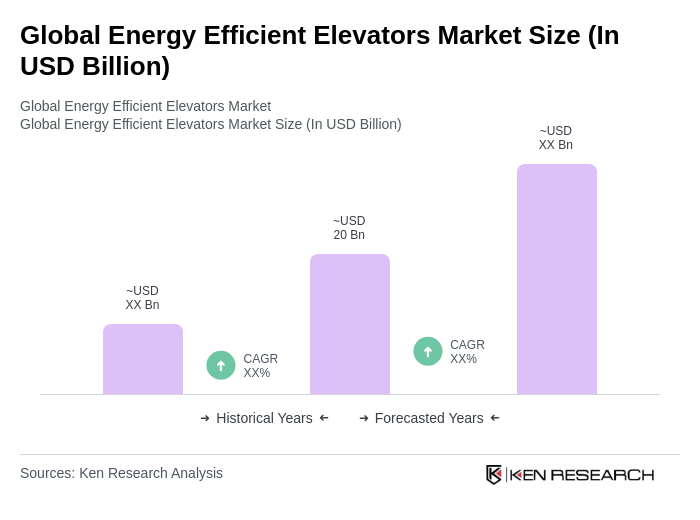
The Global Energy Efficient Elevators Market is valued at approximately USD 20 billion, driven by urbanization, rising energy costs, and advancements in elevator technology, including regenerative drives and destination control systems.

What makes us stand out is that our consultants follow Robust, Refine and Result (RRR) methodology. Robust for clear definitions, approaches and sanity checking, Refine for differentiating respondents' facts and opinions, and Result for presenting data with story.

We have set a benchmark in the industry by offering our clients with syndicated and customized market research reports featuring coverage of entire market as well as meticulous research and analyst insights.

While we don't replace traditional research, we flip the method upside down. Our dual approach of Top Bottom & Bottom Top ensures quality deliverable by not just verifying company fundamentals but also looking at the sector and macroeconomic factors.

With one step in the future, our research team constantly tries to show you the bigger picture. We help with some of the tough questions you may encounter along the way: How is the industry positioned? Best marketing channel? KPI's of competitors? By aligning every element, we help maximize success.

Our report gives you instant access to the answers and sources that other companies might choose to hide. We elaborate each steps of research methodology we have used and showcase you the sample size to earn your trust.

If you need any support, we are here! We pride ourselves on universe strength, data quality, and quick, friendly, and professional service.













