About the Report
Base Year 2024Global Fast Fashion Market Overview
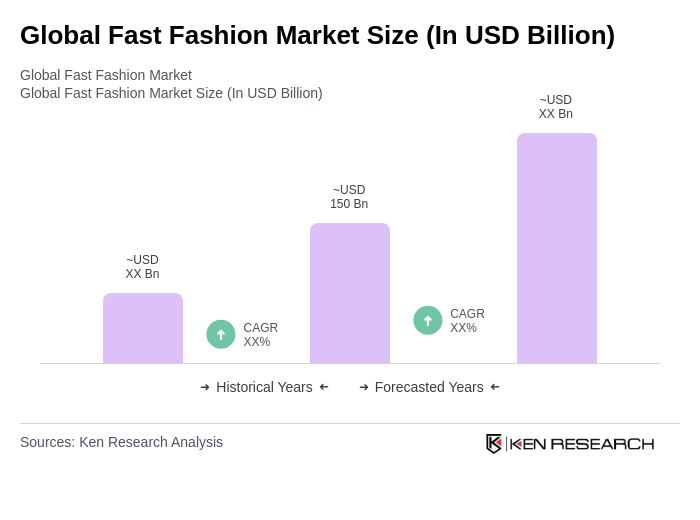
- The Global Fast Fashion Market is valued at USD 150 billion, based on a five-year historical analysis. This growth is primarily driven by the increasing demand for trendy and affordable clothing among consumers, particularly millennials and Gen Z. The rapid production cycles, frequent product launches, and the ability to quickly respond to viral fashion trends—often amplified by social media platforms—have enabled brands to capture market share effectively .
- Key players in this market include countries like the United States, China, and the United Kingdom, which dominate due to their large consumer bases and established retail infrastructures. The presence of major fast fashion brands in these regions, along with a culture of consumerism, fashion consciousness, and high digital engagement, further solidifies their dominance in the global market .
- In 2023, the European Union advanced regulations aimed at promoting sustainable practices in the fashion industry. This includes mandatory reporting on environmental impacts and the introduction of eco-labels for sustainable products, encouraging brands to adopt more responsible sourcing and production methods .
Global Fast Fashion Market Segmentation
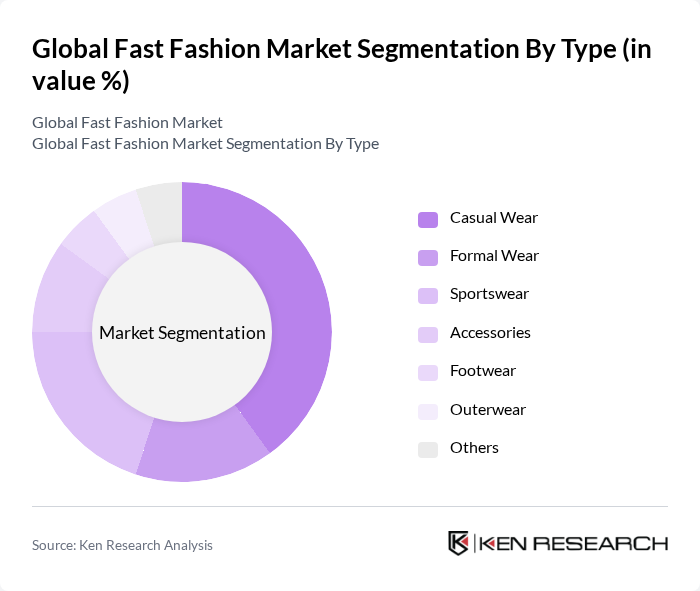
By Type:The fast fashion market is segmented into various types, including Casual Wear, Formal Wear, Sportswear, Accessories, Footwear, Outerwear, and Others. Among these,Casual Wearis the most dominant segment, driven by the increasing preference for comfortable and versatile clothing suitable for everyday use. The trend towards athleisure and relaxed styles, heavily influenced by social media and celebrity endorsements, has further propelled the demand for casual apparel, making it a staple in consumers' wardrobes .
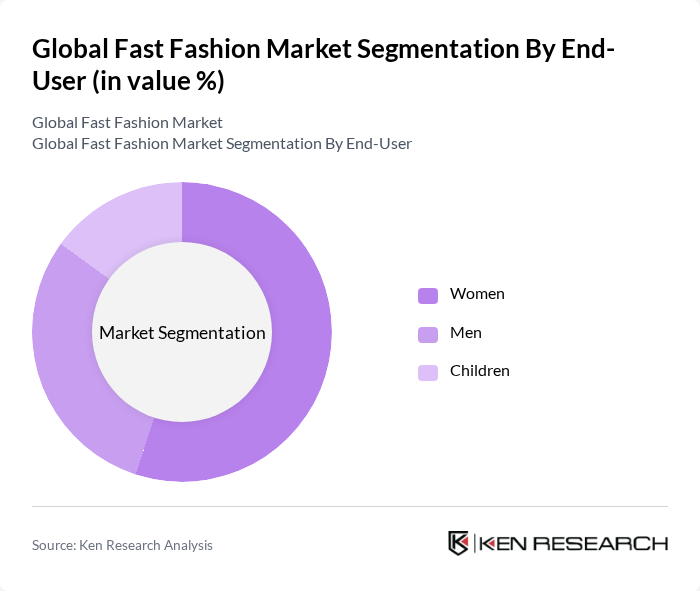
By End-User:The fast fashion market is segmented by end-user into Women, Men, and Children. TheWomensegment holds the largest share, driven by a higher propensity for fashion consumption, a wider variety of styles available, and a strong influence from social media and digital marketing. Women are more likely to purchase clothing frequently, influenced by trends and online content, which significantly boosts the demand in this segment .
Global Fast Fashion Market Competitive Landscape
The Global Fast Fashion Market is characterized by a dynamic mix of regional and international players. Leading participants such as Zara (Industria de Diseño Textil, S.A.), H&M (Hennes & Mauritz AB), Forever 21, ASOS Plc, Uniqlo (Fast Retailing Co., Ltd.), Primark Stores Ltd., Boohoo Group plc, Shein, Mango (Punto Fa, S.L.), Gap Inc., American Eagle Outfitters, Lulus, Urban Outfitters, Next plc, Abercrombie & Fitch, C&A Mode GmbH & Co KG, Cotton On Group, Aditya Birla Fashion & Retail Ltd., Bestseller A/S, New Look Retailers Ltd., River Island, Victoria's Secret & Co., Esprit Holdings Ltd., ARCADIA SRL, Reliance Industries Ltd. contribute to innovation, geographic expansion, and service delivery in this space.
Global Fast Fashion Market Industry Analysis
Growth Drivers
- Rapidly Changing Fashion Trends:The fast fashion industry thrives on the ability to quickly adapt to new trends, with brands introducing over 12 collections annually. In future, the global fashion industry is projected to reach $2.5 trillion, driven by consumer demand for the latest styles. The average consumer now purchases 60% more clothing than a decade ago, reflecting a shift towards a culture of immediacy and variety, which fast fashion brands capitalize on effectively.
- Increased Online Shopping:E-commerce sales in the fashion sector are expected to exceed $800 billion in future, representing a significant growth opportunity for fast fashion brands. With 70% of consumers preferring online shopping for convenience, brands are investing heavily in digital platforms. The rise of mobile shopping, which accounts for 50% of online fashion sales, further emphasizes the need for fast fashion retailers to enhance their online presence and user experience to capture this growing market segment.
- Affordable Pricing Strategies:Fast fashion brands have successfully positioned themselves as affordable alternatives to traditional retailers, with average price points around 30% lower. In future, the average consumer spends approximately $1,200 annually on clothing, with fast fashion capturing a significant share due to its pricing strategies. This affordability, combined with frequent promotions and discounts, attracts budget-conscious consumers, driving sales and market penetration in various demographics.
Market Challenges
- Environmental Concerns:The fast fashion industry is under scrutiny for its environmental impact, with an estimated 92 million tons of textile waste generated annually. In future, regulations are expected to tighten, with governments implementing stricter environmental policies. Brands face pressure to adopt sustainable practices, as 66% of consumers express concern about the environmental footprint of their purchases, necessitating a shift towards eco-friendly production methods to maintain market relevance.
- Supply Chain Disruptions:The global supply chain for fast fashion is vulnerable to disruptions, as seen during the COVID-19 pandemic, which caused a 30% drop in production capacity. In future, ongoing geopolitical tensions and trade disputes may exacerbate these challenges, leading to increased costs and delays. Brands must navigate these complexities while ensuring timely delivery and maintaining inventory levels, which can significantly impact profitability and customer satisfaction.
Global Fast Fashion Market Future Outlook
The fast fashion market is poised for transformation as brands increasingly focus on sustainability and digital innovation. With consumer preferences shifting towards eco-friendly products, companies are likely to invest in sustainable materials and ethical production practices. Additionally, the integration of advanced technologies, such as AI and data analytics, will enhance inventory management and customer engagement. As the market adapts to these trends, brands that prioritize sustainability and technological advancements will likely gain a competitive edge in the evolving landscape.
Market Opportunities
- Sustainable Fashion Initiatives:The demand for sustainable fashion is growing, with 70% of consumers willing to pay more for eco-friendly products. Brands that invest in sustainable practices can tap into this lucrative market, potentially increasing their customer base and brand loyalty. By adopting circular economy principles, companies can reduce waste and enhance their reputation, leading to long-term profitability.
- Expansion into Emerging Markets:Emerging markets, particularly in Asia and Africa, present significant growth opportunities for fast fashion brands. With a combined population of over 2.5 billion and rising disposable incomes, these regions are becoming key consumer bases. In future, the fashion market in Asia is expected to grow by $200 billion, offering brands a chance to expand their footprint and capture new customers in these dynamic markets.
Scope of the Report
| Segment | Sub-Segments |
|---|---|
| By Type | Casual Wear Formal Wear Sportswear Accessories Footwear Outerwear Others |
| By End-User | Women Men Children |
| By Sales Channel | Online Retail Brick-and-Mortar Stores Wholesale |
| By Price Range | Budget Mid-Range Premium |
| By Material | Cotton Polyester Blends Manmade Fibers |
| By Distribution Mode | Direct Sales Indirect Sales |
| By Consumer Demographics | Age Group (Teens, Adults, Kids) Income Level Lifestyle Preferences Urban vs Rural |
Key Target Audience
Investors and Venture Capitalist Firms
Government and Regulatory Bodies (e.g., Federal Trade Commission, Environmental Protection Agency)
Manufacturers and Producers
Distributors and Retailers
Fashion Industry Associations
Logistics and Supply Chain Companies
Textile and Material Suppliers
Financial Institutions
Players Mentioned in the Report:
Zara (Industria de Diseno Textil, S.A.)
H&M (Hennes & Mauritz AB)
Forever 21
ASOS Plc
Uniqlo (Fast Retailing Co., Ltd.)
Primark Stores Ltd.
Boohoo Group plc
Shein
Mango (Punto Fa, S.L.)
Gap Inc.
American Eagle Outfitters
Lulus
Urban Outfitters
Next plc
Abercrombie & Fitch
C&A Mode GmbH & Co KG
Cotton On Group
Aditya Birla Fashion & Retail Ltd.
Bestseller A/S
New Look Retailers Ltd.
River Island
Victoria's Secret & Co.
Esprit Holdings Ltd.
ARCADIA SRL
Reliance Industries Ltd.
Table of Contents
Market Assessment Phase
1. Executive Summary and Approach
2. Global Fast Fashion Market Overview
2.1 Key Insights and Strategic Recommendations
2.2 Global Fast Fashion Market Overview
2.3 Definition and Scope
2.4 Evolution of Market Ecosystem
2.5 Timeline of Key Regulatory Milestones
2.6 Value Chain & Stakeholder Mapping
2.7 Business Cycle Analysis
2.8 Policy & Incentive Landscape
3. Global Fast Fashion Market Analysis
3.1 Growth Drivers
3.1.1 Rapidly Changing Fashion Trends
3.1.2 Increased Online Shopping
3.1.3 Affordable Pricing Strategies
3.1.4 Globalization of Fashion Brands
3.2 Market Challenges
3.2.1 Environmental Concerns
3.2.2 Supply Chain Disruptions
3.2.3 Intense Competition
3.2.4 Consumer Awareness of Ethical Practices
3.3 Market Opportunities
3.3.1 Sustainable Fashion Initiatives
3.3.2 Expansion into Emerging Markets
3.3.3 Collaborations with Influencers
3.3.4 Technological Innovations in Retail
3.4 Market Trends
3.4.1 Rise of Second-Hand Fashion
3.4.2 Customization and Personalization
3.4.3 Digital Fashion Shows
3.4.4 Integration of Augmented Reality
3.5 Government Regulation
3.5.1 Labor Laws and Fair Trade Practices
3.5.2 Environmental Regulations
3.5.3 Import Tariffs and Trade Policies
3.5.4 Consumer Protection Laws
4. SWOT Analysis
5. Stakeholder Analysis
6. Porter's Five Forces Analysis
7. Global Fast Fashion Market Market Size, 2019-2024
7.1 By Value
7.2 By Volume
7.3 By Average Selling Price
8. Global Fast Fashion Market Segmentation
8.1 By Type
8.1.1 Casual Wear
8.1.2 Formal Wear
8.1.3 Sportswear
8.1.4 Accessories
8.1.5 Footwear
8.1.6 Outerwear
8.1.7 Others
8.2 By End-User
8.2.1 Women
8.2.2 Men
8.2.3 Children
8.3 By Sales Channel
8.3.1 Online Retail
8.3.2 Brick-and-Mortar Stores
8.3.3 Wholesale
8.4 By Price Range
8.4.1 Budget
8.4.2 Mid-Range
8.4.3 Premium
8.5 By Material
8.5.1 Cotton
8.5.2 Polyester
8.5.3 Blends
8.5.4 Manmade Fibers
8.6 By Distribution Mode
8.6.1 Direct Sales
8.6.2 Indirect Sales
8.7 By Consumer Demographics
8.7.1 Age Group (Teens, Adults, Kids)
8.7.2 Income Level
8.7.3 Lifestyle Preferences
8.7.4 Urban vs Rural
9. Global Fast Fashion Market Competitive Analysis
9.1 Market Share of Key Players
9.2 KPIs for Cross Comparison of Key Players
9.2.1 Company Name
9.2.2 Group Size (Large, Medium, Small)
9.2.3 Revenue Growth Rate (YoY %)
9.2.4 Market Penetration Rate (Global/Regional Presence)
9.2.5 Customer Retention Rate (%)
9.2.6 Average Order Value (USD)
9.2.7 Pricing Strategy (Budget, Mid-Range, Premium)
9.2.8 Inventory Turnover Ratio
9.2.9 Return on Advertising Spend (ROAS)
9.2.10 Brand Equity Score
9.2.11 Online vs Offline Sales Mix (%)
9.2.12 Sustainability Initiatives (e.g., % of sustainable products)
9.2.13 Social Media Engagement Rate
9.2.14 Supply Chain Lead Time
9.3 SWOT Analysis of Top Players
9.4 Pricing Analysis
9.5 Detailed Profile of Major Companies
9.5.1 Zara (Industria de Diseño Textil, S.A.)
9.5.2 H&M (Hennes & Mauritz AB)
9.5.3 Forever 21
9.5.4 ASOS Plc
9.5.5 Uniqlo (Fast Retailing Co., Ltd.)
9.5.6 Primark Stores Ltd.
9.5.7 Boohoo Group plc
9.5.8 Shein
9.5.9 Mango (Punto Fa, S.L.)
9.5.10 Gap Inc.
9.5.11 American Eagle Outfitters
9.5.12 Lulus
9.5.13 Urban Outfitters
9.5.14 Next plc
9.5.15 Abercrombie & Fitch
9.5.16 C&A Mode GmbH & Co KG
9.5.17 Cotton On Group
9.5.18 Aditya Birla Fashion & Retail Ltd.
9.5.19 Bestseller A/S
9.5.20 New Look Retailers Ltd.
9.5.21 River Island
9.5.22 Victoria's Secret & Co.
9.5.23 Esprit Holdings Ltd.
9.5.24 ARCADIA SRL
9.5.25 Reliance Industries Ltd.
10. Global Fast Fashion Market End-User Analysis
10.1 Procurement Behavior of Key Ministries
10.1.1 Government Procurement Policies
10.1.2 Budget Allocations for Fashion
10.1.3 Sustainability Initiatives
10.2 Corporate Spend on Infrastructure & Energy
10.2.1 Investment in Sustainable Practices
10.2.2 Infrastructure Development for Retail
10.3 Pain Point Analysis by End-User Category
10.3.1 Quality vs. Price Concerns
10.3.2 Availability of Sizes
10.3.3 Ethical Sourcing Issues
10.4 User Readiness for Adoption
10.4.1 Awareness of Fast Fashion Trends
10.4.2 Acceptance of Online Shopping
10.5 Post-Deployment ROI and Use Case Expansion
10.5.1 Measurement of Customer Satisfaction
10.5.2 Expansion into New Markets
11. Global Fast Fashion Market Future Size, 2025-2030
11.1 By Value
11.2 By Volume
11.3 By Average Selling Price
Go-To-Market Strategy Phase
1. Whitespace Analysis + Business Model Canvas
1.1 Market Gaps Identification
1.2 Value Proposition Development
1.3 Revenue Streams Analysis
1.4 Customer Segmentation
1.5 Key Partnerships
1.6 Cost Structure
1.7 Channels of Distribution
2. Marketing and Positioning Recommendations
2.1 Branding Strategies
2.2 Product USPs
3. Distribution Plan
3.1 Urban Retail vs Rural NGO Tie-ups
4. Channel & Pricing Gaps
4.1 Underserved Routes
4.2 Pricing Bands
5. Unmet Demand & Latent Needs
5.1 Category Gaps
5.2 Consumer Segments
6. Customer Relationship
6.1 Loyalty Programs
6.2 After-sales Service
7. Value Proposition
7.1 Sustainability
7.2 Integrated Supply Chains
8. Key Activities
8.1 Regulatory Compliance
8.2 Branding
8.3 Distribution Setup
9. Entry Strategy Evaluation
9.1 Domestic Market Entry Strategy
9.1.1 Product Mix
9.1.2 Pricing Band
9.1.3 Packaging
9.2 Export Entry Strategy
9.2.1 Target Countries
9.2.2 Compliance Roadmap
10. Entry Mode Assessment
10.1 JV
10.2 Greenfield
10.3 M&A
10.4 Distributor Model
11. Capital and Timeline Estimation
11.1 Capital Requirements
11.2 Timelines
12. Control vs Risk Trade-Off
12.1 Ownership vs Partnerships
13. Profitability Outlook
13.1 Breakeven Analysis
13.2 Long-term Sustainability
14. Potential Partner List
14.1 Distributors
14.2 JVs
14.3 Acquisition Targets
15. Execution Roadmap
15.1 Phased Plan for Market Entry
15.1.1 Market Setup
15.1.2 Market Entry
15.1.3 Growth Acceleration
15.1.4 Scale & Stabilize
15.2 Key Activities and Milestones
15.2.1 Activity Planning
15.2.2 Milestone Tracking
Research Methodology
Phase 1: Approach1
Desk Research
- Analysis of industry reports from fashion market research firms
- Review of trade publications and fashion industry journals
- Examination of consumer behavior studies and trend forecasts
Primary Research
- Interviews with fashion brand executives and product managers
- Surveys targeting consumers to understand purchasing habits
- Focus groups with fashion influencers and trendsetters
Validation & Triangulation
- Cross-validation of data from multiple industry sources
- Triangulation of consumer insights with sales data from retailers
- Sanity checks through expert panels comprising industry veterans
Phase 2: Market Size Estimation1
Top-down Assessment
- Estimation of global market size based on retail sales data
- Segmentation by geographic regions and consumer demographics
- Incorporation of macroeconomic indicators affecting fashion spending
Bottom-up Modeling
- Analysis of sales data from leading fast fashion retailers
- Estimation of average transaction values and purchase frequencies
- Volume calculations based on SKU counts and inventory turnover rates
Forecasting & Scenario Analysis
- Multi-variable regression analysis incorporating economic trends
- Scenario modeling based on sustainability initiatives and consumer preferences
- Projections for market growth under various economic conditions through 2030
Phase 3: CATI Sample Composition1
| Scope Item/Segment | Sample Size | Target Respondent Profiles |
|---|---|---|
| Fast Fashion Retailers | 100 | Brand Managers, Marketing Directors |
| Consumer Purchase Behavior | 120 | Fashion Consumers, Online Shoppers |
| Sustainability Practices in Fashion | 80 | Sustainability Officers, CSR Managers |
| Supply Chain Dynamics | 60 | Supply Chain Managers, Logistics Coordinators |
| Market Trends and Innovations | 90 | Fashion Analysts, Trend Forecasters |
Frequently Asked Questions
What is the current value of the Global Fast Fashion Market?
The Global Fast Fashion Market is valued at approximately USD 150 billion, driven by the increasing demand for trendy and affordable clothing, particularly among millennials and Gen Z consumers. This growth reflects a significant shift in consumer purchasing behavior over recent years.
Which regions dominate the Global Fast Fashion Market?
What are the key segments of the Global Fast Fashion Market?
Who are the major players in the Global Fast Fashion Market?
Other Regional/Country Reports
Indonesia Fast Fashion Market
Malaysia Fast Fashion Market
APAC Fast Fashion Market
SEA Fast Fashion Market
Why Buy From Us?

What makes us stand out is that our consultants follow Robust, Refine and Result (RRR) methodology. Robust for clear definitions, approaches and sanity checking, Refine for differentiating respondents' facts and opinions, and Result for presenting data with story.

We have set a benchmark in the industry by offering our clients with syndicated and customized market research reports featuring coverage of entire market as well as meticulous research and analyst insights.

While we don't replace traditional research, we flip the method upside down. Our dual approach of Top Bottom & Bottom Top ensures quality deliverable by not just verifying company fundamentals but also looking at the sector and macroeconomic factors.

With one step in the future, our research team constantly tries to show you the bigger picture. We help with some of the tough questions you may encounter along the way: How is the industry positioned? Best marketing channel? KPI's of competitors? By aligning every element, we help maximize success.

Our report gives you instant access to the answers and sources that other companies might choose to hide. We elaborate each steps of research methodology we have used and showcase you the sample size to earn your trust.

If you need any support, we are here! We pride ourselves on universe strength, data quality, and quick, friendly, and professional service.