About the Report
Base Year 2024Global Insect Feed Market Overview
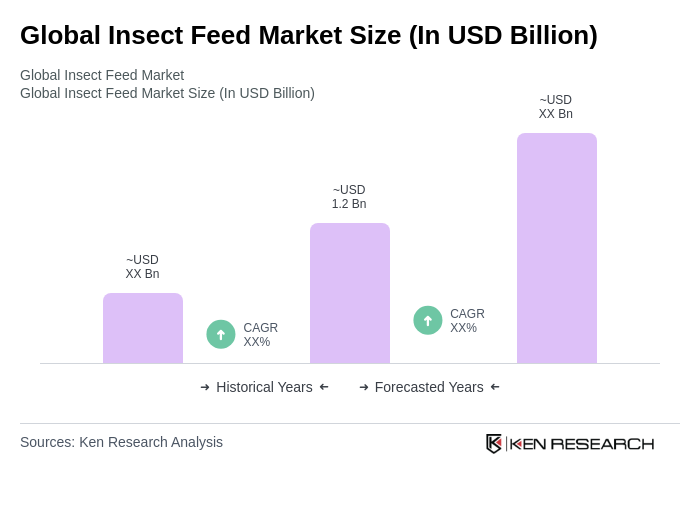
- The Global Insect Feed Market is valued at approximately USD 1.2 billion, based on a five-year analysis. This growth is primarily driven by the increasing demand for sustainable protein sources in animal feed, coupled with the rising awareness of the environmental benefits of insect farming. The market is also supported by advancements in insect farming technologies and the growing acceptance of insects as a viable alternative to traditional feed ingredients.
- Key production and commercialization hubs include several European nations, the United States, and Canada, supported by active regulatory frameworks and a concentration of innovators such as Protix, Innovafeed, and Enterra. Europe has built a robust regulatory path and industrial base for insect-derived feed ingredients, with North America scaling capacity through commercial BSF operations.
- The European Union authorized processed animal proteins from seven insect species in aquaculture feed earlier and expanded authorizations to poultry and swine via Regulation (EU) 2021/1372; aquaculture authorization predates 2023 and remains a key regulatory enabler for insect-based feed adoption across the bloc.
Global Insect Feed Market Segmentation
By Type:The insect feed market is segmented into various types, including Black Soldier Fly (BSF), Mealworms (Tenebrio molitor), Crickets (Acheta domesticus), Other Insects (e.g., housefly larvae, locusts), and product derivatives such as Protein Meal, Insect Oil, and Frass. Among these,Black Soldier Fly (BSF)is the leading sub-segment due to its high protein content, favorable amino acid profile, and efficiency in converting organic side-streams into valuable feed. Rising sustainability requirements in aquaculture, poultry, and pet nutrition, along with regulatory acceptance in Europe and growing commercial-scale BSF facilities, are driving demand for BSF in animal feed formulations.

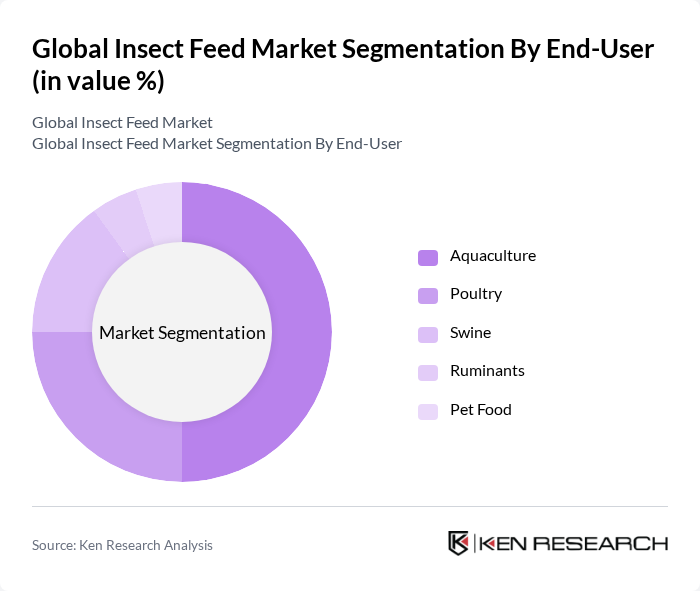
By End-User:The end-user segmentation includes Aquaculture, Poultry, Swine, Ruminants, and Pet Food. Theaquaculturesector is the dominant end-user, driven by demand for sustainable fish feed alternatives and regulatory allowances enabling insect meals to substitute a portion of fishmeal. Increasing global seafood consumption and the need to mitigate pressure on forage fisheries are accelerating the shift toward insect-based feeds, which offer high digestibility and a balanced nutrient profile.
Global Insect Feed Market Competitive Landscape
The Global Insect Feed Market is characterized by a dynamic mix of regional and international players. Leading participants such as Protix, Innovafeed, Ÿnsect, Enterra Feed Corporation, Alltech Coppens, Darling Ingredients (EnviroFlight), Bühler Group, Beta Hatch, nextProtein, Nasekomo, Entofood Sdn Bhd, Hipromine, Loopworm, Hexafly, Entomo Farms contribute to innovation, geographic expansion, and service delivery in this space.
Global Insect Feed Market Industry Analysis
Growth Drivers
- Increasing Demand for Sustainable Protein Sources:The global protein consumption is projected to reach 500 million tons in the future, with insect protein emerging as a viable alternative. Insect feed can produce up to 50% protein content, significantly higher than traditional sources like soy, which averages around 44%. This shift is driven by a growing consumer base seeking sustainable food options, as evidenced by a 30% increase in insect feed production in the future, according to the Food and Agriculture Organization (FAO).
- Rising Awareness of Environmental Impact:The livestock sector contributes approximately 14.5% of global greenhouse gas emissions, prompting a shift towards more sustainable practices. Insect farming requires 90% less land and water compared to traditional livestock, making it an attractive option. The World Bank estimates that adopting insect feed could reduce the environmental footprint of animal agriculture by up to 50% in the future, aligning with global sustainability goals.
- Technological Advancements in Insect Farming:Innovations in insect farming technology, such as automated breeding and feeding systems, have increased production efficiency by 40% in recent years. The global investment in insect farming technology reached $200 million in the future, facilitating better scalability and cost-effectiveness. This technological progress is crucial for meeting the projected demand for insect feed, which is expected to grow significantly as more farmers adopt these methods.
Market Challenges
- Regulatory Hurdles:The insect feed industry faces stringent regulatory frameworks that vary significantly across regions. In the European Union, for instance, the approval process for new insect feed products can take up to 18 months, delaying market entry. The lack of harmonized regulations globally complicates trade, with only 10% of countries having established clear guidelines for insect feed, according to the International Feed Industry Federation (IFIF).
- Consumer Acceptance Issues:Despite the nutritional benefits, consumer acceptance of insect-based products remains low in many regions. A survey by the FAO indicated that only 25% of consumers in North America are willing to try insect-based foods. This hesitance is compounded by cultural perceptions and a lack of awareness about the benefits of insect protein, posing a significant barrier to market growth.
Global Insect Feed Market Future Outlook
The future of the insect feed market appears promising, driven by increasing investments in sustainable agriculture and technological innovations. As consumer awareness grows, the demand for insect-based products is expected to rise, particularly in regions with high protein consumption. Additionally, collaborations between insect farming companies and agricultural sectors are likely to enhance market penetration, fostering a more sustainable food system. The focus on circular economy practices will further support the industry's growth trajectory, aligning with global sustainability initiatives.
Market Opportunities
- Expansion into New Geographical Markets:Emerging markets in Asia and Africa present significant opportunities for insect feed adoption. With a combined population of over 2.5 billion, these regions are increasingly seeking sustainable protein sources. The FAO projects that insect feed consumption in Asia could increase by 50% in the future, driven by rising protein demand and local agricultural practices.
- Development of Value-Added Products:There is a growing trend towards creating value-added insect-based products, such as protein powders and snacks. The global market for insect-based food products is expected to reach $1 billion in the future, driven by innovations in product development. Companies focusing on this segment can tap into the health-conscious consumer base, enhancing their market presence and profitability.
Scope of the Report
| Segment | Sub-Segments |
|---|---|
| By Type | Black Soldier Fly (BSF) Mealworms (Tenebrio molitor) Crickets (Acheta domesticus) Other Insects (e.g., housefly larvae, locusts) By Product Derivative (Protein Meal, Insect Oil, Frass) |
| By End-User | Aquaculture Poultry Swine Ruminants Pet Food |
| By Application | Fish Feed (salmonids, tilapia, shrimp) Poultry Feed (broilers, layers) Piglet and Grower Feed Pet Nutrition (dry, wet, treats) Organic Fertilizers (frass-based soil amendments) |
| By Distribution Channel | Direct B2B (feed integrators, farms) Distributors and Wholesalers Online B2B Platforms Retail and Specialty Stores (pet specialty) |
| By Region | North America Europe Asia-Pacific Latin America Middle East & Africa |
| By Price Range | Entry (commodity-grade meal/oil) Mid (functional formulations) Premium (certified, traceable, hypoallergenic) |
| By Product Form | Whole Dried Larvae Insect Protein Meal Insect Oil/Lipids Frass (organic fertilizer) |
Key Target Audience
Investors and Venture Capitalist Firms
Government and Regulatory Bodies (e.g., Food and Agriculture Organization, Environmental Protection Agency)
Manufacturers and Producers of Insect Feed
Animal Feed Companies
Food Processing Companies
Biotechnology Firms
Industry Associations (e.g., Insect Protein Association)
Financial Institutions and Banks
Players Mentioned in the Report:
Protix
Innovafeed
Ynsect
Enterra Feed Corporation
Alltech Coppens
Darling Ingredients (EnviroFlight)
Buhler Group
Beta Hatch
nextProtein
Nasekomo
Entofood Sdn Bhd
Hipromine
Loopworm
Hexafly
Entomo Farms
Table of Contents
Market Assessment Phase
1. Executive Summary and Approach
2. Global Insect Feed Market Overview
2.1 Key Insights and Strategic Recommendations
2.2 Global Insect Feed Market Overview
2.3 Definition and Scope
2.4 Evolution of Market Ecosystem
2.5 Timeline of Key Regulatory Milestones
2.6 Value Chain & Stakeholder Mapping
2.7 Business Cycle Analysis
2.8 Policy & Incentive Landscape
3. Global Insect Feed Market Analysis
3.1 Growth Drivers
3.1.1 Increasing Demand for Sustainable Protein Sources
3.1.2 Rising Awareness of Environmental Impact
3.1.3 Technological Advancements in Insect Farming
3.1.4 Supportive Government Policies
3.2 Market Challenges
3.2.1 Regulatory Hurdles
3.2.2 Consumer Acceptance Issues
3.2.3 Competition from Traditional Feed Sources
3.2.4 Supply Chain Limitations
3.3 Market Opportunities
3.3.1 Expansion into New Geographical Markets
3.3.2 Development of Value-Added Products
3.3.3 Collaborations with Agricultural Sectors
3.3.4 Increasing Investment in Research and Development
3.4 Market Trends
3.4.1 Growing Popularity of Insect-Based Pet Foods
3.4.2 Innovations in Insect Farming Techniques
3.4.3 Shift Towards Circular Economy Practices
3.4.4 Rising Interest in Alternative Protein Sources
3.5 Government Regulation
3.5.1 Food Safety Standards for Insect Feed
3.5.2 Environmental Regulations on Waste Management
3.5.3 Subsidies for Sustainable Agriculture
3.5.4 Import/Export Regulations for Insect Products
4. SWOT Analysis
5. Stakeholder Analysis
6. Porter's Five Forces Analysis
7. Global Insect Feed Market Market Size, 2019-2024
7.1 By Value
7.2 By Volume
7.3 By Average Selling Price
8. Global Insect Feed Market Segmentation
8.1 By Type
8.1.1 Black Soldier Fly (BSF)
8.1.2 Mealworms (Tenebrio molitor)
8.1.3 Crickets (Acheta domesticus)
8.1.4 Other Insects (e.g., housefly larvae, locusts)
8.1.5 By Product Derivative (Protein Meal, Insect Oil, Frass)
8.2 By End-User
8.2.1 Aquaculture
8.2.2 Poultry
8.2.3 Swine
8.2.4 Ruminants
8.2.5 Pet Food
8.3 By Application
8.3.1 Fish Feed (salmonids, tilapia, shrimp)
8.3.2 Poultry Feed (broilers, layers)
8.3.3 Piglet and Grower Feed
8.3.4 Pet Nutrition (dry, wet, treats)
8.3.5 Organic Fertilizers (frass-based soil amendments)
8.4 By Distribution Channel
8.4.1 Direct B2B (feed integrators, farms)
8.4.2 Distributors and Wholesalers
8.4.3 Online B2B Platforms
8.4.4 Retail and Specialty Stores (pet specialty)
8.5 By Region
8.5.1 North America
8.5.2 Europe
8.5.3 Asia-Pacific
8.5.4 Latin America
8.5.5 Middle East & Africa
8.6 By Price Range
8.6.1 Entry (commodity-grade meal/oil)
8.6.2 Mid (functional formulations)
8.6.3 Premium (certified, traceable, hypoallergenic)
8.7 By Product Form
8.7.1 Whole Dried Larvae
8.7.2 Insect Protein Meal
8.7.3 Insect Oil/Lipids
8.7.4 Frass (organic fertilizer)
9. Global Insect Feed Market Competitive Analysis
9.1 Market Share of Key Players
9.2 Cross Comparison of Key Players
9.2.1 Company Name
9.2.2 Production Capacity (tons/year)
9.2.3 Utilization Rate (%)
9.2.4 Revenue (latest fiscal year, USD)
9.2.5 Revenue Growth Rate (YoY, %)
9.2.6 Product Mix (% meal / % oil / % frass)
9.2.7 End-Market Exposure (% aquaculture / poultry / pet / swine)
9.2.8 Geographic Footprint (sites, countries served)
9.2.9 Certifications & Compliance (e.g., GMP+, FSSC 22000, EU approvals)
9.2.10 Cost per kg Protein (estimated, USD/kg)
9.2.11 R&D Intensity (% of revenue)
9.2.12 Strategic Partnerships (feed integrators, retailers)
9.2.13 Supply Model (vertical integration, waste-stream sourcing)
9.2.14 Pricing Bands (contract vs spot, premium positioning)
9.3 SWOT Analysis of Top Players
9.4 Pricing Analysis
9.5 Detailed Profile of Major Companies
9.5.1 Protix
9.5.2 Innovafeed
9.5.3 Ÿnsect
9.5.4 Enterra Feed Corporation
9.5.5 Alltech Coppens
9.5.6 Darling Ingredients (EnviroFlight)
9.5.7 Bühler Group
9.5.8 Beta Hatch
9.5.9 nextProtein
9.5.10 Nasekomo
9.5.11 Entofood Sdn Bhd
9.5.12 Hipromine
9.5.13 Loopworm
9.5.14 Hexafly
9.5.15 Entomo Farms
10. Global Insect Feed Market End-User Analysis
10.1 Procurement Behavior of Key Ministries
10.1.1 Government Initiatives for Sustainable Feed
10.1.2 Budget Allocations for Insect Feed Research
10.1.3 Partnerships with Private Sector
10.2 Corporate Spend on Infrastructure & Energy
10.2.1 Investment in Insect Farming Facilities
10.2.2 Funding for R&D in Insect Feed
10.2.3 Expenditure on Marketing and Awareness
10.3 Pain Point Analysis by End-User Category
10.3.1 Cost of Insect Feed Production
10.3.2 Quality Assurance Challenges
10.3.3 Supply Chain Disruptions
10.4 User Readiness for Adoption
10.4.1 Awareness of Insect Feed Benefits
10.4.2 Training and Education Needs
10.4.3 Infrastructure Readiness
10.5 Post-Deployment ROI and Use Case Expansion
10.5.1 Measurement of Cost Savings
10.5.2 Expansion into New Markets
10.5.3 Long-term Sustainability Metrics
11. Global Insect Feed Market Future Size, 2025-2030
11.1 By Value
11.2 By Volume
11.3 By Average Selling Price
Go-To-Market Strategy Phase
1. Whitespace Analysis + Business Model Canvas
1.1 Market Gaps Identification
1.2 Value Proposition Development
1.3 Revenue Streams Analysis
1.4 Key Partnerships Exploration
1.5 Cost Structure Assessment
1.6 Customer Segmentation
1.7 Competitive Advantage Analysis
2. Marketing and Positioning Recommendations
2.1 Branding Strategies
2.2 Product USPs
2.3 Target Market Identification
2.4 Communication Strategy
2.5 Digital Marketing Tactics
2.6 Customer Engagement Plans
3. Distribution Plan
3.1 Urban Retail Strategies
3.2 Rural NGO Tie-ups
3.3 E-commerce Integration
3.4 Logistics and Supply Chain Management
3.5 Distribution Partnerships
4. Channel & Pricing Gaps
4.1 Underserved Routes
4.2 Pricing Bands Analysis
4.3 Competitor Pricing Comparison
4.4 Value-Based Pricing Strategies
4.5 Discount and Promotion Strategies
5. Unmet Demand & Latent Needs
5.1 Category Gaps Identification
5.2 Consumer Segments Analysis
5.3 Product Development Opportunities
5.4 Market Entry Barriers
5.5 Customer Feedback Mechanisms
6. Customer Relationship
6.1 Loyalty Programs
6.2 After-sales Service
6.3 Customer Support Strategies
6.4 Feedback and Improvement Processes
6.5 Community Engagement Initiatives
7. Value Proposition
7.1 Sustainability Initiatives
7.2 Integrated Supply Chains
7.3 Cost Efficiency Measures
7.4 Quality Assurance Practices
7.5 Customer-Centric Innovations
8. Key Activities
8.1 Regulatory Compliance
8.2 Branding Efforts
8.3 Distribution Setup
8.4 Market Research Activities
8.5 Training and Development Programs
9. Entry Strategy Evaluation
9.1 Domestic Market Entry Strategy
9.1.1 Product Mix Considerations
9.1.2 Pricing Band Strategy
9.1.3 Packaging Innovations
9.2 Export Entry Strategy
9.2.1 Target Countries Identification
9.2.2 Compliance Roadmap Development
10. Entry Mode Assessment
10.1 Joint Ventures
10.2 Greenfield Investments
10.3 Mergers & Acquisitions
10.4 Distributor Model Evaluation
11. Capital and Timeline Estimation
11.1 Capital Requirements Analysis
11.2 Timelines for Market Entry
12. Control vs Risk Trade-Off
12.1 Ownership vs Partnerships
13. Profitability Outlook
13.1 Breakeven Analysis
13.2 Long-term Sustainability Considerations
14. Potential Partner List
14.1 Distributors
14.2 Joint Ventures
14.3 Acquisition Targets
15. Execution Roadmap
15.1 Phased Plan for Market Entry
15.1.1 Market Setup
15.1.2 Market Entry
15.1.3 Growth Acceleration
15.1.4 Scale & Stabilize
15.2 Key Activities and Milestones
15.2.1 Milestone Planning
15.2.2 Activity Tracking
Research Methodology
Phase 1: Approach1
Desk Research
- Industry reports from organizations such as the Food and Agriculture Organization (FAO) and the United Nations Environment Programme (UNEP)
- Market analysis from agricultural and entomology journals focusing on insect protein and feed applications
- Government publications and policy documents related to sustainable agriculture and insect farming regulations
Primary Research
- Interviews with insect feed producers and suppliers to gather insights on production capacities and market trends
- Surveys with livestock and aquaculture farmers to understand their perceptions and adoption rates of insect feed
- Field visits to insect farming facilities to observe operational practices and technology usage
Validation & Triangulation
- Cross-validation of data through multiple sources including academic studies and industry white papers
- Triangulation of findings from primary interviews with secondary data to ensure consistency
- Sanity checks conducted through expert panels comprising entomologists and agricultural economists
Phase 2: Market Size Estimation1
Top-down Assessment
- Analysis of global protein demand trends and the role of insect feed in meeting these needs
- Segmentation of the market by application areas such as aquaculture, poultry, and pet food
- Incorporation of regional market dynamics and growth potential in emerging economies
Bottom-up Modeling
- Estimation of production volumes based on the number of active insect farms and their output capacities
- Cost analysis of insect feed production, including raw material sourcing and processing expenses
- Revenue projections based on pricing strategies and market penetration rates
Forecasting & Scenario Analysis
- Multi-variable forecasting models incorporating factors such as consumer acceptance and regulatory changes
- Scenario analysis based on varying levels of market adoption and technological advancements in insect farming
- Development of baseline, optimistic, and pessimistic forecasts through 2030
Phase 3: CATI Sample Composition1
| Scope Item/Segment | Sample Size | Target Respondent Profiles |
|---|---|---|
| Aquaculture Feed Producers | 100 | Feed Formulators, Aquaculture Managers |
| Poultry Farmers | 80 | Poultry Farm Owners, Nutritionists |
| Pet Food Manufacturers | 70 | Product Development Managers, Procurement Officers |
| Insect Farming Operations | 60 | Farm Operators, Business Development Managers |
| Regulatory Bodies and NGOs | 50 | Policy Makers, Environmental Scientists |
Frequently Asked Questions
What is the current value of the Global Insect Feed Market?
The Global Insect Feed Market is valued at approximately USD 1.2 billion, driven by the increasing demand for sustainable protein sources in animal feed and advancements in insect farming technologies.
What are the main drivers of growth in the insect feed market?
Which regions are leading in insect feed production?
What types of insects are commonly used in feed production?
Other Regional/Country Reports
Indonesia Insect Feed Market
Malaysia Insect Feed Market
APAC Insect Feed Market
SEA Insect Feed Market
Why Buy From Us?

What makes us stand out is that our consultants follow Robust, Refine and Result (RRR) methodology. Robust for clear definitions, approaches and sanity checking, Refine for differentiating respondents' facts and opinions, and Result for presenting data with story.

We have set a benchmark in the industry by offering our clients with syndicated and customized market research reports featuring coverage of entire market as well as meticulous research and analyst insights.

While we don't replace traditional research, we flip the method upside down. Our dual approach of Top Bottom & Bottom Top ensures quality deliverable by not just verifying company fundamentals but also looking at the sector and macroeconomic factors.

With one step in the future, our research team constantly tries to show you the bigger picture. We help with some of the tough questions you may encounter along the way: How is the industry positioned? Best marketing channel? KPI's of competitors? By aligning every element, we help maximize success.

Our report gives you instant access to the answers and sources that other companies might choose to hide. We elaborate each steps of research methodology we have used and showcase you the sample size to earn your trust.

If you need any support, we are here! We pride ourselves on universe strength, data quality, and quick, friendly, and professional service.