Global Lice Treatment Market

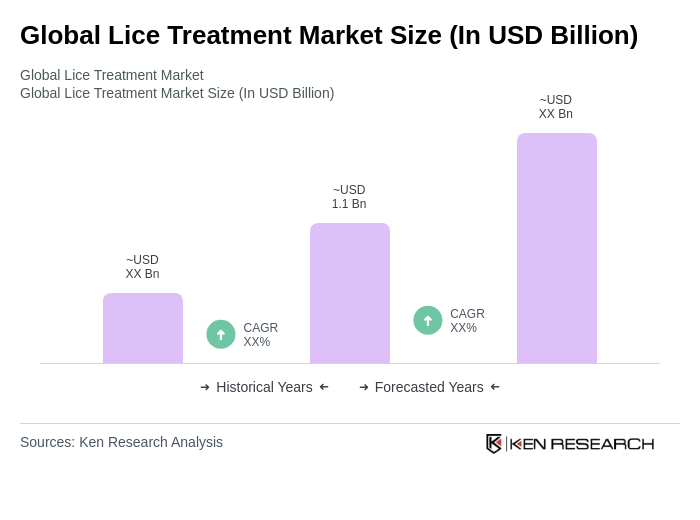
The Global Lice Treatment Market, valued at USD 1.1 billion, is growing due to increasing infestations, hygiene awareness, and innovations in treatments like Ivermectin and natural options.

Region:Global

Author(s):Geetanshi

Product Code:KRAC0140

Pages:92

Published On:August 2025
About the Report

Base Year 2024

Global Lice Treatment Market Overview

  • The Global Lice Treatment Market is valued at USD 1.1 billion, based on a five-year historical analysis. This growth is primarily driven by increasing awareness of personal hygiene, rising incidences of lice infestations, and the growing demand for effective treatment options. The market has seen a surge in product innovations, including natural and chemical treatments, catering to diverse consumer preferences.
  • Key players in this market are concentrated in regions such as North America and Europe, where the prevalence of lice infestations is notably high due to factors like high population density and increased travel. Countries like the United States and Germany dominate the market, driven by robust healthcare systems, a strong emphasis on personal care and hygiene, and high rates of school-aged children affected by head lice.
  • Recent regulatory trends in the United States have focused on improving the safety and efficacy of lice treatment products, with the Food and Drug Administration (FDA) requiring clear labeling, usage instructions, and warnings to enhance consumer trust and promote responsible usage. While a specific 2023 government mandate is not documented, ongoing regulatory oversight continues to shape product standards.
Global Lice Treatment Market Size

Global Lice Treatment Market Segmentation

By Type:The lice treatment market can be segmented into four main types: Pediculosis Capitis (Head Lice), Pediculosis Corporis (Body Lice), Pediculosis Pubis (Pubic Lice), and Others. Among these, Pediculosis Capitis is the most prevalent, primarily affecting children and leading to a higher demand for effective treatments. The increasing awareness of head lice in schools and communities, coupled with the high incidence among school-aged children, has further propelled the growth of this segment.
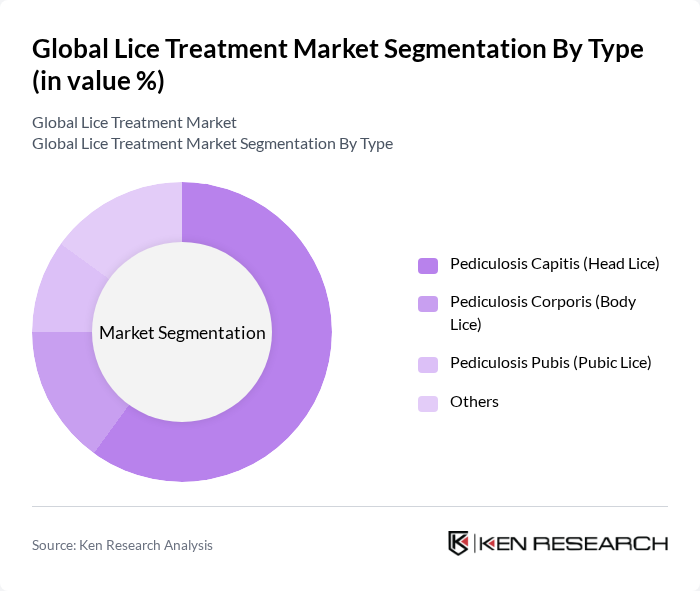
Global Lice Treatment Market segmentation by Type.

By Treatment:The treatment segment includes Ivermectin, Spinosad, Permethrin, Pyrethrin, and Others. Ivermectin has gained significant traction due to its effectiveness and ease of use, making it a preferred choice among consumers. The growing trend towards prescription treatments and the increasing prevalence of resistant lice strains have contributed to the dominance of this segment, as healthcare professionals increasingly recommend it for severe infestations.
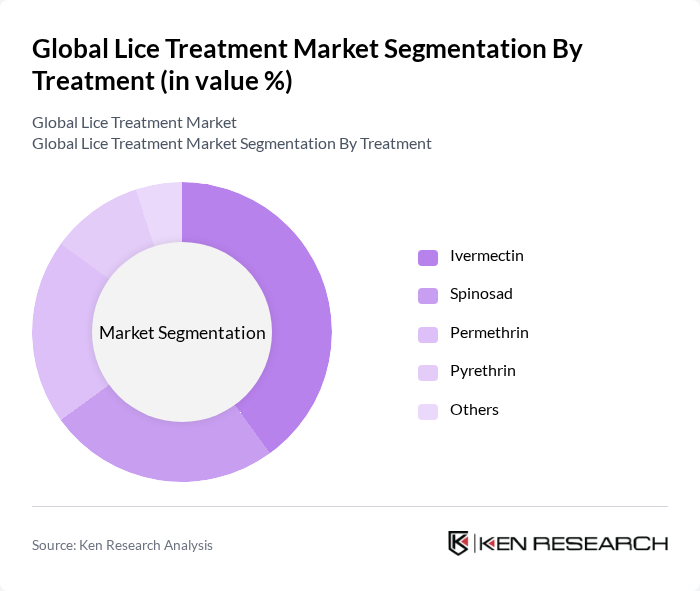
Global Lice Treatment Market segmentation by Treatment.

Global Lice Treatment Market Competitive Landscape

The Global Lice Treatment Market is characterized by a dynamic mix of regional and international players. Leading participants such as Johnson & Johnson, Bayer AG, Reckitt Benckiser Group plc, ParaPRO, LLC, Lice Clinics of America, Prestige Consumer Healthcare Inc. (Nix), LiceGuard, EcoSMART Technologies, The Lice Place, Harris Pharmaceutical, Inc. (RID), Tec Labs, Inc. (Licefreee!), Fairy Tales Hair Care, Nit Free (Larada Sciences, Inc.), Babo Botanicals, Lice Troopers contribute to innovation, geographic expansion, and service delivery in this space.

Johnson & Johnson

1886

New Brunswick, New Jersey, USA

Bayer AG

1863

Leverkusen, Germany

Reckitt Benckiser Group plc

1823

Slough, England

ParaPRO, LLC

2002

Carmel, Indiana, USA

Lice Clinics of America

2014

Sandy, Utah, USA

Company

Establishment Year

Headquarters

Group Size (Large, Medium, or Small as per industry convention)

Revenue (USD, latest available year)

Revenue Growth Rate (CAGR %)

Market Share (%)

Geographic Presence (No. of countries/regions)

Product Portfolio Breadth (No. of SKUs or product lines)

Global Lice Treatment Market Industry Analysis

Growth Drivers

  • Increasing Prevalence of Lice Infestations:The World Health Organization reported that approximately 1.2 billion people globally are affected by head lice, with a significant concentration in children aged 3 to 11 years. In the None region, the incidence of lice infestations has risen by 15% over the past five years, driven by factors such as increased travel and school attendance. This growing prevalence is propelling demand for effective lice treatment solutions, creating a robust market environment.
  • Rising Awareness About Personal Hygiene:Public health campaigns have significantly increased awareness regarding personal hygiene, particularly in schools and communities. According to the Centers for Disease Control and Prevention, educational initiatives have led to a 20% increase in lice treatment product sales in None. This heightened awareness is encouraging parents to seek preventive measures and treatments, thereby driving market growth and expanding the consumer base for lice treatment products.
  • Growth in the Pediatric Population:The pediatric population in None is projected to reach 10 million in future, according to demographic studies. This growth is crucial as children are the primary demographic affected by lice infestations. With an increasing number of children in schools and daycare centers, the demand for lice treatment products is expected to rise correspondingly, providing a significant boost to the market as parents seek effective solutions for their children.

Market Challenges

  • Resistance to Existing Treatment Options:A growing concern in the lice treatment market is the development of resistance to traditional chemical treatments. Studies indicate that up to 30% of lice populations in None have shown resistance to common pediculicides. This resistance complicates treatment protocols and necessitates the development of new solutions, posing a challenge for manufacturers and healthcare providers in effectively managing infestations.
  • Stigmatization Associated with Lice Infestations:The social stigma surrounding lice infestations can deter individuals from seeking treatment. In None, surveys indicate that 40% of parents feel embarrassed to address lice issues publicly, leading to delayed treatment and increased infestation rates. This challenge not only affects market growth but also complicates public health efforts aimed at controlling lice outbreaks in schools and communities.

Global Lice Treatment Market Future Outlook

The future of the lice treatment market in None is poised for transformation, driven by innovations in product formulations and a shift towards natural remedies. As consumer preferences evolve, there is a growing demand for eco-friendly and organic treatment options. Additionally, the integration of digital health solutions, such as telehealth consultations, is expected to enhance accessibility and convenience for consumers, further shaping the market landscape in the coming years.

Market Opportunities

  • Development of Natural and Organic Treatment Options:The increasing consumer preference for natural products presents a significant opportunity for manufacturers. With a projected market growth of 25% for organic lice treatments in None, companies can capitalize on this trend by developing innovative, chemical-free solutions that appeal to health-conscious consumers.
  • Expansion into Emerging Markets:Emerging markets in None are witnessing a rise in disposable income, leading to increased spending on health and wellness products. This trend offers a lucrative opportunity for lice treatment companies to expand their distribution channels and introduce their products to a broader audience, potentially increasing market share and revenue.

Scope of the Report

SegmentSub-Segments
By Type

Pediculosis Capitis (Head Lice)

Pediculosis Corporis (Body Lice)

Pediculosis Pubis (Pubic Lice)

Others

By Treatment

Ivermectin

Spinosad

Permethrin

Pyrethrin

Others

By Route of Administration

Oral

Topical

Others

By Dosage Form

Shampoos

Lotions

Creams

Sprays

Others

By End-User

Hospitals

Specialty Clinics

Homecare

Schools

Others

By Distribution Channel

Hospital Pharmacy

Retail Pharmacy

Online Pharmacy

Supermarkets

Others

By Region

North America

Europe

Asia-Pacific

LAMEA

Key Target Audience

Investors and Venture Capitalist Firms

Government and Regulatory Bodies (e.g., U.S. Food and Drug Administration, European Medicines Agency)

Manufacturers and Producers

Distributors and Retailers

Pharmaceutical Companies

Healthcare Providers and Clinics

Industry Associations

Financial Institutions

Players Mentioned in the Report:

Johnson & Johnson

Bayer AG

Reckitt Benckiser Group plc

ParaPRO, LLC

Lice Clinics of America

Prestige Consumer Healthcare Inc. (Nix)

LiceGuard

EcoSMART Technologies

The Lice Place

Harris Pharmaceutical, Inc. (RID)

Tec Labs, Inc. (Licefreee!)

Fairy Tales Hair Care

Nit Free (Larada Sciences, Inc.)

Babo Botanicals

Lice Troopers

Table of Contents

Market Assessment Phase

1. Executive Summary and Approach


2. Global Lice Treatment Market Overview

2.1 Key Insights and Strategic Recommendations

2.2 Global Lice Treatment Market Overview

2.3 Definition and Scope

2.4 Evolution of Market Ecosystem

2.5 Timeline of Key Regulatory Milestones

2.6 Value Chain & Stakeholder Mapping

2.7 Business Cycle Analysis

2.8 Policy & Incentive Landscape


3. Global Lice Treatment Market Analysis

3.1 Growth Drivers

3.1.1 Increasing prevalence of lice infestations
3.1.2 Rising awareness about personal hygiene
3.1.3 Growth in the pediatric population
3.1.4 Innovations in lice treatment products

3.2 Market Challenges

3.2.1 Resistance to existing treatment options
3.2.2 Stigmatization associated with lice infestations
3.2.3 High cost of advanced treatment solutions
3.2.4 Limited access to treatment in rural areas

3.3 Market Opportunities

3.3.1 Development of natural and organic treatment options
3.3.2 Expansion into emerging markets
3.3.3 Collaborations with healthcare providers
3.3.4 Increasing demand for preventive products

3.4 Market Trends

3.4.1 Shift towards over-the-counter treatments
3.4.2 Growing popularity of digital health solutions
3.4.3 Increased focus on eco-friendly products
3.4.4 Rise in telehealth consultations for treatment

3.5 Government Regulation

3.5.1 Stricter regulations on chemical treatments
3.5.2 Guidelines for safe product usage
3.5.3 Support for public health campaigns
3.5.4 Incentives for research and development

4. SWOT Analysis


5. Stakeholder Analysis


6. Porter's Five Forces Analysis


7. Global Lice Treatment Market Market Size, 2019-2024

7.1 By Value

7.2 By Volume

7.3 By Average Selling Price


8. Global Lice Treatment Market Segmentation

8.1 By Type

8.1.1 Pediculosis Capitis (Head Lice)
8.1.2 Pediculosis Corporis (Body Lice)
8.1.3 Pediculosis Pubis (Pubic Lice)
8.1.4 Others

8.2 By Treatment

8.2.1 Ivermectin
8.2.2 Spinosad
8.2.3 Permethrin
8.2.4 Pyrethrin
8.2.5 Others

8.3 By Route of Administration

8.3.1 Oral
8.3.2 Topical
8.3.3 Others

8.4 By Dosage Form

8.4.1 Shampoos
8.4.2 Lotions
8.4.3 Creams
8.4.4 Sprays
8.4.5 Others

8.5 By End-User

8.5.1 Hospitals
8.5.2 Specialty Clinics
8.5.3 Homecare
8.5.4 Schools
8.5.5 Others

8.6 By Distribution Channel

8.6.1 Hospital Pharmacy
8.6.2 Retail Pharmacy
8.6.3 Online Pharmacy
8.6.4 Supermarkets
8.6.5 Others

8.7 By Region

8.7.1 North America
8.7.2 Europe
8.7.3 Asia-Pacific
8.7.4 LAMEA

9. Global Lice Treatment Market Competitive Analysis

9.1 Market Share of Key Players

9.2 Cross Comparison of Key Players

9.2.1 Company Name
9.2.2 Group Size (Large, Medium, or Small as per industry convention)
9.2.3 Revenue (USD, latest available year)
9.2.4 Revenue Growth Rate (CAGR %)
9.2.5 Market Share (%)
9.2.6 Geographic Presence (No. of countries/regions)
9.2.7 Product Portfolio Breadth (No. of SKUs or product lines)
9.2.8 R&D Intensity (R&D spend as % of revenue)
9.2.9 Regulatory Approvals (No. of approved products)
9.2.10 Distribution Channel Strength (No. of channels/partners)
9.2.11 Brand Recognition Score (Indexed or survey-based)
9.2.12 Customer Retention Rate (%)
9.2.13 Innovation Rate (No. of new launches per year)

9.3 SWOT Analysis of Top Players

9.4 Pricing Analysis

9.5 Detailed Profile of Major Companies

9.5.1 Johnson & Johnson
9.5.2 Bayer AG
9.5.3 Reckitt Benckiser Group plc
9.5.4 ParaPRO, LLC
9.5.5 Lice Clinics of America
9.5.6 Prestige Consumer Healthcare Inc. (Nix)
9.5.7 LiceGuard
9.5.8 EcoSMART Technologies
9.5.9 The Lice Place
9.5.10 Harris Pharmaceutical, Inc. (RID)
9.5.11 Tec Labs, Inc. (Licefreee!)
9.5.12 Fairy Tales Hair Care
9.5.13 Nit Free (Larada Sciences, Inc.)
9.5.14 Babo Botanicals
9.5.15 Lice Troopers

10. Global Lice Treatment Market End-User Analysis

10.1 Procurement Behavior of Key Ministries

10.1.1 Government health departments
10.1.2 Educational institutions
10.1.3 Non-profit organizations

10.2 Corporate Spend on Infrastructure & Energy

10.2.1 Budget allocation for health initiatives
10.2.2 Investment in preventive health measures

10.3 Pain Point Analysis by End-User Category

10.3.1 Accessibility of treatment options
10.3.2 Affordability of products

10.4 User Readiness for Adoption

10.4.1 Awareness of lice treatment options
10.4.2 Willingness to try new products

10.5 Post-Deployment ROI and Use Case Expansion

10.5.1 Effectiveness of treatments
10.5.2 Customer satisfaction and feedback

11. Global Lice Treatment Market Future Size, 2025-2030

11.1 By Value

11.2 By Volume

11.3 By Average Selling Price


Go-To-Market Strategy Phase

1. Whitespace Analysis + Business Model Canvas

1.1 Market gaps identification

1.2 Value proposition development

1.3 Revenue model exploration

1.4 Key partnerships and resources

1.5 Customer segments analysis

1.6 Cost structure evaluation

1.7 Competitive landscape overview


2. Marketing and Positioning Recommendations

2.1 Branding strategies

2.2 Product USPs

2.3 Target audience identification

2.4 Communication channels

2.5 Promotional tactics


3. Distribution Plan

3.1 Urban retail strategies

3.2 Rural NGO tie-ups

3.3 E-commerce integration

3.4 Direct-to-consumer models


4. Channel & Pricing Gaps

4.1 Underserved routes

4.2 Pricing bands analysis

4.3 Competitor pricing comparison


5. Unmet Demand & Latent Needs

5.1 Category gaps identification

5.2 Consumer segments analysis

5.3 Product development opportunities


6. Customer Relationship

6.1 Loyalty programs

6.2 After-sales service

6.3 Customer feedback mechanisms


7. Value Proposition

7.1 Sustainability initiatives

7.2 Integrated supply chains

7.3 Community engagement strategies


8. Key Activities

8.1 Regulatory compliance

8.2 Branding efforts

8.3 Distribution setup


9. Entry Strategy Evaluation

9.1 Domestic Market Entry Strategy

9.1.1 Product mix considerations
9.1.2 Pricing band strategy
9.1.3 Packaging options

9.2 Export Entry Strategy

9.2.1 Target countries analysis
9.2.2 Compliance roadmap

10. Entry Mode Assessment

10.1 Joint Ventures

10.2 Greenfield investments

10.3 Mergers & Acquisitions

10.4 Distributor Model


11. Capital and Timeline Estimation

11.1 Capital requirements

11.2 Timelines for market entry


12. Control vs Risk Trade-Off

12.1 Ownership considerations

12.2 Partnerships evaluation


13. Profitability Outlook

13.1 Breakeven analysis

13.2 Long-term sustainability strategies


14. Potential Partner List

14.1 Distributors

14.2 Joint Ventures

14.3 Acquisition targets


15. Execution Roadmap

15.1 Phased Plan for Market Entry

15.1.1 Market Setup
15.1.2 Market Entry
15.1.3 Growth Acceleration
15.1.4 Scale & Stabilize

15.2 Key Activities and Milestones

15.2.1 Milestone tracking
15.2.2 Activity scheduling

Research Methodology

ApproachModellingSample

Phase 1: Approach1

Desk Research

  • Analysis of market reports from industry associations and health organizations
  • Review of academic journals and publications on lice treatment efficacy and trends
  • Examination of sales data from pharmacies and retail chains specializing in personal care products

Primary Research

  • Interviews with dermatologists and pediatricians to understand treatment preferences
  • Surveys with parents and caregivers regarding lice treatment experiences and product choices
  • Focus groups with pharmacy staff to gather insights on customer inquiries and product sales

Validation & Triangulation

  • Cross-validation of findings with multiple data sources, including sales and clinical studies
  • Triangulation of consumer feedback with expert opinions from healthcare professionals
  • Sanity checks through expert panel discussions to ensure data reliability

Phase 2: Market Size Estimation1

Top-down Assessment

  • Estimation of total addressable market based on population demographics and prevalence rates of lice infestations
  • Segmentation of market by product type, including shampoos, lotions, and combs
  • Incorporation of trends in over-the-counter versus prescription treatments

Bottom-up Modeling

  • Collection of sales data from leading lice treatment product manufacturers
  • Estimation of average selling prices across different product categories
  • Volume estimates based on historical sales trends and market penetration rates

Forecasting & Scenario Analysis

  • Multi-factor regression analysis incorporating factors such as seasonal outbreaks and public health campaigns
  • Scenario modeling based on potential changes in consumer behavior and treatment preferences
  • Development of baseline, optimistic, and pessimistic forecasts through 2030

Phase 3: CATI Sample Composition1

Scope Item/SegmentSample SizeTarget Respondent Profiles
Consumer Insights on Lice Treatments120Parents, Caregivers
Healthcare Professional Perspectives60Dermatologists, Pediatricians
Pharmacy Staff Feedback50Pharmacists, Pharmacy Technicians
Market Trends Analysis40Market Analysts, Industry Experts
Product Efficacy Evaluations40Clinical Researchers, Product Developers

Frequently Asked Questions

What is the current value of the Global Lice Treatment Market?

The Global Lice Treatment Market is valued at approximately USD 1.1 billion, reflecting a five-year historical analysis. This growth is attributed to increased awareness of personal hygiene and rising incidences of lice infestations, alongside a demand for effective treatment options.

What are the main types of lice treated in the market?

Which regions dominate the Global Lice Treatment Market?

What are the key growth drivers for the lice treatment market?

Other Regional/Country Reports

Why Buy From Us?

Refine Robust Result (RRR) Framework

What makes us stand out is that our consultants follow Robust, Refine and Result (RRR) methodology. Robust for clear definitions, approaches and sanity checking, Refine for differentiating respondents' facts and opinions, and Result for presenting data with story.

Our Reach Is Unmatched

We have set a benchmark in the industry by offering our clients with syndicated and customized market research reports featuring coverage of entire market as well as meticulous research and analyst insights.

Shifting the Research Paradigm

While we don't replace traditional research, we flip the method upside down. Our dual approach of Top Bottom & Bottom Top ensures quality deliverable by not just verifying company fundamentals but also looking at the sector and macroeconomic factors.

More Insights-Better Decisions

With one step in the future, our research team constantly tries to show you the bigger picture. We help with some of the tough questions you may encounter along the way: How is the industry positioned? Best marketing channel? KPI's of competitors? By aligning every element, we help maximize success.

Transparency and Trust

Our report gives you instant access to the answers and sources that other companies might choose to hide. We elaborate each steps of research methodology we have used and showcase you the sample size to earn your trust.

Round the Clock Support

If you need any support, we are here! We pride ourselves on universe strength, data quality, and quick, friendly, and professional service.

Why Clients Choose Us?

400000+
Reports in repository
150+
Consulting projects a year
100+
Analysts
8000+
Client Queries in 2022








