Region:Global
Author(s):Rebecca
Product Code:KRAA1351
Pages:82
Published On:August 2025
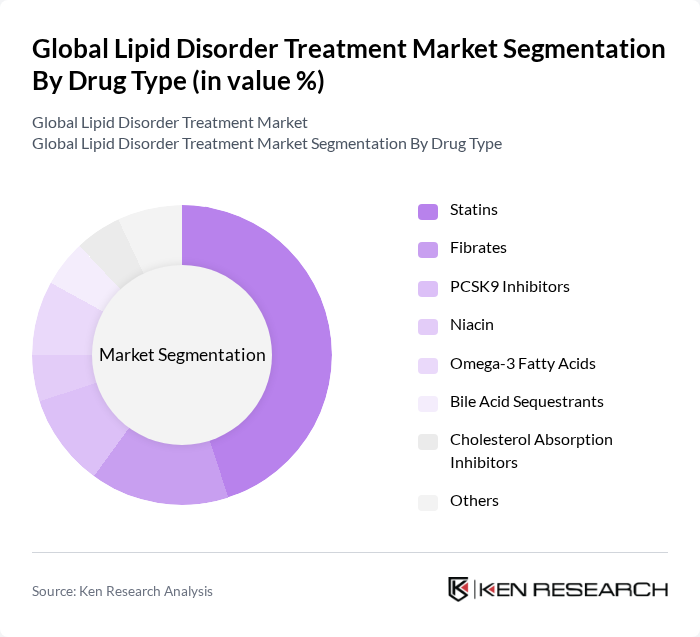
By Drug Type:The drug type segmentation includes various categories such as Statins, Fibrates, PCSK9 Inhibitors, Niacin, Omega-3 Fatty Acids, Bile Acid Sequestrants, Cholesterol Absorption Inhibitors, and Others. Statins remain the leading sub-segment due to their widespread use and proven efficacy in lowering cholesterol levels. The increasing awareness of cardiovascular health and the growing number of patients diagnosed with hyperlipidemia contribute to the dominance of this category. PCSK9 inhibitors are the fastest-growing sub-segment, driven by new formulations and expanding indications.
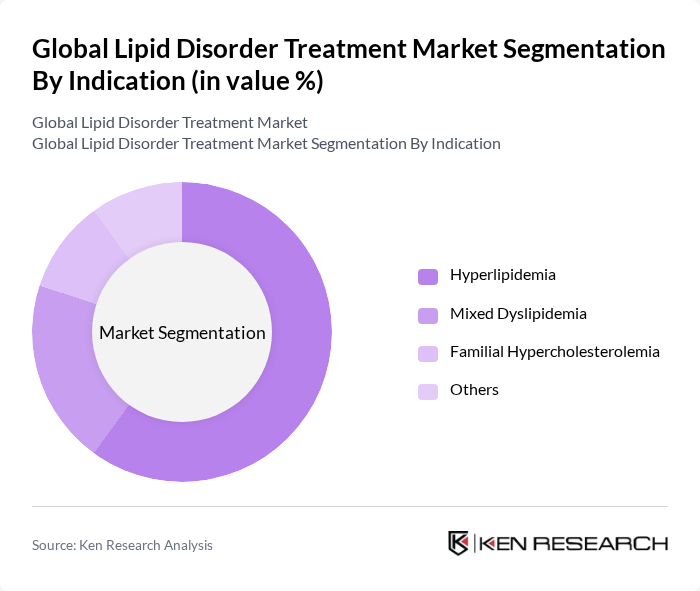
By Indication:The indication segmentation encompasses Hyperlipidemia, Mixed Dyslipidemia, Familial Hypercholesterolemia, and Others. Hyperlipidemia is the dominant sub-segment, driven by the high prevalence of elevated cholesterol levels among the global population. The increasing focus on preventive healthcare and the rising incidence of lifestyle-related diseases further bolster the demand for treatments targeting this indication. Familial hypercholesterolemia is gaining attention due to advances in genetic screening and targeted therapies.
The Global Lipid Disorder Treatment Market is characterized by a dynamic mix of regional and international players. Leading participants such as Pfizer Inc., Merck & Co., Inc., Amgen Inc., Sanofi S.A., Novartis AG, AstraZeneca PLC, GlaxoSmithKline plc, AbbVie Inc., Boehringer Ingelheim GmbH, Regeneron Pharmaceuticals, Inc., Takeda Pharmaceutical Company Limited, Bayer AG, Eli Lilly and Company, Gilead Sciences, Inc., Daiichi Sankyo Company, Limited, Esperion Therapeutics, Inc., Kowa Company, Ltd., Ionis Pharmaceuticals, Inc., Alnylam Pharmaceuticals, Inc., The Medicines Company (a Novartis company) contribute to innovation, geographic expansion, and service delivery in this space.
The future of the lipid disorder treatment market in None is poised for significant transformation, driven by technological advancements and evolving patient needs. The integration of telemedicine is expected to enhance patient engagement and adherence to treatment protocols. Additionally, the focus on preventive healthcare will likely lead to earlier diagnosis and intervention, improving patient outcomes. As healthcare systems adapt to these trends, the market is set to experience robust growth, fostering innovation and collaboration among stakeholders.
| Segment | Sub-Segments |
|---|---|
| By Drug Type | Statins Fibrates PCSK9 Inhibitors Niacin Omega-3 Fatty Acids Bile Acid Sequestrants Cholesterol Absorption Inhibitors Others |
| By Indication | Hyperlipidemia Mixed Dyslipidemia Familial Hypercholesterolemia Others |
| By End-User | Hospitals Clinics Homecare Settings Pharmacies |
| By Distribution Channel | Direct Sales Retail Pharmacies Online Pharmacies Hospitals |
| By Region | North America Europe Asia-Pacific Latin America Middle East & Africa |
| By Patient Demographics | Adults Geriatric Pediatric |
| By Treatment Setting | Inpatient Outpatient |
| By Pricing Tier | Premium Mid-range Economy |
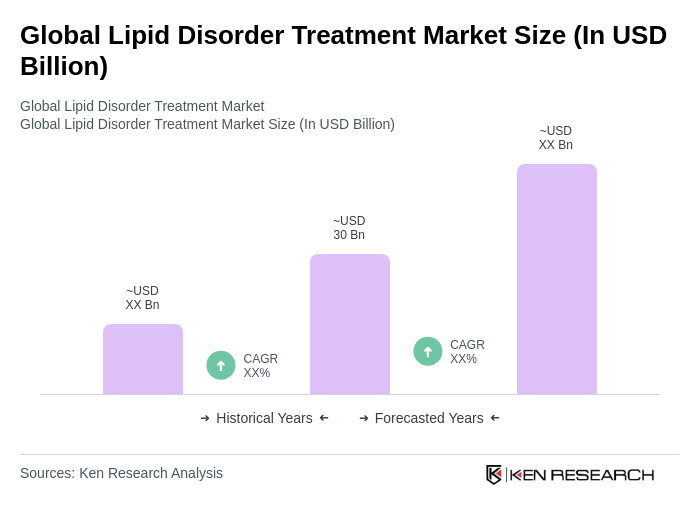
The Global Lipid Disorder Treatment Market is valued at approximately USD 30 billion, driven by the increasing prevalence of lipid disorders, heightened awareness of cardiovascular diseases, and advancements in treatment options.

What makes us stand out is that our consultants follow Robust, Refine and Result (RRR) methodology. Robust for clear definitions, approaches and sanity checking, Refine for differentiating respondents' facts and opinions, and Result for presenting data with story.

We have set a benchmark in the industry by offering our clients with syndicated and customized market research reports featuring coverage of entire market as well as meticulous research and analyst insights.

While we don't replace traditional research, we flip the method upside down. Our dual approach of Top Bottom & Bottom Top ensures quality deliverable by not just verifying company fundamentals but also looking at the sector and macroeconomic factors.

With one step in the future, our research team constantly tries to show you the bigger picture. We help with some of the tough questions you may encounter along the way: How is the industry positioned? Best marketing channel? KPI's of competitors? By aligning every element, we help maximize success.

Our report gives you instant access to the answers and sources that other companies might choose to hide. We elaborate each steps of research methodology we have used and showcase you the sample size to earn your trust.

If you need any support, we are here! We pride ourselves on universe strength, data quality, and quick, friendly, and professional service.













