Region:Global
Author(s):Geetanshi
Product Code:KRAD4161
Pages:93
Published On:December 2025
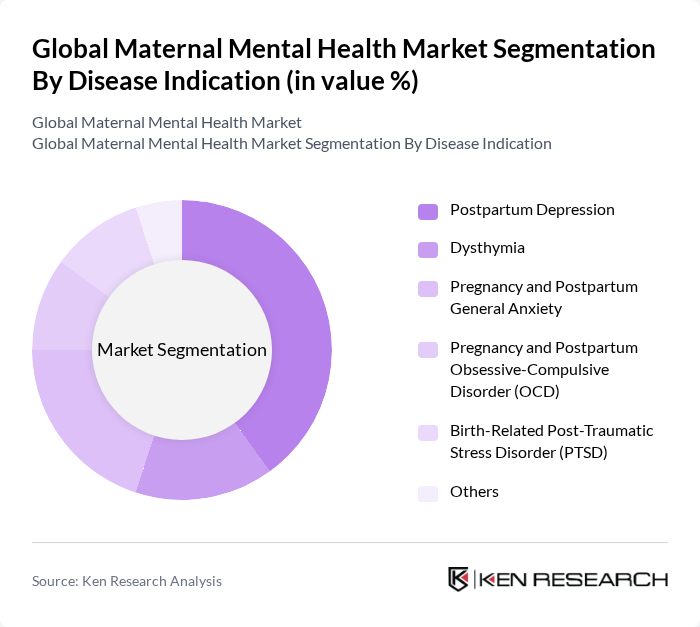
By Disease Indication:The market is segmented into various disease indications, including postpartum depression, dysthymia, pregnancy and postpartum general anxiety, pregnancy and postpartum obsessive-compulsive disorder (OCD), birth-related post-traumatic stress disorder (PTSD), and others. Among these, postpartum depression is the most prevalent, significantly impacting maternal health and requiring immediate attention and treatment. The increasing recognition of its effects on both mothers and infants has led to a heightened focus on effective interventions, including pharmacological therapies, psychotherapy, and digital support tools.
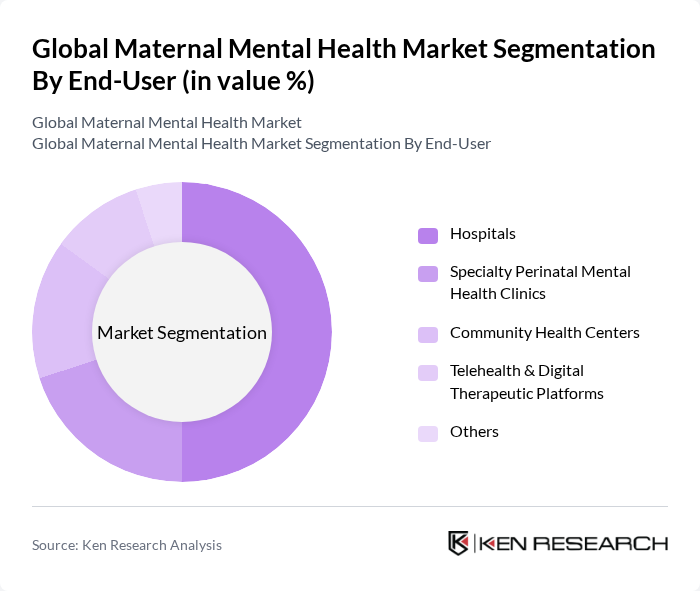
By End-User:The market is categorized by end-users, including hospitals, specialty perinatal mental health clinics, community health centers, telehealth & digital therapeutic platforms, and others. Hospitals are the leading end-user segment, as they provide comprehensive maternal care services, including mental health support. The integration of mental health services within hospital settings has become increasingly important, especially in light of the growing awareness of maternal mental health issues and the expansion of perinatal psychiatric units and collaborative care models.
The Global Maternal Mental Health Market is characterized by a dynamic mix of regional and international players. Leading participants such as Sage Therapeutics, Inc., Pfizer Inc., GlaxoSmithKline plc (GSK), Viatris Inc., Bausch Health Companies Inc., Alembic Pharmaceuticals Limited, Mallinckrodt plc, Magellan Health, Inc., Canopie, Therapy Mama, Maven Clinic Co., Happiest Baby, Inc., Spring Health, Postpartum Support International (PSI), Maternal Mental Health Alliance contribute to innovation, geographic expansion, and service delivery in this space.
The future of maternal mental health is poised for significant advancements, driven by technological innovations and a growing emphasis on integrated care. As telehealth services expand, more women will have access to mental health support, particularly in underserved areas. Additionally, the integration of mental health screenings into routine prenatal care is expected to become standard practice, ensuring early identification and intervention for mental health issues among pregnant women.
| Segment | Sub-Segments |
|---|---|
| By Disease Indication | Postpartum Depression Dysthymia Pregnancy and Postpartum General Anxiety Pregnancy and Postpartum Obsessive-Compulsive Disorder (OCD) Birth-Related Post-Traumatic Stress Disorder (PTSD) Others |
| By End-User | Hospitals Specialty Perinatal Mental Health Clinics Community Health Centers Telehealth & Digital Therapeutic Platforms Others |
| By Age Group (Maternal) | Under 20 Years –29 Years –39 Years Years & Above |
| By Therapy / Treatment Modality | Antidepressant Medications Selective Serotonin Reuptake Inhibitors (SSRIs) Tricyclic Antidepressants (TCAs) Cognitive Behavioral Therapy (CBT) Interpersonal Psychotherapy (IPT) Other Pharmacological & Psychotherapeutic Approaches |
| By Delivery Model | In-Person Care Virtual / Telehealth Care Hybrid Care Models |
| By Payer Type | Public / Government-Funded Programs Private Insurance Out-of-Pocket / Self-Pay Employer-Sponsored & Other Payers |
| By Region | North America Europe Asia-Pacific Latin America Middle East & Africa |
| Scope Item/Segment | Sample Size | Target Respondent Profiles |
|---|---|---|
| Healthcare Providers in Maternal Mental Health | 120 | Psychiatrists, Obstetricians, Midwives |
| Support Groups and Counseling Services | 80 | Counselors, Social Workers, Peer Support Leaders |
| Policy Makers and Health Administrators | 60 | Public Health Officials, Program Directors |
| New Mothers and Caregivers | 100 | New Mothers, Caregivers, Family Support Members |
| Academic Researchers in Maternal Health | 50 | Researchers, Professors, Graduate Students |
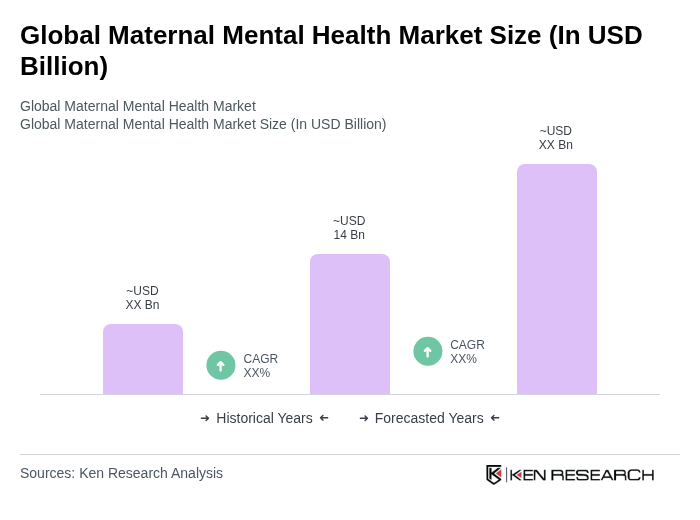
The Global Maternal Mental Health Market is valued at approximately USD 14 billion, reflecting a significant increase due to heightened awareness of maternal mental health issues and the integration of mental health services into maternal care.

What makes us stand out is that our consultants follow Robust, Refine and Result (RRR) methodology. Robust for clear definitions, approaches and sanity checking, Refine for differentiating respondents' facts and opinions, and Result for presenting data with story.

We have set a benchmark in the industry by offering our clients with syndicated and customized market research reports featuring coverage of entire market as well as meticulous research and analyst insights.

While we don't replace traditional research, we flip the method upside down. Our dual approach of Top Bottom & Bottom Top ensures quality deliverable by not just verifying company fundamentals but also looking at the sector and macroeconomic factors.

With one step in the future, our research team constantly tries to show you the bigger picture. We help with some of the tough questions you may encounter along the way: How is the industry positioned? Best marketing channel? KPI's of competitors? By aligning every element, we help maximize success.

Our report gives you instant access to the answers and sources that other companies might choose to hide. We elaborate each steps of research methodology we have used and showcase you the sample size to earn your trust.

If you need any support, we are here! We pride ourselves on universe strength, data quality, and quick, friendly, and professional service.













