Region:Global
Author(s):Dev
Product Code:KRAB0421
Pages:86
Published On:August 2025
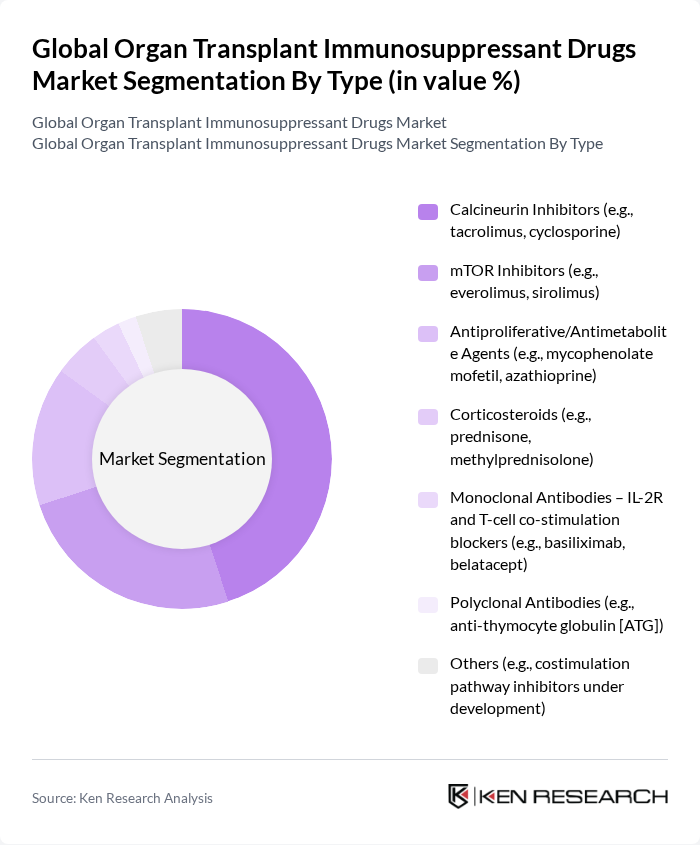
By Type:The market is segmented into various types of immunosuppressant drugs, each serving a unique role in the management of transplant patients. The leading sub-segment is Calcineurin Inhibitors, which remain the backbone of maintenance therapy in kidney and other solid organ transplants, with tacrolimus and cyclosporine widely used to prevent rejection. mTOR Inhibitors and Antiproliferative Agents also hold significant shares as part of combination regimens to balance efficacy and toxicity. The diversity in drug types allows for tailored treatment regimens based on patient risk profiles, organ type, and time since transplant .
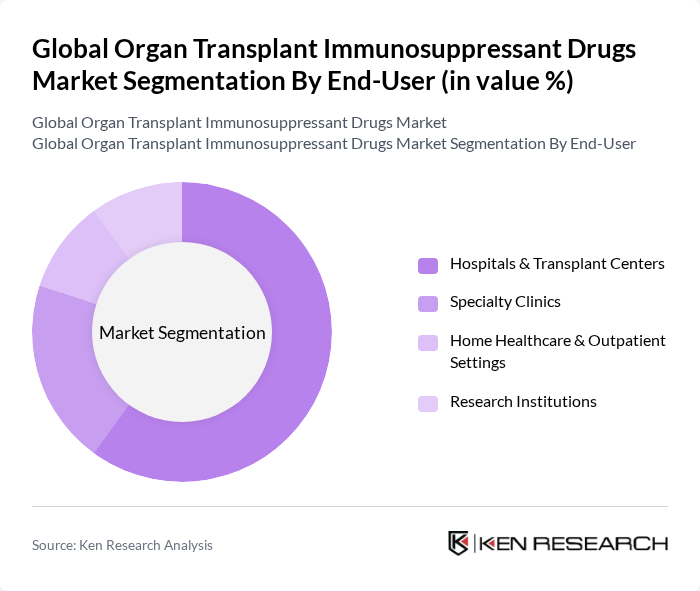
By End-User:The end-user segmentation highlights the various healthcare settings where immunosuppressant drugs are utilized. Hospitals and transplant centers are the primary users, reflecting their central role in performing organ transplants and managing immediate and long-term post-operative care. Specialty clinics and home healthcare settings support chronic maintenance therapy and monitoring, while research institutions advance clinical trials and regimen optimization for improved outcomes and safety .
The Global Organ Transplant Immunosuppressant Drugs Market is characterized by a dynamic mix of regional and international players. Leading participants such as Novartis AG, F. Hoffmann-La Roche Ltd, AbbVie Inc., Astellas Pharma Inc., Bristol Myers Squibb Company, Sanofi S.A., Merck & Co., Inc., Pfizer Inc., Teva Pharmaceutical Industries Ltd., Hikma Pharmaceuticals PLC, Veloxis Pharmaceuticals, Inc., CSL Vifor (Vifor Pharma AG), Sandoz Group AG, Dr. Reddy’s Laboratories Ltd., Sun Pharmaceutical Industries Ltd. contribute to innovation, geographic expansion, and service delivery in this space. Recent trends include incremental innovation in calcineurin inhibitor formulations, use of belatacept in selected kidney transplant populations, and ongoing development of next-generation agents aimed at reducing nephrotoxicity and improving long-term graft survival .
The future of the organ transplant immunosuppressant drugs market appears promising, driven by ongoing advancements in drug formulations and a growing emphasis on personalized medicine. As the healthcare landscape evolves, the integration of telemedicine and digital health solutions is expected to enhance patient management and adherence to treatment protocols. Furthermore, the increasing collaboration between pharmaceutical companies and biotech firms will likely accelerate innovation, leading to more effective therapies and improved patient outcomes in the coming years.
| Segment | Sub-Segments |
|---|---|
| By Type | Calcineurin Inhibitors (e.g., tacrolimus, cyclosporine) mTOR Inhibitors (e.g., everolimus, sirolimus) Antiproliferative/Antimetabolite Agents (e.g., mycophenolate mofetil, azathioprine) Corticosteroids (e.g., prednisone, methylprednisolone) Monoclonal Antibodies – IL-2R and T-cell co-stimulation blockers (e.g., basiliximab, belatacept) Polyclonal Antibodies (e.g., anti-thymocyte globulin ) Others (e.g., costimulation pathway inhibitors under development) |
| By End-User | Hospitals & Transplant Centers Specialty Clinics Home Healthcare & Outpatient Settings Research Institutions |
| By Route of Administration | Oral Intravenous Subcutaneous |
| By Distribution Channel | Hospital Pharmacies Retail Pharmacies Online Pharmacies |
| By Patient Demographics | Adult Patients Pediatric Patients |
| By Treatment Regimen | Induction Therapy Maintenance Therapy |
| By Pricing Tier | Premium Mid-range Economy |
| Scope Item/Segment | Sample Size | Target Respondent Profiles |
|---|---|---|
| Transplant Surgeons | 100 | Surgeons specializing in kidney, liver, and heart transplants |
| Pharmacy Directors | 80 | Directors from hospitals with transplant programs |
| Clinical Researchers | 60 | Researchers involved in immunosuppressant drug trials |
| Patient Advocacy Groups | 50 | Leaders from organizations supporting transplant patients |
| Healthcare Policy Makers | 40 | Officials involved in healthcare regulations and transplant policies |
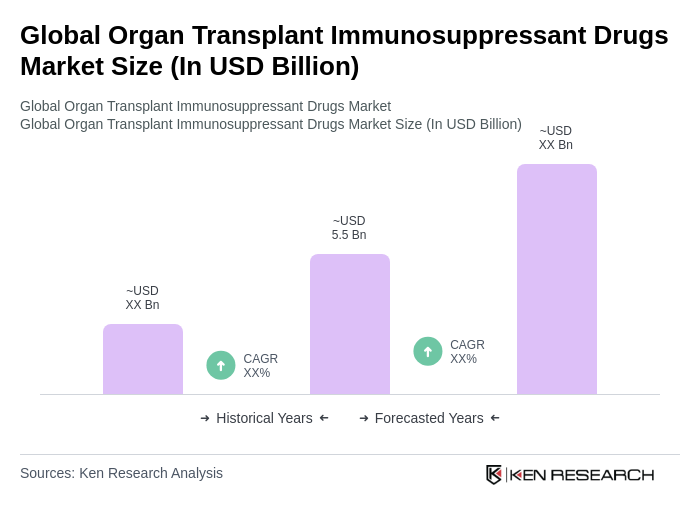
The Global Organ Transplant Immunosuppressant Drugs Market is valued at approximately USD 5.5 billion, reflecting steady growth driven by increasing transplant volumes and the ongoing need for maintenance immunosuppression following organ transplants.

What makes us stand out is that our consultants follow Robust, Refine and Result (RRR) methodology. Robust for clear definitions, approaches and sanity checking, Refine for differentiating respondents' facts and opinions, and Result for presenting data with story.

We have set a benchmark in the industry by offering our clients with syndicated and customized market research reports featuring coverage of entire market as well as meticulous research and analyst insights.

While we don't replace traditional research, we flip the method upside down. Our dual approach of Top Bottom & Bottom Top ensures quality deliverable by not just verifying company fundamentals but also looking at the sector and macroeconomic factors.

With one step in the future, our research team constantly tries to show you the bigger picture. We help with some of the tough questions you may encounter along the way: How is the industry positioned? Best marketing channel? KPI's of competitors? By aligning every element, we help maximize success.

Our report gives you instant access to the answers and sources that other companies might choose to hide. We elaborate each steps of research methodology we have used and showcase you the sample size to earn your trust.

If you need any support, we are here! We pride ourselves on universe strength, data quality, and quick, friendly, and professional service.













